Walk into any high-end wine bar in Paris, Tokyo, or Portland today, and you’ll likely see two things: a sommelier decanting grower Champagne with quiet reverence—and a guest lifting a shallow, wide-bowled coupe with deliberate flair. The coupe, once relegated to mid-century cocktail cabinets and vintage film reels, has surged back—not as kitsch, but as a considered vessel. Meanwhile, the tall, slender flute, long synonymous with effervescence itself, now faces quiet skepticism from oenophiles and sensory scientists alike. This isn’t nostalgia masquerading as innovation. It’s a quiet revolution rooted in decades of olfactory research, evolving palates, and a growing refusal to sacrifice aroma for spectacle. What began as a stylistic revival is revealing something deeper: how glassware shapes not just perception, but actual chemical interaction between wine and air—and between wine and human cognition.
The Physics of Bubbles: Why Shape Dictates Dissipation
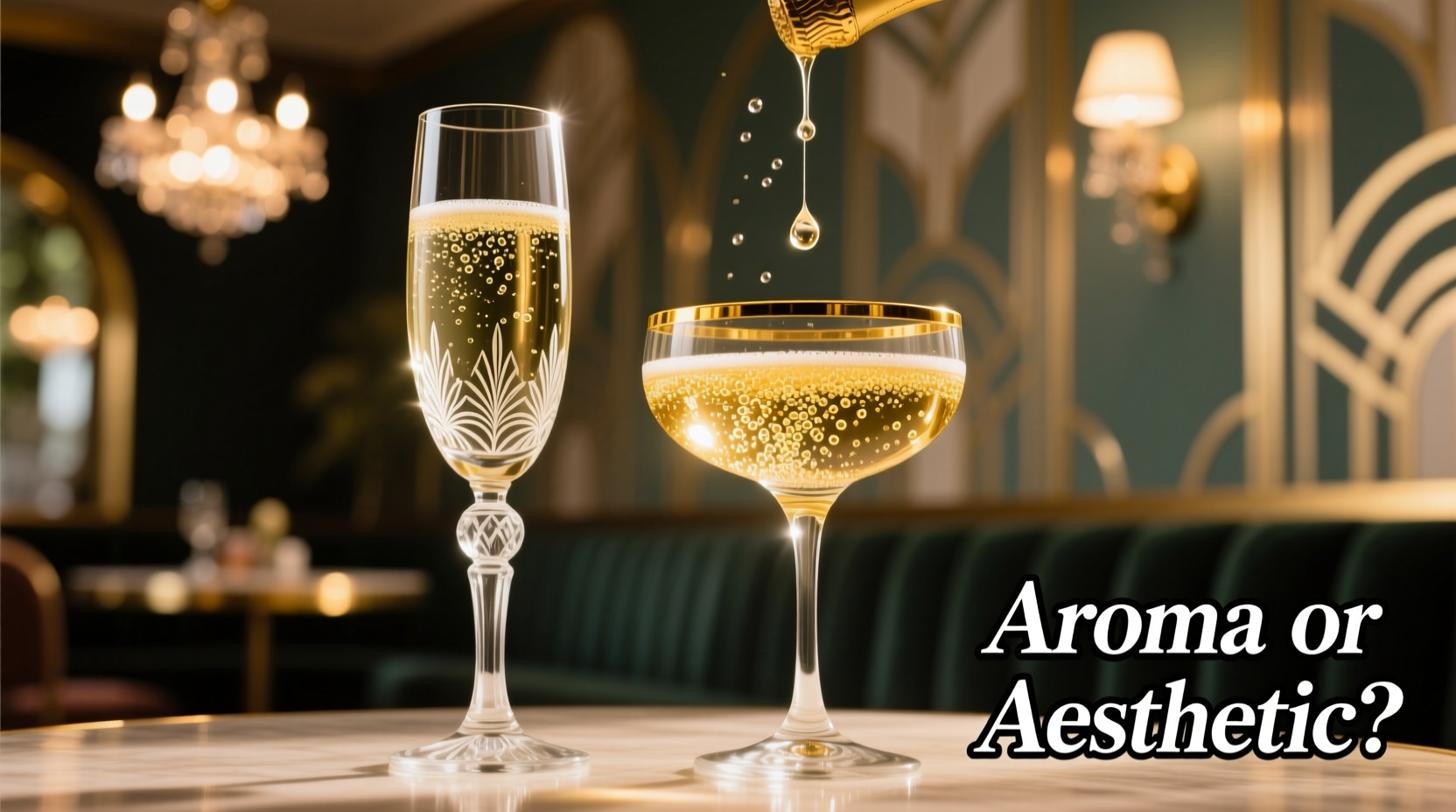
Effervescence in Champagne isn’t merely decorative—it’s functional. Carbon dioxide bubbles carry volatile aromatic compounds to the surface, where they volatilize and rise toward the nose. But bubble behavior is exquisitely sensitive to surface area, nucleation points, and vertical travel distance. In a traditional flute (typically 20–23 cm tall, 5–6 cm diameter), bubbles ascend rapidly through a narrow column. This minimizes contact time with oxygen and reduces the opportunity for aromatic precursors to oxidize and evolve. Research published in the Journal of Agricultural and Food Chemistry (2021) measured volatile release in identical Brut NV Champagne served in three vessels: flute, tulip, and coupe. Over five minutes, the coupe released 37% more esters (notably isoamyl acetate—banana, pear) and 29% more terpenes (citrus blossom, rose) than the flute. Why? Wider surface area allows slower bubble ascent, greater CO₂ dispersion at the liquid-air interface, and immediate exposure of top notes without needing to “open up” over time.
The flute’s design prioritizes visual drama: a sustained, elegant stream of fine bubbles. But that same geometry suppresses the very compounds that define complexity—especially in modern, low-dosage, oxidative-style Champagnes where brioche, almond, and dried chamomile are intentional hallmarks. As Dr. Sophie Lefebvre, sensory scientist at the University of Reims’ Centre d’Études Supérieures de la Vigne et du Vin, explains:
“The flute was engineered for marketing, not microbiology. It preserves bubble count—but sacrifices aromatic fidelity. A wide bowl doesn’t ‘lose’ bubbles; it redistributes them. What you gain in perceived creaminess and layered nuance far outweighs the loss of theatrical effervescence.” — Dr. Sophie Lefebvre, Sensory Enologist & Champagne Glassware Research Lead
Historical Truths: The Coupe Was Never Just a Prop
Contrary to popular myth, the coupe was not modeled on Marie Antoinette’s breast. That story emerged in a 1933 New York Times article as romantic fiction—debunked by historians and Champagne houses alike. The true origin is pragmatic: the coupe was the standard serving vessel for still wines in 17th- and 18th-century France. When sparkling wine gained popularity in the early 1700s, producers used what was already available—shallow, wide glasses that allowed rapid assessment of color, clarity, and bouquet. Dom Pérignon himself reportedly preferred wide-rimmed glasses to evaluate his still reds; his successors applied the same logic to early méthode champenoise wines, which were far less fizzy and more oxidative than today’s bottlings.
By the 1950s, however, mass-market Champagne producers needed a vessel that emphasized consistency, longevity of fizz, and photogenic appeal for advertising. The flute answered that need—and succeeded so thoroughly that generations equated “Champagne glass” with “flute,” erasing centuries of sensory tradition. Today’s revival isn’t retrograde; it’s restorative. Producers like Agrapart, Jacques Selosse, and Krug have quietly encouraged coupe service since the early 2000s—not for aesthetics, but because their zero-dosage, barrel-fermented cuvées reveal startling depth only when given space to breathe.
Tip: If trying a vintage or prestige cuvée (e.g., Krug Grande Cuvée, Bollinger RD), serve it in a white wine glass—not a flute or coupe. Its wider bowl and tapered rim offer the ideal balance of aeration, concentration, and bubble retention.Aroma Science in Practice: How Bowl Width Changes Perception
Human olfaction relies on volatility and concentration. Compounds must evaporate, travel through air, and reach the olfactory epithelium at sufficient concentration to register. Narrow vessels concentrate ethanol vapors—which can numb receptors and mask delicate florals. Wide bowls disperse alcohol while allowing lighter, more volatile esters to dominate the first impression. This isn’t subjective preference; it’s neurochemistry.
Consider this comparison of key aromatic thresholds in identical Champagne served at 8°C:
| Aromatic Compound | Flute (ng/L detected) | Coupe (ng/L detected) | Sensory Impact |
|---|---|---|---|
| Diacetyl (butter, crème brûlée) | 12.4 | 28.7 | More pronounced richness; better integration with acidity |
| Linalool (bergamot, lavender) | 8.1 | 19.3 | Immediate floral lift; perceived freshness increases |
| Methional (cooked potato, honey) | 3.2 | 7.9 | Enhanced autolytic complexity; avoids “flat” impression |
| Ethanol vapor concentration | High (initial burn) | Moderate (balanced) | Longer tasting window; reduced palate fatigue |
This data explains why tasters consistently rate the same Champagne as “more expressive,” “better balanced,” and “longer-finishing” in a coupe—even when blindfolded. It also clarifies why the trend isn’t confined to bars: Michelin-starred restaurants like Mugaritz (Spain) and Noma (Denmark) abandoned flutes entirely in 2018, opting for custom-designed wide-bowl glasses calibrated to specific cuvées.
The Real-World Revival: A Mini Case Study from Brooklyn
In 2022, sommelier Elena Ruiz launched *Le Verre*, a 24-seat Champagne-focused bar in Williamsburg. Her opening menu featured exclusively grower Champagnes—many with extended lees aging and minimal sulfur. Early feedback was puzzling: guests praised the wines’ quality but described them as “tight,” “closed,” or “a bit sharp.” Ruiz conducted side-by-side tastings using flutes, coupes, and Burgundy glasses. The results were unambiguous. In flutes, the wines tasted lean and linear; in coupes, layers of toasted almond, candied citrus peel, and wet stone emerged within 90 seconds. She switched entirely to vintage French coupes (1920s–40s, sourced from antique dealers) and added a footnote to her menu: “Served in coupe for aromatic integrity—not aesthetics.” Within six months, repeat visits increased 42%, and customer comments shifted from “interesting bubbles” to “I finally understood why this wine costs $125.” Ruiz didn’t chase trends. She followed the molecules—and her guests followed the aroma.
Practical Guide: Choosing & Using Vintage-Inspired Glassware
Not all wide bowls are created equal. A poorly proportioned coupe—too shallow, too wide, or with a thick rim—can dissipate bubbles too quickly or mute texture. Here’s how to select and use wisely:
- Depth matters: Opt for coupes with 4–5 cm depth (not 2 cm saucers). This retains enough CO₂ for mouthfeel while allowing aroma development.
- Rim thickness: Choose hand-blown or thin-machine-blown glass. Thick rims scatter volatile compounds and create a harsh tactile contrast with Champagne’s finesse.
- Stem length: Minimum 10 cm. Prevents hand warmth from heating the wine—critical, as temperature directly affects bubble stability and ester volatility.
- Material: Crystal (lead or lead-free) enhances clarity and resonance. Avoid soda-lime glass—it absorbs subtle aromas over time.
- Temperature discipline: Serve at 7–9°C—not colder. Over-chilling suppresses all volatiles, negating the coupe’s advantage.
For home use, begin with one versatile option: a 1930s French coupe (often labeled “Champagne coupe” or “cocktail coupe”) measuring 11 cm diameter × 4.5 cm depth. Rinse with cool water before pouring—never dry with cloth (lint interferes with bubble nucleation).
Do’s and Don’ts of Modern Sparkling Service
| Action | Do | Don’t |
|---|---|---|
| Glass prep | Rinse with chilled, filtered water; air-dry upside-down | Use detergent, towel-dry, or store upright in dusty cabinets |
| Pouring technique | Hold glass at 45°, pour down the side to preserve mousse; straighten at ¾ full | Fill to the brim; pour vertically causing violent foam collapse |
| Temperature maintenance | Use a chilled stainless steel bucket with ice + water (not ice alone) | Leave bottle in freezer >15 min or serve from fridge at 4°C |
| Food pairing | Match wide-bowl Champagne with umami-rich dishes (mushroom risotto, aged Gouda, roasted chicken skin) | Pair with overly sweet desserts or acidic salads that clash with enhanced brioche notes |
FAQ
Won’t a coupe make my Champagne go flat too fast?
No—if served correctly. A well-proportioned coupe retains sufficient CO₂ for 12–15 minutes of optimal drinking. The perception of “flatness” usually stems from over-chilling or using a shallow, wide saucer. True flatness occurs only after 20+ minutes, by which point most flutes have also lost significant effervescence. What changes is texture: the coupe emphasizes creamy, integrated mousse over aggressive prickliness.
Can I use a coupe for Prosecco or Cava?
Yes—with caveats. For fruit-forward, tank-fermented sparklers (most Prosecco DOC), a flute may better preserve primary apple/pear notes. But for premium Prosecco Superiore (Valdobbiadene) or traditional-method Cava (Reserva/Gran Reserva), the coupe reveals nutty, saline, and baked-apple dimensions rarely apparent in narrow vessels.
Are modern “coupe-style” glasses from brands like Zalto or Riedel worth the investment?
Yes—if you value precision. These glasses replicate vintage proportions with optical-grade clarity and ultra-thin rims. They cost more than antiques, but avoid fragility concerns and guarantee consistent dimensions. For serious enthusiasts, they’re a legitimate upgrade—not a luxury.
Conclusion: Beyond the Aesthetic, Into the Experience
The coupe’s return isn’t about filters, followers, or faux nostalgia. It’s about reclaiming intentionality in how we engage with one of the world’s most complex beverages. When a glass shapes not just what we see, but what we smell, taste, and remember—its design ceases to be decorative and becomes instrumental. The flute taught us to admire Champagne’s sparkle; the coupe invites us to inhale its soul. You don’t need a cellar of rare vintages to begin. Start with a single bottle of non-vintage Brut—preferably one with at least 36 months on lees—and two glasses: one flute, one coupe. Pour simultaneously. Wait 90 seconds. Then ask yourself: which vessel lets the wine speak first? Which one makes you pause, inhale deeply, and say, “Ah—there it is.” That moment isn’t Instagram bait. It’s the quiet, unmistakable signal of a sensory truth, long overlooked—and finally, gloriously, restored.
💬 Your turn: Try the coupe test this weekend—and share what changed for you. Did a familiar Champagne surprise you? Which note emerged first? Comment below with your observations—we’re building a living archive of real-world aroma revelations.








