The Westminster Kennel Club Dog Show is not just a competition—it’s a celebration of canine excellence, tradition, and precision. Among its seven groups, the Toy Group stands out for its elegance, refinement, and intimate bond with handlers. These small dogs are more than lap warmers; they are athletes of poise, bred to reflect perfection in miniature form. Understanding the nuances of Toy Group breeds—their conformation, temperament, grooming needs, and competitive edge—can make the difference between an also-ran and Best in Show.
Understanding the Toy Group: Purpose and Standards
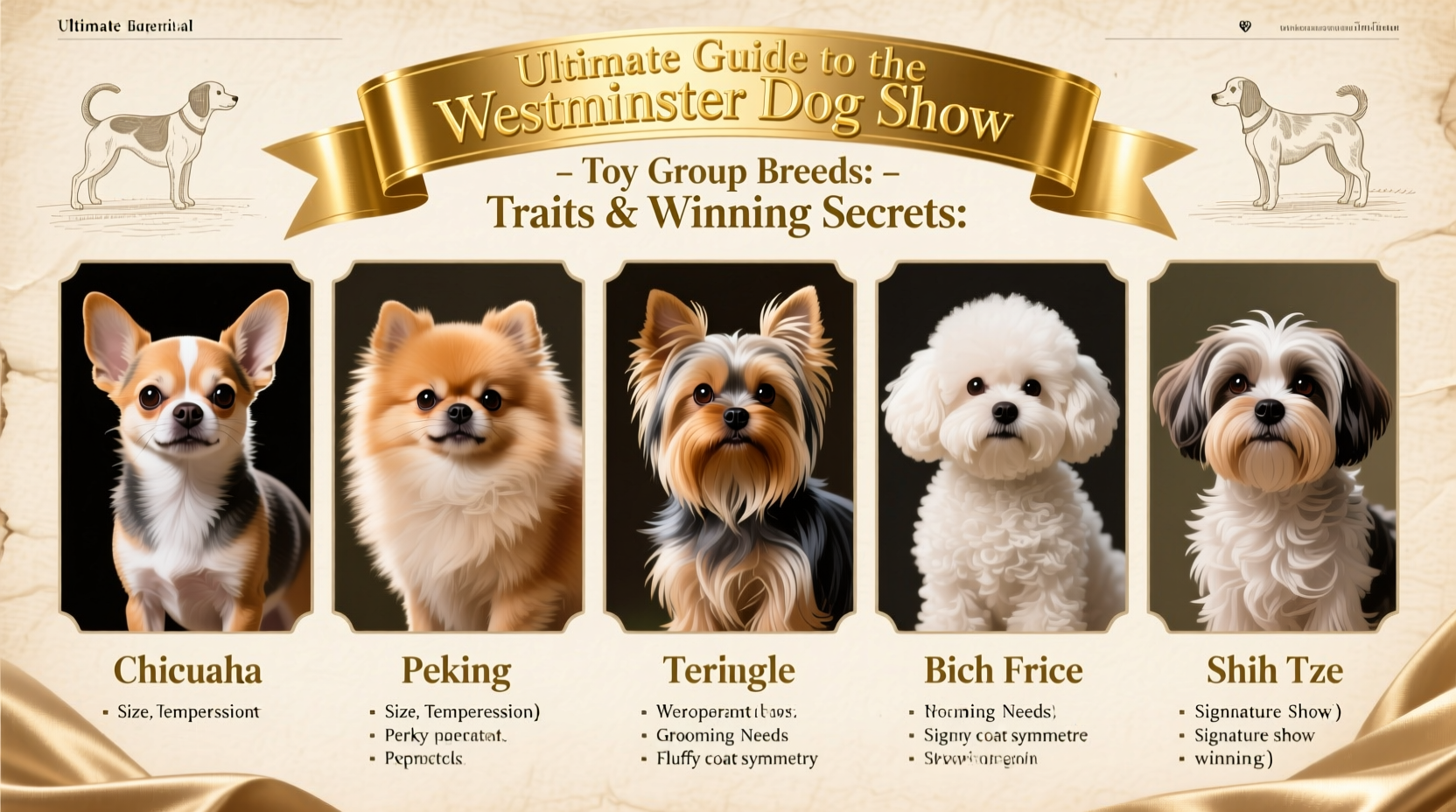
The American Kennel Club defines the Toy Group as breeds developed primarily for companionship. Despite their size, these dogs must exhibit balance, alertness, and structural correctness. Each breed adheres to a detailed standard outlining everything from ear set to tail carriage. At Westminster, judges evaluate how closely each dog matches its ideal blueprint—not personality or tricks, but pure conformation.
Breeds in the Toy Group include the Poodle (Toy), Shih Tzu, Cavalier King Charles Spaniel, Pomeranian, Maltese, Havanese, Yorkshire Terrier, and others. While diverse in coat and expression, all share a common purpose: to be graceful, well-proportioned companions that move fluidly and carry themselves with dignity.
“Winning at Westminster isn’t about cuteness. It’s about adherence to the breed standard with precision in movement, structure, and presentation.” — Dr. Janice Koler-Matznick, Canine Ethologist and AKC Judge
Key Traits That Define Winning Toy Breeds
To succeed at the highest level, a Toy breed must embody several critical characteristics:
- Proportion and Balance: A winning Toy dog appears harmonious. No single feature should dominate—ears, eyes, muzzle, and tail must work together in balanced symmetry.
- Expression: The face tells a story. For example, the Cavalier King Charles Spaniel must have a “melting” expression, while the Pekingese demands a bold, lion-like presence.
- Gait and Movement: Despite short legs, Toy dogs must move with reach and drive. Judges watch for effortless, ground-covering strides without bounce or stiffness.
- Coat Quality: Whether silky (like the Maltese) or profuse (like the Shih Tzu), the coat must be healthy, properly textured, and presented according to breed norms.
- Temperament: Confidence without aggression. A nervous or overly shy dog will be penalized, even if structurally perfect.
Behind the Scenes: Grooming and Presentation Secrets
At Westminster, presentation is everything. A perfectly conformed dog can lose due to poor grooming. Handlers spend months preparing coats, conditioning skin, and refining details. Here’s what separates average from exceptional:
- Daily Brushing: Tangles lead to matting, which is disqualifying in many breeds. Silk-coated dogs like Yorkies require daily detangling with wide-tooth combs.
- Bathing Routine: Most top dogs are bathed 3–5 days before show day using high-quality shampoo and conditioner tailored to coat type.
- Drying Technique: Air drying creates frizz. Professionals use stand dryers with combs to stretch the coat and enhance volume.
- Eyewear Maintenance: Tear staining is a major issue in breeds like the Pekingese and Maltese. Daily wiping and pH-balanced cleaners keep the face clean.
- Nail and Paw Pad Care: Overgrown nails affect gait. Pads are trimmed for neatness, especially in long-haired breeds.
| Breed | Coat Type | Grooming Frequency | Show Prep Tip |
|---|---|---|---|
| Maltese | Silky, non-shedding | Daily brushing, weekly bath | Use blue shampoo to neutralize yellow tones |
| Shih Tzu | Long double coat | Daily detangling, bi-weekly bath | Braid hair at night to prevent tangles |
| Toy Poodle | Corded or clipped curls | Every 4–6 weeks clip, daily fluff | Maintain pom-pom tail and rounded feet |
| Yorkshire Terrier | Silk-like, human-hair texture | Daily wrapping, weekly oil treatment | Wrap hair in silk bands to preserve length |
| Havanese | Wavy to curly, double coat | Brush every other day | Trim around eyes but avoid full clip |
Training and Handling: The Path to the Winner’s Circle
A dog may be perfectly bred, but without expert handling, victory slips away. Top handlers emphasize consistency, muscle memory, and subtle communication.
Leading a Toy breed in the ring requires finesse. The dog must heel close, stack naturally, and stand still during examination. Handlers train for months using bait (treats or toys) to shape the correct stance. Practice sessions mimic real shows: entering the ring, moving on command, pivoting, and standing for judging.
“I spend more time teaching the dog to stand calmly than I do on gaiting. If the judge can’t examine the bite or chest depth because the dog won’t hold still, you’ve lost.” — Sandy Esterly, Professional Handler & Multiple Group Winner
Step-by-Step: Preparing a Toy Breed for Westminster
- Start Early: Begin basic handling at 8–10 weeks. Teach stacking and eye contact.
- Select a Mentor: Work with an experienced handler familiar with your breed.
- Enter Local Shows: Gain points and experience under different judges.
- Perfect the Stack: Use a grooming table and bait to teach balanced posture.
- Simulate Ring Conditions: Practice in crowded spaces with distractions.
- Refine Grooming: Schedule final trim and deep clean 3–4 days pre-show.
- Travel Smart: Arrive early to acclimate the dog to the venue and routine.
Real Example: GCHP Stonegrange Remember Me – The Record-Breaking Havanese
In 2022, a Havanese named GCHP Stonegrange Remember Me made history by becoming the first of her breed to win Best in Show at Westminster. Bred and handled by Sam Cox, she exemplified breed perfection: soft, wavy coat, expressive eyes, and confident demeanor.
Her success wasn’t accidental. Cox began training her at nine weeks, focusing on calmness and precision. He avoided over-handling, preserving her natural joy in the ring. Her coat was washed every five days leading up to the event, conditioned with argan oil, and dried slowly to maintain wave integrity. In the final round, she moved smoothly, stood proudly, and charmed the judge with her alert yet gentle expression.
Her win highlighted a shift: Toy breeds are no longer seen as delicate novelties but as serious contenders when bred and presented with excellence.
Frequently Asked Questions
What makes a Toy breed competitive at Westminster?
Competitiveness comes from strict adherence to breed standards, impeccable grooming, confident temperament, and precise handling. Structural correctness outweighs size or color.
Can mixed-breed dogs enter the Westminster Dog Show?
No. Only purebred dogs recognized by the American Kennel Club and registered in the Stud Book are eligible to compete.
How are ties broken in the Toy Group?
Judges do not score numerically—they select one winner. If two dogs appear equal, the judge chooses based on overall impression, movement, and adherence to standard. There are no ties.
Checklist: Is Your Toy Breed Ready for Westminster?
- ✅ Registered with AKC and eligible for conformation events
- ✅ Has earned required number of points (minimum 15, including two majors)
- ✅ Coat is healthy, clean, and breed-appropriate in style
- ✅ Trained to stack, gait, and remain calm under examination
- ✅ Vet-cleared for travel and performance stress
- ✅ Handler experienced in Toy Group presentation
- ✅ Acclimated to large crowds and loud environments
Conclusion: The Art of Excellence in the Toy Group
Winning at the Westminster Dog Show is not a matter of luck. It is the culmination of years of selective breeding, meticulous care, disciplined training, and deep understanding of canine artistry. The Toy Group, often underestimated for its size, consistently delivers some of the most memorable moments in Westminster history—proof that greatness comes in small packages.
Whether you’re a seasoned breeder, a dedicated handler, or a devoted owner dreaming of the big stage, remember: perfection lies in the details. From the curve of a tail to the shine of a coat, every element matters. Study the standards, refine your craft, and honor the legacy of these remarkable companion breeds.
🚀 Ready to take the next step? Review your breed’s AKC standard today, connect with a mentor handler, and begin building the foundation for your own Westminster journey.








