Cats are fastidious creatures by nature, and their bathroom habits reflect that. A poorly chosen litter box can lead to avoidance, inappropriate elimination, stress, and even health issues. Selecting the right litter box isn’t just about convenience for you—it’s essential for your cat’s physical comfort, mental well-being, and household hygiene. With a wide variety of styles, sizes, and features on the market, making the best choice requires understanding your cat’s needs, behavior, and environment.
Understanding Your Cat’s Litter Box Needs
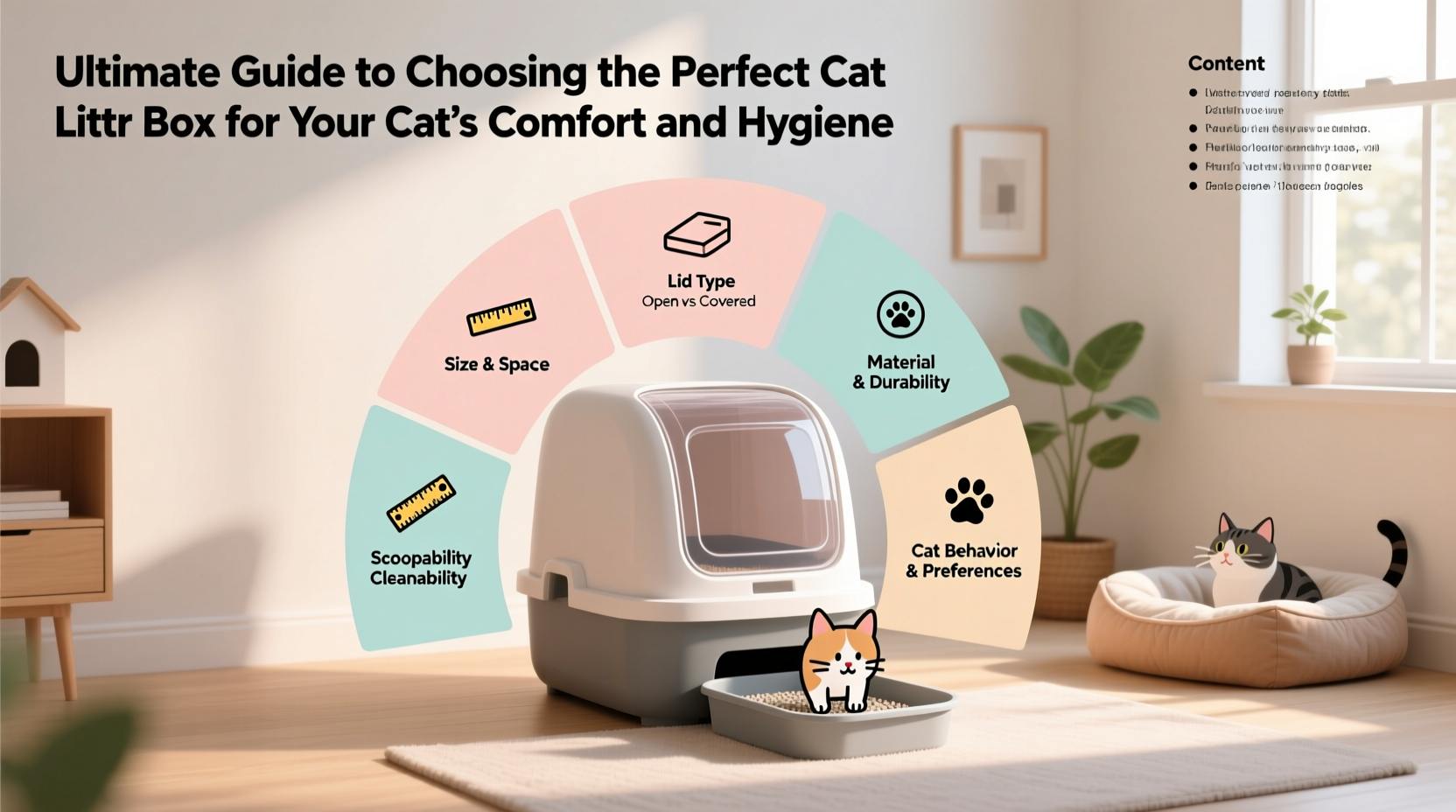
Cats have strong instincts when it comes to elimination. In the wild, they bury waste to avoid predators and mark territory subtly. At home, this translates into a need for a clean, accessible, and private space. Any disruption—odor, location, texture, or confinement—can cause a cat to reject the box entirely.
The ideal litter box supports natural behaviors: easy entry and exit, enough room to dig and turn around, effective odor control, and minimal stress during use. Factors like age, size, mobility, and number of cats in the household all influence what type of box works best.
Tip: Always provide one more litter box than the number of cats in your home. For example, two cats should have at least three boxes.Types of Cat Litter Boxes: Pros and Cons
Litter boxes come in several designs, each catering to different needs. Understanding the differences helps match the right model to your cat’s personality and your living situation.
| Type | Pros | Cons |
|---|---|---|
| Open Top | Excellent ventilation, easy access, preferred by most cats | Less privacy, more litter scatter, visible waste |
| Covered (Enclosed) | More privacy, contains odor and litter better | Poor airflow, harder for some cats to enter, may trap smells inside |
| Top-Entry | Reduces litter tracking, keeps out other pets | Difficult for older or arthritic cats, claustrophobic for some |
| Automatic/Self-Cleaning | Minimal maintenance, excellent hygiene, reduces odor | Expensive, noisy, not all cats adapt well |
| Low-Sided / Kitten & Senior Boxes | Easy access for young, old, or disabled cats | May allow litter kick-out, less privacy |
No single design fits all cats. While kittens and seniors benefit from low-entry models, active adult cats often prefer open boxes with ample space. Covered boxes may seem ideal for odor control but can deter cats if not cleaned frequently due to trapped scents.
“Cats are highly sensitive to their elimination environment. A box that feels confining or smells unpleasant—even slightly—can be enough to make them seek an alternative.” — Dr. Lena Torres, Feline Behavior Specialist
Key Features to Consider When Choosing a Litter Box
Beyond style, specific features significantly impact usability and satisfaction for both cat and owner.
Size and Space
The box should allow your cat to stand, turn around, and dig comfortably. A general rule: the box should be 1.5 times the length of your cat from nose to tail base. Many commercial boxes are too small, especially for larger breeds like Maine Coons.
Material and Durability
Most boxes are made from plastic. High-density polyethylene resists scratches and odor absorption better than thinner plastics. Avoid flimsy materials that warp or crack over time.
Odor Control
Covered boxes with carbon filters or self-cleaning models with sealed waste compartments offer superior odor management. However, ventilation is critical—stale air in enclosed spaces can repel cats.
Litter Tracking Prevention
Boxes with built-in ledges, hoods, or top-entry designs reduce litter scatter. Pair with a good-quality mat placed underneath to catch stray granules.
Accessibility and Maintenance
Large openings, removable lids, and smooth interiors make cleaning easier. Self-cleaning models automate waste removal but require power and regular maintenance of mechanical parts.
Tip: Clean the litter box daily. Even high-tech boxes need manual wiping weekly to prevent bacterial buildup and lingering odors.Step-by-Step Guide to Selecting and Introducing the Right Litter Box
- Assess your cat’s age, size, and mobility. Kittens and seniors need low sides; large cats need spacious boxes.
- Determine your home layout. Choose locations that are quiet, easily accessible, and away from food and noise.
- Select 2–3 suitable types based on your assessment (e.g., open, covered, or automatic).
- Test one option at a time. Introduce the new box alongside the old one without removing the original.
- Observe usage patterns. Note if your cat hesitates, avoids, or uses it confidently.
- Adjust as needed. If rejection occurs, try a different style or location.
- Gradually phase out old boxes once consistent use is established.
This gradual approach prevents stress and gives cats time to adapt, especially if switching from open to enclosed or automated systems.
Real-Life Example: Solving a Multi-Cat Household Challenge
Sarah adopted a second cat, Milo, to keep her shy tabby, Luna, company. Within weeks, Luna began eliminating behind the couch. After ruling out medical causes, Sarah realized the issue was litter box competition. She had only two covered boxes, both in a busy laundry room.
Following expert advice, she added a third open-top box in a quiet hallway, removed the covers from the others to improve accessibility, and relocated one box to a quieter area. Within days, both cats were using the boxes consistently. The change wasn’t about preference for a specific type—but about availability, privacy, and reducing perceived competition.
This case highlights that behavior problems often stem from environmental factors, not defiance. Simple adjustments can restore harmony.
Essential Checklist Before Buying a Litter Box
- ✅ Is the box at least 1.5 times the length of your cat?
- ✅ Does it have easy entry, especially for kittens or older cats?
- ✅ Is it made from durable, non-porous material?
- ✅ Does it fit in a quiet, low-traffic area of your home?
- ✅ Can it be cleaned easily and thoroughly?
- ✅ Does it minimize odor and litter scatter?
- ✅ Do you have enough boxes for all your cats (n+1 rule)?
- ✅ Have you considered your cat’s past preferences?
Frequently Asked Questions
How often should I replace a litter box?
Plastic litter boxes should be replaced every 1–2 years, or sooner if cracked, scratched, or permanently stained. Deep grooves harbor bacteria and odors that cleaning can’t fully remove.
Are self-cleaning boxes safe for cats?
Yes, when used correctly. Modern models have sensors to detect when a cat is inside, preventing activation during use. However, some cats are startled by the noise or movement. Introduce gradually and monitor behavior.
My cat won’t use the new litter box. What should I do?
First, ensure the box is clean and located appropriately. Try reverting to the old box while introducing the new one slowly. Use unscented litter and avoid sudden changes in type or location. If problems persist, consult a vet or feline behaviorist.
Final Thoughts: Prioritize Comfort, Hygiene, and Choice
The perfect litter box balances your cat’s instinctual needs with practical household demands. It should be large enough, clean enough, and placed thoughtfully. Remember, what seems minor to us—a tight space, lingering smell, or high entry—can be a major deterrent to a cat.
By observing your cat’s behavior, experimenting with options, and maintaining high standards of cleanliness, you create a stress-free environment that supports lifelong healthy habits. Your cat may never thank you verbally, but consistent litter use and relaxed body language are clear signs of success.
💬 Have a litter box success story or challenge? Share your experience in the comments—your insight could help another cat owner find the perfect solution.








