
Selecting the right toy for your dog goes far beyond color or cuteness. The ideal toy supports your dog’s physical health, mental stimulation, and natural behaviors—many of which are deeply rooted in their breed lineage. A Border Collie doesn’t play like a Pug. A Labrador Retriever has different chewing habits than a Chihuahua. Understanding these differences is essential to keeping your dog safe, engaged, and happy.
Dog toys aren't one-size-fits-all. Choosing poorly can lead to boredom, destructive behavior, or even serious injury. This guide breaks down how to match toys to your dog’s breed-specific traits, from jaw strength and energy level to instinctual drives like fetching, herding, or gnawing.
Breed Traits That Influence Toy Selection
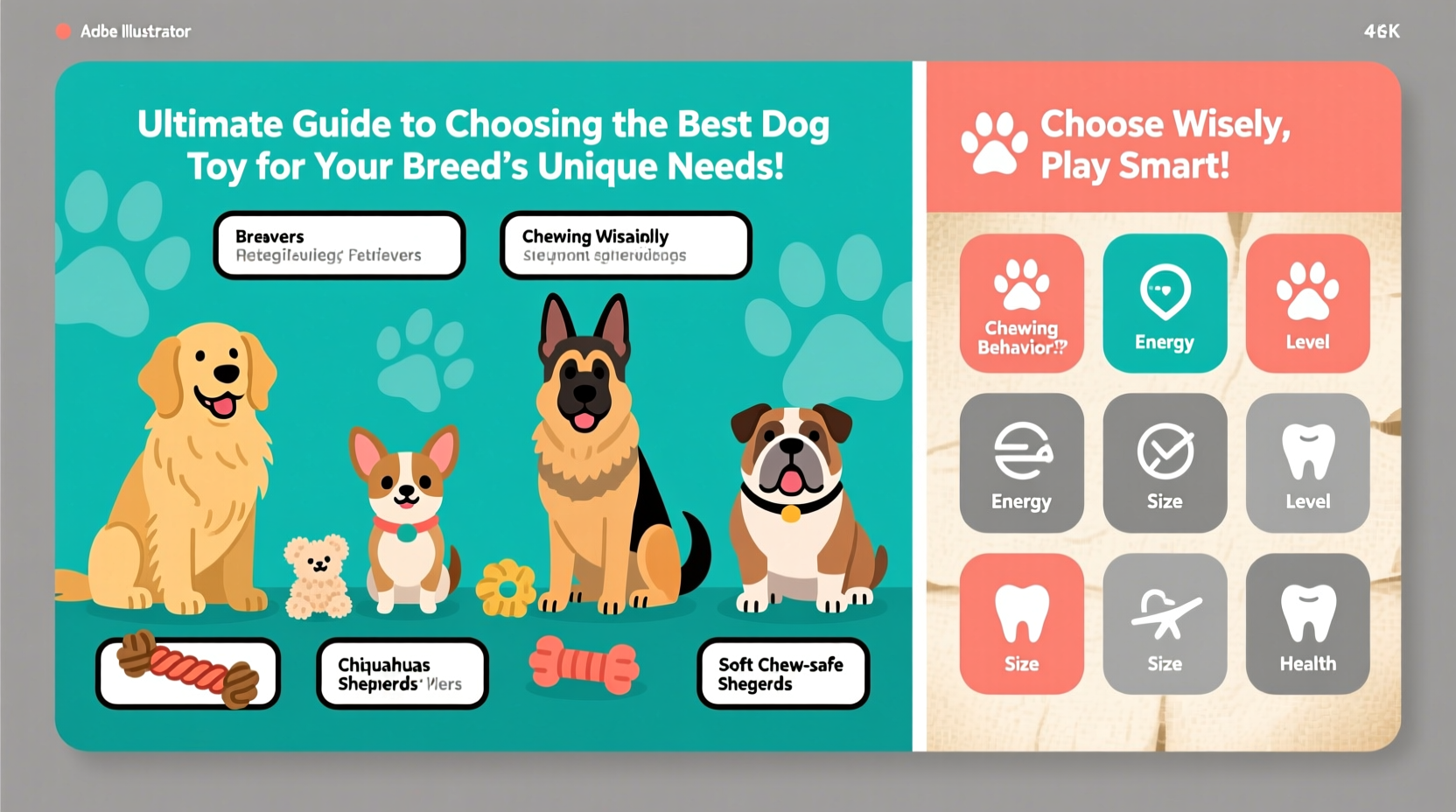
Dogs were originally bred for specific tasks—herding, guarding, hunting, retrieving—and those instincts still shape their behavior today. A toy that aligns with these natural tendencies will captivate your dog far more than one chosen at random.
- Herding breeds (e.g., Border Collie, Australian Shepherd): These dogs thrive on control and movement. They enjoy puzzle toys, moving targets, or anything they can “chase” or manipulate.
- Retrievers (e.g., Golden Retriever, Labrador): Bred to fetch, they love soft plush toys, floating fetch balls, and durable rubber discs.
- Terriers (e.g., Jack Russell, Scottish Terrier): High-energy diggers and hunters. They benefit from tug toys, squeaky prey-like plushies, and chew-resistant options.
- Scent hounds (e.g., Beagle, Basset Hound): Driven by smell, not sight. Snuffle mats, treat-dispensing puzzles, and hidden-object games stimulate their strongest sense.
- Bulldogs and brachycephalic breeds (e.g., French Bulldog, Pug): Short muzzles mean difficulty grabbing large toys. Soft, small, easy-to-hold plush or rubber toys work best.
- Giant breeds (e.g., Mastiff, Great Dane): Powerful jaws demand extreme durability. Avoid flimsy toys that can be shredded and swallowed.
Matching Toy Types to Breed Needs
Not all toys serve the same purpose. Some promote dental health, others relieve anxiety, and many satisfy deep-seated instincts. Below is a breakdown of common toy types and which breeds benefit most.
| Toy Type | Ideal For | Best Breeds | Avoid For |
|---|---|---|---|
| Chew Toys | Dogs who destroy objects when bored or teething | Pit Bulls, Labradors, German Shepherds | Small breeds with weak teeth |
| Plush Toys | Dogs who “kill” toys or carry them around | Golden Retrievers, Cocker Spaniels, Terriers | Powerful chewers (unless reinforced) |
| Puzzle/Interactive Toys | Mentally active dogs needing engagement | Border Collies, Poodles, Shetland Sheepdogs | Young puppies without problem-solving skills |
| Tug Toys | Dogs with strong prey or pulling drive | Australian Shepherds, Boxers, Staffies | Dogs with joint issues or aggression triggers |
| Floating Fetch Toys | Water-loving retrievers and swimmers | Labradors, Newfoundlands, Portuguese Water Dogs | Non-swimmers or fearful dogs |
“Dogs don’t just play to have fun—they play to fulfill biological roles. A well-chosen toy can reduce stress, prevent behavioral issues, and strengthen the human-animal bond.” — Dr. Karen Becker, Veterinary Biologist and Canine Behavior Specialist
Safety First: What to Look for in Dog Toys
No toy should compromise your dog’s safety. Even the most breed-appropriate toy can become dangerous if poorly made. Follow these guidelines to ensure every toy passes the safety test.
Material Matters
Rubber, nylon, and food-grade silicone are top choices for durability and non-toxicity. Avoid vinyl, phthalates, or painted surfaces that may chip and be ingested. For plush toys, look for double-stitched seams and hidden squeakers protected behind fabric layers.
Size & Shape
A toy should be too large to swallow but small enough to manipulate. As a rule, avoid anything that fits entirely in your dog’s mouth. For flat-faced breeds, avoid long ropes or narrow shapes that could get lodged in the throat.
Choking Hazards
Remove any toy that begins to break apart. Inspect regularly for loose eyes, buttons, stuffing, or frayed ropes. If you wouldn’t let a child play with it unsupervised, don’t give it to your dog.
Tip: Rotate toys weekly to keep them novel and inspect each one for wear before giving it back.Step-by-Step: How to Choose the Right Toy for Your Dog
- Identify your dog’s primary play style: Does your dog chew, chase, dig, or solve puzzles? Watch them interact with current toys or household objects.
- Consider breed history: Research your dog’s original working role. Was it bred to retrieve waterfowl? Herd sheep? Hunt rodents underground?
- Evaluate physical traits: Size, jaw strength, dental health, and muzzle length all influence toy suitability.
- Assess energy level: High-energy dogs need longer-lasting engagement; low-energy dogs may prefer soft comfort toys.
- Select 2–3 toy types: Combine a chew toy for dental health, an interactive toy for mental stimulation, and a favorite plush or fetch toy for bonding.
- Introduce gradually: Offer one new toy at a time. Supervise the first few sessions to monitor safety and interest.
- Rotate monthly: Keep toys fresh by storing some away and reintroducing them later to renew interest.
Real-Life Example: Choosing for a Destructive Chewer
Meet Max, a 2-year-old American Staffordshire Terrier. His owner noticed he destroyed every plush toy within hours and once swallowed part of a rubber ball. After consulting a trainer, she learned that Max’s breed was historically used for gripping and holding—making him naturally inclined to powerful chewing.
Instead of continuing with standard pet store toys, she switched to ultra-durable rubber toys designed for power chewers, such as the West Paw Zogoflex or Kong Extreme. She added a treat-stuffed puzzle toy to redirect his focus and introduced a thick cotton tug rope for structured play. Within weeks, Max’s destructive chewing decreased, and his focus improved during training.
The key wasn’t just buying tougher toys—it was understanding Max’s instincts and channeling them appropriately.
Checklist: Before You Buy Any Dog Toy
- ✅ Is the toy appropriate for my dog’s size and weight?
- ✅ Is it made from non-toxic, durable materials?
- ✅ Can small parts be easily torn off and swallowed?
- ✅ Does it match my dog’s natural play behavior?
- ✅ Is it easy to clean? (Toys collect bacteria and saliva.)
- ✅ Does it encourage healthy activity instead of obsessive behavior?
- ✅ Have I supervised the first use?
Frequently Asked Questions
How do I know if a toy is too hard for my dog’s teeth?
If you can’t indent the toy with your fingernail, it’s likely too hard and could cause tooth fractures. Very hard nylon or bone-like toys should be avoided unless recommended by a vet for aggressive chewers.
Are squeaky toys bad for dogs?
Not inherently—but they can overstimulate some dogs, especially terriers or those with high prey drive. If your dog becomes aggressive or obsessive when the squeaker sounds, remove it or choose a silent version.
How often should I replace dog toys?
Inspect toys weekly. Replace any with tears, exposed filling, cracked rubber, or loose parts. On average, plush toys last 1–3 months depending on use; durable rubber toys can last 6–12 months with proper care.
Make Playtime Purposeful
Choosing the best dog toy isn’t about trends or convenience—it’s about honoring your dog’s nature. When you select toys that align with breed instincts, physical ability, and emotional needs, you’re not just preventing boredom. You’re supporting joint health, reducing anxiety, improving obedience, and building trust.
Start today: reevaluate your dog’s current toys. Are they safe? Engaging? Appropriate? Replace what doesn’t serve your dog’s true needs. Invest in quality over quantity. And remember—every chew, toss, and tug is an opportunity to nurture a happier, healthier companion.
💬 Have a toy success story with your breed? Share your experience in the comments and help other pet parents make smarter choices!








