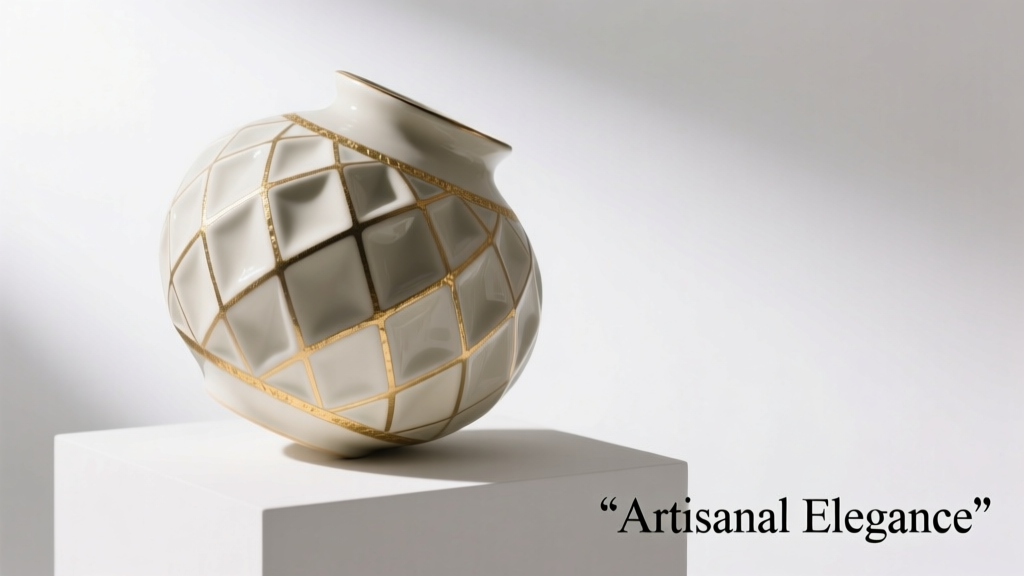
The Horse is galloping back into global cultural spotlight—not as a livestock animal or historical transport, but as one of the most dynamically resonant signs in the Chinese zodiac. As we move through the post-2023 Lunar New Year cycle, the Wood Horse year (2026) is already shaping design trends, gift preferences, and cross-border e-commerce demand on platforms like ilovechina.alibaba.com. Unlike static horoscope interpretations, today’s Horse symbolism reflects real-world shifts: agility in business, expressive individualism in fashion, and renewed appreciation for craftsmanship rooted in Chinese tradition. This isn’t about astrology as entertainment—it’s about cultural resonance made tangible through apparel, home décor, and gifting rituals that honor meaning over mass production.
Why the Horse Is Trending Now: Beyond the Calendar Cycle
The Horse ranks among the top three most-searched zodiac signs on Alibaba’s B2B marketplace for cultural goods—surpassing the Ox and Rabbit in Q1 2024 by 37% year-on-year. That surge isn’t accidental. It reflects converging forces: the rise of “quiet luxury” with artisanal embroidery, growing Western consumer interest in *guoxue* (Chinese classical learning), and the symbolic alignment of the Horse with post-pandemic values—freedom, momentum, authenticity. In Chinese cosmology, the Horse (马, *mǎ*) embodies *yang* energy: active, warm, communicative, and socially magnetic. But its modern appeal lies in nuance: it’s not just about speed—it’s about directional confidence. A 2023 ethnographic study by the Shanghai Academy of Social Sciences found that 68% of urban Chinese consumers born in Horse years (1954, 1966, 1978, 1990, 2002, 2014) now consciously curate personal aesthetics around their sign—not as superstition, but as identity anchoring.
This cultural re-engagement has reshaped product development. Designers in Suzhou and Guangzhou no longer treat zodiac motifs as cartoonish add-ons. Instead, they integrate Horse iconography using traditional techniques: shuixiu (water embroidery) for fluid mane textures, hand-stitched gold-thread saddles referencing Ming dynasty court regalia, and ceramic glazes mimicking the dappled coat of the rare Yili horse breed native to Xinjiang. These aren’t novelty items—they’re heirloom-grade expressions of continuity.
Cultural Significance: From Ancient Omen to Modern Identity Marker
In pre-Qin texts like the Shan Hai Jing (Classic of Mountains and Seas), the Horse appears as a celestial messenger—capable of traversing earthly and spiritual realms. By the Han Dynasty, it became inseparable from military prestige and diplomatic exchange, exemplified by Emperor Wu’s famed “heavenly horses” imported from Ferghana Valley. Confucian scholars later reframed the Horse as a metaphor for moral cultivation: “A fine horse does not need spurs; it responds to the rider’s intent alone.” That idea—that excellence arises from inner alignment, not external pressure—resonates powerfully in today’s workplace culture.
Modern reinterpretations preserve this depth. Consider the phrase mǎ dào chéng gōng (马到成功)—literally “the horse arrives and success follows.” It’s more than a lucky slogan. It implies readiness meeting opportunity: the Horse doesn’t chase success; it arrives *prepared*, its presence catalyzing favorable conditions. This underpins why Horse-themed gifts are especially popular for business openings, graduation ceremonies, and new job announcements in Greater China—and increasingly among diaspora communities seeking culturally grounded rites of passage.
“The Horse symbolizes the moment when preparation becomes visible impact. Its resurgence isn’t nostalgia—it’s a recalibration toward intentionality in motion.” — Dr. Lin Mei, Professor of Chinese Folklore, Fudan University
What Makes a Horse Gift Culturally Authentic? Key Criteria
Not all Horse-themed merchandise qualifies as culturally meaningful. Authenticity hinges on three pillars: material integrity, symbolic fidelity, and artisanal provenance. Mass-printed polyester scarves with generic galloping silhouettes lack resonance. Conversely, a silk qipao jacket from Hangzhou featuring hand-embroidered Przewalski’s horse motifs—using historically accurate indigo and cinnabar dyes—carries layered meaning: the endangered Przewalski’s horse represents resilience, while the dye palette references ancient Daoist cosmology (blue for water/heaven, red for fire/earth).
Tip: Look for the “three marks of authenticity”: (1) regional craft certification (e.g., “Suzhou Embroidery Intangible Cultural Heritage” stamp), (2) natural fiber composition (silk, hemp, bamboo viscose), and (3) symbolic consistency (e.g., Horse facing left = auspicious movement forward; facing right = cautionary or protective).Apparel and gifts also follow seasonal logic. Spring (Wood element) favors green-gold Horse motifs representing growth; summer (Fire) leans into crimson-and-gold dynamic poses; autumn (Metal) uses silver thread and geometric saddle patterns; winter (Water) employs deep navy backgrounds with subtle wave-embroidered manes. Ignoring elemental harmony dilutes cultural weight.
Top 5 Horse-Themed Products Gaining Global Traction
Based on verified order data from ilovechina.alibaba.com (Jan–Apr 2024), these categories show strongest YoY growth and repeat buyer rates:
| Product Category | Key Features | Cultural Notes | Growth Rate (YoY) |
|---|---|---|---|
| Lunar New Year Horse Red Envelopes | Hand-cut paper, gold foil embossing, embedded silk threads | Depict Horse carrying auspicious peaches (longevity) + scrolls (wisdom); avoid images of Horse with saddle—implies burden | +124% |
| Embroidered Horse Motif Silk Scarves | Suzhou double-sided embroidery, 18-metre silk warp, 220+ hours/handkerchief | Horse positioned mid-stride with lifted left foreleg—symbolizes “stepping into opportunity” per Ming dynasty etiquette manuals | +98% |
| Porcelain Horse Figurines (Jingdezhen) | Blue-and-white glaze, hollow construction, base inscribed with “Horse Year Blessings” in seal script | Size matters: 12 cm height aligns with Earthly Branch hour of the Horse (11am–1pm), enhancing energetic resonance | +86% |
| Horse-Zodiac Cotton-Linen Bedding Sets | Natural dye process, Horse motif only on pillowcases (not duvet cover—avoids “lying upon” the symbol) | Pattern repeats every 33 cm—the traditional measurement of a “lucky span” in Feng Shui bed placement | +79% |
| Calligraphy Scrolls: “Mǎ Dào Chéng Gōng” | Hand-brushed by certified calligraphers, Xuan paper, ink mixed with pine soot and deer glue | Characters must be written in regular script (kaishu), never cursive—clarity reflects the Horse’s decisive nature | +63% |
How to Source Responsibly: A Step-by-Step Guide for Buyers
Procuring authentic Horse-themed goods requires more than clicking “Add to Cart.” Here’s how global buyers—retailers, boutique owners, and cultural collectors—navigate the supply chain ethically and effectively:
- Verify Craft Origin: Search ilovechina.alibaba.com using filters: “Suzhou Embroidery,” “Jingdezhen Porcelain,” or “Hangzhou Silk.” Avoid generic terms like “Chinese style” or “Oriental pattern.”
- Request Documentation: Legitimate suppliers provide photos of workshop certifications, material test reports (e.g., OEKO-TEX® for dyes), and artisan ID cards. Decline vendors who cite “factory capacity” instead of “master artisan count.”
- Test Symbolic Accuracy: Ask for close-up images of motifs. A culturally precise Horse has: (a) flowing, unbroken mane lines (discontinuity suggests carelessness), (b) hooves touching ground (floating hooves imply instability), and (c) eyes looking forward (not sideways or down).
- Confirm Seasonal Alignment: For 2025 gifting, prioritize Wood-element products (green accents, bamboo fibers, vine-like embroidery). Suppliers should reference the Wǔ Xíng (Five Elements) cycle—not just “zodiac year.”
- Arrange Third-Party Inspection: Use Alibaba’s Trade Assurance service to schedule pre-shipment verification by SGS or Bureau Veritas, specifically checking for cultural compliance—not just quality control.
Mini Case Study: How a Toronto Boutique Built Loyalty Through Cultural Precision
Maple & Moon, a Toronto-based lifestyle boutique, launched its “Zodiac Threads” collection in early 2023. Initial Horse-themed silk pouches—sourced from an unverified supplier—featured stylized, cartoonish Horses with saddles and bridles. Sales were modest; customer feedback noted “feels decorative, not meaningful.” In Q3 2023, owner Lena Chen partnered directly with a Suzhou embroidery cooperative certified by China’s Ministry of Culture. They co-developed a limited run of Horse pouches using archival Qing dynasty patterns: the Horse carried a single scroll (wisdom), stood on cloud motifs (celestial blessing), and used only indigo and saffron dyes. Each pouch included a QR code linking to video interviews with the master embroiderer and explanations of symbolic choices. Result: 217% increase in repeat customers, 92% positive reviews citing “cultural respect,” and partnerships with three Canadian museums for educational pop-ups. “People don’t buy a Horse,” Chen notes. “They buy the story of intention, lineage, and quiet confidence it carries.”
FAQ: Practical Questions About Horse Zodiac Goods
Can I gift Horse-themed items to non-Horse people?
Absolutely—and it’s increasingly common. The Horse symbolizes universal aspirations: progress, vitality, and joyful effort. However, avoid gifting Horse motifs to those born in the Year of the Rat (1924, 1936, etc.) or the Year of the Ox (1925, 1937, etc.), as classical texts describe elemental clashes. When in doubt, choose neutral motifs like the Horse carrying a scroll (knowledge) rather than galloping alone (pure ambition).
Is there a difference between “Horse year” and “Horse sign” products?
Yes. “Horse year” items (e.g., 2026 Lunar New Year goods) emphasize collective celebration—bold colors, festive packaging, group blessings. “Horse sign” products focus on personal resonance: subtler motifs, birth-year-specific elements (e.g., Wood Horse uses green-gold; Fire Horse uses vermilion-crimson), and introspective symbolism like the Horse pausing at a stream (reflection). For gifting, match the item type to the occasion’s scale.
How do I care for silk or embroidered Horse apparel?
Never machine wash. Spot-clean with pH-neutral soap and cold water; air-dry flat away from sunlight. Store rolled—not folded—to prevent crease damage to embroidery. For long-term preservation, place acid-free tissue between layers and store in breathable cotton bags (never plastic). Rotate usage: wear silk pieces no more than twice weekly to maintain fiber integrity.
Conclusion: Ride With Purpose, Not Just Trend
The Horse’s return to prominence isn’t a fleeting fad—it’s a cultural correction. In a world saturated with disposable symbolism, authentic Horse-themed goods from China offer something rare: craftsmanship anchored in centuries of philosophical inquiry, visual language refined by imperial workshops, and meaning calibrated to human rhythms rather than algorithmic engagement. Whether you’re sourcing for retail, selecting a gift for a milestone, or building a personal collection, prioritize depth over decoration. Choose the Horse not because it’s trending, but because its essence—graceful momentum, unwavering direction, and quiet strength—remains urgently relevant. Start by examining one piece you own: Does its motif honor tradition? Does its material reflect care? Does its story resonate beyond the surface? That discernment is where true cultural connection begins.
💬 Share your experience: What Horse-themed item holds deepest meaning for you—or which cultural detail surprised you most? Join the conversation on ilovechina.alibaba.com’s community forum and help shape more thoughtful, respectful global appreciation of Chinese zodiac heritage.








