For decades, the base of the Christmas tree was an afterthought—hidden under layers of tinsel, wrapped gifts, or hastily draped fabric. Today, that base is a deliberate design statement: a curated focal point where craftsmanship meets intentionality. The rise of the tree collar and the resurgence of the refined tree skirt reflect a broader shift in holiday aesthetics—away from clutter and toward minimalism, texture, and architectural harmony. Yet confusion persists. Is a tree collar merely a trendier version of the skirt? Does one suit modern lofts while the other belongs in traditional homes? The answer isn’t about style alone—it’s about proportion, permanence, practicality, and how each piece interacts with your overall interior language.
What Exactly Defines a Tree Collar—and Why It’s Not Just a “Skirt Alternative”
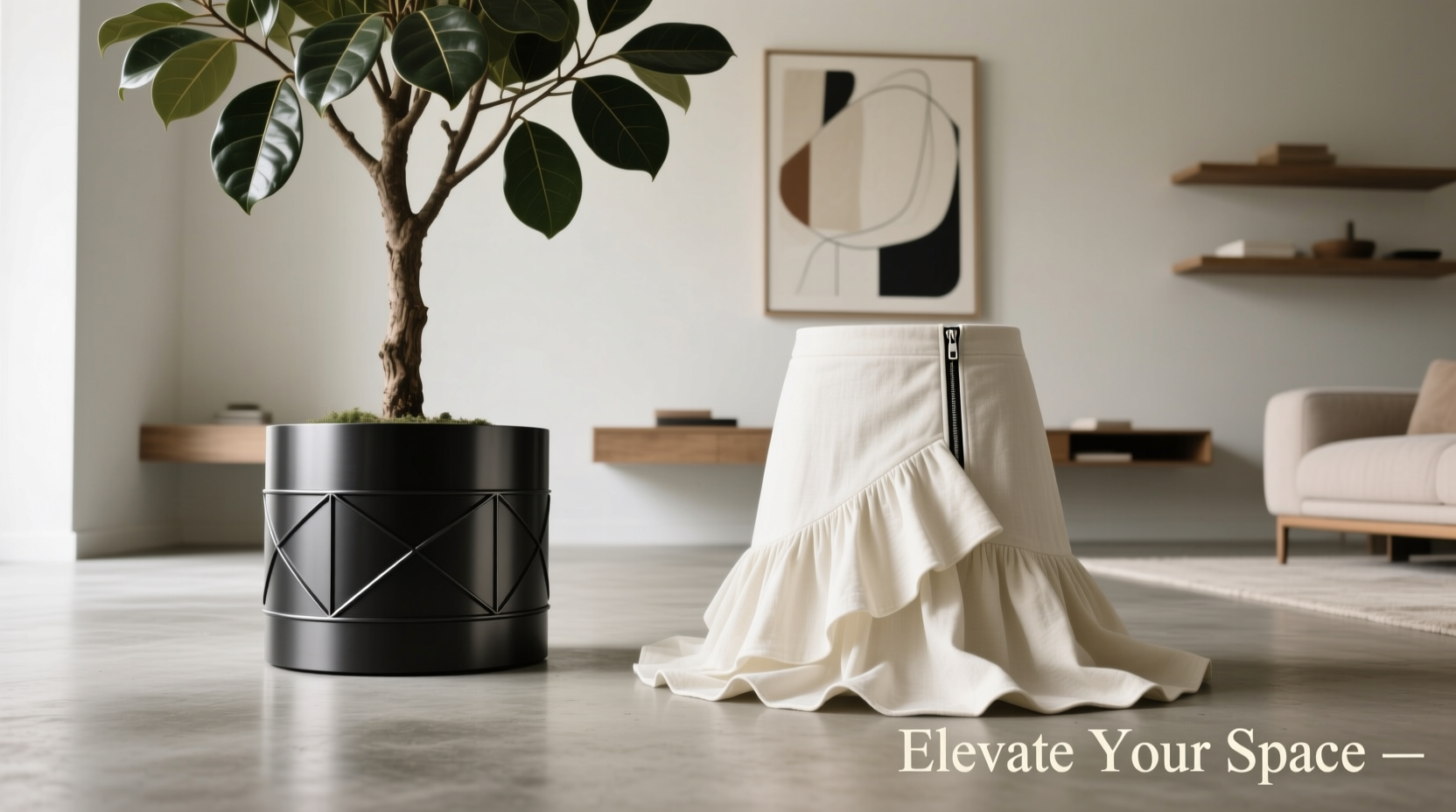
A tree collar is a rigid, cylindrical or tapered enclosure designed to wrap snugly around the trunk and lower branches of a live or artificial tree. Unlike skirts, collars are typically constructed from structured materials—woven rattan, powder-coated metal, molded felt, ceramic composites, or matte-finish wood veneer. Its form follows function: it conceals the stand, stabilizes the trunk visually, and creates clean vertical lines that anchor the tree within a room’s architecture. Modern collars rarely flare outward; instead, they taper gently upward or maintain a uniform silhouette, reinforcing contemporary design principles like balance, restraint, and material honesty.
Crucially, collars are engineered for precision fit. Most accommodate standard tree stands (4–6 inches in diameter) and are sized by height (8–14 inches) and inner circumference—not just “small,” “medium,” or “large.” This specificity eliminates guesswork and ensures visual cohesion: a 10-inch-tall collar on a slender 7-foot Nordmann fir reads as intentional; the same height on a bushy 5-foot Fraser feels abrupt and top-heavy. Designers increasingly treat collars as permanent fixtures—reused year after year, stored flat or nested, and selected to complement year-round furniture finishes (e.g., blackened steel collars echoing kitchen hardware, or bleached oak matching dining chairs).
Tip: Measure your tree stand’s outer diameter *before* purchasing a collar—many retailers list only inner dimensions, and a ½-inch gap can break the illusion of seamless integration.The Evolving Tree Skirt: From Grandma’s Doily to Curated Textural Anchor
The tree skirt has undergone a quiet renaissance. No longer synonymous with polyester lace or glitter-dusted velvet, today’s skirts embrace artisanal techniques and tactile intelligence. Think hand-loomed wool in heathered charcoal, oversized linen-cotton blends with raw-edged hems, or sculptural pleated silk with subtle metallic threading. Modern skirts prioritize drape, weight, and ground presence—they’re meant to pool gracefully, not bunch or balloon. Their radius (typically 48–60 inches) is calibrated to create a soft visual “landing zone” for the tree, drawing the eye downward and grounding tall vertical forms in open-plan spaces.
Where collars excel at definition, skirts excel at diffusion. A well-chosen skirt blurs the boundary between tree and floor, softening hard surfaces like polished concrete or wide-plank oak. It invites layering: a neutral skirt becomes the canvas for stacked leather-bound books, dried eucalyptus stems, or ceramic ornaments placed deliberately at its perimeter. Unlike collars, skirts require no precise trunk measurement—only enough radius to cover the stand and create intentional negative space. This flexibility makes them ideal for households with multiple trees (a slim collar for the living room, a generous skirt for the entryway), or for renters who avoid drilling or heavy hardware.
“Modern holiday design isn’t about adding more—it’s about editing with purpose. A tree collar is punctuation; a tree skirt is whitespace. Choose based on what your room needs most: clarity or calm.” — Lena Torres, Interior Designer & Author of Seasonal Spaces
Key Decision Factors: Beyond Aesthetics
Selecting between collar and skirt demands evaluating real-world constraints—not just Pinterest inspiration. Below is a comparative framework grounded in functional reality:
| Factor | Tree Collar | Tree Skirt |
|---|---|---|
| Setup Time | Under 90 seconds: slide over stand, adjust height, secure with discreet clips or friction fit. | 2–5 minutes: center over stand, smooth fabric, arrange folds or tucks for even drape. |
| Pet & Child Safety | High: rigid structure prevents tripping, no loose fabric to pull, no dangling cords. | Moderate: long hems may be tugged; lightweight fabrics can shift if stepped on. |
| Storage & Longevity | Low footprint: most collapse flat or nest; durable materials resist crushing and fading. | Medium footprint: requires folding or rolling; natural fibers may crease; delicate trims need careful handling. |
| Stand Compatibility | Requires precise stand diameter match; incompatible with oversized or non-cylindrical stands (e.g., wrought iron tripods). | Universal: accommodates all stand types and sizes, including water reservoirs with irregular shapes. |
| Design Flexibility | Fixed silhouette: color/texture must harmonize with year-round decor; limited seasonal variation. | High adaptability: swap skirts annually without replacing base hardware; easy to layer with seasonal accents (pinecones, faux fur throws). |
A Real-World Choice: How Maya Redefined Her Urban Loft Holiday
Maya Chen, a graphic designer in Portland, faced a recurring dilemma each November. Her 900-square-foot loft featured floor-to-ceiling windows, exposed ductwork, and a minimalist Scandinavian furniture palette—light oak, black steel, oat-colored wool. Her old tree skirt, a crimson velvet relic from college, clashed violently with her aesthetic. She tried a white linen skirt, but it wrinkled instantly and looked “tent-like” against her sleek aluminum tree stand. Frustrated, she opted for a matte black powder-coated metal collar last year.
The impact was immediate. The collar���s crisp geometry echoed her kitchen island’s blackened steel legs and the frame of her gallery wall. Its 12-inch height created visual weight without overwhelming the airy space. Most importantly, it eliminated the “stuffing” problem: no more hiding tangled lights or awkwardly placed gifts beneath fabric. Instead, she arranged three low-slung ceramic planters (in tonal grays) around the collar’s base, filled with dried pampas grass and black olive branches. The result wasn’t “Christmassy”—it was *cohesive*. Neighbors commented not on the tree, but on how “the whole room felt resolved.” This year, she ordered a second collar—in brushed brass—to pair with her new dining table hardware, proving that modern collars aren’t seasonal accessories; they’re integrated design elements.
Your Action Plan: Choosing With Confidence
Follow this step-by-step process to eliminate doubt and select the option that genuinely elevates your space:
- Assess Your Stand First: Measure its exact outer diameter and height. If it’s wider than 6 inches, non-cylindrical, or has protruding levers, a collar is likely impractical.
- Evaluate Floor Context: Is your flooring hard and reflective (marble, tile, polished concrete)? A skirt adds warmth and softness. Is it textured or busy (patterned rug, reclaimed wood)? A clean-lined collar provides visual relief.
- Define Your Priority: Choose one primary goal:
- “I want zero setup time and maximum safety for my toddler” → Collar.
- “I love changing my holiday look yearly and enjoy styling details” → Skirt.
- “My tree sits in a high-traffic hallway where tripping is a concern” → Collar.
- Test Material Harmony: Hold fabric swatches or metal samples next to your sofa, coffee table, or light fixtures. Does the finish echo existing metals? Does the texture complement nearby textiles? If unsure, choose neutral tones (charcoal, oyster, warm taupe) over seasonal reds or greens.
- Commit to One Base Element: Resist layering a skirt *over* a collar—it defeats the purpose of both. Either embrace the collar’s precision or the skirt’s fluidity. Authentic modern flair comes from decisive editing, not accumulation.
FAQ: Practical Questions, Direct Answers
Can I use a tree collar with a live tree that needs watering?
Yes—but only if the collar is explicitly designed for live trees. Look for models with removable bottom panels, ventilation slits, or elevated bases that allow access to the reservoir. Standard collars seal the stand completely and will trap moisture, promoting mold and rot. Always check product specifications for “live tree compatible” labeling.
Are tree skirts still appropriate for modern, minimalist homes?
Absolutely—if chosen with intention. Avoid ornate lace, excessive ruffles, or loud patterns. Opt for monochromatic, heavyweight fabrics (like boiled wool or thick Belgian linen) with clean hems and subtle textural interest (e.g., nubby bouclé, cross-weave cotton). The key is scale: a 60-inch skirt under a 7-foot tree creates balanced proportions; a 36-inch skirt looks undersized and fussy.
Do tree collars work with pre-lit trees that have wires running down the trunk?
Most do, but verify clearance. Measure the diameter of your trunk *at the base*, including any wire bundles or conduit covers. Choose a collar with an inner diameter at least 1 inch larger than that measurement. Flexible woven collars (rattan, seagrass) often accommodate irregular profiles better than rigid metal or ceramic options.
Conclusion: Elevating Isn’t About Adding—It’s About Aligning
The choice between tree collar and tree skirt isn’t a contest of trends—it’s an exercise in spatial intelligence. A collar elevates by asserting clarity: it frames the tree as a sculptural object, honoring the architecture of your home and the integrity of your design choices. A skirt elevates by inviting humanity: it softens edges, encourages tactile interaction, and transforms the tree into a gathering point rooted in warmth and texture. Neither is inherently “more modern.” What makes either feel contemporary is consistency—how seamlessly it integrates with your everyday environment, not how photogenic it appears in a single Instagram post.
Stop asking “Which looks better?” and start asking “Which serves my space, my lifestyle, and my values more authentically?” That alignment—between object and environment, function and feeling—is where true modern flair begins. Your tree base shouldn’t shout “holiday!” It should whisper “this is where I live.”
💬 Share your own collar-or-skirt story! Did a specific material or design choice transform your holiday space? Comment below—we’ll feature thoughtful insights in next month’s design round-up.








