For decades, two entertainment giants have dominated toy shelves, imaginations, and collector cabinets: Transformers and Star Wars. Both franchises boast rich storytelling, iconic characters, and expansive universes that translate into action figures, vehicles, and role-play gear beloved by children and adults alike. But when it comes to choosing between them—whether for a child’s playtime or an adult’s curated collection—one question persists: Which franchise truly reigns supreme?
The answer isn’t simple. While both offer excitement and nostalgia, they differ in design philosophy, play patterns, collectibility, and cultural longevity. Understanding these differences helps parents, gift-givers, and collectors make informed decisions based on age, interest, and investment goals.
Play Value: How Kids Engage with the Toys
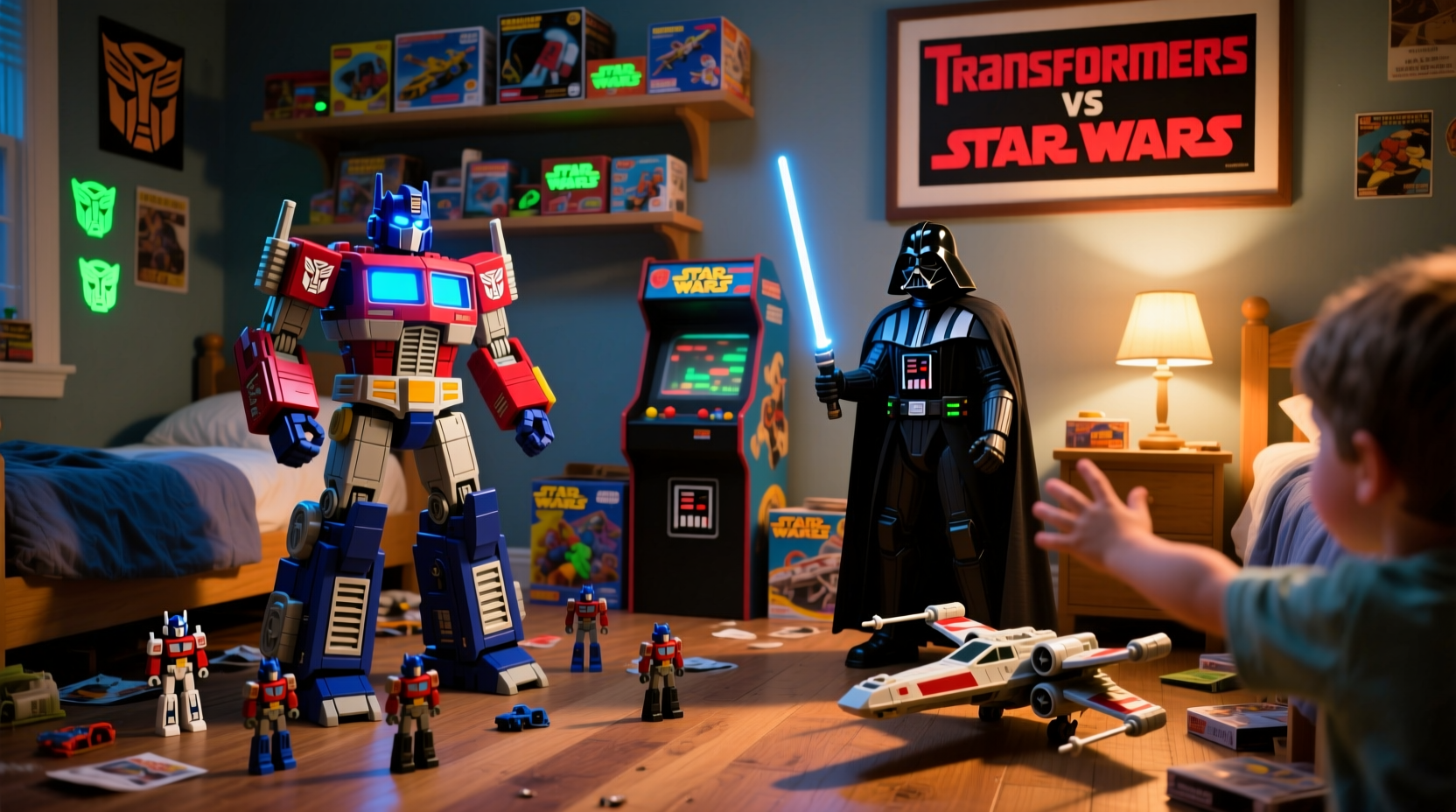
Children don’t just want toys—they want experiences. The way a toy encourages imagination, motor skills, and narrative play determines its real-world impact.
Transformers excel in interactivity. The core appeal lies in transformation: turning a robot into a car, jet, or animal and back again. This mechanical engagement captivates kids who enjoy puzzles, engineering, and hands-on manipulation. The act of transforming builds fine motor skills and cognitive understanding of form and function. For many children, the joy isn’t just in owning a robot—it’s in mastering the sequence of flips, twists, and clicks that bring it to life.
Star Wars, on the other hand, leans heavily into character-driven storytelling. A child wielding a lightsaber as Rey or piloting the Millennium Falcon as Han Solo steps directly into a galaxy far, far away. These toys support dramatic, open-ended play where dialogue, conflict, and heroism take center stage. Unlike Transformers, most Star Wars figures don’t change shape—but they often come with accessories, vehicles, and playsets that expand narrative possibilities.
Tip: For younger children (ages 3–6), prioritize durability and ease of transformation. Look for simplified Transformers like Rescue Bots or Disney+ era Star Wars figures with chunky designs.Collectibility: What Makes a Toy Worth Holding Onto
Not all toys are meant to be played with. Many are acquired for display, preservation, and appreciation. In the world of adult collecting, both franchises have strong followings—but for different reasons.
Transformers collectors often seek out specific eras: Generation 1 (G1) remains legendary, with vintage Optimus Prime and Megatron figures fetching thousands at auction. Modern lines like Studio Series and War for Cybertron emphasize screen-accurate detail, articulation, and packaging authenticity. The thrill for collectors lies in rarity, transformation complexity, and lineage from the original 1980s cartoon and comics.
Star Wars has arguably the most mature collector market in pop culture. From Kenner’s original 1978 figures to today’s Black Series and Premium Format offerings, the franchise spans generations. Collectors prize mint-in-box items, prototype variants, and limited editions. The release of new films and series consistently renews demand, making Star Wars a stable long-term asset in the collector economy.
“Star Wars has set the gold standard for toy collectibility. Its cultural penetration and consistent product innovation keep values rising.” — Michael Tran, Senior Curator at Pop Culture Archive
Comparison Table: Key Factors for Parents & Collectors
| Factor | Transformers | Star Wars |
|---|---|---|
| Best Age Range | 5–12 (younger with simplified lines) | 4–12 (all ages with premium lines) |
| Core Play Feature | Transformation mechanics | Character role-play and battles |
| Collector Appeal | High for G1 and screen-accurate modern lines | Extremely high across all eras |
| Price Range (Average) | $15–$80 (up to $200+ for Masterpiece) | $12–$70 (up to $300+ for deluxe statues) |
| Franchise Longevity | 40+ years (with fluctuating popularity) | 45+ years (consistent global presence) |
| TV/Film Support | Periodic (Bumblebee, Rise of the Beasts) | Ongoing (films, series like The Mandalorian) |
Real-World Example: Two Brothers, Two Passions
Consider the case of the Rivera family in Austin, Texas. Twelve-year-old Mateo collects Transformers almost exclusively. He disassembles and rebuilds his figures during homework breaks, fascinated by how each joint and panel contributes to the transformation. His favorite is a third-party Warhammer 40K-inspired Decepticon mod he customized himself.
His younger brother, Lucas, age 8, lives for Star Wars. Every night, he stages battles between Kylo Ren and Ahsoka Tano using figures arranged across the living room. He watches behind-the-scenes documentaries and can recite the history of Darth Revan (from the games, not canon).
Their parents noticed a key difference: Mateo’s toys required focus and patience, while Lucas’s encouraged verbal storytelling and social play with friends. Both boys were deeply engaged—just through different pathways. Their collections coexist, but their passions highlight how each franchise appeals to distinct developmental interests.
Investment Potential: Which Toys Hold or Increase Value?
For serious collectors, toys aren’t just memorabilia—they’re assets. Let’s examine long-term trends.
Vintage Transformers from the 1984–1987 era, especially rare molds like Roller or Glowstrike Bumblebee, have seen exponential growth. A sealed G1 Megatron recently sold for over $12,000. However, the market is more niche. Reissues and third-party manufacturers (like Generations Selects) help sustain interest, but mainstream resale platforms like eBay show slower turnover than Star Wars.
Star Wars, meanwhile, has proven time and again to be recession-resistant in the collectibles space. Original 1978 Kenner figures in near-mint condition regularly exceed $1,000. Even newer releases—such as the 2023 Droid Factory R2-D2—are reselling at 3x retail within weeks. With Disney’s ongoing commitment to the franchise, including theme park expansions and streaming exclusives, demand shows no signs of slowing.
Checklist: Choosing the Right Franchise for Your Needs
- ✅ Are you buying for a young child? Consider Star Wars for easier storytelling or Transformers if they love building and mechanics.
- ✅ Is the focus on display and investment? Prioritize Star Wars for broader market appeal and liquidity.
- ✅ Do they enjoy customization? Transformers offer more modding opportunities due to interchangeable parts and third-party ecosystems.
- ✅ Looking for educational value? Transformers promote spatial reasoning; Star Wars encourages narrative development and vocabulary growth.
- ✅ Want ongoing media support? Star Wars currently has more consistent content across film, TV, and games.
Frequently Asked Questions
Can Transformers and Star Wars toys be collected together?
Absolutely. Many collectors enjoy both, especially since crossover events (like comic collaborations) have occurred. Displaying them separately by theme or integrating them into dioramas is a popular approach.
Which franchise is better for toddlers?
For ages 3–5, Star Wars offers safer options with the Galaxy Heroes line and simpler figures. Transformers’ small moving parts and complex transformations can be frustrating or pose choking hazards. Stick to preschool-friendly lines like Transformers Junior or Little People Star Wars for youngest fans.
Do Transformers lose value faster than Star Wars toys?
Generally, yes—especially for non-vintage or non-limited releases. While high-end Masterpiece editions hold value well, mass-market Transformers often depreciate. Star Wars figures, even recent ones, tend to retain or increase value due to stronger brand consistency and demand.
Final Verdict: Who Reigns Supreme?
If the measure is pure cultural staying power, **Star Wars** takes the crown. Its universe is deeper, its characters more universally recognized, and its product lifecycle more resilient. It appeals equally to children lost in galactic battles and adults preserving mint-condition Boba Fett figures from 1979.
But **Transformers** holds a unique edge in innovation and interactivity. No other toy line offers the same mechanical satisfaction of transformation. For kids who love engineering, problem-solving, and customization, Transformers provide unmatched engagement.
In the end, supremacy depends on purpose. For imaginative play and broad appeal, Star Wars wins. For technical fascination and tactile challenge, Transformers stand tall. The smartest choice? Recognizing that both franchises have earned their place on the shelf—and in the hearts of fans across generations.
🚀 Ready to build your dream collection? Start with one figure that speaks to you—robot or Jedi—and let the journey unfold. Share your favorite pick in the comments below!








