Police dogs are more than working animals—they are trusted partners in maintaining public safety. Tasked with tracking suspects, detecting narcotics or explosives, conducting search-and-rescue missions, and protecting officers, these canines combine instinct, training, and unwavering loyalty to perform under pressure. The most effective police dogs come from breeds selectively bred for intelligence, physical endurance, courage, and a deep bond with their handlers. Across departments in the U.S., Europe, and beyond, certain breeds consistently rise to the top due to their reliability and performance in high-stress environments.
This list highlights the ten most widely used and respected police dog breeds, detailing their strengths, temperament, and real-world contributions to law enforcement. Whether you're interested in K-9 units, considering a career in canine policing, or simply fascinated by working dogs, understanding what makes these breeds exceptional offers valuable insight into one of the most demanding roles in animal service.
1. German Shepherd
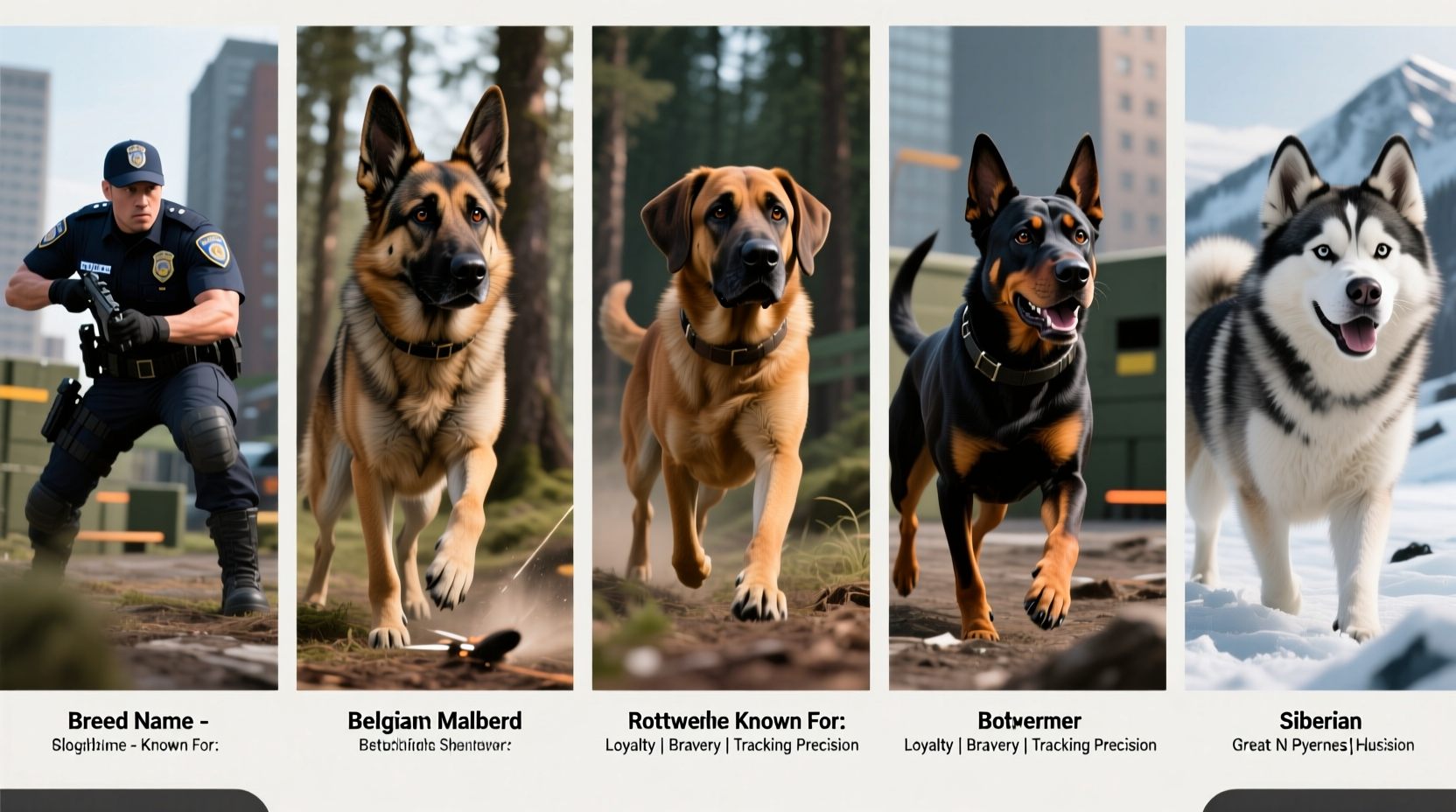
Renowned for their intelligence, strength, and versatility, German Shepherds have long been the face of police K-9 units. Originally developed in Germany for herding, their trainability and protective instincts made them ideal candidates for law enforcement. They excel in patrol work, suspect apprehension, tracking, and crowd control.
With a keen sense of smell and an ability to remain focused amid chaos, German Shepherds often serve in federal agencies like the FBI and DEA. Their loyalty to their handler is profound—many form lifelong bonds that enhance communication and operational efficiency.
Tip: German Shepherds require consistent mental stimulation and physical exercise to prevent behavioral issues, even after retirement.2. Belgian Malinois
In recent decades, the Belgian Malinois has become the breed of choice for elite tactical units, including military special forces and SWAT teams. Leaner and more agile than the German Shepherd, this breed possesses extraordinary drive, focus, and energy. Their work ethic is unmatched—many operate in extreme conditions, from desert heat to urban combat zones.
Used extensively by the U.S. military and federal law enforcement, Malinois are frequently deployed in counter-terrorism operations. One famous example is Cairo, the dog who accompanied Navy SEAL Team 6 during the raid that led to Osama bin Laden’s capture.
“Malinois aren’t just tools—they’re warriors with heart. Their courage under fire changes outcomes.” — Sgt. John Reynolds, U.S. Marine Corps K-9 Trainer
3. Dutch Shepherd
Less common than its German cousin but equally capable, the Dutch Shepherd shares many traits with the German Shepherd but tends to be more energetic and independent. Bred as farm guardians and herders, they adapt quickly to complex tasks such as scent detection and agility-based searches.
While not as widely used in the U.S., Dutch Shepherds are staples in European police forces, particularly in the Netherlands and France. Their short, brindle coat requires less maintenance, making them suitable for all-weather operations.
4. Labrador Retriever
Best known for their friendly demeanor, Labradors are also among the most effective detection dogs in law enforcement. Their strong sense of smell, combined with a cooperative nature, makes them ideal for narcotics and explosive detection at airports, borders, and large public events.
Unlike some high-drive protection breeds, Labradors thrive in public-facing roles because of their calm temperament. They are less likely to appear threatening while still being highly efficient. Their willingness to please allows for rapid learning and adaptability across different environments.
Why Labs Excel in Detection Roles
- Natural scenting ability surpasses many larger breeds
- Low aggression levels reduce risk in crowded areas
- High food motivation enhances reward-based training
- Excellent swimming skills useful in water-based searches
5. Bloodhound
No breed rivals the Bloodhound when it comes to tracking. With up to 300 million scent receptors—ten times more than humans—they can follow trails days old over miles of terrain. Police departments use them primarily in missing persons cases, fugitive tracking, and wilderness search operations.
Though not suited for protection duties due to their gentle nature, Bloodhounds are indispensable in investigations where scent continuity is critical. Their persistence is legendary; once on a trail, they rarely give up until the target is located.
Tip: Handlers must protect Bloodhounds’ long ears and loose skin from debris and infection during fieldwork.6. Rottweiler
Rottweilers bring power, confidence, and natural guarding instincts to police work. Historically used as drover dogs, they possess immense strength and a calm authority that deters threats without unnecessary aggression. They are commonly assigned to patrol and personal protection roles.
Properly trained Rottweilers exhibit excellent control and respond reliably to commands. Their imposing presence alone can de-escalate volatile situations. However, due to public perception and stricter regulations, their deployment has declined in some regions despite proven effectiveness.
7. Doberman Pinscher
Once a dominant force in mid-20th century police work, the Doberman remains a capable working dog, though less commonly used today. Known for speed, alertness, and loyalty, they were historically favored for guard duty and urban patrols.
Modern breeding practices have reduced some health concerns linked to the breed, and renewed interest in their agility and responsiveness may lead to a resurgence in specialized roles. Their sleek build allows for quick movement through tight spaces, beneficial in building searches.
8. Giant Schnauzer
A lesser-known but highly effective police dog, the Giant Schnauzer combines size, intelligence, and a low-shedding coat ideal for indoor detection work. Originally bred in Germany as a multipurpose farm dog, they transitioned into police service due to their boldness and trainability.
They perform well in cold climates and are resistant to distractions. Their distinctive appearance—bearded muzzle and erect ears—adds to their authoritative presence. Some German state police units still rely heavily on this breed for patrol and escort duties.
9. Springer Spaniel
The English Springer Spaniel stands out in detection roles, especially for locating firearms, explosives, and currency. Despite their smaller size, they possess intense focus and an exceptional nose. Their high energy and play-driven motivation make them responsive to positive reinforcement training.
Used by UK police forces and increasingly in North America, Springers are particularly effective in airport screening and vehicle searches. Their non-threatening appearance helps maintain public comfort during inspections.
Mini Case Study: Operation Falcon Intercept
In 2021, a Springer Spaniel named Dash assisted Toronto Police in intercepting a cross-border smuggling operation. Deployed at a cargo terminal, Dash alerted officers to a hidden compartment in a shipping container carrying illegal firearms. His precise indication—trained through thousands of hours of repetition—led to multiple arrests and the seizure of over 40 weapons. Dash’s success underscored how small-breed detection dogs can deliver outsized impact in crime prevention.
10. Boxer
Boxers offer a balance of athleticism, courage, and affection. While not as prevalent in modern K-9 units, they continue to serve in regional departments across Europe and parts of the U.S. Their strong jaws and explosive power make them effective in apprehension scenarios.
What sets Boxers apart is their emotional connection to handlers. They are highly attuned to human cues, which improves coordination during dynamic operations. Their short coat and resilience to moderate climates add to their utility in year-round deployments.
Comparison Table: Key Traits of Top Police Dog Breeds
| Breed | Primary Role | Scent Ability | Aggression Control | Lifespan |
|---|---|---|---|---|
| German Shepherd | Patrol, Tracking, Protection | High | Excellent | 9–13 years |
| Belgian Malinois | Tactical Operations, Apprehension | Very High | Excellent (with training) | 12–14 years |
| Dutch Shepherd | Tracking, Detection | High | Very Good | 12–15 years |
| Labrador Retriever | Narcotics/Explosives Detection | Exceptional | Outstanding | 10–12 years |
| Bloodhound | Long-Distance Tracking | Unmatched | Good | 7–10 years |
Frequently Asked Questions
Can any dog become a police dog?
No. Police dogs must meet strict criteria including health clearances, temperament testing, prey drive, and social resilience. Most are selected from working lines bred specifically for performance, not as pets.
How long do police dogs serve?
Most retire between 8 and 10 years of age, depending on health and performance. Many are adopted by their handlers after service and live out their lives as family companions.
Are police dogs trained to attack on command?
Yes, but only in controlled, justified scenarios. Training emphasizes precision and obedience—dogs learn to bite only when directed and to release immediately upon command. This control ensures public safety and operational integrity.
How Police Dogs Are Selected and Trained
- Selection: Puppies are evaluated at 8–12 weeks for confidence, curiosity, and response to stimuli.
- Socialization: Exposed to traffic, crowds, loud noises, and various surfaces to build resilience.
- Basic Obedience: Taught commands like sit, stay, heel, and come under distraction.
- Specialization: Assigned to detection, patrol, or dual-purpose tracks based on aptitude.
- Certification: Must pass standardized tests before deployment.
- Ongoing Training: Weekly drills ensure skill retention and adaptability.
Conclusion
The dedication of police dogs is matched only by the rigor of their selection and training. From the fearless Belgian Malinois to the tireless Bloodhound, each breed brings unique strengths to the mission of protecting communities. Their loyalty isn’t just instinctual—it’s cultivated through partnership, discipline, and mutual respect with their handlers.
💬 What’s your experience with police dogs? Have you met a K-9 hero? Share your story in the comments and help honor the silent guardians who serve alongside our officers.








