
For cat owners, one of the most tedious daily chores is scooping the litter box. Beyond the unpleasantness, traditional litter maintenance can be time-consuming and inconsistent—especially in multi-cat households. Fortunately, advancements in pet technology have introduced automatic cat litter boxes that handle waste removal with minimal human intervention. These smart systems detect when your cat has used the box, automatically sift waste, seal it away, and even notify you when maintenance is needed. The result? A cleaner home, less odor, and more time for what really matters: enjoying life with your feline companion.
What Makes an Automatic Litter Box Worth It?
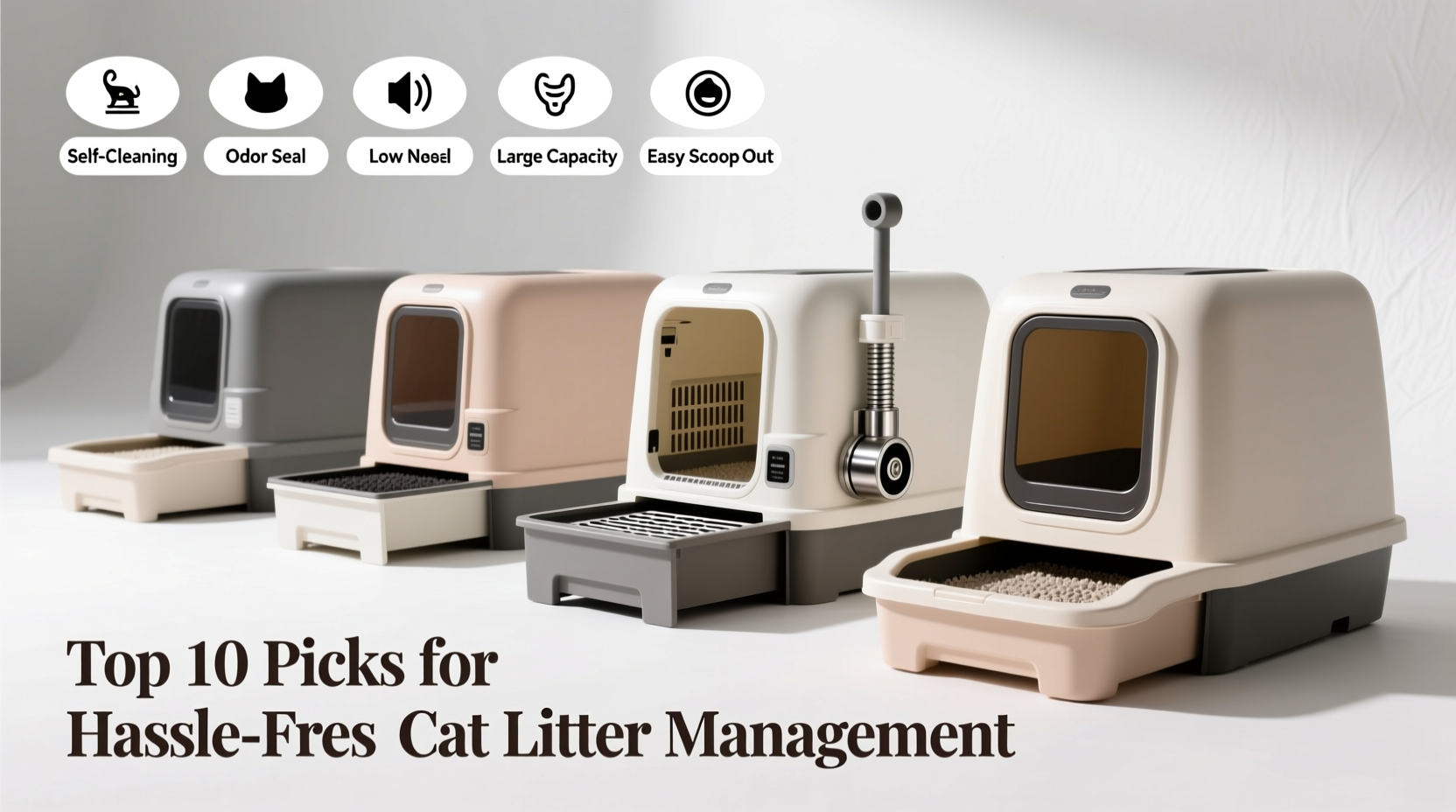
Automatic litter boxes are designed to eliminate the need for daily scooping by using sensors, rakes, or rotating mechanisms to separate solid and liquid waste from clean litter. Most models deposit waste into a sealed compartment or disposable bag, reducing exposure to bacteria and odors. While they typically cost more upfront than traditional boxes, their long-term benefits often justify the investment.
Key advantages include:
- Time savings: No daily scooping required.
- Better hygiene: Waste is sealed off quickly, minimizing bacterial growth.
- Odor control: Advanced models use carbon filters and enclosed designs to contain smells.
- Convenience for busy owners: Ideal for travelers, remote workers, or those with mobility issues.
- Data tracking: Some models sync with apps to monitor usage patterns—useful for detecting health changes.
Top 10 Automatic Cat Litter Boxes Reviewed
The market offers a wide range of self-cleaning litter boxes, each with unique features. Below is a curated list of the top 10 models based on reliability, user feedback, ease of use, and innovation.
| Model | Capacity | Key Features | Best For | Price Range |
|---|---|---|---|---|
| Litter-Robot 4 | Large (single cat) | Wi-Fi, app alerts, auto-reset, whisper-quiet motor | Tech-savvy owners | $$$ |
| PetKit PuraMax | X-Large (multi-cat) | Self-cleaning, air purifier, app control, carbon filter | Multicat homes | $$ |
| SurePath Self-Cleaning Box | Medium | Affordable, simple rake system, low profile | Budget-conscious users | $ |
| Omega Paw Roll'n | Medium | Manual roll design, no electricity, durable | Off-grid or minimalist setups | $ |
| Tidy Cats Breeze Litter System | Large | Uses pellets and pads, low tracking, urine pad collection | Cats who dislike clay litter | $$ |
| Playful Pets SpinClean | Large | Rotating drum, collects waste in bags, battery-powered | Small spaces | $$ |
| LAICA Self-Cleaning Box | Medium | Compact, quiet operation, removable tray | Apartments | $$ |
| SmartCat One Litter Box | Large | Simple rake mechanism, reliable, easy maintenance | First-time buyers | $$ |
| GoHealthyPets AutoEgg | Large | Sealed design, anti-spill edge, app monitoring | Odor-sensitive homes | $$$ |
| CatGenie Self-Washing Box | X-Large | Washes and dries litter, connects to drain, reusable granules | Ultimate hands-off solution | $$$ |
Why These Models Stand Out
The Litter-Robot 4 remains a gold standard due to its consistent performance and smart features. Its globe-shaped design allows waste to be separated efficiently after a timed delay, preventing false triggers. The PetKit PuraMax impresses with dual fans and real-time air quality reporting via app. Meanwhile, the CatGenie offers a revolutionary approach—washing and sanitizing reusable litter grains, making it the only truly “self-washing” option.
“Automatic litter boxes aren’t just about convenience—they’re a step toward better feline wellness. Consistent cleanliness reduces stress and litter box avoidance.” — Dr. Rebecca Tran, DVM, Feline Behavior Consultant
Choosing the Right Model: A Buyer’s Checklist
Not all automatic litter boxes suit every household. Use this checklist to find the best fit for your lifestyle and your cat’s needs.
- ✅ Does your cat accept new environments easily?
- ✅ Do you have one cat or multiple cats?
- ✅ Is noise a concern (e.g., in a bedroom)?
- ✅ Do you want app connectivity and usage tracking?
- ✅ How important is odor control?
- ✅ Do you prefer disposable waste trays or reusable systems?
- ✅ Is space a constraint?
- ✅ What type of litter does the system require?
Real-World Example: How the Litter-Robot Changed One Household
Sarah, a nurse working 12-hour shifts in Chicago, struggled to maintain a clean litter box for her two cats, Luna and Milo. With unpredictable hours, scooping was often forgotten, leading to accidents outside the box. After researching solutions, she invested in the Litter-Robot 4. Within days, both cats adapted to the new routine. The app alerted her when the waste drawer was full, and she only needed to empty it every 5–7 days. “It’s like having a tiny robot butler for my cats,” she said. “I’ve regained peace of mind—and my living room no longer smells like a pet store.”
Step-by-Step Guide to Setting Up Your Automatic Litter Box
Proper setup ensures smooth operation and helps your cat adjust faster. Follow these steps:
- Unbox and assemble: Follow manufacturer instructions carefully. Ensure all parts are secure and sensors are unobstructed.
- Choose the right location: Place on a flat, hard surface away from high-traffic areas and loud appliances.
- Add compatible litter: Use the type and amount recommended. Most systems work best with clumping clay or crystal litter.
- Power up and test: Run a dry cycle without your cat to observe the mechanism.
- Introduce your cat: Let them sniff and enter freely. Offer treats nearby to create positive associations.
- Monitor initial use: Watch the first few cycles to ensure proper detection and cleaning.
- Set maintenance schedule: Empty waste drawers regularly and clean sensors monthly to prevent clogs.
Frequently Asked Questions
Are automatic litter boxes safe for cats?
Yes, modern models include weight sensors and timers that prevent activation while a cat is inside. Always supervise the first few uses to ensure your cat exits promptly after elimination.
How often do I need to clean the machine?
While daily scooping isn’t needed, perform a deep clean every 1–2 months. Wipe down sensors, rinse trays, and inspect moving parts. Replace carbon filters every 1–3 months depending on usage.
Can multiple cats use the same automatic box?
Some models, like the PetKit PuraMax and CatGenie, are designed for multi-cat homes. However, if cats exhibit territorial behavior, consider having a second box available to avoid stress.
Final Thoughts and Recommendation
Automatic cat litter boxes are more than a luxury—they’re a practical upgrade for any cat owner seeking simplicity and cleanliness. From budget-friendly manual rollers like the Omega Paw to high-tech systems like the CatGenie that wash their own litter, there’s a solution for every need and budget. The key is matching the technology to your cat’s temperament and your living environment.
If you're new to automated systems, start with a proven model like the Litter-Robot 4 or SmartCat One. For eco-conscious users, the CatGenie’s reusable granules reduce waste significantly. And in multi-cat homes, prioritize capacity and rapid reset times to avoid conflicts.
🚀 Ready to reclaim your time and eliminate litter box stress? Choose one of the top-rated models above and experience the difference a smart litter box can make. Share your experience or ask questions in the comments below—we’d love to hear how your cat adjusted!








