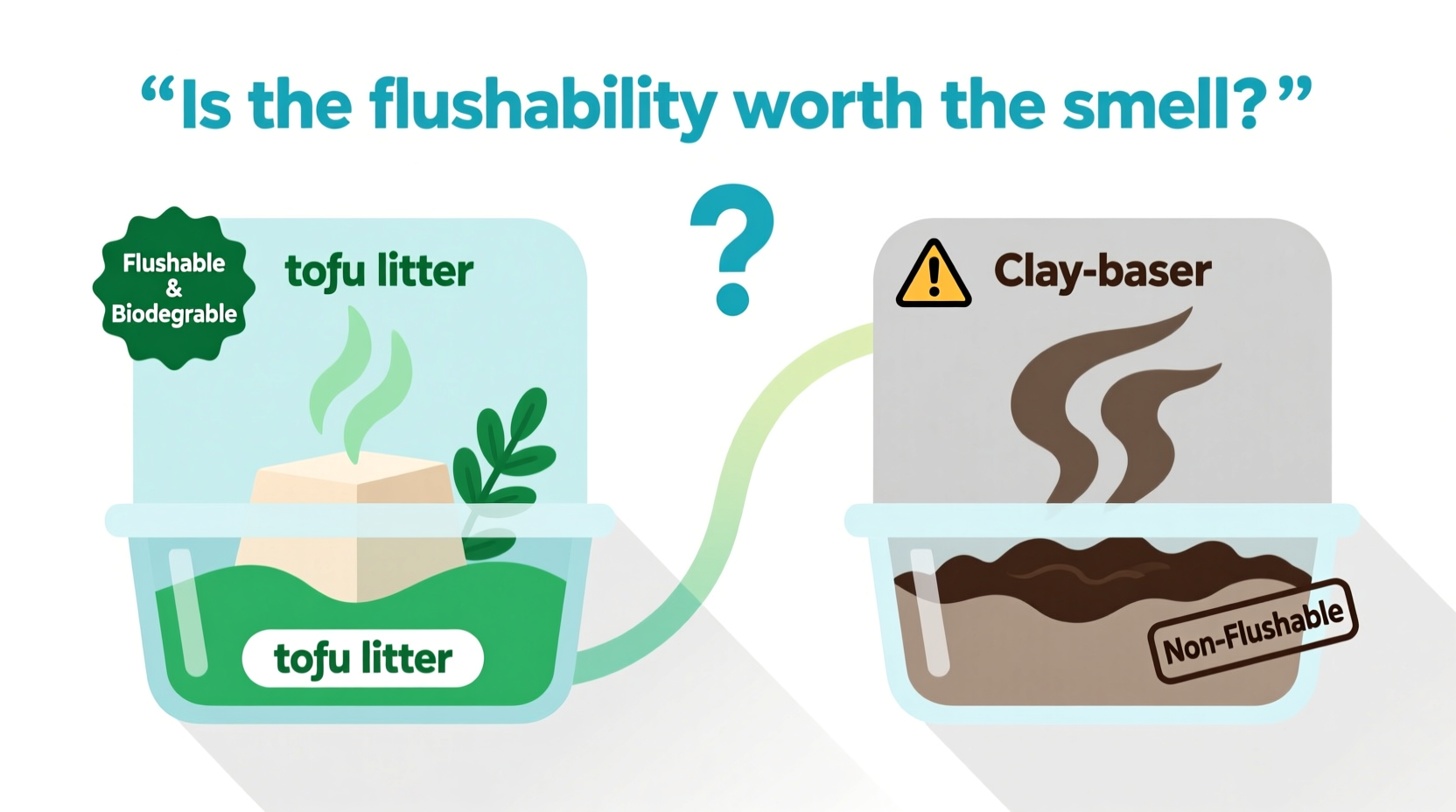
For cat owners, choosing the right litter isn't just about convenience—it affects daily cleanup, bathroom odors, plumbing safety, and even your pet's comfort. In recent years, tofu-based cat litter has gained popularity for its eco-friendly claims and flushability. Meanwhile, traditional clay litter remains a staple in many homes due to its superior clumping and odor control. But when comparing tofu litter vs clay litter, one key question arises: is the ability to flush really worth the trade-off in smell control?
This article dives deep into both options, examining their composition, environmental impact, user experience, and real-world performance. We’ll break down not just what each litter does well—but where it falls short—so you can make an informed decision that balances hygiene, sustainability, and household harmony.
Understanding the Basics: What Are Tofu and Clay Litters Made Of?
The core difference between tofu litter and clay litter lies in their raw materials and manufacturing processes.
Tofu litter is made from soybean pulp, a byproduct of tofu production. After processing, it’s combined with natural binders and sometimes fragrance to form granules that absorb moisture and form soft clumps. Because it’s plant-based and biodegradable, manufacturers market it as compostable and flushable under certain conditions.
Clay litter, on the other hand, is typically made from sodium bentonite, a type of absorbent volcanic ash mined from the earth. When exposed to liquid, it swells and forms hard, scoopable clumps. Most clay litters are non-biodegradable and explicitly labeled as not flushable due to their tendency to expand and clog pipes.
These material differences set the stage for divergent performance across key categories: odor control, texture, dust levels, ease of disposal, and environmental footprint.
Performance Comparison: Odor Control, Clumping, and Dust Levels
To assess whether the flushable feature of tofu litter outweighs its drawbacks, we need to evaluate how each performs across critical metrics.
| Feature | Tofu Litter | Clay Litter |
|---|---|---|
| Odor Control | Moderate; relies on added fragrances or natural absorption. Struggles with ammonia buildup over time. | Excellent; bentonite naturally traps odors and neutralizes smells quickly. |
| Clumping Ability | Soft clumps; may break apart during scooping if urine volume is high. | Hard, tight clumps; easy to scoop and maintain. |
| Dust Production | Low; ideal for cats and humans sensitive to airborne particles. | High (especially non-dust-free variants); can irritate respiratory systems. |
| Texture & Paws Sensitivity | Softer, more natural feel; preferred by some finicky cats. | Coarser; some cats avoid it after switching from softer litters. |
| Litter Tracking | Low to moderate; lightweight but less likely to stick to paws. | Higher; heavier granules stick to wet paws and scatter more. |
From this comparison, a pattern emerges: clay excels in functionality but raises health and environmental concerns, while tofu offers gentler, greener alternatives at the cost of consistent odor management.
Tip: If using tofu litter, change the entire box more frequently—ideally every 7–10 days—to minimize lingering odors.The Flushability Factor: Convenience vs Plumbing Risk
One of tofu litter’s biggest selling points is its flushability. Unlike clay, which can solidify and block pipes, tofu litter dissolves in water and breaks down in septic systems when used in small amounts. This makes post-scooping cleanup faster and eliminates the need for plastic waste bags.
However, flushability comes with caveats:
- Not all municipal sewage systems support flushing any kind of litter—even “flushable” ones.
- Flushing large volumes at once can still cause clogs, especially in older plumbing.
- Septic system owners must be cautious; excessive organic load can disrupt bacterial balance.
Clay litter sidesteps these issues entirely by being disposed of in the trash. While less convenient, this method avoids potential plumbing disasters. Many landlords and apartment buildings explicitly ban flushing cat waste due to shared drain lines, making flushable litter a risky option regardless of marketing claims.
“Flushable doesn’t always mean safe. Even biodegradable litters can overwhelm a septic tank if used daily.” — Dr. Lena Tran, DVM, Feline Wellness Consultant
Real-World Example: A Multi-Cat Household’s Switch to Tofu Litter
Sarah, a pet owner in Portland, switched her two-cat home to tofu litter hoping to reduce plastic bag usage and simplify cleanup. Initially impressed by the low dust and soft texture, she found the litter tray developed a persistent ammonia smell by day three—despite daily scooping.
She began flushing waste as directed, but after a minor backup in her downstairs bathroom, her plumber advised against continued flushing due to narrow pipes. Forced to double-bag waste and change litter weekly, Sarah realized she hadn’t actually reduced her environmental footprint or effort. She eventually returned to a premium clay litter with better odor control, accepting the trade-off of trash disposal.
Her experience underscores a common pitfall: flushable litter assumes ideal infrastructure and light usage. In multi-cat homes or older buildings, the practical benefits diminish quickly.
Environmental Impact and Sustainability Considerations
Eco-conscious pet owners often lean toward tofu litter because it’s renewable, compostable (in theory), and produces less mining-related damage than clay.
But sustainability isn’t just about source material—it includes full lifecycle analysis:
- Clay litter is strip-mined, a process that disrupts ecosystems and consumes fossil fuels. Once used, it ends up in landfills where it won’t degrade for decades.
- Tofu litter uses agricultural byproducts, reducing food waste. However, if flushed into water treatment systems or trashed instead of composted, its green advantage fades.
Additionally, transportation emissions matter. Some tofu litters are imported from Asia, increasing their carbon footprint despite local sourcing of soy pulp. Locally produced clay alternatives may, in some cases, have a smaller overall environmental impact depending on disposal methods.
Tip: For true sustainability, pair tofu litter with home composting (only for non-feces waste) or use a certified compost pickup service.Checklist: Choosing the Right Litter for Your Home
Use this checklist to evaluate whether tofu or clay litter better suits your needs:
- How many cats do you have? (More cats = higher odor challenge)
- Do you own your home or rent? (Renters may face plumbing restrictions)
- What type of plumbing/septic system do you have?
- Are you willing to compost or dispose of waste manually?
- Does your cat have sensitivities to dust or texture?
- Is odor control a top priority for your living space?
- How important is reducing plastic bag usage to you?
Answering these questions honestly helps clarify whether flushability is a meaningful benefit or just a marketing perk.
Step-by-Step Guide to Transitioning Litters Safely
Switching litters can stress cats, leading to avoidance or inappropriate elimination. Follow this timeline to transition smoothly:
- Day 1–3: Mix 75% old litter with 25% new litter. Place the blend in a clean box.
- Day 4–6: Adjust to a 50/50 mix. Monitor your cat’s behavior closely.
- Day 7–9: Use 25% old litter and 75% new. Scoop regularly to prevent odor confusion.
- Day 10: Fully switch to the new litter. Keep the old type on hand in case of rejection.
- Ongoing: Clean the litter box thoroughly before starting the transition to eliminate residual scents.
If your cat refuses the new litter, consider layering—placing the new type at the bottom and old on top—to encourage gradual adaptation.
Frequently Asked Questions
Can I flush tofu litter with my cat’s feces?
While technically possible, it’s not recommended by most veterinarians. Cat feces can contain Toxoplasma gondii, a parasite harmful to marine life and humans. Flushing increases environmental contamination risk. Dispose of solid waste in sealed bags.
Does tofu litter work for kittens?
Yes, and its low dust makes it safer for developing respiratory systems. However, ensure the granules aren’t small enough to be ingested during play. Supervise young kittens during initial use.
Why does my tofu litter smell worse than clay?
Tofu litter absorbs moisture but lacks the chemical odor-neutralizing agents found in many clay litters. It also begins breaking down after absorbing urine, which can accelerate bacterial growth and odor if not changed frequently.
Expert Insight: Veterinarian Perspective on Litter Safety
“I’ve seen more urinary tract issues in cats using dusty clay litters, especially in multi-cat homes with poor ventilation. But I also caution against assuming ‘natural’ means safer. Any litter that causes chronic avoidance due to smell or texture puts feline health at risk.” — Dr. Marcus Bell, Veterinary Behavior Specialist
The takeaway? Litter choice directly impacts urinary health, stress levels, and elimination habits. The best litter is one your cat will consistently use without hesitation.
Final Verdict: Is the Flushable Feature Worth the Smell Trade-Off?
The answer depends on your priorities.
If you live alone, have a single cat, access to a robust plumbing system, and prioritize eco-disposal, tofu litter’s flushability may justify its weaker odor control—especially if you commit to frequent full changes.
But for most households—particularly those with multiple cats, rental units, or sensitivity to bathroom smells—clay litter’s superior clumping and odor suppression deliver greater daily comfort. The inconvenience of trash disposal is often a fair trade for peace of mind and fresher air.
No litter is perfect. Tofu litter brings innovation and sustainability to an otherwise stagnant market, but it’s not yet a universal replacement for clay. Until formulation improves—particularly in long-term ammonia resistance—its benefits remain situational rather than transformative.
💬 Have you tried switching from clay to tofu litter—or back again? Share your experience, tips, or lessons learned in the comments. Your insights could help another cat owner make a smarter, healthier choice.








