
Clean aquarium gravel isn't just about aesthetics—it's essential for maintaining a balanced, healthy aquatic environment. Over time, uneaten food, fish waste, and decaying plant matter accumulate in the substrate, leading to elevated ammonia and nitrite levels that can stress or even harm your fish. While partial water changes help, they don’t fully address debris trapped in the gravel. Washing your aquarium gravel properly removes this buildup without disrupting beneficial bacteria colonies or clouding the tank. This comprehensive guide walks you through every aspect of cleaning aquarium gravel safely and efficiently, whether you're preparing new substrate or performing routine maintenance.
Why Cleaning Aquarium Gravel Matters
Aquarium gravel serves as more than just decoration. It anchors live plants, provides surface area for beneficial bacteria, and contributes to overall tank stability. However, it also acts as a trap for organic waste. When left unchecked, this waste breaks down into toxic compounds like ammonia and nitrites, which compromise water quality. Poor substrate hygiene can lead to algae blooms, cloudy water, and increased disease risk among fish.
Regularly cleaning your gravel helps prevent these issues by removing detritus while preserving the biological filtration that keeps your nitrogen cycle functioning. Unlike harsh chemical cleaners used on household surfaces, aquarium gravel requires gentle, non-toxic methods that protect both your fish and the microbial ecosystem within the tank.
Tip: Never use soap or detergents when cleaning aquarium gravel—these leave residues toxic to fish and beneficial bacteria.When and How Often to Wash Your Gravel
The frequency of gravel cleaning depends on several factors: tank size, bioload (number of fish), feeding habits, and presence of live plants. As a general rule, vacuuming the substrate during water changes every two to four weeks is sufficient for most freshwater tanks.
New aquarium owners often make the mistake of over-cleaning, which can destabilize the nitrogen cycle. Conversely, infrequent cleaning leads to sludge buildup. A balanced approach ensures optimal water parameters and long-term tank health.
- High-bioload tanks (many fish, large species): clean weekly
- Moderate tanks: clean every 2–3 weeks
- Planted or low-stock tanks: clean monthly or as needed
“Gravel cleaning is one of the most overlooked yet impactful maintenance tasks. Done correctly, it prevents nutrient overload and supports clearer water and healthier fish.” — Dr. Lena Reyes, Aquatic Veterinarian and Tank Ecosystem Specialist
Step-by-Step Guide to Washing Aquarium Gravel
Follow this detailed process whether you’re cleaning new gravel before setup or performing routine maintenance on an established tank.
For New Gravel (Pre-Use Rinse)
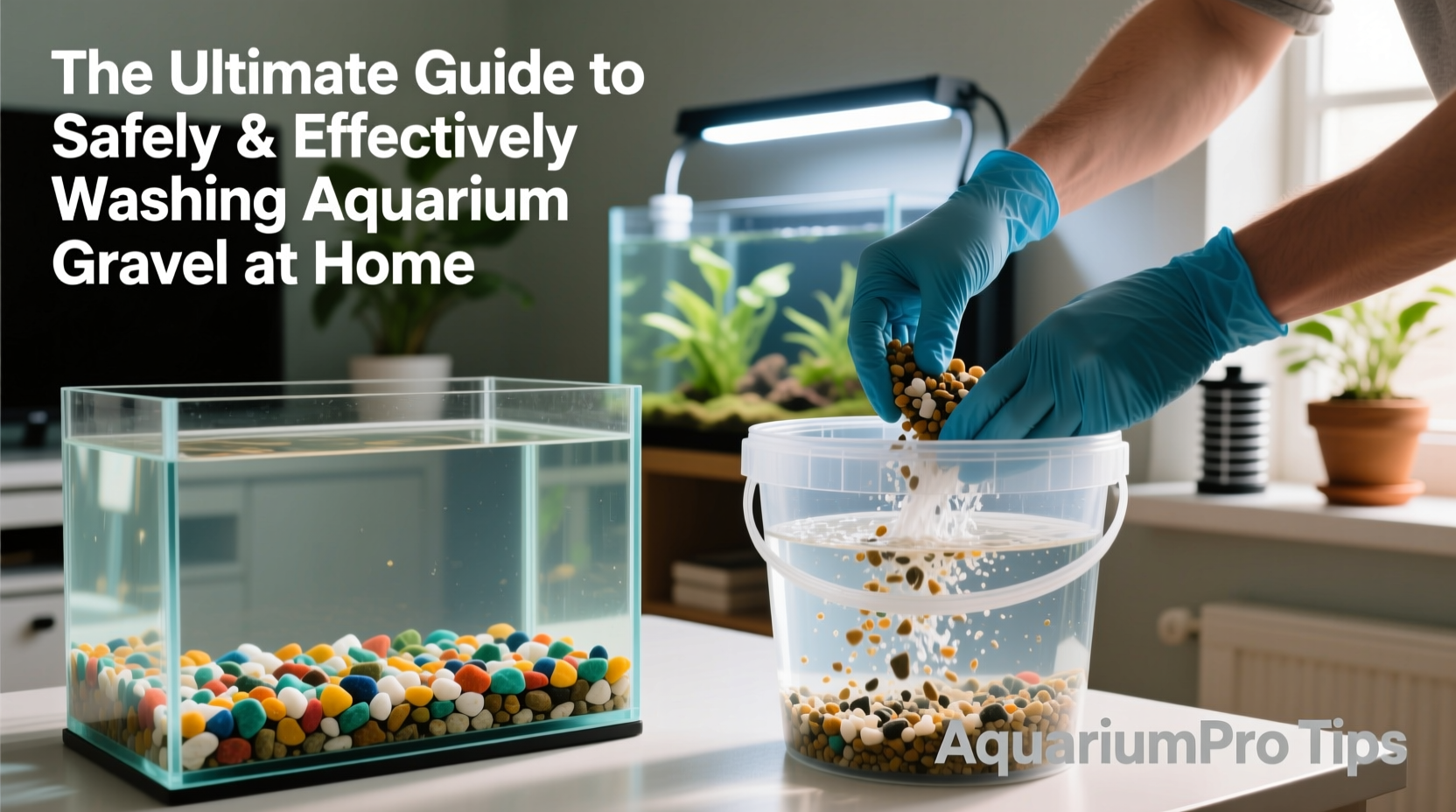
- Place the dry gravel in a clean bucket or colander.
- Rinse thoroughly under cold tap water, agitating with your hands to dislodge dust and fine particles.
- Continue rinsing until the runoff water runs completely clear—this may take several minutes.
- Do not boil or sterilize unless instructed for specific substrates (e.g., soil-based planted tank media).
- Transfer directly to the empty aquarium or store in a sealed container if not using immediately.
For Established Tanks (In-Tank Vacuuming)
- Turn off heaters, filters, and pumps to avoid damage during cleaning.
- Use a gravel vacuum siphon—choose a size appropriate for your tank (smaller tubes for delicate areas, larger for deep beds).
- Insert the vacuum into the gravel and start the siphon by suction or pump mechanism.
- Move the tube slowly across the substrate, allowing it to lift debris while letting heavier gravel fall back.
- Target high-traffic zones near feeding areas and under decorations where waste accumulates.
- Remove no more than 25–30% of the water during each session to maintain biological balance.
- Refill with dechlorinated water matched to the tank temperature (±1°F).
- Restart equipment once the water level is restored.
Best Tools and Supplies for Effective Gravel Cleaning
Using the right tools makes a significant difference in efficiency and safety. Here’s what you’ll need:
| Tool | Purpose | Recommended Type |
|---|---|---|
| Gravel Vacuum Siphon | Removes debris and water simultaneously | Python-style with adjustable flow control |
| Bucket(s) | Collects dirty water; keep separate from household use | Two 5-gallon buckets labeled for aquarium only |
| Algae Scrubber Pad | Cleans glass during maintenance | Magnetic or handheld non-abrasive pad |
| Dechlorinator | Treats replacement water | Standard liquid conditioner (e.g., Seachem Prime) |
| Latex or Nitrile Gloves | Protects hands and reduces contamination | Powder-free medical grade |
Common Mistakes to Avoid
Even experienced hobbyists sometimes undermine their efforts with avoidable errors. Steer clear of these pitfalls:
- Over-vacuuming entire substrate at once: Destroys beneficial bacteria colonies and stresses fish.
- Using tap water with chlorine: Kills nitrifying bacteria and harms sensitive species.
- Cleaning filter media under tap water: Chlorine wipes out bacterial colonies—rinse gently in removed tank water instead.
- Ignoring flow rate on siphons: Too strong can uproot plants; too weak won’t lift debris.
- Skipping pre-rinsing new gravel: Leads to persistent cloudiness after filling the tank.
Real Example: Reviving a Neglected 30-Gallon Community Tank
Mark, a beginner aquarist, inherited a 30-gallon freshwater tank from a roommate who hadn’t maintained it for months. The water was cloudy, fish were lethargic, and a thick layer of black sludge coated the gravel. After testing revealed high nitrite levels, he began weekly partial water changes using a mid-sized gravel vacuum. He focused on one-third of the tank per session, avoiding deep disturbance. Within four weeks, clarity improved dramatically, fish activity increased, and follow-up tests showed stable, safe parameters. His success came not from aggressive cleaning but from consistent, gentle gravel maintenance aligned with biological needs.
Frequently Asked Questions
Can I remove gravel from the tank to clean it?
Yes, but only if absolutely necessary (e.g., deep cleaning after illness). Removing all gravel risks destroying the nitrogen cycle. If done, clean in batches using old tank water and return promptly. Avoid soap or hot water.
My water stays cloudy after washing new gravel. What should I do?
Fine dust from new gravel can take time to settle. Continue rinsing small batches until water clears. After adding to the tank, run the filter continuously and consider adding a water clarifier. Cloudiness typically resolves within 24–48 hours.
Should I clean the gravel when doing a full tank teardown?
During a complete reset, you can rinse gravel thoroughly. However, if reusing the same tank soon, retain some old gravel or filter media to seed beneficial bacteria in the new setup.
Final Checklist for Safe and Effective Gravel Washing
- Assemble all tools: gravel vacuum, buckets, dechlorinator, gloves
- Turn off electrical equipment
- Vacuum 1/3 to 1/2 of the substrate, focusing on waste-prone areas
- Remove 25–30% of water maximum per session
- Rinse filter media in removed tank water, not tap water
- Refill with treated, temperature-matched water
- Restart equipment and observe fish for signs of stress
- Record maintenance date for future scheduling
Take Action for a Healthier Aquarium
Clean gravel is the foundation of a thriving aquarium. By integrating regular, thoughtful substrate maintenance into your routine, you support clearer water, stable chemistry, and happier fish. Whether you're setting up a new tank or revitalizing an older one, proper gravel care pays dividends in long-term tank health and enjoyment. Don’t wait for problems to arise—start today with a simple siphon session and experience the difference firsthand.
💬 Have a tip or trick for keeping your aquarium gravel spotless? Share your experience in the comments below and help fellow aquarists maintain pristine, healthy tanks!








