For pet owners with enthusiastic eaters, mealtime often means cleanup time. Dogs that dig into their food with full-body commitment can send water flying, kibble scattering, and create slippery puddles across kitchen floors. A waterproof dog bowl isn’t just about convenience—it’s about hygiene, durability, and preserving your home’s cleanliness. But not all bowls marketed as “waterproof” deliver on their promises. Choosing the right one requires understanding materials, design features, and how your dog actually eats.
Why Waterproof Bowls Matter for Messy Eaters
Dogs with high energy or breeds prone to gulping—like Labradors, Beagles, or German Shepherds—often treat mealtimes like obstacle courses. They paw at bowls, shove them across the floor, and splash water everywhere. Over time, repeated exposure to moisture can warp flooring, encourage mold growth in grout, and even lead to slipping hazards.
A truly waterproof dog bowl prevents liquid from seeping through seams, absorbing into the material, or pooling underneath. Unlike standard plastic or ceramic dishes, which may crack or degrade over time, a well-designed waterproof bowl maintains integrity after daily use and frequent washing.
Tip: Look for bowls with sealed bases and non-porous surfaces to ensure no liquid penetrates beneath or into the material.Key Features of an Effective Waterproof Dog Bowl
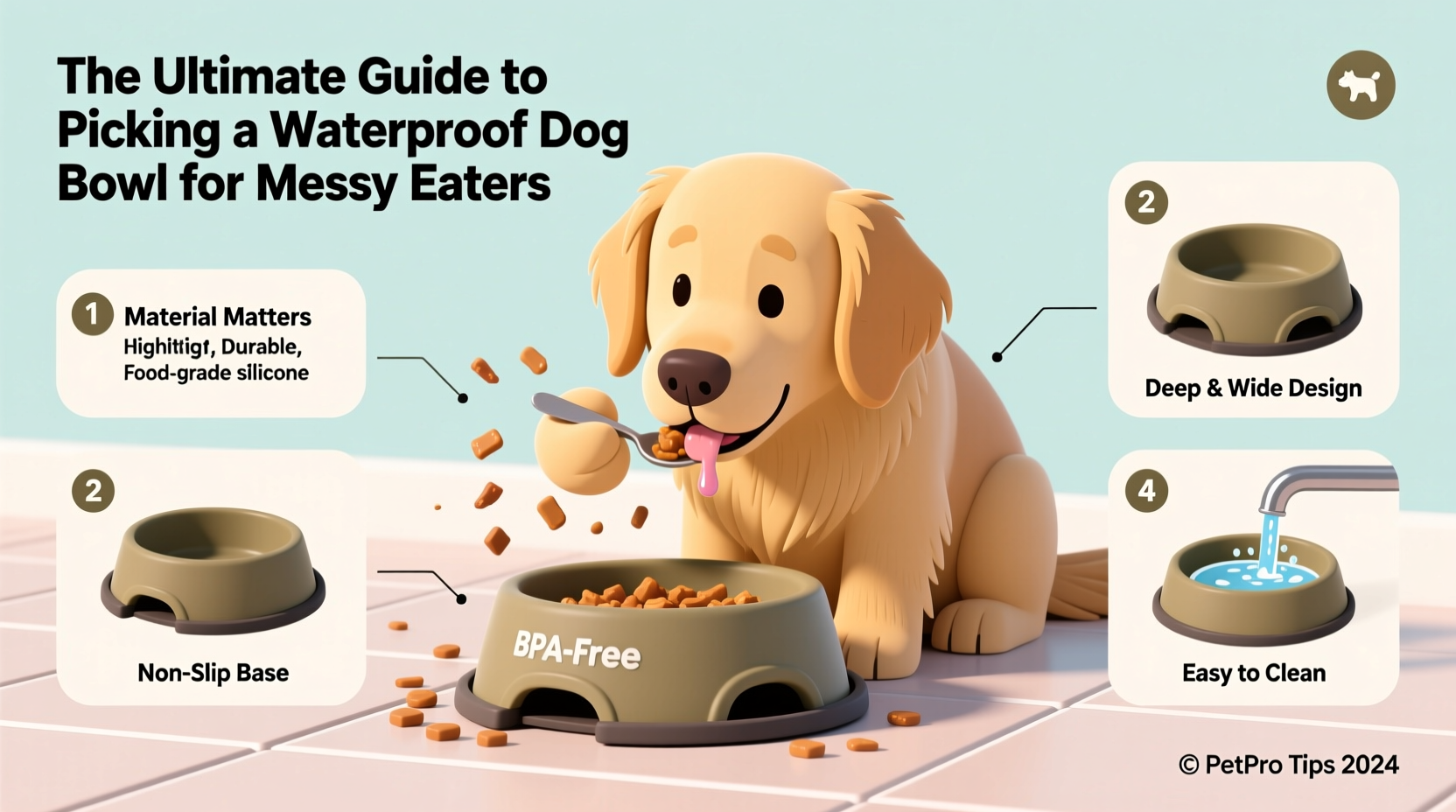
Not all dog bowls labeled “waterproof” are created equal. To make an informed decision, focus on these essential characteristics:
- Material Quality: Stainless steel, food-grade silicone, and high-density polyethylene (HDPE) resist moisture absorption and bacterial growth.
- Sealed Base Design: Prevents water from collecting underneath, reducing mold and floor damage.
- Non-Skid Bottom: Keeps the bowl stable during vigorous eating, minimizing spills before they start.
- Rounded Edges and Smooth Interior: Makes cleaning easier and eliminates crevices where bacteria can hide.
- Integrated Splash Guard or Rim: Some models feature raised edges that contain splashes without restricting access.
“Dogs who eat aggressively benefit most from bowls designed with both stability and containment in mind. The goal is to reduce environmental stress caused by constant mess.” — Dr. Lena Patel, Veterinary Behavior Specialist
Step-by-Step Guide to Choosing the Right Bowl
Selecting the ideal waterproof bowl involves more than reading product labels. Follow this practical process to find the best fit for your dog and home:
- Assess Your Dog’s Eating Habits: Does your dog tilt the bowl? Push it around? Drink excessively between bites? Observe two to three meals to identify patterns.
- Measure Feeding Area Space: Ensure the bowl fits comfortably in your designated spot without blocking pathways or door swings.
- Determine Size Needs: Choose portion-appropriate capacity—typically 1–2 cups for small dogs, 3–5 for medium to large breeds.
- Evaluate Material Safety: Avoid cheap plastics containing BPA or phthalates. Opt for stainless steel or certified food-safe silicone.
- Test Stability Features: If possible, check whether the bowl has rubberized feet or suction capability to prevent sliding.
- Check Cleanability: Dishwasher-safe models save time and ensure thorough sanitation.
- Read Real User Reviews: Focus on feedback related to leakage, durability, and actual spill reduction—not just aesthetics.
Comparison: Top Materials for Waterproof Dog Bowls
| Material | Waterproof? | Durability | Cleanability | Safety Notes |
|---|---|---|---|---|
| Stainless Steel | Yes – fully non-porous | Excellent (resists dents, chewing) | Dishwasher safe; resists stains | Hypoallergenic; safest long-term option |
| Food-Grade Silicone | Yes – seamless construction | Good (flexible but can tear if chewed) | Easy wipe or dishwasher | BPA-free versions recommended |
| Plastic (HDPE) | Conditionally – only if sealed | Fair (scratches harbor bacteria) | Hand wash preferred | Look for recyclable #2 plastic |
| Ceramic | No – glaze may crack over time | Poor (breaks easily) | Surface wipe only | Can leach lead if low quality |
Real Example: How One Owner Solved Chronic Spills
Sarah Thompson, a Boston Terrier owner from Portland, struggled with daily puddles under her dog’s feeding station. Her previous ceramic bowl looked nice but cracked within weeks, and the plastic alternative warped in the dishwasher. After researching solutions, she switched to a stainless steel double bowl with a wide rubber base and slightly elevated design.
Within days, floor dampness dropped significantly. The new bowl stayed in place even when her dog leaned into it, and wiping down the area took seconds instead of minutes. More importantly, she noticed fewer yeast infections on her dog’s paws—likely due to reduced moisture exposure.
“I didn’t realize how much standing water was affecting his health until we fixed the bowl,” Sarah said. “It wasn’t just about clean floors—it was about creating a healthier space.”
Essential Checklist Before Buying
Before purchasing a waterproof dog bowl, verify the following:
- ✅ Non-slip or suction base to prevent movement
- ✅ Fully sealed construction (no gaps between bowl and base)
- ✅ Made from non-toxic, food-safe materials
- ✅ Sized appropriately for your dog’s breed and appetite
- ✅ Easy to disassemble and clean (if modular)
- ✅ Resistant to tipping, cracking, or warping
- ✅ Compatible with dishwashers or simple hand-washing
Frequently Asked Questions
Are all silicone dog bowls truly waterproof?
Most high-quality silicone bowls are fully waterproof due to their seamless molding process. However, cheaper versions may have thin spots or weak seams that degrade over time. Always choose medical-grade or food-safe silicone with reinforced bases.
Can I use a waterproof bowl for both food and water?
Yes—most waterproof bowls are designed for dual use. Just ensure you clean them regularly, especially if used for wet food, which can cling to surfaces and promote bacterial growth if left uncleaned.
Do elevated bowls help reduce mess?
For larger dogs, elevated feeders can improve posture and digestion, but they don’t inherently prevent spills unless combined with splash guards or non-slip bases. In some cases, height increases momentum during eating, so pairing elevation with stability features is key.
Final Thoughts: Make Mealtime Cleaner and Safer
A waterproof dog bowl for messy eaters isn’t a luxury—it’s a practical investment in your pet’s health and your home’s upkeep. By prioritizing durable materials, smart design, and proven functionality, you can transform chaotic mealtimes into calm, contained routines. The right bowl reduces stress for both you and your dog, supports better hygiene, and saves hours of mopping and scrubbing.
🚀 Ready to end the mess? Evaluate your current feeding setup today, apply this guide’s criteria, and upgrade to a truly waterproof solution that works as hard as your dog eats.








