Selecting the right pet bowl isn’t just about matching it to your dog’s collar or favorite toy—it’s a critical part of their daily health and comfort. Too small, and your dog may struggle to eat efficiently; too large, and it could lead to waste, mess, or even digestive strain. The ideal bowl supports proper posture, portion control, and hydration, all of which contribute to long-term wellness. Yet, many pet owners choose bowls based on aesthetics or convenience rather than function. This guide breaks down the science and practical considerations behind choosing the correct bowl size tailored to your dog’s unique needs.
Why Bowl Size Matters More Than You Think
The size of your dog’s food and water bowl directly affects their eating behavior, digestion, and overall physical comfort. A bowl that forces your dog to stretch their neck too far down or hunch over can cause strain on their spine and joints, especially in larger breeds or older dogs with arthritis. Conversely, a bowl placed too high without proper sizing can encourage gulping, leading to bloating or discomfort.
Dogs have varying jaw depths, neck lengths, and feeding speeds. A Chihuahua doesn’t need the same capacity or depth as a Great Dane. Using an improperly sized bowl can result in spilled kibble, inadequate water intake, or even behavioral issues like food guarding due to difficulty accessing meals. Proper sizing also supports portion discipline—using oversized bowls often leads to overfeeding because visual cues trick owners into pouring more than necessary.
“Bowl ergonomics are as important as diet formulation. Poorly sized or positioned bowls can subtly compromise a dog’s musculoskeletal health over time.” — Dr. Laura Simmons, DVM, Canine Nutrition Specialist
Step-by-Step Guide to Measuring the Ideal Bowl Size
Finding the right bowl isn’t guesswork. Follow this structured approach to ensure accuracy and suitability for your dog’s build and lifestyle.
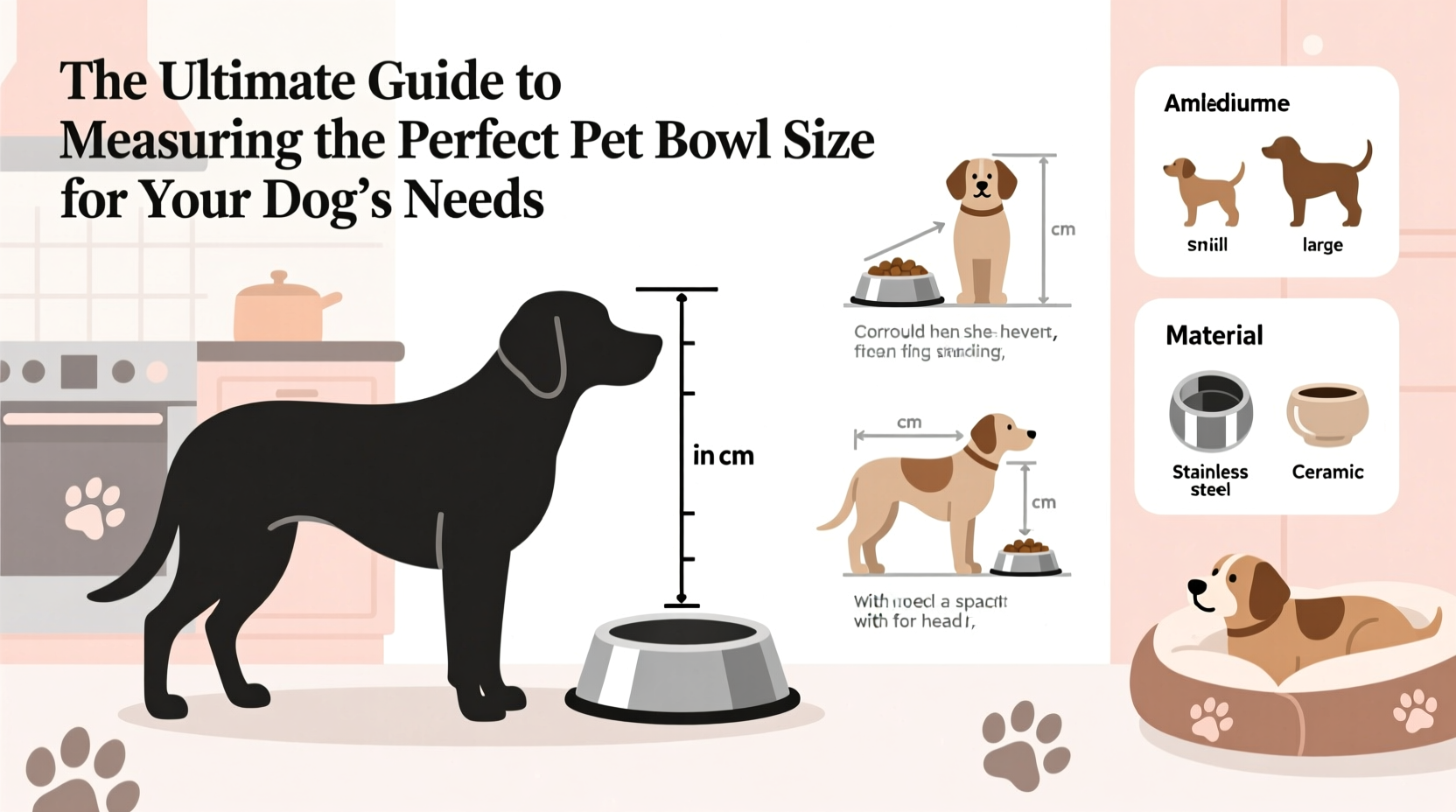
- Measure Your Dog’s Withers Height: Use a tape measure from the ground to the top of their shoulders (withers). This determines optimal bowl height.
- Determine Jaw Clearance: Observe your dog eating. Their chin should not drag on the floor, and their neck should remain nearly straight—not bent sharply downward.
- Calculate Food Volume Needs: Check your dog’s daily caloric requirement and kibble density. Most dry foods list cup-to-calorie ratios on packaging. For example, a 50-pound dog needing 1,000 calories/day might require ~3 cups of food daily, split into two meals (~1.5 cups per meal).
- Select Bowl Capacity: Choose a bowl that holds at least 1.5x the largest single meal volume to prevent overflow during enthusiastic eating.
- Test Depth and Diameter: The bowl should allow easy access to food without whisker stress. For most dogs, depth should be no more than 4 inches; diameter should exceed the width of their muzzle by 1–2 inches.
Breed-Specific Bowl Recommendations
Different breeds have distinct anatomical and behavioral traits that influence bowl choice. Below is a reference table outlining recommended bowl dimensions based on common breed categories.
| Breed Category | Withers Height Range | Recommended Bowl Height (from floor) | Capacity (Food) | Special Considerations |
|---|---|---|---|---|
| Small (e.g., Pomeranian, Shih Tzu) | 6–10 inches | 1–3 inches | 1–2 cups | Shallow bowls to avoid whisker fatigue |
| Medium (e.g., Beagle, Cocker Spaniel) | 15–20 inches | 4–6 inches | 2–3 cups | Wider diameter for easier access |
| Large (e.g., Labrador, German Shepherd) | 22–27 inches | 8–12 inches | 4–6 cups | Elevated feeders recommended to reduce strain |
| Giant (e.g., Mastiff, Saint Bernard) | 28+ inches | 12–18 inches | 6–10 cups | Deep-chested breeds benefit from slower feeding designs |
| Brachycephalic (e.g., Bulldog, Pug) | 10–16 inches | 2–5 inches | 1–2 cups | Wide, shallow bowls to accommodate flat faces |
Common Mistakes and How to Avoid Them
- Using human dishware: Plates and bowls designed for people lack the depth and stability dogs need and often promote neck strain.
- Ignoring growth phases: Puppies grow rapidly. Reassess bowl size every 4–6 weeks until adulthood.
- One-size-fits-all thinking: Even within breeds, individual variation exists. Always observe your dog’s posture and adjust accordingly.
- Overlooking water bowl needs: Water bowls should be larger than food bowls and refilled daily. Dehydration risk increases with undersized containers.
- Choosing decorative over functional: Bowls with narrow bottoms tip easily; those with sharp interiors damage gums.
Real-Life Example: Adjusting for a Growing Labrador Retriever
Sarah adopted a male Labrador puppy at 8 weeks old. Initially, she used a small ceramic bowl meant for toy breeds, thinking it was cute and easy to clean. By week 10, the puppy began pawing at the bowl and leaving food behind. After consulting her vet, Sarah realized the bowl was too shallow and low. The puppy had to lie down to eat, straining his developing joints.
She switched to a raised stainless steel feeder set at 6 inches off the ground with a 4-cup capacity. Within days, the puppy ate more consistently and stopped spilling. As he grew, Sarah increased the height to 10 inches by six months and upgraded to a 6-cup bowl. Monitoring his eating posture and adjusting incrementally prevented orthopedic stress during a critical growth phase.
Checklist: Choosing the Right Bowl for Your Dog
Use this checklist before purchasing or replacing a pet bowl:
- ☐ Measure your dog’s withers height
- ☐ Determine daily food volume per meal
- ☐ Select a bowl height that keeps the neck neutral
- ☐ Choose material: stainless steel, ceramic, or BPA-free plastic
- ☐ Ensure the diameter allows full access without whisker pressure
- ☐ Confirm non-slip base or elevated stand if needed
- ☐ Test the bowl with actual food and observe eating behavior
- ☐ Re-evaluate every 3–6 months or after major weight changes
Frequently Asked Questions
How do I know if my dog’s bowl is too small?
If your dog frequently knocks the bowl over, eats too quickly, leaves food around the edges, or appears frustrated during meals, the bowl may be too small or poorly shaped. Also, if you’re refilling multiple times per day despite appropriate portions, consider upgrading capacity.
Should large dogs always use elevated feeders?
Many large and giant breeds benefit from elevated feeders to maintain spinal alignment and reduce air ingestion. However, recent studies suggest that overly high feeders may increase bloat risk in deep-chested dogs. The ideal elevation brings the bowl to the lower chest level—about 6 inches below the withers—not shoulder height.
Can bowl size affect my dog’s hydration?
Absolutely. A water bowl that’s too small forces frequent refills and may discourage drinking. Dogs should have constant access to fresh water in a container holding at least twice their typical daily intake. For active or hot-climate dogs, even larger volumes are advisable.
Final Thoughts: Invest in Comfort, Not Just Convenience
Measuring the perfect pet bowl size is a simple act with lasting impact. It reflects a deeper commitment to your dog’s physical comfort, digestive health, and emotional well-being. Just as we wouldn’t expect a child to eat from a thimble or a giant pot, dogs deserve feeding tools suited to their bodies and lifestyles. By applying precise measurements, observing behavior, and adjusting as needed, you create a feeding experience that supports vitality at every life stage.
💬 Have you noticed a difference after changing your dog’s bowl size? Share your story or questions below—your experience could help another pet parent make a healthier choice today.








