Selecting the right collar for your puppy isn’t just about style or branding—it’s a critical component of their safety, comfort, and long-term well-being. A poorly fitted collar can cause skin irritation, breathing issues, or even allow an escape-prone pup to slip free. With so many collar types, materials, and sizes available, making the right choice can feel overwhelming. This guide walks you through every step—from measuring your puppy’s neck accurately to understanding growth patterns and selecting the ideal fit that adapts as they grow.
Why Proper Collar Fit Matters
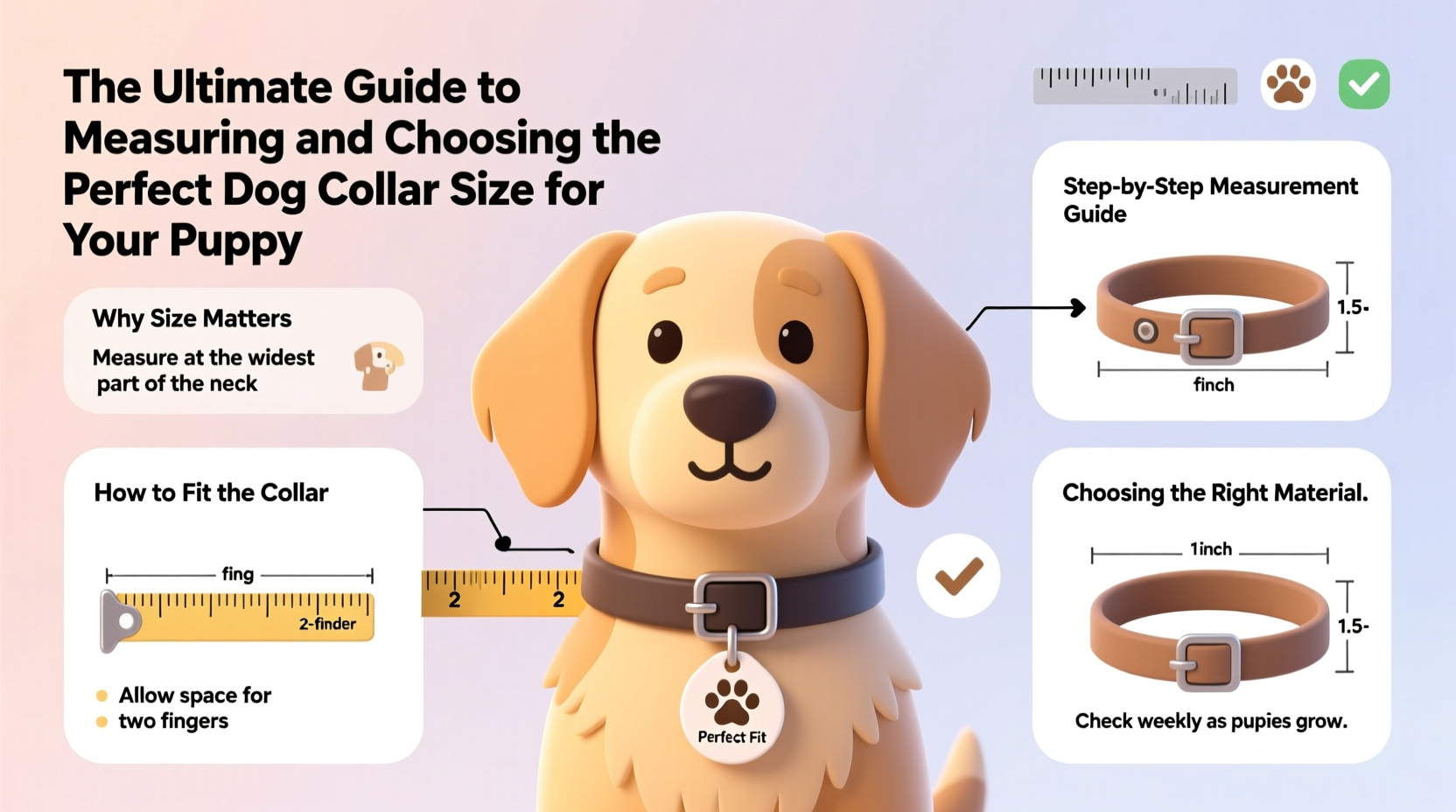
A collar serves multiple purposes: identification, leash attachment, training, and sometimes behavioral control. But above all, it must be safe. Too tight, and it can restrict airflow, damage the trachea, or cause fur loss and sores. Too loose, and your puppy risks slipping out during walks—especially common in breeds with narrow heads like Greyhounds or Whippets.
Puppies grow rapidly, particularly in their first six months. A collar that fits perfectly at eight weeks may become too small within a few weeks. Regular monitoring and timely adjustments are essential. The goal is a “snug but not tight” fit—comfortable enough for daily wear, secure enough to stay on during activity.
Tip: Always recheck your puppy’s collar fit every two to three weeks during their growth phase.How to Measure Your Puppy’s Neck Correctly
Accurate measurement is the foundation of proper collar selection. Follow this step-by-step method to ensure precision:
- Gather tools: Use a soft fabric tape measure. If unavailable, use a string and a ruler.
- Position correctly: Place the tape around the middle of your puppy’s neck, just behind the ears and above the shoulders—the natural collar zone.
- Ensure snugness: Slide two fingers between the tape and the neck. This mimics the ideal collar fit.
- Record the measurement: Note the circumference in inches or centimeters.
- Add room for growth: For puppies under six months, add ½ to 1 inch (1.25–2.5 cm) to account for rapid development.
If your puppy is still growing, avoid relying solely on breed-based size charts. Individual variation is significant—even within litters. A Chihuahua mix might need a smaller collar than expected, while a fast-growing Labrador could outgrow a medium in weeks.
Common Measurement Mistakes to Avoid
- Measuring too loosely or tightly.
- Using a rigid ruler instead of a flexible tape.
- Measuring around the head instead of the neck.
- Ignoring seasonal changes—thicker winter fur can increase neck girth slightly.
Choosing the Right Collar Type and Size
Not all collars are created equal. The best choice depends on your puppy’s breed, temperament, and stage of training. Below is a comparison of common collar types and their suitability:
| Collar Type | Best For | Sizing Notes | Caution |
|---|---|---|---|
| Flat Buckle Collar | Daily wear, ID tags, calm breeds | Adjustable; choose based on neck measurement + growth allowance | May not prevent pulling; unsuitable for strong pullers |
| Quick-Release Clip | Small breeds, ease of use | Lightweight; ensure clips don’t pinch sensitive skin | Less durable; check clasp security regularly |
| Martingale Collar | Slip-head breeds (Greyhounds, Basenjis) | Tightens gently when pulled; measure relaxed neck size | Never leave unattended; not for constant wear |
| Training Collar (e.g., head halter) | Puppies learning leash manners | Follow manufacturer’s fitting guide precisely | Must be introduced gradually; not for unsupervised use |
For young puppies, start with a lightweight flat buckle collar made from nylon or biothane. These materials resist moisture, won’t stretch, and are gentle on delicate skin. Avoid heavy leather collars until your puppy matures—these can be too rigid and may chafe.
Real-Life Example: Choosing a Collar for a Growing Beagle
Maria adopted a Beagle puppy named Milo at nine weeks old. His initial neck measurement was 10 inches. Knowing Beagles grow quickly, she added ¾ inch and selected a collar adjustable from 9 to 13 inches. Within six weeks, Milo had grown to a 12-inch neck. Because she chose a collar with sufficient adjustment range, she avoided needing a replacement prematurely. She switched to a sturdier 11–15 inch collar by week 14, ensuring continued comfort and safety.
This example highlights the importance of forward-thinking. Buying a collar that’s “a little big” is safer than one that’s already tight—but never so large that two adult fingers can fit between the collar and neck.
“Puppy collars should be checked weekly. Even a half-inch gap can mean the difference between a secure walk and a lost pet.” — Dr. Lena Torres, DVM, Canine Behavior Specialist
Step-by-Step Guide to Fitting a Puppy Collar
Once you’ve chosen the collar, follow this process to ensure proper fit:
- Unbuckle the collar and open it fully.
- Place it around your puppy’s neck, positioning it high—not drooping down toward the shoulders.
- Fasten the buckle securely, then test the fit.
- Perform the two-finger test: Slide your index and middle finger under the collar. It should slide easily without pinching or excessive space.
- Check for chafing points: Gently move the collar side to side. Look for redness or resistance near the ears or throat.
- Observe behavior: If your puppy scratches, shakes their head, or seems agitated, remove and reassess the fit.
- Repeat weekly or whenever growth is noticeable.
Frequently Asked Questions
How do I know if the collar is too tight?
If you cannot fit two fingers comfortably beneath the collar, it’s too tight. Signs include coughing, difficulty swallowing, hair loss, or visible indentations on the neck after removal.
Should my puppy wear the collar all day?
During the day, yes—especially when supervised. However, remove the collar during crate time or unsupervised play to prevent snagging. Never let a puppy sleep in a collar unless advised by a trainer or vet for specific reasons.
What size collar does a 10-pound puppy need?
A 10-pound puppy typically has a neck size between 8 and 11 inches. Choose a collar with an adjustable range that includes this span, such as 9–13 inches. Always measure directly rather than guessing by weight.
Final Checklist Before Purchase
- ✅ Measured neck circumference with two-finger space
- ✅ Added ½ to 1 inch for growth (if under 6 months)
- ✅ Selected appropriate collar type for breed and behavior
- ✅ Verified adjustability range covers current and near-future size
- ✅ Checked material for durability and skin sensitivity
- ✅ Confirmed secure buckle or clasp mechanism
- ✅ Planned to recheck fit every 2–3 weeks
Conclusion
Choosing the perfect collar for your puppy is more than a one-time decision—it’s an ongoing process of observation, measurement, and adaptation. A well-fitted collar supports your puppy’s safety, comfort, and training success. By following precise measuring techniques, understanding growth patterns, and selecting the right style, you set the foundation for a lifetime of secure, enjoyable walks together.
💬 Have questions about your puppy’s collar fit or need help choosing the right style? Share your experience or ask for advice in the comments—we’re here to help every puppy grow up safe and stylish!








