Dog bandanas are more than just a fashion statement—they’re a way to express your pet’s personality, protect their skin from sun exposure, or even signal their mood to other dogs and owners. But a poorly sized bandana can slip off, cause discomfort, or restrict movement. Choosing the right size isn’t guesswork; it requires understanding your dog’s neck dimensions, breed characteristics, and how the bandana will be used. Whether you're dressing up a Chihuahua for a birthday party or fitting a Great Dane for a summer hike, getting the fit right ensures safety, comfort, and style.
Why Bandana Size Matters More Than You Think
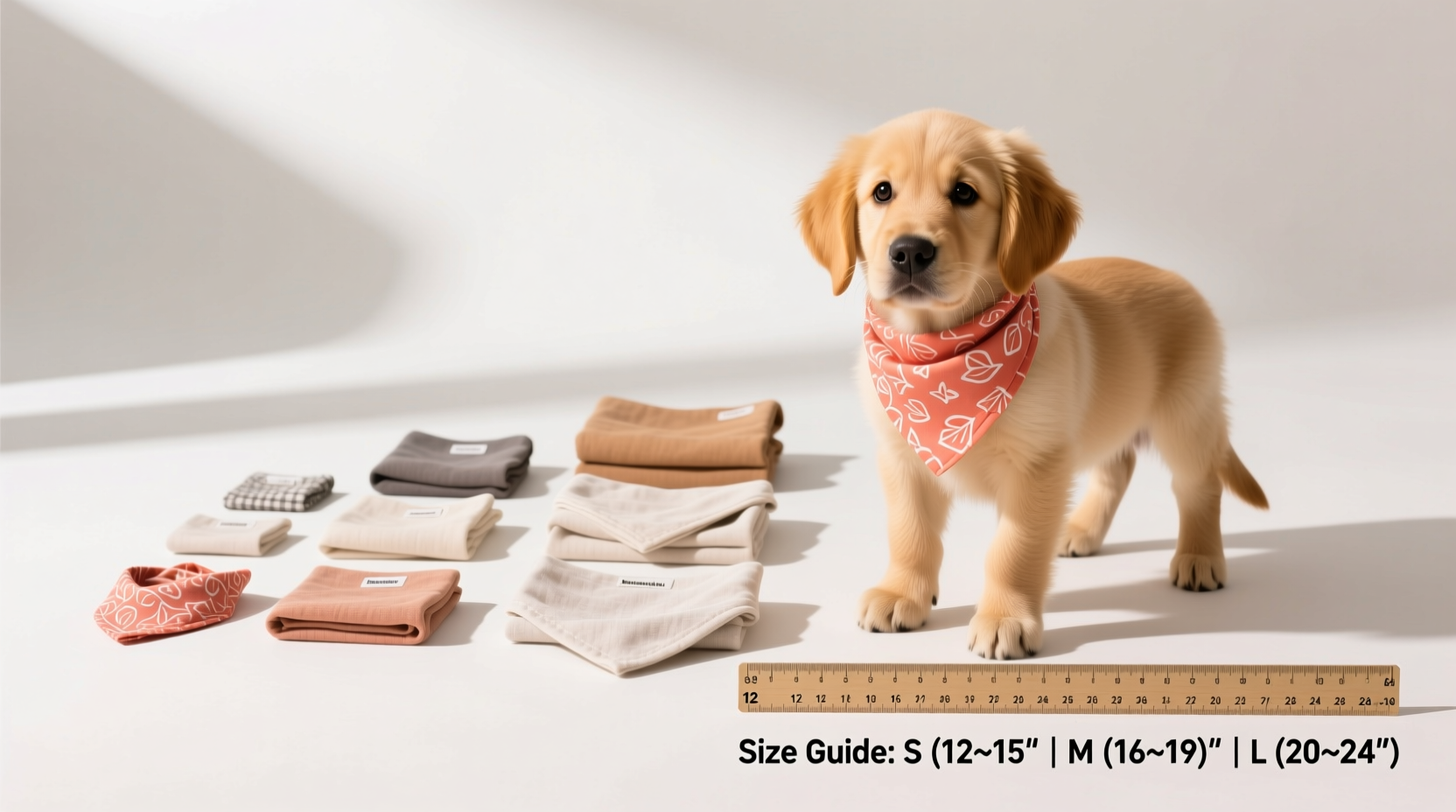
A well-fitting bandana stays in place without constant adjustment, doesn’t rub against sensitive areas, and allows full range of motion. Too tight, and it can impair breathing or circulation. Too loose, and it becomes a tripping hazard or gets caught on furniture. The ideal bandana should sit snugly behind the ears, with enough room to slide two fingers comfortably underneath the neck strap.
Different styles—triangle, square, or pre-tied bandanas—require different sizing approaches. Triangle bandanas, the most common, are typically tied at the back and depend heavily on neck circumference. Pre-tied versions often come in fixed sizes and may offer adjustable straps, but still require accurate measurement.
Tip: Always measure your dog’s neck when they’re calm and standing naturally. Avoid measuring over an existing collar, as this can inflate the size.How to Measure Your Dog’s Neck Correctly
The foundation of selecting the right bandana is an accurate neck measurement. Use a soft fabric tape measure—not a rigid ruler—for flexibility and precision. Wrap it around the base of the neck where the collar normally sits, ensuring it’s flat and not twisted. Pull it snug but not tight—two fingers should fit between the tape and the skin.
Note the measurement in inches. This number is your starting point. However, don’t stop there. Consider your dog’s coat thickness. A Husky with a double coat may need a larger size than a Greyhound of similar neck measurement due to bulk under the fur.
“Accurate neck measurement is 80% of proper bandana fit. The rest comes down to style and function.” — Dr. Lena Torres, Canine Behavior and Comfort Specialist
Bandana Size Guide by Breed and Weight
While measurements are best, many shoppers use breed or weight as a shortcut. Below is a general reference table based on average neck circumferences across common breeds.
| Dog Size Category | Average Neck Circumference | Recommended Bandana Size | Example Breeds |
|---|---|---|---|
| Extra Small (XS) | 8–10 inches | Triangle: 10” x 10” | Chihuahua, Pomeranian, Toy Poodle |
| Small (S) | 10–13 inches | Triangle: 12” x 12” | Beagle, Cocker Spaniel, Shih Tzu |
| Medium (M) | 14–17 inches | Triangle: 15” x 15” | Bulldog, Border Collie, Basset Hound |
| Large (L) | 18–22 inches | Triangle: 18” x 18” | Labrador, German Shepherd, Boxer |
| Extra Large (XL) | 23+ inches | Triangle: 22” x 22” or custom | Great Dane, Mastiff, Saint Bernard |
This chart serves as a guideline. Always cross-check with actual measurements. Some medium breeds like Bulldogs have thicker necks relative to their weight, requiring a larger bandana than expected.
Step-by-Step: How to Choose & Fit a Bandana
Selecting the perfect bandana involves more than just size. Follow this five-step process to ensure optimal fit and function:
- Measure the neck using a soft tape measure at the usual collar position.
- Determine the purpose: Is it for sun protection, cooling, fashion, or identification? Cooling bandanas may be larger to hold dampness; reflective ones might have wider straps.
- Choose the style: Triangle bandanas offer versatility and adjustability. Pre-tied bandanas save time but may limit fit options.
- Select the material: Lightweight cotton is ideal for daily wear; polyester blends offer durability. Avoid heavy fabrics for small breeds.
- Test the fit: Tie or fasten the bandana and observe your dog for 10–15 minutes. Check for slipping, scratching, or signs of irritation behind the ears.
Common Sizing Mistakes and How to Avoid Them
Even experienced pet owners make errors when selecting bandanas. Here are the most frequent missteps—and how to correct them:
- Mistake: Using collar size as a direct substitute – Collars are sized differently and often include extra holes. Always measure the neck directly.
- Mistake: Ignoring growth in puppies – A puppy’s neck can grow rapidly. Re-measure every 4–6 weeks and opt for adjustable or slightly larger bandanas during growth spurts.
- Mistake: Prioritizing looks over fit – Oversized bandanas may look dramatic in photos but can interfere with movement or get tangled.
- Mistake: Not checking after activity – After play or swimming, recheck the fit. Wet fabric shrinks and can tighten unexpectedly.
Real-Life Example: Fitting Bella the Beagle
Bella, a three-year-old Beagle, kept slipping out of her bandanas during neighborhood walks. Her owner, Sarah, assumed a “small” size was correct based on breed charts. After measuring, she discovered Bella’s neck was 13.5 inches—right at the upper limit of small. Upgrading to a medium-sized triangle bandana (15” x 15”) solved the issue. The larger size allowed for a secure knot behind the ears without pressure, and the bandana stayed in place throughout hikes and park visits. The key was combining measurement with observation.
Checklist: Before You Buy a Dog Bandana
Use this checklist to ensure you’re making the right choice:
- ☑ Measured neck circumference accurately
- ☑ Considered coat thickness and breed traits
- ☑ Selected appropriate material for climate and use
- ☑ Chosen style (triangle, square, pre-tied) based on ease and function
- ☑ Verified return policy in case of sizing issues
- ☑ Checked for safety features (e.g., no loose embellishments)
Frequently Asked Questions
Can I use one bandana size for all seasons?
It depends. If your dog maintains a consistent weight and coat length, yes. However, dogs with seasonal shedding may need different sizes—thicker winter coats can add half an inch or more to neck girth. Consider having two sets: lightweight for summer, slightly larger for winter.
What if my dog has a wide neck but a small head?
This is common in breeds like Pit Bulls and Bull Terriers. Look for bandanas with longer tie straps or adjustable Velcro closures. Triangle bandanas made from stretchable fabric blends can also accommodate disproportionate proportions safely.
How tight should a dog bandana be?
Snug enough to stay in place, but loose enough to fit two fingers between the fabric and the neck. If your dog scratches, shakes their head excessively, or seems reluctant to move, the bandana is likely too tight.
Final Thoughts: Style Meets Safety
Choosing the perfect size dog bandana blends practicality with personal expression. When done right, it enhances your dog’s comfort and confidence—whether they’re lounging at home or turning heads at the dog park. Never assume size based on breed alone. Measure, test, and observe. A well-fitted bandana doesn’t just look good—it supports your dog’s well-being.
💬 Have a tip or story about finding the perfect bandana fit? Share your experience below and help fellow dog lovers dress their pups in comfort and style!








