For small dog owners, finding the right collar isn’t just about style—it’s about safety, comfort, and longevity. Many collars marketed for tiny breeds fail under everyday stress, fraying after weeks or breaking during a sudden tug. A poorly constructed collar can slip off, cause skin irritation, or even lead to injury. Choosing one that truly lasts requires understanding materials, fit, hardware quality, and breed-specific needs. This guide cuts through marketing claims to deliver practical, tested advice on selecting a collar built to endure.
Why Durability Matters for Small Dogs
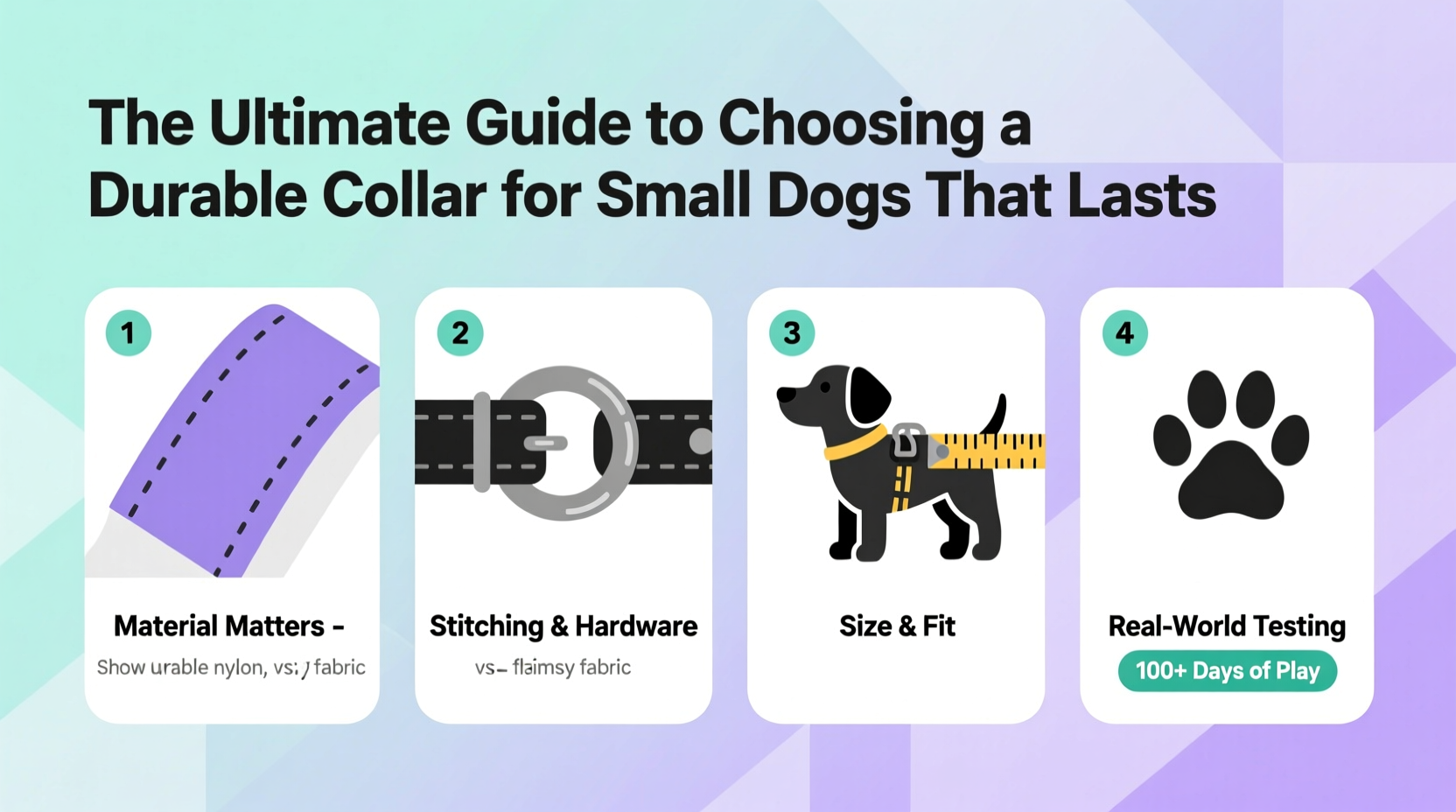
Small dogs may not pull like larger breeds, but their collars face unique challenges. Frequent indoor movement, contact with furniture, chewing habits, and delicate skin all contribute to wear and tear. Additionally, many small breeds—like Chihuahuas, Pomeranians, and Yorkshire Terriers—are prone to tracheal collapse, making it essential that their collars are both strong and gentle on the neck.
A durable collar doesn’t just resist fraying; it maintains structural integrity over time, keeps hardware intact, and preserves its shape without stretching. Longevity reduces replacement costs and minimizes environmental waste from discarded accessories. More importantly, a reliable collar means consistent identification and leash control, critical for your dog’s safety.
Tip: Always check stitching monthly—reinforced box-stitching at stress points is a hallmark of long-lasting collars.Key Materials That Stand the Test of Time
The foundation of durability lies in material choice. Not all fabrics or synthetics perform equally under strain, moisture, or friction. Here’s a breakdown of the most resilient options:
- Nylon webbing: Lightweight, water-resistant, and highly tensile. High-density nylon (often used in military-grade gear) resists fraying and UV degradation.
- Polyester: Similar to nylon but less elastic, offering better shape retention. Often blended with spandex for stretch without compromising strength.
- Leather (genuine or synthetic): Naturally durable and molds to the dog’s neck over time. Full-grain leather is best, though it requires maintenance to prevent drying.
- Reflective threading: Woven into fabric rather than printed, this enhances visibility and adds abrasion resistance.
Avoid cotton or thin ribbon collars—they look charming but degrade quickly with washing and outdoor exposure. Mesh collars, while breathable, often lack reinforcement and are best suited for supervised, short-term use.
“Durability begins at the fiber level. For small dogs, I recommend high-tenacity nylon with double-layer construction—it supports safety without adding bulk.” — Dr. Lena Patel, Veterinary Behaviorist & Pet Product Consultant
Hardware and Construction: What to Inspect Before Buying
Even the strongest fabric fails if attached with weak hardware. The buckle, D-ring, and stitching determine whether a collar survives a spirited squirrel chase or a startled leap.
Buckle Type
Two primary types dominate the market: side-release (plastic) and roller buckles (metal). Side-release buckles made from acetal resin (e.g., Duraflex) are lightweight and secure, ideal for daily wear. Cheaper plastic variants crack under pressure. Roller buckles are more common on martingale collars and offer smooth adjustment with metal-on-metal reliability.
D-Ring Quality
This small loop attaches the leash and bears the brunt of force. Solid brass or nickel-plated steel rings resist corrosion and bending. Avoid hollow or welded rings—they can snap under tension.
Stitching Technique
Look for triple-stitched seams or box-stitching around the D-ring and buckle. Zigzag stitching offers more give than straight lines, reducing thread breakage. Contrast stitching makes flaws easier to spot over time.
| Feature | Durable Choice | Avoid |
|---|---|---|
| Buckle | Duraflex side-release or metal roller | Thin plastic, no-lock mechanisms |
| D-Ring | Solid brass or stainless steel | Hollow, painted, or welded rings |
| Stitching | Triple or box-stitched with bonded thread | Single-line, loose, or uneven stitches |
| Lining | Soft neoprene or fleece (for sensitive skin) | Rough inner edges, exposed stitching |
Step-by-Step: How to Choose the Right Collar for Your Small Dog
Selecting a lasting collar isn’t guesswork. Follow this process to ensure every factor is considered:
- Measure your dog’s neck accurately. Use a soft tape measure snugly behind the ears and above the shoulders. Add ½ inch for growth and comfort. Re-measure every 3–6 months for puppies.
- Determine usage needs. Is it for walking, ID display, training, or all-day wear? Active dogs need reinforced collars; fashion-focused ones may prioritize softness.
- Evaluate material suitability. For dogs that swim or live in humid climates, prioritize quick-drying nylon. For allergy-prone pets, hypoallergenic leather or polyester blends work best.
- Test adjustability. The collar should have multiple sizing holes so it can be tightened as needed. Sliding martingales are excellent for escape-prone breeds.
- Inspect craftsmanship. Hold the collar firmly and tug on the D-ring. Wiggle the buckle. If anything feels loose or creaks, walk away.
- Check return policy. Even well-made collars may not suit your dog. Buy from brands offering exchanges within 30 days.
Real-Life Example: From Breakdown to Breakthrough
Maria adopted a 4-pound Havanese named Milo, who loved darting after birds in the garden. Within two months, three different collars had broken—two at the buckle, one where the D-ring tore through the fabric. Frustrated and worried about losing him, she consulted a trainer who recommended a collar with military-spec nylon, box-stitching, and a solid brass D-ring. She chose a custom-fit martingale with reflective threading. Two years later, the collar remains intact, only replaced because Milo outgrew it. “It survived mud, rain, and Milo’s obsession with squirrels,” Maria said. “Now I check every new accessory like I’m buying car parts.”
Tip: Rotate between two high-quality collars to extend the life of each by reducing continuous wear.Essential Checklist Before Purchase
Use this checklist when evaluating any collar:
- ☑ Measured neck size confirmed with room to grow
- ☑ Material is abrasion-resistant (nylon, leather, or reinforced polyester)
- ☑ Hardware is solid metal or high-grade polymer
- ☑ Stitching is tight, tripled, and reinforced at stress points
- ☑ Lining is smooth and non-irritating for sensitive skin
- ☑ Reflective elements are woven-in, not surface-printed
- ☑ Brand offers warranty or satisfaction guarantee
Frequently Asked Questions
How often should I replace my small dog’s collar?
Even durable collars should be inspected monthly. Replace immediately if you notice fraying, weakened stitching, or damaged hardware. With proper care, a high-quality collar can last 1–3 years, depending on activity level and exposure to elements.
Are wider collars better for small dogs?
Not necessarily. While wider collars distribute pressure more evenly, they can be cumbersome on toy breeds. A width of ½ inch is typically sufficient for dogs under 15 pounds, provided the material and construction are robust.
Can I wash a durable collar?
Yes, most nylon and polyester collars are machine-washable on gentle cycle or hand-washable with mild soap. Leather collars require specialized cleaners and conditioning. Always air dry—never use heat, which degrades adhesives and fibers.
Final Thoughts: Invest in Safety, Not Just Style
A collar is more than an accessory—it’s a vital piece of safety equipment. For small dogs, whose size makes them more vulnerable to slipping away or sustaining injury, a durable collar is non-negotiable. By prioritizing material integrity, hardware strength, and precise fit, you ensure your pet stays secure, comfortable, and identifiable for years. Don’t settle for flimsy designs sold on cuteness alone. Choose wisely, inspect regularly, and upgrade proactively. Your dog’s daily adventures deserve a collar that won’t quit.
🚀 Ready to upgrade your dog’s collar? Start by measuring their neck today and compare your current collar against the durability checklist. Share your go-to brand or tip in the comments—your insight could help another pet parent make a safer choice.








