A well-oxygenated aquarium is essential for the health and vitality of fish, beneficial bacteria, and aquatic plants. While filters contribute to water movement, they don’t always provide sufficient surface agitation or dissolved oxygen. This is where an air pump becomes indispensable. Whether you're maintaining a betta tank, a breeding setup, or a heavily stocked community aquarium, understanding how to install and optimize an air pump can dramatically improve water quality and reduce stress on your fish.
Why Your Fish Tank Needs an Air Pump
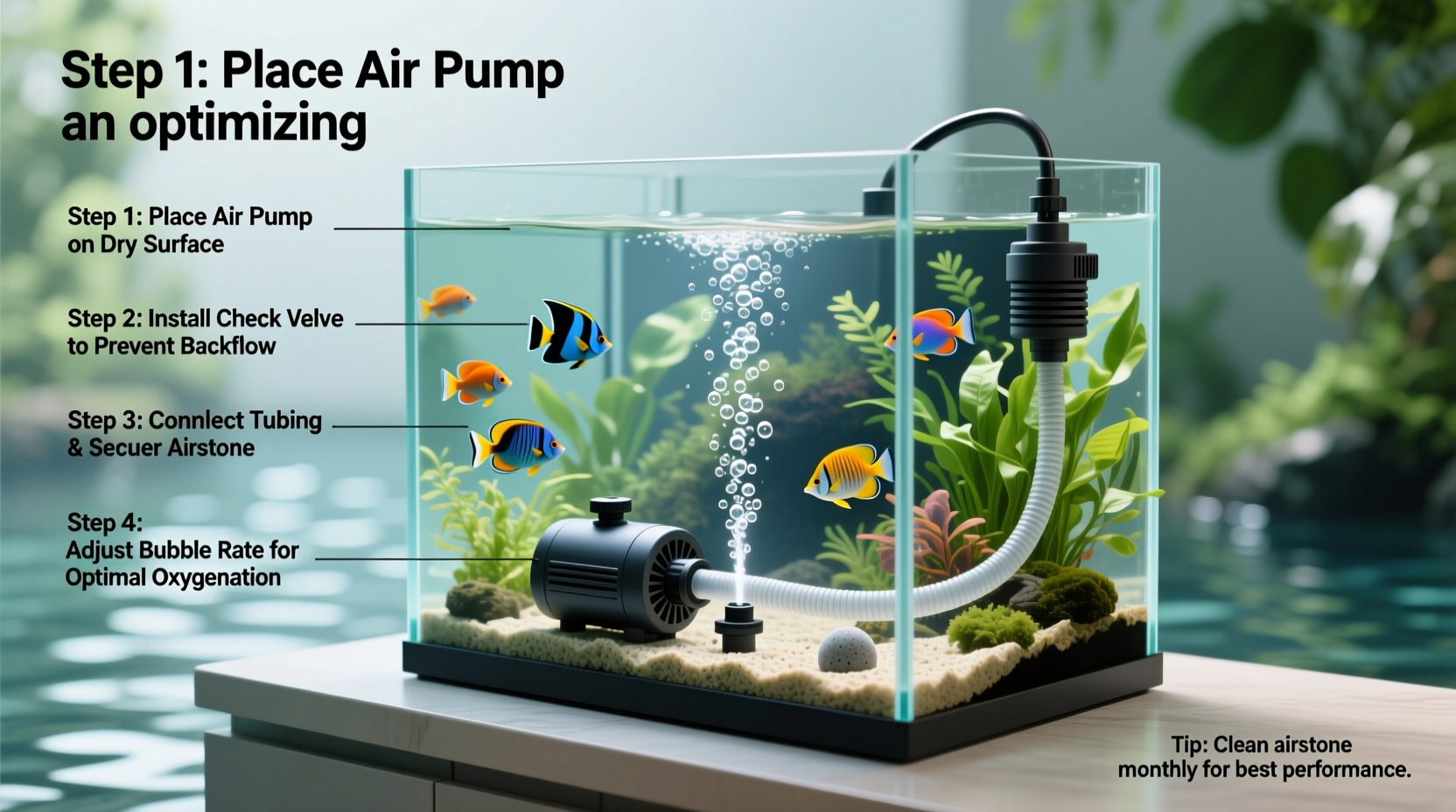
An air pump increases dissolved oxygen levels by forcing air through a diffuser or air stone, creating bubbles that rise to the surface. As these bubbles burst, they enhance gas exchange—releasing carbon dioxide and absorbing oxygen from the atmosphere. This process is especially critical in warm water tanks (where oxygen solubility is lower), densely populated setups, or tanks with limited surface movement.
Beyond oxygenation, air pumps power various accessories such as sponge filters, undergravel filters, protein skimmers (in saltwater), and decorative bubbling ornaments. They also help prevent dead spots in the tank by promoting gentle water circulation without strong currents that might stress certain species.
Tip: Even if your filter creates surface ripples, adding an air pump during hot weather or power outages can be a lifesaver for oxygen-sensitive species.Step-by-Step Installation Guide
Installing an air pump correctly ensures quiet operation, maximum efficiency, and long-term reliability. Follow this timeline-based approach:
- Choose the Right Location: Place the air pump above the water level of the tank, ideally on a shelf or wall mount behind the aquarium. This prevents back-siphoning if the pump stops.
- Attach Tubing: Connect flexible airline tubing to the outlet nozzle of the pump. Use a check valve near the pump end to block water from flowing backward into the device.
- Add an Air Stone or Diffuser: Attach the other end of the tubing to an air stone, porous wood, or diffuser inside the tank. Soak ceramic stones in water first to remove dust and prime airflow.
- Route Tubing Neatly: Clip the tubing along the back of the tank using suction cup holders. Avoid sharp bends that restrict airflow. <5> Plug In and Test: Turn on the pump and observe bubble flow. Adjust the rate using a control valve if included. Listen for excessive vibration or noise—place rubber pads under the pump to dampen sound.
After installation, monitor the system for 24 hours. Ensure no leaks, consistent bubbling, and stable water levels. If bubbles stop suddenly, check for clogs, kinks, or malfunctioning valves.
Optimizing Air Pump Performance
Simply having an air pump isn’t enough—you need to fine-tune it for your specific tank conditions. Optimization involves balancing oxygen delivery with energy efficiency and minimizing disturbance to fish.
| Tank Type | Recommended Airflow | Ideal Accessories |
|---|---|---|
| Small Betta (5–10 gal) | Low (gentle bubbles) | Micro air stone, sponge filter |
| Community Tank (20–40 gal) | Moderate (steady stream) | Dual air stones, UGF |
| Breeding/Fry Tank | High (constant flow) | Fine-pore diffuser, adjustable valve |
| Planted Tank | Low–Moderate (night only) | Timer-controlled pump |
In planted tanks, consider running the air pump only at night when photosynthesis stops and oxygen levels dip. Use a simple timer plug to automate this cycle. For deep tanks over 18 inches, position air stones near the substrate to maximize vertical water turnover.
“Proper aeration can reduce fish mortality by up to 40% in tropical systems, especially during seasonal temperature spikes.” — Dr. Lena Torres, Aquatic Biologist & Aquarium Systems Researcher
Common Mistakes and How to Avoid Them
Even experienced hobbyists make errors when setting up air pumps. Recognizing these pitfalls early saves time, money, and protects your livestock.
- Placing the pump below tank level: Risk of flooding the pump during a power outage. Always elevate the unit or use a check valve.
- Using dirty or aged tubing: Algae buildup restricts airflow. Replace airline every 6–12 months or clean with diluted vinegar.
- Over-aerating sensitive species: Bettas and some catfish prefer calm water. Use porous stones instead of loud bubblers.
- Ignoring noise issues: Vibration travels through surfaces. Isolate the pump with foam pads or enclosures.
- Forgetting maintenance: Clean air stones monthly; replace them annually as pores clog and reduce output.
Real-World Example: Reviving a Stagnant 30-Gallon Tank
Mark, an intermediate aquarist, struggled with low oxygen signs in his 30-gallon community tank—guppies gasping at the surface, slow bacterial colonization, and persistent algae blooms. His hang-on-back filter provided minimal surface agitation.
He installed a dual-outlet air pump with two medium-pore air stones placed at opposite ends of the tank. Within 48 hours, surface rippling increased visibly, and fish resumed normal swimming behavior. After one week, nitrite levels dropped due to improved aerobic bacterial activity. Mark later added a timer to run the pump only at night, reducing noise while maintaining balance.
This case illustrates how targeted aeration solves multiple problems simultaneously—oxygen deficiency, poor circulation, and biological inefficiency.
Essential Checklist for Air Pump Setup
Before powering on your system, verify each item:
- ✅ Air pump positioned above water line
- ✅ Check valve installed on airline tubing
- ✅ Air stone submerged and securely anchored
- ✅ Tubing free of kinks or compression
- ✅ Control valve adjusted for desired bubble rate
- ✅ Pump isolated from vibrations (foam pad used)
- ✅ System tested for 24 hours without issues
Frequently Asked Questions
Can I leave my air pump on 24/7?
Yes, most modern air pumps are designed for continuous operation. However, in planted tanks, turning them off during daylight hours may prevent excessive oxygen supersaturation and CO₂ loss. Using a timer offers flexibility.
Why has my air stone stopped bubbling?
Clogging is the most common cause. Mineral deposits and biofilm block the pores over time. Soak the stone in a 1:1 white vinegar and water solution for 2–3 hours, then rinse thoroughly. If performance doesn’t improve, replace it.
Do all fish tanks need an air pump?
No. Tanks with powerful filters that agitate the surface sufficiently may not require additional aeration. However, any tank with high bioload, warm water (>78°F), or low flow benefits from supplemental oxygen via an air pump.
Final Thoughts: Breathe New Life Into Your Aquarium
An air pump is more than just a bubbling decoration—it's a functional tool that supports respiration, filtration, and ecosystem stability. When installed thoughtfully and maintained regularly, it becomes an invisible guardian of your aquarium’s health. From preventing oxygen crashes to enhancing biological filtration, the right setup pays dividends in fish vitality and peace of mind.
Now that you understand the science and practical steps behind effective aeration, take action today. Assess your current tank conditions, choose the appropriate equipment, and optimize airflow for your unique environment. Your fish will swim stronger, breathe easier, and thrive longer.
💬 Have questions about your setup or want to share your air pump success story? Join the conversation—your experience could help another hobbyist breathe easier too.








