
A sudden change in your voice—especially the development of a hoarse or raspy tone—can be alarming. While often temporary and linked to minor conditions like a cold or overuse, a raspy voice can sometimes signal something more serious. Understanding the root causes, knowing how to treat it effectively, and recognizing red flags can prevent complications and support faster recovery.
Vocal changes occur when the vocal cords—delicate tissues in the larynx (voice box)—become inflamed, swollen, or irritated. This affects their ability to vibrate smoothly, resulting in a strained, weak, or gravelly sound. The good news is that most cases resolve with rest and simple care. But certain symptoms warrant prompt medical attention.
Common Causes of a Sudden Raspy Voice
The onset of voice changes can happen overnight or within hours. Identifying the underlying cause helps determine the appropriate response.
- Viral upper respiratory infections: Colds, flu, and other viruses frequently lead to laryngitis, one of the most common reasons for sudden hoarseness.
- Vocal strain: Shouting at a concert, prolonged talking, or speaking loudly in noisy environments can fatigue the vocal cords.
- Allergies: Postnasal drip from allergic reactions irritates the throat and larynx, leading to inflammation.
- Acid reflux (LPR): Silent reflux, where stomach acid reaches the throat without heartburn, can damage vocal tissue over time—even causing sudden worsening after lying down or eating certain foods.
- Dehydration: Dry vocal cords don’t vibrate efficiently. Alcohol, caffeine, dry indoor air, and insufficient fluid intake contribute to this issue.
- Environmental irritants: Smoke, chemical fumes, and pollution can inflame the larynx quickly, especially in sensitive individuals.
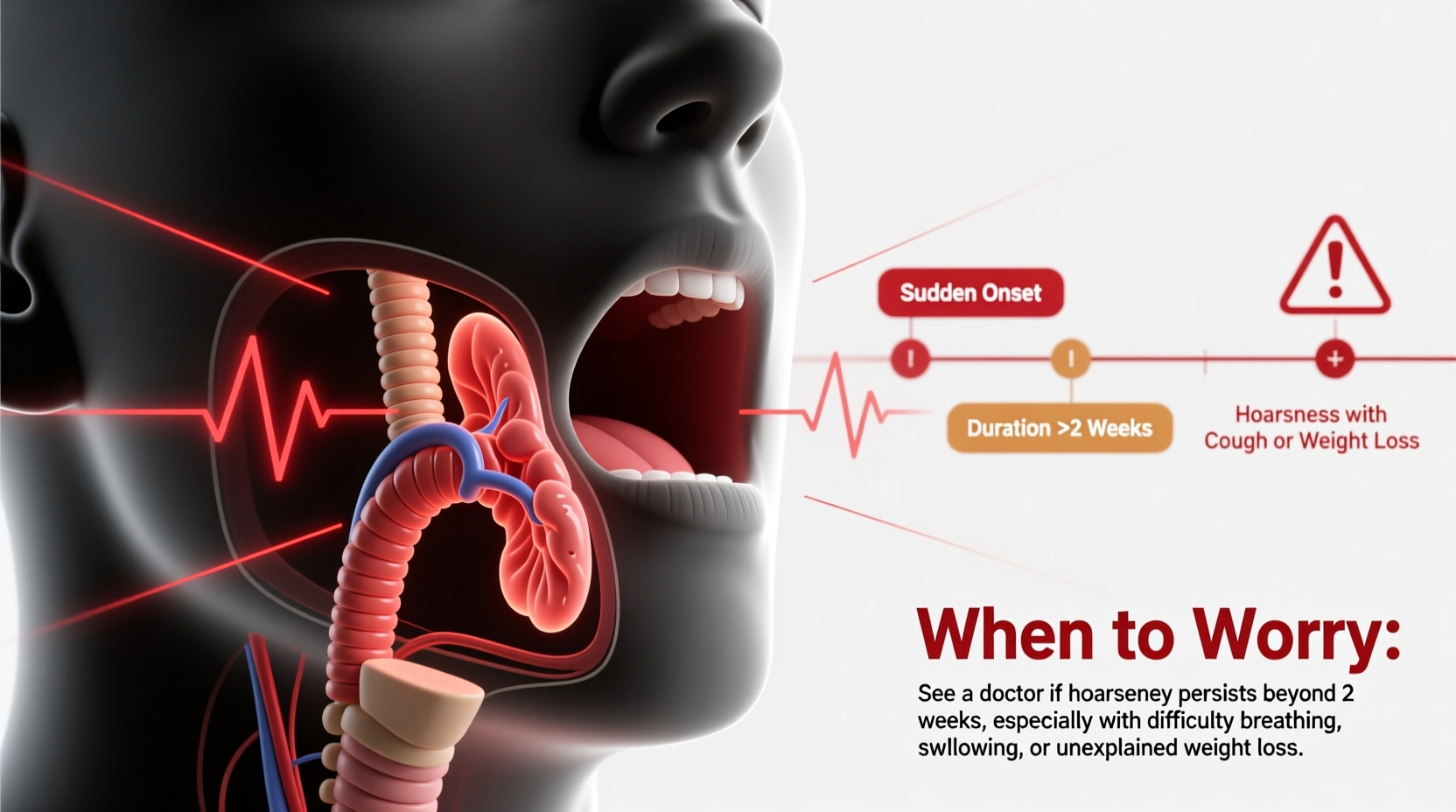
When to Worry: Red Flags That Need Medical Evaluation
While most voice changes resolve in a week or two, certain symptoms indicate a need for professional assessment. Delaying care in these situations can lead to chronic issues or mask serious conditions.
“Persistent hoarseness lasting more than three weeks should never be ignored. It’s the body’s way of signaling that something isn’t right with the vocal cords.” — Dr. Lena Torres, Otolaryngologist, Johns Hopkins Voice Center
Seek immediate medical attention if you experience any of the following:
- Hoarseness lasting longer than 3 weeks without improvement
- Pain when speaking or swallowing that worsens over time
- Difficulty breathing or a sensation of tightness in the throat
- Complete loss of voice (aphonia) without an obvious cause
- Lump-like sensation in the throat that doesn’t go away
- Unexplained weight loss alongside voice changes
- Coughing up blood
These may point to vocal cord nodules, polyps, nerve damage, or, in rare cases, laryngeal cancer. Early diagnosis dramatically improves outcomes, particularly for tumors.
Treatment and Home Care Strategies
In many cases, a raspy voice responds well to conservative measures. The goal is to reduce irritation and allow the vocal cords to heal.
Step-by-Step Recovery Plan
- Vocal rest: Avoid whispering, shouting, or prolonged talking. Whispering actually strains the voice more than soft speech.
- Hydration: Drink plenty of water throughout the day. Warm herbal teas (like chamomile or licorice root) may soothe irritation.
- Humidify the air: Use a cool-mist humidifier, especially at night, to prevent drying of the throat.
- Avoid irritants: Steer clear of smoke, strong perfumes, and cleaning chemicals. Quit smoking if applicable.
- Manage reflux: Avoid spicy, acidic, or fatty foods before bed. Elevate the head of your bed slightly if nighttime reflux is suspected.
- Limit decongestants: These can dry out mucous membranes. Use only if absolutely necessary and under guidance.
| Do’s | Don’ts |
|---|---|
| Drink warm fluids like broth or tea | Smoke or vape |
| Use a humidifier in dry rooms | Clear your throat repeatedly |
| Rest your voice completely for 24–48 hours if possible | Whisper or talk over loud noise |
| Gargle with warm salt water to ease discomfort | Consume alcohol or caffeine, which dehydrate |
| Take steam inhalations (e.g., leaning over a bowl of hot water) | Use over-the-counter sprays without consulting a doctor |
Real-Life Example: A Teacher’s Experience
Sarah, a middle school teacher, developed a sudden raspy voice during parent-teacher conference week. She attributed it to exhaustion and continued speaking through back-to-back meetings. After five days, her voice vanished entirely. Concerned, she visited an ENT specialist.
Examination revealed bilateral vocal cord swelling and early formation of nodules—likely due to chronic overuse combined with mild acid reflux. Sarah was prescribed strict vocal rest for one week, daily hydration goals, and a proton-pump inhibitor to manage reflux. She also began working with a speech therapist to improve vocal technique.
Within six weeks, her voice returned to normal. “I didn’t realize how much strain I was putting on my voice,” she said. “Now I use a microphone in class and schedule silent breaks between lessons.”
FAQ: Common Questions About Sudden Voice Changes
Can allergies really cause a raspy voice?
Yes. Allergic rhinitis leads to postnasal drip, where mucus drains down the back of the throat and irritates the larynx. This constant irritation can result in swelling and hoarseness, even without nasal congestion.
Is it worse to whisper when your voice is gone?
Yes. Whispering forces the vocal cords to tense and stretch abnormally, increasing trauma. It's better to speak softly or remain silent altogether during recovery.
How long does viral laryngitis usually last?
Most cases resolve within 7 to 10 days with rest and hydration. If symptoms persist beyond two weeks, further evaluation is recommended to rule out secondary infection or structural issues.
Prevention Checklist: Protect Your Voice Daily
- ✅ Stay well-hydrated (aim for 6–8 glasses of water daily)
- ✅ Avoid yelling or talking over background noise
- ✅ Use amplification devices if you speak professionally
- ✅ Treat allergies and reflux promptly
- ✅ Practice good hand hygiene to avoid viral infections
- ✅ Limit alcohol and quit smoking
- ✅ Humidify indoor air during dry seasons
“Your voice is a vital tool—whether you’re a singer, teacher, or just someone who values clear communication. Treat it with the same care you’d give your eyes or ears.” — Dr. Alan Pierce, Speech-Language Pathologist
Conclusion: Listen to Your Voice—Literally
A sudden raspy voice is often benign, but it shouldn't be dismissed without consideration. Most cases respond well to rest, hydration, and avoidance of irritants. However, persistent hoarseness is not normal and deserves medical investigation. Early intervention prevents long-term damage and can uncover underlying conditions that affect more than just your voice.
Whether you rely on your voice for work or simply want to maintain your ability to communicate clearly, proactive care makes all the difference. Pay attention to your body’s signals, adopt healthy vocal habits, and don’t hesitate to consult a specialist when needed.
💬 Have you experienced sudden voice changes? What helped you recover? Share your story in the comments to help others recognize symptoms and find relief.








