For individuals with oily skin, finding the right foundation isn’t just about achieving flawless coverage—it’s about maintaining a matte finish throughout the day without slipping, sliding, or settling into pores. Two popular formats—stick and liquid foundations—often come up in conversations about ideal formulations for oil control. While both have loyal followings, their performance on oily skin can vary significantly based on ingredients, application method, and lifestyle factors.
Oily skin is characterized by excess sebum production, particularly in the T-zone (forehead, nose, and chin). This natural oil can break down makeup, cause caking, and lead to unwanted shine by midday. Choosing between stick and liquid foundation involves more than personal preference; it requires understanding how each formulation interacts with your skin type, climate, and daily routine.
Understanding Foundation Formulations for Oily Skin
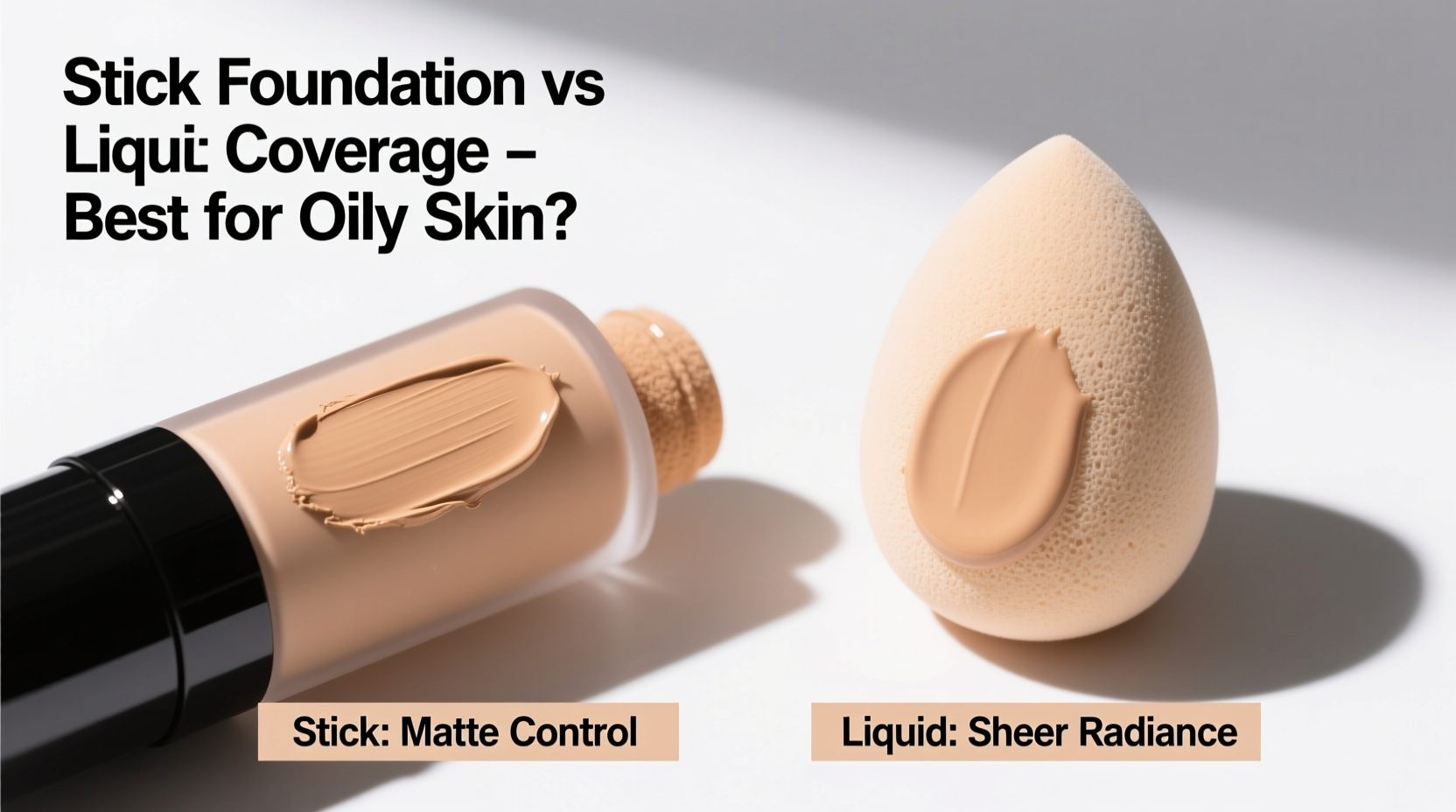
The effectiveness of any foundation on oily skin depends on its base, texture, and finish. Stick foundations are typically wax-based and highly concentrated, offering buildable coverage in a compact form. Liquid foundations, on the other hand, are fluid-based and often contain water, silicones, or oils designed to blend smoothly across the skin.
For oily complexions, the goal is to balance coverage with breathability while avoiding pore-clogging ingredients. Many dermatologists emphasize the importance of non-comedogenic (non-pore-blocking) formulas. According to Dr. Lena Patel, a board-certified dermatologist in Los Angeles:
“Oily skin doesn’t mean you should avoid moisture altogether. The key is using lightweight, oil-free products that hydrate without contributing to greasiness. Look for mattifying agents like silica, clay, or niacinamide in either stick or liquid forms.” — Dr. Lena Patel, Dermatologist
Both stick and liquid foundations can meet these criteria—but they do so differently.
Stick Foundations: Pros and Cons for Oily Skin
Stick foundations are gaining popularity due to their portability and high coverage potential. They’re especially favored for touch-ups and spot-concealing on the go.
Advantages of Stick Foundations
- Highly portable and mess-free: Ideal for travel or quick fixes during the day.
- Buildable, full coverage: Excellent for hiding blemishes, redness, and discoloration common in oily skin types.
- Long-wearing formula: Often contains waxes and emollients that resist melting, making them durable in humid conditions.
- Natural matte finish: Many stick foundations are formulated with powders or clays that absorb oil as it emerges.
Drawbacks of Stick Foundations
- Can feel heavy: Over-application may lead to a cakey appearance, especially if not blended well.
- Potential for tugging: Due to their thick consistency, some sticks drag on the skin unless warmed slightly before use.
- Limited shade ranges: Some brands offer fewer options compared to liquid lines, making matching harder.
- May clog pores: If not labeled non-comedogenic, the wax-heavy base can contribute to breakouts over time.
Liquid Foundations: Performance on Oily Skin
Liquid foundations dominate the market for a reason—they offer versatility in coverage, finish, and compatibility with skincare routines. For oily skin, the best liquid options are typically oil-free, water-based, or silicone-based with a matte or semi-matte finish.
Benefits of Liquid Foundations
- Better blendability: Easier to sheer out or build up depending on need.
- Lightweight feel: Feels less occlusive than stick formulas, reducing the sensation of heaviness.
- Wider range of finishes: Available in dewy, satin, and matte variations—ideal for customizing your look.
- Easier to layer with skincare: Can be mixed with serums or primers to enhance skin health under makeup.
Limitations of Liquid Foundations
- Shine can develop faster: Without proper setting, liquids may require blotting or powdering by midday.
- Less convenient for touch-ups: Bottles and pumps aren’t always travel-friendly compared to sticks.
- Shorter wear time without prep: Requires a good primer and setting routine to last through humidity and sweat.
- Application tool dependency: Performance varies greatly depending on whether you use fingers, sponge, or brush.
“Liquid foundations give you more control over texture and layering. For oily skin, I recommend pairing a mattifying liquid with a hydrating primer to prevent over-drying.” — Sarah Kim, Celebrity Makeup Artist
Comparative Analysis: Stick vs Liquid for Oily Skin
| Feature | Stick Foundation | Liquid Foundation |
|---|---|---|
| Coverage | Full, buildable | Sheer to full (varies) |
| Finish | Mattifying, velvety | Dewy, satin, or matte |
| Portability | Excellent (no spills) | Fair (bottles can leak) |
| Blendability | Requires warming and tools | Easy with sponge or brush |
| Longevity on Oily Skin | High (if non-comedogenic) | Medium to high (with setting) |
| Skin Feel | Heavier, more occlusive | Lighter, breathable |
| Best For | Touch-ups, spot coverage, humid climates | Daily wear, even application, layered routines |
This table highlights that neither format is universally superior. The choice hinges on your priorities: longevity and convenience favor stick foundations, while comfort and customization lean toward liquids.
Real-World Scenario: A Week of Testing Both Formats
Consider Maria, a 29-year-old marketing executive living in Miami, where humidity regularly exceeds 75%. She has combination-oily skin with frequent breakouts along her jawline. For one week, she tested a popular matte stick foundation; the following week, she switched to an oil-free liquid with SPF 30.
During the stick week, Maria appreciated how quickly she could apply it before meetings and how little shine appeared until late afternoon. However, she noticed slight caking around her nose after five hours and had to use a damp sponge to smooth it out.
In the liquid week, her skin looked more naturally even, and the formula didn’t settle into fine lines. But by 2 PM, oil began to show through, requiring blotting and a light dusting of translucent powder. She preferred the initial feel but spent more time on touch-ups.
Her conclusion? “The stick stayed put better, but the liquid felt better on my skin. I ended up using the liquid daily and keeping the stick in my bag for emergencies.”
Step-by-Step Guide to Choosing & Using Foundation for Oily Skin
Follow this sequence to determine which foundation type works best for your oily skin—and how to maximize its performance.
- Assess your skin’s needs: Is your primary concern shine control, breakouts, texture, or coverage? Identify your top two goals.
- Read labels carefully: Choose “oil-free,” “non-comedogenic,” and “matte” formulas. Avoid alcohol-heavy products that can trigger rebound oil production.
- Prime appropriately: Use a mattifying primer with salicylic acid or silica to create a smooth, oil-resistant base.
- Test application methods: Apply stick foundation with a dense stippling brush for seamless blending. Use a damp beauty sponge for liquids to avoid streaks.
- Set strategically: Lock in either formula with a lightweight translucent powder, focusing on the T-zone. Avoid over-powdering, which can emphasize dry patches.
- Monitor wear time: Check your makeup at 4-hour intervals. Note when shine appears, where it gathers, and whether the foundation separates.
- Adjust based on environment: Humid days may call for stick or transfer-resistant liquids; drier indoor settings allow more flexibility with lighter liquids.
Checklist: Picking the Right Foundation for Oily Skin
- ☐ Formula is labeled oil-free and non-comedogenic
- ☐ Finish is matte or natural (avoid dewy unless controlled)
- ☐ Contains oil-absorbing ingredients (e.g., kaolin clay, silica, tapioca starch)
- ☐ Offers medium to full buildable coverage
- ☐ Compatible with your preferred primer and setting powder
- ☐ Performs well in your climate (tested for at least 6–8 hours)
- ☐ Doesn’t oxidize or darken on the skin within hours
- ☐ Blends easily without tugging or pilling
Frequently Asked Questions
Can I mix stick and liquid foundation for oily skin?
Yes. Some users apply liquid foundation first for even coverage, then use a stick to spot-conceal blemishes or areas prone to shine. Just ensure both products are compatible (e.g., both water-based or both silicone-based) to prevent pilling.
Do stick foundations clog pores more than liquids?
Not necessarily. Clogging depends on ingredients, not format. A stick made with non-comedogenic waxes and oils is safer than a liquid loaded with coconut oil or lanolin. Always check the ingredient list.
How can I prevent my liquid foundation from separating on oily skin?
Start with a clean, lightly moisturized face. Use a mattifying primer, apply foundation with a sponge, and set immediately with a setting spray followed by loose powder. Reapply setting spray midday if needed.
Final Recommendation: It Depends on Your Routine
There is no single “better” option between stick and liquid foundation for oily skin. Each excels in different contexts. Stick foundations are ideal for touch-ups, high-humidity environments, and those who prioritize long wear and minimal maintenance. Liquid foundations suit those seeking a more natural feel, customizable coverage, and integration with skincare layers.
The most effective approach is hybrid: use a lightweight, oil-free liquid as your base for daily wear, and keep a matte stick in your bag for quick corrections. Pair either with a good skincare routine—cleansing, toning, and light hydration—to regulate oil production at the source.
Ultimately, the best foundation is the one that makes you feel confident, stays intact through your day, and supports your skin’s health—not just its appearance.
🚀 Ready to upgrade your oily-skin routine? Try one stick and one liquid foundation this month, track your results, and share your findings with others navigating the same journey. Your perfect match is out there.








