
White dress shirts are a wardrobe staple—crisp, professional, and timeless. But when foundation or makeup transfers onto the collar during wear, it can turn that polished look into a source of frustration. These stains are stubborn: oily, pigmented, and often set deep into the fibers. Worse, improper cleaning can set the stain permanently or damage delicate fabrics like cotton, polyester blends, or silk.
The good news is that with the right approach, you can remove foundation stains from white collars safely and effectively. This guide walks you through proven methods, preventive habits, and expert-backed strategies to restore your shirt’s clean appearance—without risking fabric integrity.
Why Foundation Stains Are Particularly Tricky
Fashion and textile experts agree: foundation stains are among the most difficult makeup marks to remove. Unlike water-based stains, foundation contains oils, silicones (like dimethicone), pigments, and emollients designed to adhere to skin—and unfortunately, to fabric too.
When these compounds settle into collar fibers, especially around the neckline where friction and sweat accelerate absorption, they resist standard washing. Heat from dryers or irons can bake the oils into the fabric, making removal nearly impossible later.
“Foundation isn’t just color—it’s formulated to be transfer-resistant. That same quality makes it cling to clothing. Immediate, cool-water intervention is key.” — Dr. Lena Torres, Textile Chemist & Apparel Care Consultant
A Step-by-Step Guide to Safe Stain Removal
Timing matters. The sooner you treat the stain, the better your chances of full removal. Follow this detailed process carefully, even if the shirt appears clean at first glance. Residual oils may not be visible but can yellow over time.
- Blot, Don’t Rub
As soon as you notice the stain, gently blot the area with a clean, dry paper towel or cloth. Avoid rubbing, which pushes the product deeper into the fibers. - Lay the Shirt Flat
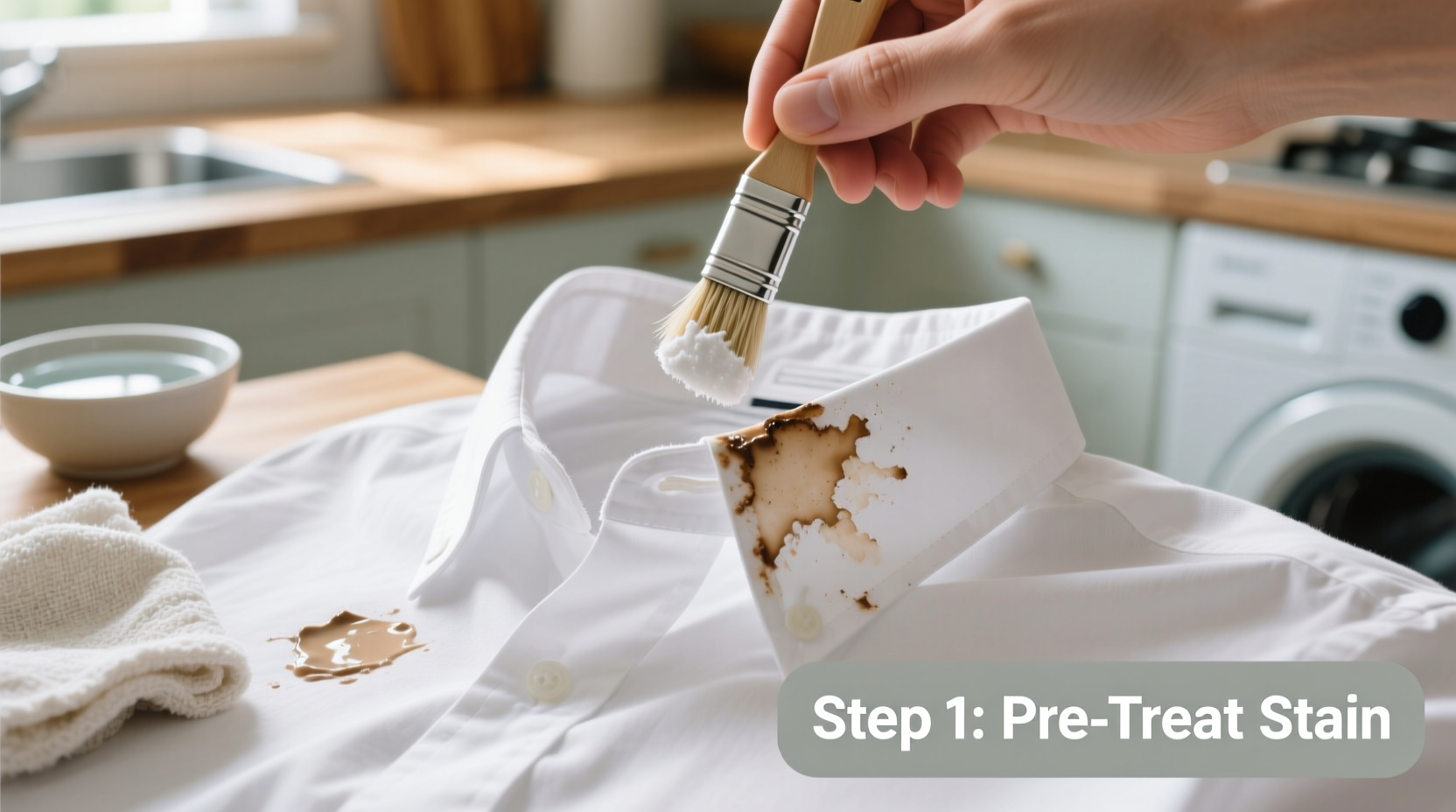
Place the collar on a clean, flat surface with the stained side facing up. Slide a folded towel or stain-absorbing pad underneath to prevent bleeding through to the other side. - Apply a Pre-Treatment Solution
Choose one of the following based on fabric type:- Dish soap (clear, fragrance-free): Excellent for breaking down oils. Apply 2–3 drops directly to the stain.
- Isopropyl alcohol (70%): Effective for pigment lift. Use sparingly—dab with a cotton ball.
- Enzyme-based stain remover: Ideal for organic residue. Spray lightly and let sit.
- Gently Agitate
Using an old soft toothbrush or fingertip, lightly work the solution into the stain in small circular motions. Do not scrub aggressively. - Rinse with Cold Water
Hold the collar under cold running water, letting it flow from the back of the stain forward to push residue out. Warm or hot water risks setting the stain. - Check Before Washing
If the stain persists, repeat steps 3–5. Once visibly reduced, proceed to laundering. - Wash Separately in Cold Water
Use a mild detergent and wash the shirt alone or with similar whites. Add ½ cup of oxygen-based bleach (not chlorine) if the fabric allows it. - Air Dry Only
Never place the shirt in a dryer until the stain is completely gone. Heat can lock in any remaining traces. Hang or lay flat to dry. - Inspect and Repeat if Necessary
After drying, check the collar. If discoloration remains, repeat the entire process before considering alternative treatments.
Do’s and Don’ts: A Quick Reference Table
| Do | Don’t |
|---|---|
| Treat the stain immediately | Wait days to address the stain |
| Use cold water throughout | Rinse with warm or hot water |
| Blot with a clean cloth | Rub the stain vigorously |
| Air-dry after treatment | Use a dryer before confirming stain removal |
| Test cleaners on hidden areas | Apply strong solvents without testing |
| Use oxygen-based bleach for whites | Use chlorine bleach on protein-based stains |
Prevention: How to Stop Stains Before They Start
Even the best cleaning method can’t match the effectiveness of avoiding the problem altogether. Many professionals adopt simple daily habits that drastically reduce collar staining.
- Let foundation fully set before dressing: Wait at least 5–10 minutes after applying makeup before putting on a shirt. This allows the product to bind to skin rather than transfer.
- Use a barrier spray: Fabric protectors like Scotchgard for apparel create a light shield against oil-based transfer. Apply lightly to collars once a month.
- Wear a turtleneck or undershirt: A thin cotton layer acts as a physical barrier while remaining invisible under dress shirts.
- Opt for matte-finish foundations: Creamy or dewy formulas are more prone to transfer than powders or mousse-based products.
- Carry travel-sized stain wipes: Keep one in your work bag for quick touch-ups after commuting or lunch meetings.
Real Example: A Corporate Client’s Routine Overhaul
Sarah, a marketing executive in Chicago, wore white blouses nearly every workday. Despite regular laundering, she noticed persistent yellow-gray rings forming on her shirt collars within weeks of purchase. Embarrassed during client presentations, she assumed the shirts were low quality.
After consulting a laundry specialist, she learned the issue wasn’t the fabric—it was her routine. She applied liquid foundation each morning and dressed immediately, often touching her collar while adjusting her scarf. The combination of moisture, oil, and friction created ideal conditions for staining.
She implemented three changes:
- Started waiting 8 minutes post-makeup before dressing.
- Began wearing a lightweight camisole under sheer blouses.
- Kept a pack of micellar-cleansing cloths at her desk for midday checks.
Alternative Treatments for Stubborn or Set-In Stains
If a foundation stain has dried or survived a previous wash cycle, stronger interventions may be needed—but caution is essential.
Hydrogen Peroxide + Baking Soda Paste
Mix two parts hydrogen peroxide (3%) with one part baking soda to form a thick paste. Apply only to cotton or durable blends. Leave for 15 minutes, then rinse thoroughly with cold water. Do not use on silk or wool.
Vinegar Soak
For yellowed collars, soak the area in equal parts white vinegar and water for 30 minutes before pre-treating. Vinegar helps dissolve mineral deposits and residual oils.
Commercial Makeup Removers
Some facial cleansing oils (like those with jojoba or grapeseed base) can break down foundation on fabric. Dab a small amount, wait five minutes, then rinse. Follow with dish soap to remove any oily residue left behind.
“Sometimes the solution isn’t stronger chemicals, but smarter sequencing. Remove oil first, then pigment, then launder. Rushing leads to frustration.” — Marcus Reed, Master Dry Cleaner & Owner of Heritage Garment Care
Checklist: Foundation Stain Rescue Protocol
- ☐ Blot excess product gently with a dry cloth
- ☐ Lay garment flat with stain exposed
- ☐ Test cleaner on inconspicuous area
- ☐ Apply dish soap or alcohol-based solution
- ☐ Work in with soft brush using circular motion
- ☐ Rinse thoroughly under cold running water
- ☐ Repeat if stain remains visible
- ☐ Wash in cold water with oxygen booster
- ☐ Air dry completely
- ☐ Inspect before storing or rewearing
FAQ
Can I use hand sanitizer to remove foundation stains?
Yes, in a pinch. Hand sanitizer contains alcohol, which helps break down pigments. Dab a small amount on the stain, wait 2–3 minutes, then rinse with cold water. However, avoid frequent use—fragrances and gels in some brands can leave residues.
Will vinegar alone remove a fresh foundation stain?
Vinegar helps with odor and mild discoloration but isn’t strong enough on its own for oily foundation. It works best as a secondary step after degreasing with dish soap or as part of a soaking solution.
Is it safe to use these methods on silk or delicate fabrics?
Proceed with extreme caution. Silk is sensitive to pH shifts and abrasion. For delicate materials, use only diluted dish soap and cold water. Never apply alcohol or peroxide. When in doubt, consult a professional cleaner.
Final Thoughts: Maintain Confidence, One Collar at a Time
A stained collar shouldn’t undermine your professionalism or force you to retire favorite shirts prematurely. With consistent care and informed techniques, you can preserve the crisp elegance of white attire—even in the face of daily makeup wear.
The foundation stain battle isn’t about perfection; it’s about response. By integrating prompt treatment, smart prevention, and fabric-aware methods, you reclaim control over your wardrobe’s longevity and appearance.
💬 Have a tried-and-true trick for keeping collars clean? Share your insight in the comments—your tip could help someone save their favorite shirt.








