Creating your own paracord dog leash is more than a craft project—it’s an investment in safety, durability, and personalization. Paracord, short for parachute cord, was originally used in military parachutes and is known for its high tensile strength, resistance to abrasion, and flexibility. When woven correctly, it forms a leash that can withstand daily wear, sudden pulls, and outdoor elements. More importantly, you control the length, color, and comfort of the handle, tailoring it precisely to your dog’s size and your walking habits.
This guide walks through every phase of constructing a 6-foot paracord leash with an ergonomic handle designed to reduce hand strain during long walks. Whether you're a beginner or have basic knot-tying experience, this process is accessible, cost-effective, and rewarding.
Gather Your Materials and Tools
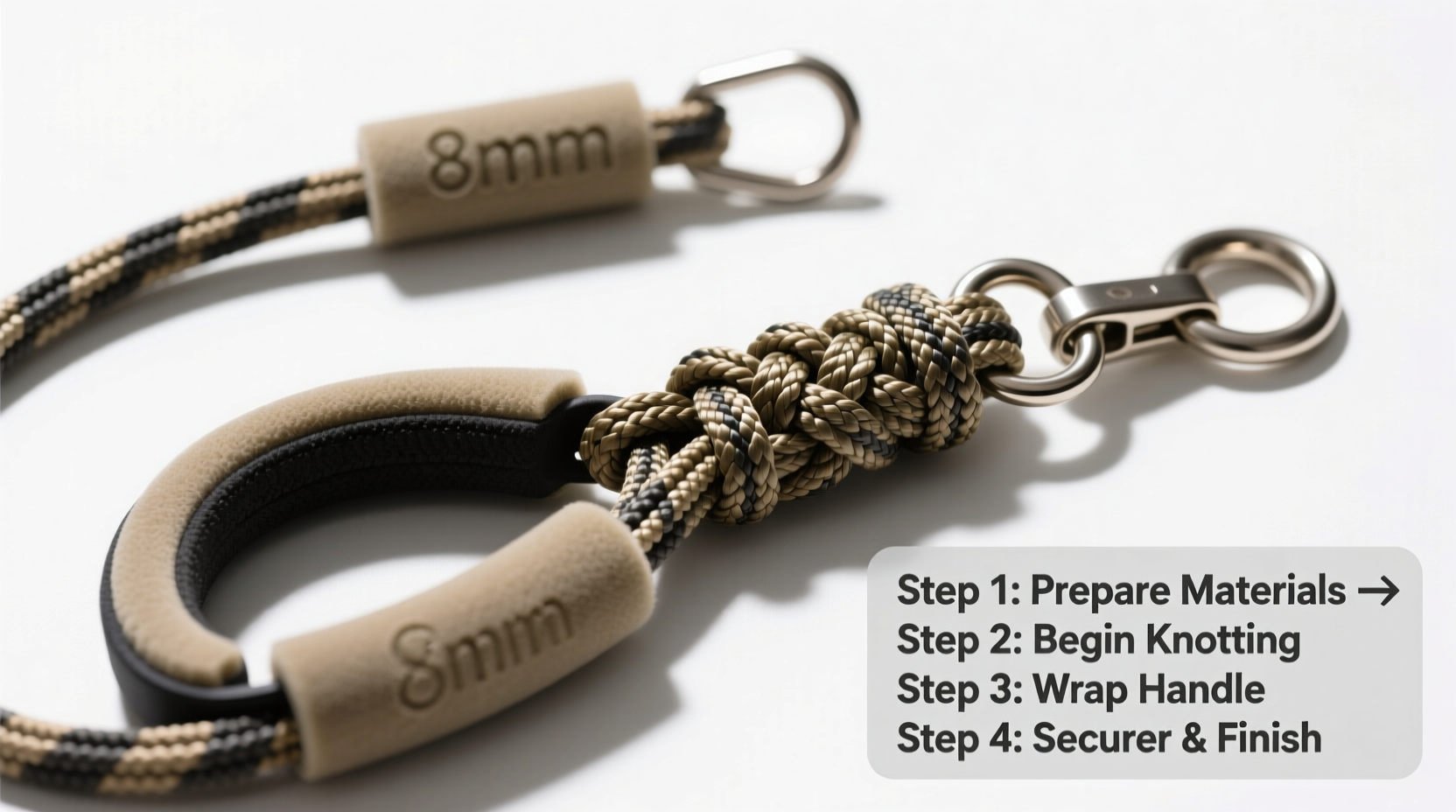
The foundation of a reliable paracord leash begins with quality materials. Using substandard cord or hardware compromises safety. Below is a checklist of everything you’ll need before starting.
Tip: Always use MIL-SPEC Type III 550 paracord—rated to hold up to 550 pounds—for maximum strength and reliability.Materials Checklist
- 100 feet of 550 lb test paracord (Type III) – two colors recommended for visual contrast
- One heavy-duty spring snap hook (rated for at least 600 lbs)
- One solid metal O-ring or D-ring (for the handle loop)
- Lighter or matches (for sealing cut ends)
- Measuring tape or ruler
- Masking tape or clips (to secure work in progress)
- Scissors or utility knife
Choose paracord with a tight nylon braid and a smooth sheen. Avoid cheap imitations that stretch easily or fray after minimal use. For the snap hook, opt for a black oxide or nickel-plated steel version to resist rust in wet conditions.
Understanding the Square Knot Lanyard Weave
The square knot (also known as the “macramé knot”) is the backbone of this leash design. It creates a dense, flexible braid that absorbs shock from sudden tugs while remaining lightweight. Unlike single-strand cords, a square knot weave distributes force across multiple strands, enhancing structural integrity.
Each knot uses four strands: two outer working cords and two inner core cords. As you progress down the leash, the pattern remains consistent, allowing for rhythmic, repeatable motion once mastered.
“Handmade paracord gear isn’t just about function—it reflects attention to detail and care for your pet’s daily experience.” — Daniel Reyes, Wilderness Survival Instructor and K9 Handler
Key Advantages of the Square Knot Weave
- High resistance to fraying under tension
- Allows slight elasticity, reducing joint strain on both dog and handler
- Customizable appearance with color patterns
- Can be unraveled partially to access inner strands in emergency survival situations
Step-by-Step Construction Process
Follow this timeline-based sequence to build a 6-foot leash with a padded handle section. Allow 2–3 hours for completion, depending on experience level.
- Prepare the snap hook end: Cut 100 feet of paracord. Fold one end to create a 6-inch loop and thread it through the snap hook. Secure with a lark’s head knot (also called a cow hitch). Trim excess and seal with a lighter.
- Create the main body: Begin square knot weaving from the snap hook. Use two strands of one color as the outer working cords and two of another color as fillers. Maintain consistent tension—too loose creates slack; too tight restricts flexibility.
- Weave continuously for 4.5 feet: This will form the leash’s main span. Count approximately 12–15 square knots per foot. Use masking tape every 12 inches to mark progress.
- Form the handle: At the 4.5-foot mark, stop the main weave. Thread all four strands through the O-ring. Re-fold the cord back toward the leash body, creating a doubled section about 12 inches long. This double layer acts as a cushioned grip.
- Weave the handle section: Continue square knots around both sets of strands, enclosing the folded section into a thicker, padded handle. This reduces pressure on your hand during extended walks.
- Finish the leash: After completing the 12-inch handle, tie off with a sturdy barrel knot or cobra stitch termination. Trim ends to ½ inch and melt slightly to prevent unraveling.
Design Options and Customization Table
You’re not limited to a standard look. The following table outlines variations based on dog size, climate, and aesthetic preference.
| Dog Size | Leash Length | Handle Style | Cord Color Strategy | Hardware Upgrade |
|---|---|---|---|---|
| Small (under 20 lbs) | 4 feet | Single-layer padded | Bright colors for visibility | Aluminum snap hook |
| Medium (20–50 lbs) | 5–6 feet | Double-wrap handle | Two-tone spiral pattern | Stainless steel O-ring |
| Large (50+ lbs) | 6 feet + traffic lead option | Triple-braided grip | Camouflage or neutral tones | Reinforced locking carabiner |
Real-World Example: Hiking with a Handmade Leash
Sarah, a trail runner from Colorado, replaced her commercial nylon leash after it snapped during a descent near Bear Creek. She built a 5-foot paracord leash with a thick double-wrapped handle using olive green and charcoal cord. On a recent 8-mile hike with her 65-pound Australian Shepherd, she noticed less hand fatigue and better control on rocky paths. When her dog lunged at a squirrel, the leash held firm without stretching excessively. Six months later, it shows only minor surface wear—no fraying or weakened joints.
“I never thought I’d trust a DIY product over a store-bought one,” Sarah said. “But knowing exactly what went into it makes all the difference.”
Frequently Asked Questions
How strong is a paracord leash compared to commercial leashes?
A properly constructed paracord leash using 550 cord and correct knots exceeds the strength of most retail nylon leashes. While many commercial leashes are rated between 200–400 lbs, a well-made paracord version can safely handle over 500 lbs of static load. However, dynamic forces (like sudden lunges) should still be managed with proper training and handling.
Can I wash the leash if it gets dirty?
Yes. Hand wash with mild soap and lukewarm water. Avoid machine washing, which can loosen knots. Hang to dry away from direct sunlight to prevent UV degradation. Do not tumble dry or iron.
Is paracord safe for dogs who chew?
No. If your dog tends to chew their leash, paracord is not recommended. Ingesting nylon fibers can cause intestinal blockages. This leash is intended for supervised use only.
Final Thoughts and Call to Action
Building a durable paracord dog leash combines practical craftsmanship with thoughtful pet care. Beyond saving money, you gain a deeper connection to the gear you rely on daily. Every knot tied is a commitment to your dog’s safety and comfort. Plus, the ability to repair or modify the leash ensures longevity far beyond mass-produced alternatives.
💬 Ready to make your first paracord leash? Gather your materials this weekend and start weaving. Share your finished product online with #DIYDogLeash—we’d love to see your designs and hear how your pup responds!








