Leash training a shy dog requires patience, empathy, and consistency. Unlike confident dogs who may adapt quickly to walking on a leash, shy or fearful dogs often associate new experiences—especially those involving restraints or unfamiliar environments—with stress. Rushing the process can deepen anxiety, but moving at the right pace builds not only leash skills but also a stronger bond between you and your dog. This guide walks you through a humane, science-backed approach that prioritizes emotional safety while teaching reliable leash behavior.
Understanding Shyness in Dogs
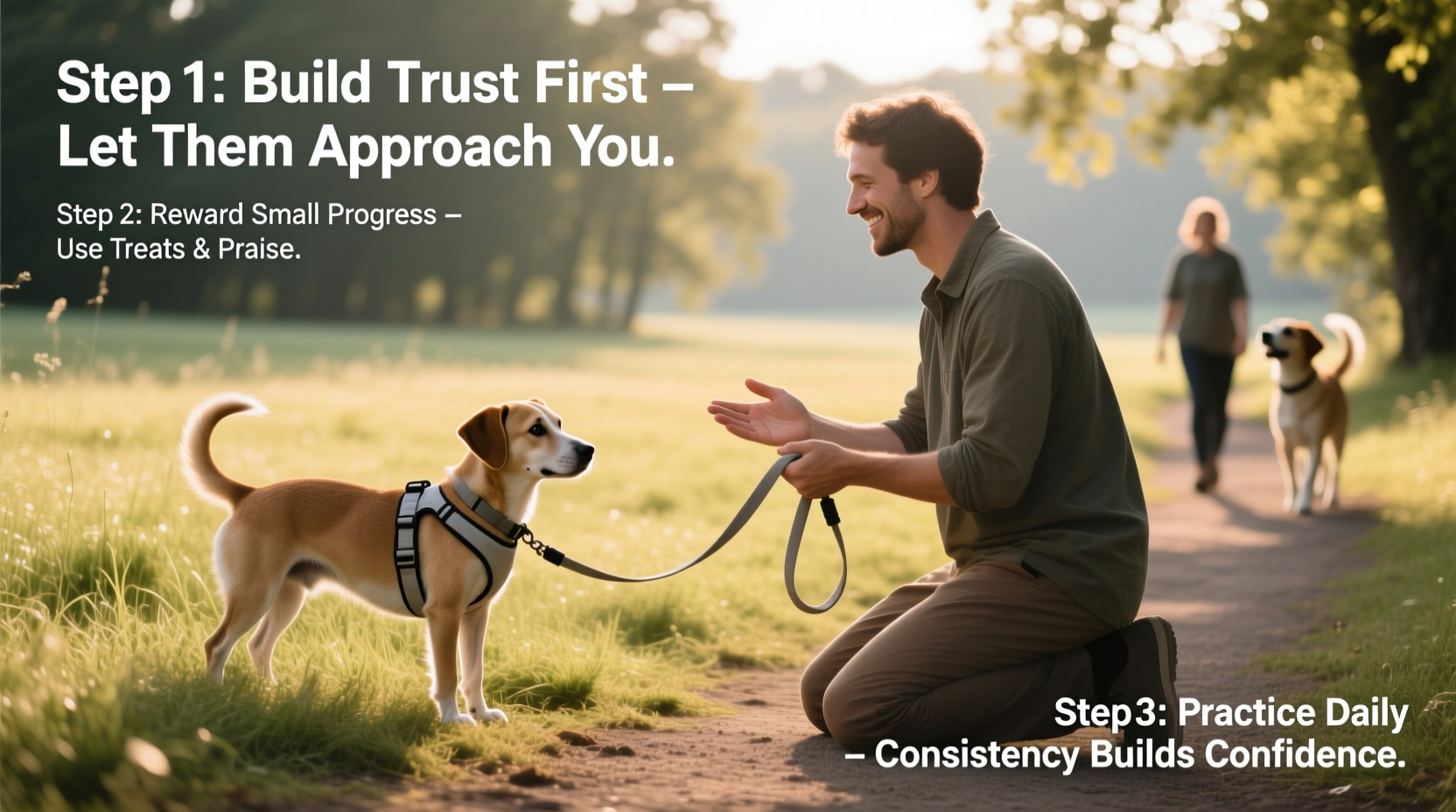
Shyness in dogs isn’t just a personality quirk—it’s often rooted in genetics, lack of early socialization, or past trauma. A dog that cowers at sudden movements, avoids eye contact, or tucks its tail when approached is communicating discomfort. Forcing such a dog into high-stimulation environments or tightening the leash during fear responses can reinforce negative associations.
Instead, successful leash training begins with recognizing signs of stress: trembling, lip licking, yawning, whale eye (showing the whites of the eyes), or freezing in place. These are not defiance—they’re pleas for space. The goal is not to suppress fear but to help your dog feel safe enough to learn.
“Building trust with a shy dog isn’t about control—it’s about creating predictability. When a dog knows what to expect, confidence follows.” — Dr. Sarah Thornton, Certified Veterinary Behaviorist
A Step-by-Step Timeline for Leash Training
Effective leash training for shy dogs unfolds in stages. Each phase must be fully mastered before progressing. Skipping steps risks setbacks and erodes trust.
- Phase 1: Introduce the Equipment Indoors (Days 1–3)
Let the leash and collar/harness sit in your home. Allow your dog to sniff and investigate them without pressure. Reward curiosity with soft praise or treats placed near the gear. - Phase 2: Touch and Reward (Days 4–6)
Gently touch the harness or collar to your dog’s body, then immediately offer a treat. Repeat multiple times per day, gradually increasing duration. If your dog flinches, pause and try again later at a slower pace. - Phase 3: Wear Briefly with Rewards (Days 7–10)
Put the harness on for short periods (30 seconds to 2 minutes) while feeding treats or playing with a favorite toy. Remove it before your dog shows any signs of discomfort. Gradually extend wear time over several days. - Phase 4: Attach Leash Inside (Days 11–14)
Clip the leash on while indoors and let it drag behind your dog (supervised). Follow the leash casually as your dog moves around, tossing treats when they ignore or accept its presence. - Phase 5: Gentle Guidance (Days 15–21)
Hold the leash loosely and encourage your dog to follow you using treats or a happy voice. Never pull. Let them lead the pace. Practice in quiet rooms first, then expand to hallways. - Phase 6: Threshold Training (Days 22–28)
Practice near doors and thresholds. Open the door slightly, toss a treat inside, and reward calm behavior. Gradually increase exposure to outdoor sights and sounds without stepping outside. - Phase 7: First Outdoor Steps (Day 29+)
Choose a quiet time and place. Step outside for just 10–20 seconds. Let your dog sniff and observe. Reward any forward movement. End on a positive note, even if that means retreating after one step.
Do’s and Don’ts During Leash Training
| Do’s | Don’ts |
|---|---|
| Use high-value treats (e.g., boiled chicken, cheese) | Pull or tug on the leash |
| Keep sessions under 3–5 minutes | Force your dog past their comfort zone |
| Move at your dog’s pace—literally and emotionally | Ignore signs of stress like freezing or panting |
| Use a front-clip harness to reduce pulling gently | Use retractable leashes during early training |
| Celebrate small wins with calm praise | Raise your voice or show frustration |
Real Example: Building Confidence with Luna
Luna, a 2-year-old mixed breed rescued from a rural shelter, would freeze and tremble when her owner attempted walks. She’d never worn a harness and associated leashes with being dragged. Her adopter, Maria, followed the phased approach outlined here.
For two weeks, Maria focused only on letting Luna explore the harness at her own pace. She placed it next to Luna’s bed and sprinkled kibble around it. After five days, Luna nudged it with her nose. Maria rewarded instantly. By day 10, Luna tolerated wearing it for three minutes while eating dinner.
The breakthrough came during indoor dragging practice. Luna began following Maria from room to room, drawn by the sound of treats rattling in a pouch. Within three weeks, she took her first outdoor step—then another the next day. Six weeks in, Luna walks confidently for 10-minute stretches in quiet neighborhoods, always with choice and control.
Maria’s success wasn’t due to speed, but to respect. “I stopped thinking about ‘training’ and started thinking about listening,” she said.
Essential Checklist for Success
- ✅ Choose a well-fitted, comfortable harness (avoid tight collars)
- ✅ Stock up on high-value, soft treats
- ✅ Identify low-distraction indoor spaces for early practice
- ✅ Schedule multiple short sessions daily (3–5 minutes each)
- ✅ Observe and record your dog’s stress signals
- ✅ Pick quiet outdoor locations and times (e.g., early morning)
- ✅ Carry a portable barrier (umbrella or mat) for quick cover if overwhelmed
- ✅ Celebrate micro-progress—eye contact, leaning toward you, sniffing the leash
Frequently Asked Questions
How long does leash training take for a shy dog?
There’s no fixed timeline. Some dogs progress within four weeks; others need several months. Factors include past experiences, temperament, and consistency. Focus on your dog’s individual pace rather than comparisons.
What if my dog lies down or refuses to move?
This is a common fear response. Do not pull. Instead, create distance from the stressor, toss high-value treats nearby, and wait. You might back up slowly to invite following. If needed, end the session and retry later. Lying down is communication—not defiance.
Can I use a head halter or gentle leader?
These tools can be effective for some dogs, but introduce them slowly and only after your dog is comfortable with a standard harness. Many shy dogs find head halters intrusive at first. Pair introduction with heavy positive reinforcement.
Conclusion: Patience Is the Path to Progress
Leash training a shy dog isn’t about achieving perfect heel position or long neighborhood circuits. It’s about transforming fear into curiosity, resistance into willingness, and isolation into connection. Every small step your dog takes toward you—physically and emotionally—is a victory.
By honoring their limits, celebrating subtle efforts, and maintaining a predictable, kind routine, you do more than teach leash manners. You rebuild trust. And from that foundation, confidence grows naturally. Start today, move slowly, and remember: the most powerful tool you have isn’t the leash—it’s your presence.
💬 Have a shy dog? Share your journey or questions below. Your experience could inspire another pet parent walking the same path.








