Dog toys are more than just distractions—they’re essential tools for mental stimulation, physical exercise, and emotional well-being. Among the most debated options in pet households are squeaky toys versus silent ones. One brings joy through noise, the other through quiet durability. But which type truly makes your dog happier—and keeps your sanity intact? The answer isn’t as simple as turning off the squeaker. It depends on your dog’s personality, your living environment, and how you define “happy.” This guide breaks down the science, behavior, and real-world trade-offs to help you choose wisely.
The Psychology Behind the Squeak
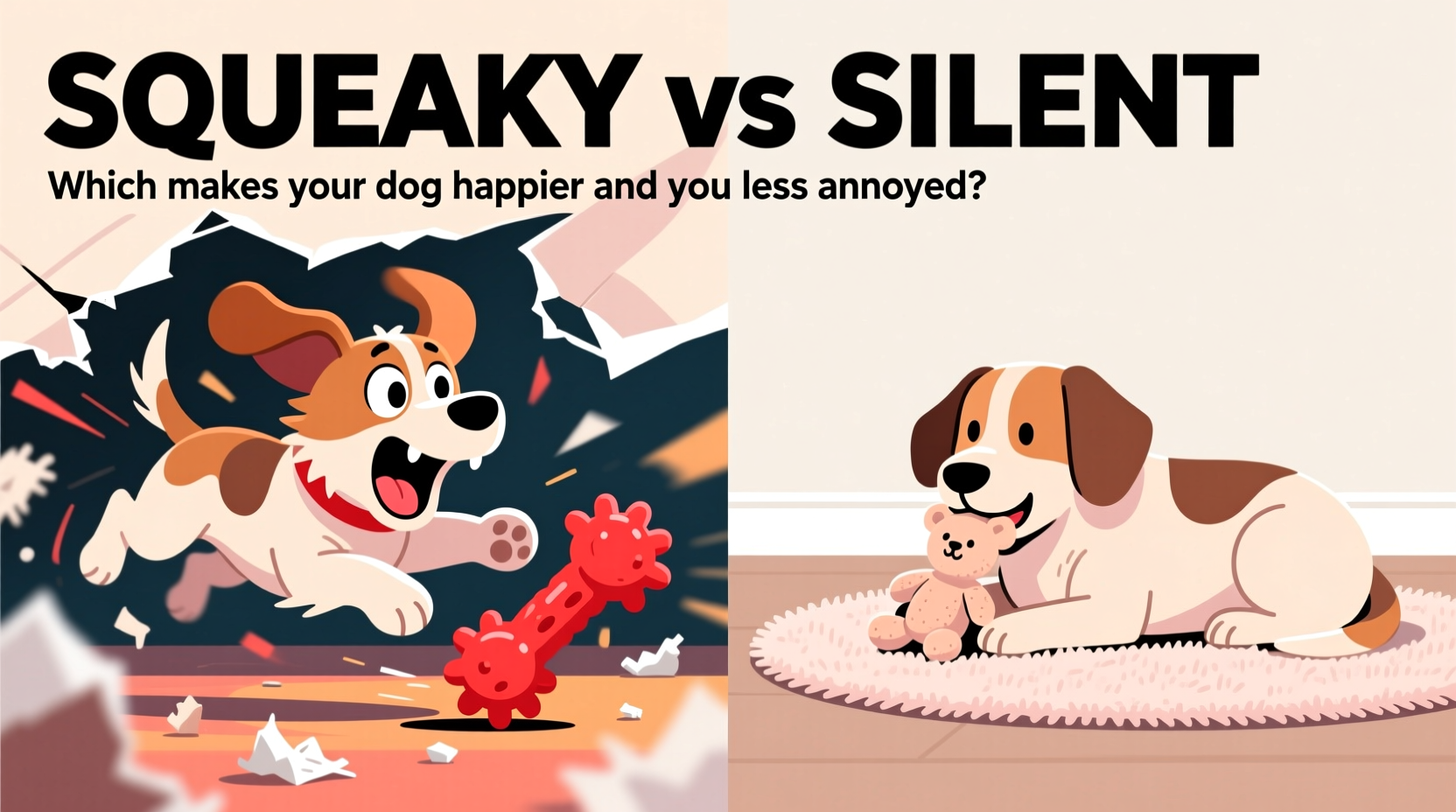
For many dogs, the high-pitched sound of a squeaky toy mimics the distress call of small prey animals. This taps into their natural predatory instincts, triggering excitement, chase behavior, and even “kill shakes.” Veterinarian and animal behaviorist Dr. Karen Becker explains:
“The squeak activates primal hunting circuits in a dog’s brain. It’s not just fun—it feels purposeful to them.”
This instinctual response is why some dogs become obsessed with squeaky toys, tearing them apart within minutes just to silence the sound—often interpreted as completing the “hunt.” However, this same thrill can lead to overstimulation, especially in high-energy or anxious dogs. For others, particularly older or more reserved breeds, the sudden noise may be startling or stressful rather than exciting.
Tip: If your dog freezes or backs away when a toy squeaks, try gradually introducing the sound by gently pressing it near them during calm moments.Silent Toys: The Understated Alternative
Silent toys—ranging from rope tugs and rubber chew rings to plushies without squeakers—offer a different kind of satisfaction. They prioritize texture, durability, and interactive play over auditory feedback. Dogs who enjoy chewing, carrying, or cuddling toys often prefer these quieter options. Silent toys also tend to last longer, especially those made from tough rubber or reinforced fabric.
They’re ideal for shared living spaces, apartments, or homes with noise-sensitive individuals. Unlike squeaky toys that can wear out in a single session, silent toys encourage prolonged engagement through gnawing, fetching, or puzzle-solving (in the case of treat-dispensing models).
When Silence Is Golden—for You and Your Dog
Consider silent toys if:
- You live in close quarters with thin walls or neighbors.
- Your dog already has high arousal levels and doesn’t need extra stimulation.
- You want a long-lasting toy that won’t end up in pieces by bedtime.
- Your dog prefers soft companionship-style play (e.g., cradling a toy like a puppy).
Comparing the Two: A Practical Breakdown
| Feature | Squeaky Toys | Silent Toys |
|---|---|---|
| Stimulates Instincts | High – mimics prey sounds | Low to moderate – relies on texture/movement |
| Lifespan | Short – often destroyed quickly | Longer – especially durable rubber or nylon |
| Noise Level | High – repetitive squeaking | Low – quiet chewing or tossing |
| Best For | Hunting-driven breeds (e.g., Terriers, Shepherds) | Chewers, cuddlers, or noise-sensitive homes |
| Risk of Overstimulation | Higher – can trigger hyperactivity | Lower – promotes calmer engagement |
A Real-World Example: Max the Border Collie
Max, a 3-year-old Border Collie in Denver, loved squeaky toys so much that his owners bought him a new one every week. At first, it seemed like pure joy—he’d sprint across the yard, pounce, and shake each toy wildly. But over time, his behavior changed. He began guarding the toys, growling when children approached, and pacing at night after intense play sessions. His vet suggested switching to silent, puzzle-based toys to reduce sensory overload.
After two weeks of using treat-stuffed rubber toys and tug ropes, Max’s anxiety decreased. He still played vigorously but settled faster afterward. His owners noticed he seemed more balanced—still energetic, but less frantic. The change wasn’t about removing fun; it was about redirecting energy in a healthier way.
“Sometimes the most ‘exciting’ toy isn’t the best for long-term happiness.” — Dr. Lena Torres, Canine Behavior Consultant
How to Choose the Right Toy for Your Dog
There’s no universal winner between squeaky and silent toys. The key is matching the toy to your dog’s temperament and your household’s lifestyle. Follow this step-by-step approach:
- Observe your dog’s play style: Does he stalk and bite aggressively? He might love squeakers. Does he carry toys gently or chew methodically? Silent options may suit him better.
- Assess your environment: In an apartment or shared home, constant squeaking may strain relationships. Keep squeaky toys for outdoor use or supervised indoor bursts.
- Start with variety: Offer both types and watch which one holds attention longer and leads to relaxed behavior afterward.
- Mix and match: Use squeaky toys for short fetch sessions to burn energy, then switch to a silent chew toy for downtime.
- Monitor reactions: If your dog becomes possessive, overly excited, or destructive, reevaluate the toy type.
Checklist: Picking the Best Toy Combination
- ☑ Assess your dog’s breed tendencies and energy level
- ☑ Consider your living situation and noise tolerance
- ☑ Introduce one squeaky and one silent toy at a time
- ☑ Watch for signs of stress or overstimulation
- ☑ Rotate toys weekly to maintain interest
- ☑ Replace damaged toys immediately to prevent ingestion
FAQ: Common Questions About Squeaky vs Silent Toys
Do all dogs like squeaky toys?
No. While many dogs are drawn to the sound, others find it irritating or meaningless. Puppies may be curious at first but lose interest if the toy doesn’t align with their preferred play style. Some dogs prefer the feel of a bouncy ball or the resistance of a rope toy over any noise.
Can I make a squeaky toy quieter without removing the squeaker?
Not reliably. Covering the toy with tape or fabric rarely dampens the sound enough to make a difference and can create loose pieces your dog might chew off and swallow. The safest option is to remove the squeaker entirely or limit squeaky play to outdoor or designated times.
Are silent toys boring for dogs?
Not if chosen correctly. Dogs don’t rely on sound the way humans do. Texture, scent, shape, and how a toy interacts with their mouth matter far more. A well-designed silent toy—like a knotted rope or a treat-dispensing cube—can be just as mentally stimulating as a squeaky one.
Conclusion: Balance Beats Extremes
The battle between squeaky and silent toys isn’t about finding a single champion—it’s about balance. Squeaky toys fulfill deep-seated instincts and deliver bursts of joy. Silent toys support calm engagement and long-term durability. The happiest dogs aren’t those with endless squeakers or only quiet chew rings, but those whose owners understand their needs and adjust accordingly.
Instead of choosing sides, curate a thoughtful toy rotation. Let your dog enjoy the thrill of the hunt in controlled doses, then wind down with a satisfying chew. Your ears will thank you, and your dog will thrive with variety, safety, and purposeful play.
💬 What’s your dog’s favorite toy—and does it drive you crazy? Share your experience and help fellow pet owners find the perfect balance!








