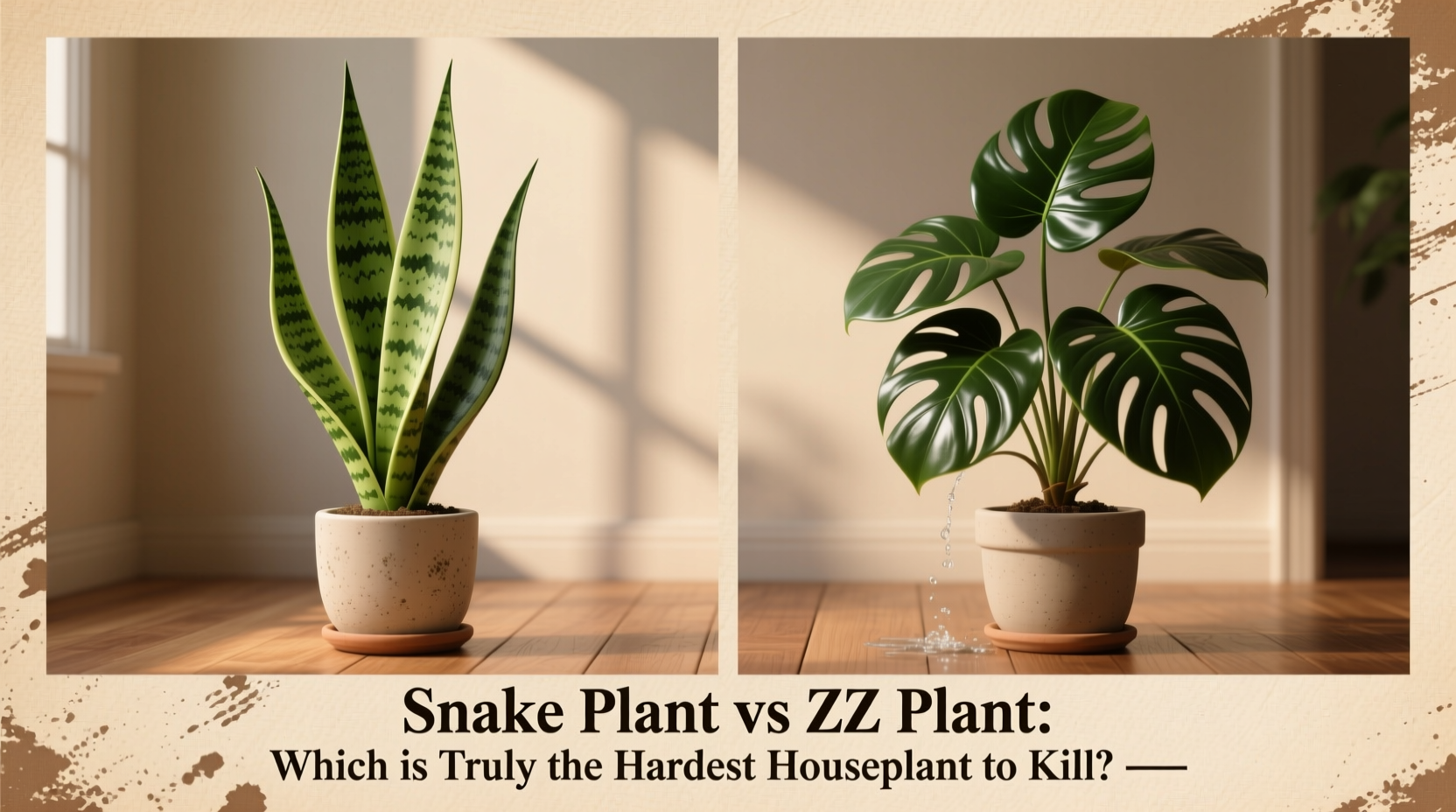
When it comes to indoor plants that thrive on neglect, two names consistently rise to the top: the snake plant (Sansevieria trifasciata) and the ZZ plant (Zamioculcas zamiifolia). Both are celebrated for their ability to survive in low light, endure infrequent watering, and bounce back from months of benign abandonment. But when push comes to shove—when you’ve gone on vacation without a plant sitter, forgotten to water for weeks, or placed them in a windowless bathroom—which one truly earns the title of “hardest houseplant to kill”?
This isn’t just about bragging rights among plant owners. For beginners, renters with inconsistent schedules, or anyone who’s lost a few green companions to overenthusiasm (or lack thereof), choosing the right resilient plant can be the difference between a thriving space and a graveyard of crispy leaves. Let’s dissect both contenders not just by reputation, but by biology, adaptability, and real-world performance.
Biology Behind the Toughness
The secret to both plants’ near-indestructibility lies in their evolutionary adaptations. Native to arid regions of Africa, each has developed specialized structures to store water and minimize loss.
The snake plant uses thick, upright leaves with a waxy cuticle to reduce transpiration. It also employs CAM photosynthesis—a process where stomata open at night to absorb carbon dioxide, reducing water loss during hot days. This makes it exceptionally efficient in dry, dim environments.
The ZZ plant takes a different approach. Instead of relying solely on leaves, it stores water in underground rhizomes—thickened stems that act like reservoirs. These allow the plant to survive extended droughts by drawing on internal reserves. Its glossy, dark green foliage further reduces moisture loss and maximizes light absorption, even in low-light office corners.
“Plants like ZZ and snake plant aren’t just tolerant of neglect—they’re adapted to it. Their survival strategies evolved in harsh climates where water was scarce and conditions unpredictable.” — Dr. Lena Torres, Botanist & Urban Horticulture ResearcherTip: If you're unsure whether to water, wait another week. Both plants suffer more from overwatering than underwatering.
Care Comparison: Light, Water, and Environment
To determine which plant is harder to kill, we need to examine how each responds to common household challenges: lighting fluctuations, irregular watering, temperature changes, and poor air quality.
| Care Factor | Snake Plant | ZZ Plant |
|---|---|---|
| Light Tolerance | Thrives in bright indirect light; survives in low light but grows slowly. Can tolerate some direct sun. | Extremely low-light tolerant. Grows slowly in darkness. Avoid prolonged direct sun to prevent scorching. |
| Water Needs | Every 2–6 weeks, depending on light. Drought-tolerant but susceptible to root rot if overwatered. | Every 3–8 weeks. Rhizomes store water, making it highly resistant to drought. |
| Temperature Range | 60–85°F (15–29°C). Sensitive to cold below 50°F. | 65–75°F (18–24°C) ideal, but tolerates down to 45°F briefly. |
| Air Purification | Excellent—removes formaldehyde, benzene, xylene, and trichloroethylene (NASA study). | Moderate—removes some toxins, though less studied than snake plant. |
| Pet Safety | Toxic to cats and dogs if ingested (saponins cause nausea, vomiting). | Toxic—contains calcium oxalate crystals; causes oral irritation and drooling. |
While both excel in low-maintenance categories, the ZZ plant edges ahead in drought tolerance due to its rhizome system. A snake plant may survive three weeks without water; a ZZ plant can go three months and still recover, albeit with leaf drop. However, the snake plant outperforms in air purification and slightly better cold tolerance, making it a stronger candidate for drafty homes or bedrooms.
Real-World Survival: A Mini Case Study
Consider Sarah, a freelance designer living in a small Chicago apartment with north-facing windows and erratic work hours. Over two years, she tested both plants under identical conditions: no grow lights, watering every 4–6 weeks, and occasional fertilizer during summer.
She started with a 12-inch snake plant and a similarly sized ZZ plant placed side by side on her desk. After six months, the snake plant showed minor tip browning—likely from tap water minerals—but continued growing upward. The ZZ plant slowed growth but remained lush.
Then came winter travel. Sarah left for a five-week trip with no plant sitter. Upon return, the snake plant had one yellowing lower leaf, likely from slight overwatering before departure. The ZZ plant had dropped two leaves but produced a new shoot within three weeks.
During a particularly dry heating season, humidity dropped to 20%. The snake plant developed crisp edges, while the ZZ plant merely paused growth. Neither died.
In this scenario, both survived extreme neglect, but the ZZ plant demonstrated greater resilience to prolonged drought and environmental stress. The snake plant required marginally more attention to avoid aesthetic decline.
Common Mistakes That Still Kill These \"Indestructible\" Plants
Even the toughest plants aren’t immortal. Missteps often come not from neglect, but from misplaced care. Here are the most frequent errors that lead to their demise:
- Overwatering: The number one killer. Both species rot at the roots if soil stays wet. ZZ rhizomes are especially prone to mushiness when overwatered.
- Poor Drainage: Using pots without drainage holes traps water. Even infrequent watering becomes dangerous.
- Too Much Fertilizer: These slow growers don’t need feeding more than once or twice a year. Excess salts build up and burn roots.
- Sudden Light Exposure: Moving either plant directly into bright sunlight after months in shade causes leaf burn.
- Ignoring Pests: While rare, spider mites and mealybugs can infest both. Wipe leaves monthly to check.
Step-by-Step Guide to Keeping Either Plant Alive (Even If You Try Not To)
Follow this simple protocol to maximize survival odds for either plant:
- Choose the Right Pot: Terracotta or unglazed ceramic helps wick moisture. Ensure it has a drainage hole.
- Use Well-Draining Soil: Mix regular potting soil with perlite or cactus mix (2:1 ratio).
- Place in Indirect Light: Near a north or east window. No direct sun unless filtered.
- Water Sparingly: Only when soil is completely dry. In winter, reduce frequency by half.
- Check Every 4–6 Weeks: Look for yellow leaves (overwatering), shriveled stems (underwatering), or pests.
- Fertilize Once a Year: Spring only, with diluted balanced liquid fertilizer (10-10-10).
- Rotate Occasionally: Turn the pot 90 degrees monthly for even growth.
This routine requires less than ten minutes per month. The key is consistency in restraint—not doing too much.
Which One Is Truly Harder to Kill?
After evaluating biological structure, environmental adaptability, and real-world test cases, the verdict leans toward the ZZ plant as the slightly more indestructible of the two.
Why? Because its rhizome-based storage system provides a longer buffer against drought. While snake plants are tough, they rely on leaf moisture retention, which diminishes over time. Once a snake plant’s leaves collapse from dehydration, recovery is slow—if possible at all. The ZZ plant, however, can regenerate from dormant rhizomes even after all foliage has died back.
Additionally, the ZZ plant handles lower light more gracefully. In offices or basements with artificial lighting, it often outlasts snake plants, which may weaken over time without any natural light source.
That said, the snake plant wins in other areas: faster growth under ideal conditions, better air purification, and a more architectural presence. It’s also slightly more forgiving of occasional overwatering—provided the soil drains well.
If the goal is pure survival under the worst conditions—no light, no water, no attention—the ZZ plant is the last one standing.
FAQ
Can I keep a snake plant or ZZ plant in a bathroom with no windows?
Yes, especially the ZZ plant. Bathrooms often have higher humidity, which both tolerate. As long as there’s some ambient light (e.g., from a door or overhead bulb), they can survive. For zero-natural-light spaces, ZZ is the better choice.
Why are the leaves on my ZZ plant turning yellow?
Almost always a sign of overwatering. Check the soil. If damp, stop watering immediately. Remove the plant from the pot and inspect rhizomes. Trim any black, mushy parts and repot in dry, fresh mix.
Do snake plants really release oxygen at night?
Yes. Due to CAM photosynthesis, snake plants absorb CO₂ and release oxygen at night, unlike most plants. This makes them ideal bedroom companions for improving air quality during sleep.
Final Verdict and Care Checklist
The debate between snake plant and ZZ plant isn’t about which is better—it’s about which aligns with your lifestyle. For absolute minimalism, the ZZ plant is the ultimate survivor. For those wanting a bit more visual impact and air-purifying power, the snake plant delivers with only slightly more care.
Ultimately, both prove that keeping a houseplant alive doesn’t require a green thumb—just the wisdom to do less.
“The best plant for a forgetful owner isn’t the one that needs constant care, but the one that thrives on your absence.” — Carlos Mendez, Indoor Plant Consultant📋 Low-Maintenance Plant Care Checklist
- ✅ Use a pot with drainage
- ✅ Mix in perlite or sand for better drainage
- ✅ Water only when soil is fully dry
- ✅ Place in low to medium indirect light
- ✅ Fertilize once a year, max
- ✅ Wipe leaves monthly to remove dust
- ✅ Rotate pot quarterly for balanced growth
- ❌ Don’t water on a schedule—always check soil first
- ❌ Avoid misting (neither plant needs high humidity)
- ❌ Never let plant sit in water
Conclusion: Choose Confidence, Not Perfection
If you’ve ever killed a plant and felt discouraged, know this: both the snake plant and ZZ plant were built for people like you. They don’t demand perfection. They thrive on inconsistency. They forgive months of silence.
Whether you choose the sleek vertical lines of the snake plant or the glossy, clustered elegance of the ZZ, you’re selecting a living companion designed to outlast your busiest seasons, your longest trips, and your most forgetful weeks.
Start with one. Place it in a quiet corner. Water it when you remember—no guilt, no pressure. Watch it survive. Then thrive. That small victory might just be the spark that turns you into someone who says, “I can actually keep plants alive.”
🚀 Ready to adopt your first unkillable plant? Pick either a snake plant or ZZ plant this week—and prove to yourself that resilience grows indoors too.








