
In the quest for cleaner indoor air, houseplants have emerged as natural allies. Among the most popular are the snake plant (Sansevieria trifasciata) and pothos (Epipremnum aureum). Both are celebrated for being low-maintenance and adaptable to indoor environments. But when it comes to air purification—specifically in terms of removing common household toxins—how do they really stack up? The answer lies in a landmark study conducted by NASA more than three decades ago, which continues to shape how we think about plants and indoor air quality.
The 1989 NASA Clean Air Study was originally designed to explore ways to purify air in sealed space stations. It tested over 50 houseplants for their ability to remove volatile organic compounds (VOCs) such as benzene, formaldehyde, trichloroethylene, xylene, and ammonia. These chemicals are commonly found in homes due to paints, cleaning products, furniture, and adhesives. The results revealed that certain plants could significantly reduce these pollutants through natural processes like photosynthesis and transpiration.
Both snake plant and pothos were included in this study—and both performed impressively. But when directly compared, subtle differences in their efficiency, growth habits, and physiological functions reveal which one edges ahead in air-purifying capability.
Air Purification Mechanisms in Houseplants
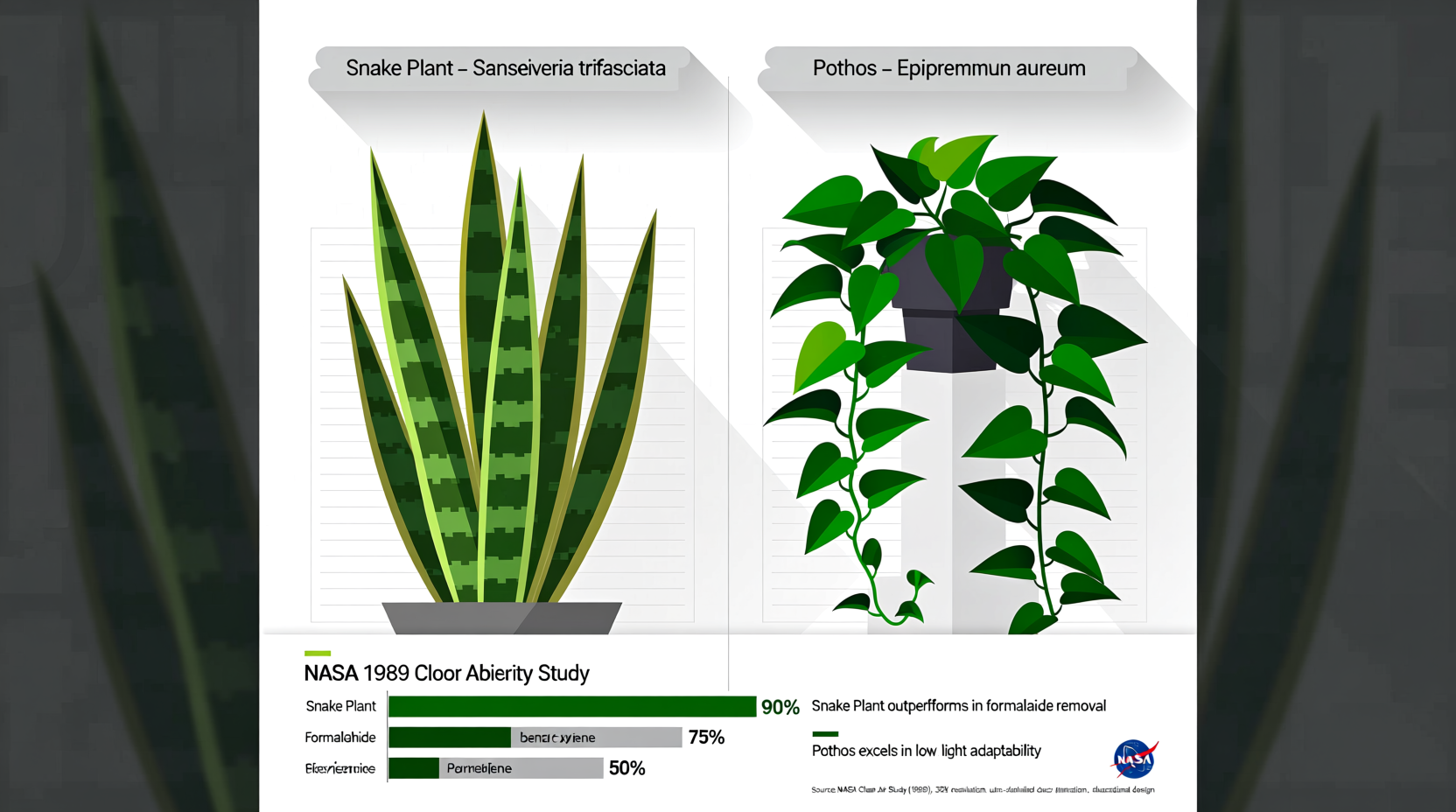
Plants clean the air not just through leaves but also via complex interactions between roots, soil microorganisms, and microbial films around root zones. During the day, most plants absorb carbon dioxide and release oxygen through photosynthesis. At night, many switch to respiration, taking in oxygen and releasing CO₂. However, snake plants use a special form of photosynthesis called Crassulacean Acid Metabolism (CAM), allowing them to open their stomata at night to minimize water loss—an adaptation from their arid native habitats.
This nocturnal gas exchange gives snake plants a unique advantage: they continue to release oxygen at night, unlike most other plants. Pothos, on the other hand, follows a typical C3 photosynthetic pathway, meaning it exchanges gases primarily during daylight hours.
More importantly, both plants demonstrated measurable removal rates of key VOCs:
- Formaldehyde: Found in plywood, insulation, and cleaning agents.
- Benzene: Present in plastics, synthetic fibers, and cigarette smoke.
- Xylene & Toluene: Emitted by paints, varnishes, and solvents.
- Trichloroethylene (TCE): A degreasing agent used in some industrial cleaners.
NASA’s methodology involved placing plants in sealed chambers with elevated levels of these toxins and measuring concentration drops over time. Removal rates were calculated based on surface area, transpiration rate, and leaf structure.
Tip: For optimal air purification, place multiple plants throughout your home—especially in high-VOC areas like kitchens, garages, and newly renovated rooms.Direct Comparison: Snake Plant vs Pothos
To understand which plant performs better, we must analyze data from the NASA study alongside practical considerations like growth speed, resilience, and ease of care.
| Feature | Snake Plant | Pothos |
|---|---|---|
| Scientific Name | Sansevieria trifasciata | Epipremnum aureum |
| Photosynthesis Type | CAM (opens stomata at night) | C3 (daytime gas exchange) |
| Oxygen Output at Night | Yes | No |
| Formaldehyde Removal Rate | High | Very High |
| Benzene Reduction | Moderate | High |
| TCE & Xylene Clearance | Moderate | High |
| Growth Speed | Slow | Fast |
| Light Requirements | Low to bright indirect | Low to moderate |
| Water Needs | Very low (drought-tolerant) | Moderate |
| Pet Safety | Toxic if ingested | Toxic if ingested |
While both plants excel at filtering indoor air, the data shows that pothos has a higher overall removal rate for several major VOCs, particularly formaldehyde and benzene. Its rapid growth means larger leaf surface area develops quickly, increasing its capacity to absorb airborne contaminants. In controlled tests, pothos reduced formaldehyde concentrations by up to 73% within 24 hours under ideal conditions.
However, snake plant stands out for its ability to produce oxygen at night—a trait few houseplants possess. This makes it especially beneficial in bedrooms, where improved air quality during sleep can enhance restfulness and cognitive function upon waking.
“Plants like snake plant offer dual benefits: daytime filtration and nighttime oxygenation. That’s rare in the plant kingdom and highly valuable in enclosed living spaces.” — Dr. Bill Wolverton, former NASA scientist and lead researcher on the Clean Air Study
Real-World Effectiveness: Beyond the Lab
While laboratory results are compelling, real-world performance depends on room size, ventilation, number of plants, and pollutant sources. NASA researchers estimated that achieving meaningful air purification indoors requires approximately one plant per 100 square feet (9.3 m²). In practice, this means having several well-placed plants across different rooms.
Consider a realistic scenario:
Mini Case Study: Urban Apartment Air Quality Improvement
Jessica, a freelance designer living in a 600-square-foot studio apartment in Chicago, struggled with headaches and fatigue after renovating her space with new flooring and cabinetry. An air quality test revealed elevated formaldehyde levels (0.12 ppm—above the WHO safety threshold).
She introduced six houseplants: two snake plants in the bedroom and four pothos spread across the living and work areas. Within six weeks, she reported improved energy levels and fewer respiratory symptoms. A follow-up air test showed formaldehyde had dropped to 0.05 ppm.
Interestingly, while both plants contributed, the fast-growing pothos vines showed visibly healthier foliage and denser growth—indicating active uptake of airborne chemicals. The snake plants remained stable and thrived despite minimal watering, proving resilient even during a two-week vacation without care.
This case illustrates that combining both species maximizes benefits: pothos tackles high-volume toxin absorption, while snake plants provide continuous oxygen support.
Step-by-Step Guide to Maximizing Indoor Air Purification
Simply owning a snake plant or pothos isn’t enough. To harness their full air-cleaning potential, follow this evidence-based routine:
- Assess Your Space: Measure square footage and identify pollution sources (e.g., new furniture, carpets, printers).
- Calculate Plant Needs: Aim for 1 medium-to-large plant per 100 sq ft. A 500-sq-ft home should have at least five robust plants.
- Choose Strategic Locations: Place near known VOC emitters—kitchens, laundry rooms, home offices, or beside upholstered furniture.
- Optimize Growing Conditions: Provide adequate light (even low-light tolerant plants need some exposure) and keep soil healthy with occasional organic compost.
- Maintain Leaf Health: Wipe leaves monthly with a damp cloth to remove dust, which blocks stomatal pores and reduces gas exchange efficiency.
- Repot When Necessary: Root-bound plants lose vigor. Repot every 1–2 years to maintain metabolic activity.
- Combine Species: Use both snake plant and pothos together to leverage complementary strengths—daytime and nighttime purification.
Practical Care Checklist
To ensure your air-purifying plants remain effective, use this maintenance checklist:
- ✅ Water only when top 1–2 inches of soil are dry
- ✅ Rotate pots weekly for even light exposure
- ✅ Prune yellowing or damaged leaves promptly
- ✅ Avoid chemical fertilizers; opt for diluted organic alternatives
- ✅ Keep away from HVAC vents that circulate dry air
- ✅ Monitor for pests like spider mites, which impair leaf function
- ✅ Group plants together to create a microclimate that enhances transpiration
Frequently Asked Questions
Can one snake plant or pothos clean an entire room?
No single plant can fully purify a standard-sized room. NASA’s research suggests you need multiple plants to make a measurable impact. While one large specimen helps, it's best to use several distributed strategically. For example, a bedroom might benefit from one snake plant on a nightstand and a trailing pothos on a shelf.
Are there any risks to using these plants for air purification?
Both plants are toxic if ingested by pets or small children. Snake plant contains saponins, which can cause nausea and vomiting. Pothos includes insoluble calcium oxalates that irritate the mouth and digestive tract. If you have curious cats or toddlers, place them out of reach or choose safer alternatives like spider plant or parlor palm.
Do these plants help with mold or allergens?
Not directly. They don’t filter particulate matter like dust or mold spores. However, by reducing VOCs, they lower overall indoor chemical load, which may improve immune response and reduce irritation in sensitive individuals. For mold control, address moisture issues first—no plant can compensate for poor ventilation or leaks.
Final Verdict: Which Is Better?
Based on the NASA Clean Air Study and subsequent research, **pothos is slightly more effective at removing common VOCs** like formaldehyde, benzene, and xylene due to its faster growth and higher transpiration rate. It acts like a biological air scrubber, pulling toxins into its tissues and supporting microbial breakdown in the rhizosphere.
Yet, **snake plant offers a unique edge in oxygen production**, making it superior for bedrooms and low-light environments where sustained air quality matters overnight. Its extreme durability also makes it ideal for beginners or forgetful plant owners.
The truth is, neither plant “wins” outright. Their strengths are complementary. For maximum benefit, integrate both into your indoor ecosystem. Let pothos climb shelves and hang baskets in living areas, while positioning snake plants in bedrooms, bathrooms, or dim corners where few other plants survive.
Moreover, remember that plants are part of a broader strategy. They work best when combined with source reduction (using low-VOC products), proper ventilation, and mechanical filtration (HEPA filters). But as natural, aesthetically pleasing, and scientifically supported tools, snake plant and pothos remain among the top choices for healthier indoor living.
Take Action Today
Start by auditing your home. Where do you spend the most time? Are there obvious sources of fumes or odors? Purchase one snake plant and one pothos. Place them thoughtfully. Commit to basic care. Track how you feel over the next month—many people report clearer breathing, better sleep, and improved focus simply by introducing more greenery.
And if you're passionate about sustainable living, share your journey. Post before-and-after photos, log symptom changes, or experiment with DIY air testing kits. The movement toward cleaner indoor environments begins not with grand gestures, but with small, intentional steps—one pot, one leaf, one breath at a time.
💬 Have you noticed health improvements after adding snake plant or pothos to your space? Share your experience in the comments and inspire others to breathe easier naturally.








