
For owners of high-energy dogs, managing excess excitement, destructive chewing, or hyperactivity isn’t just about long walks or intense fetch sessions. Mental fatigue is often more effective—and sustainable—than physical exhaustion alone. Two popular tools in the modern dog owner’s toolkit are slow feeder bowls and lick mats. Both are designed to transform mealtime into an engaging activity, but they differ significantly in how they challenge a dog’s mind and body. The real question isn't just which one works better—it's which one actually tires out a high-energy dog faster.
This article breaks down the mechanics, benefits, and limitations of each option, supported by behavioral insights and practical observations from trainers and pet behaviorists. Whether you're dealing with a border collie that never sleeps or a young husky who redecorates your couch when bored, understanding the right tool for mental and physical fatigue can make all the difference.
How Mental Stimulation Leads to Physical Fatigue
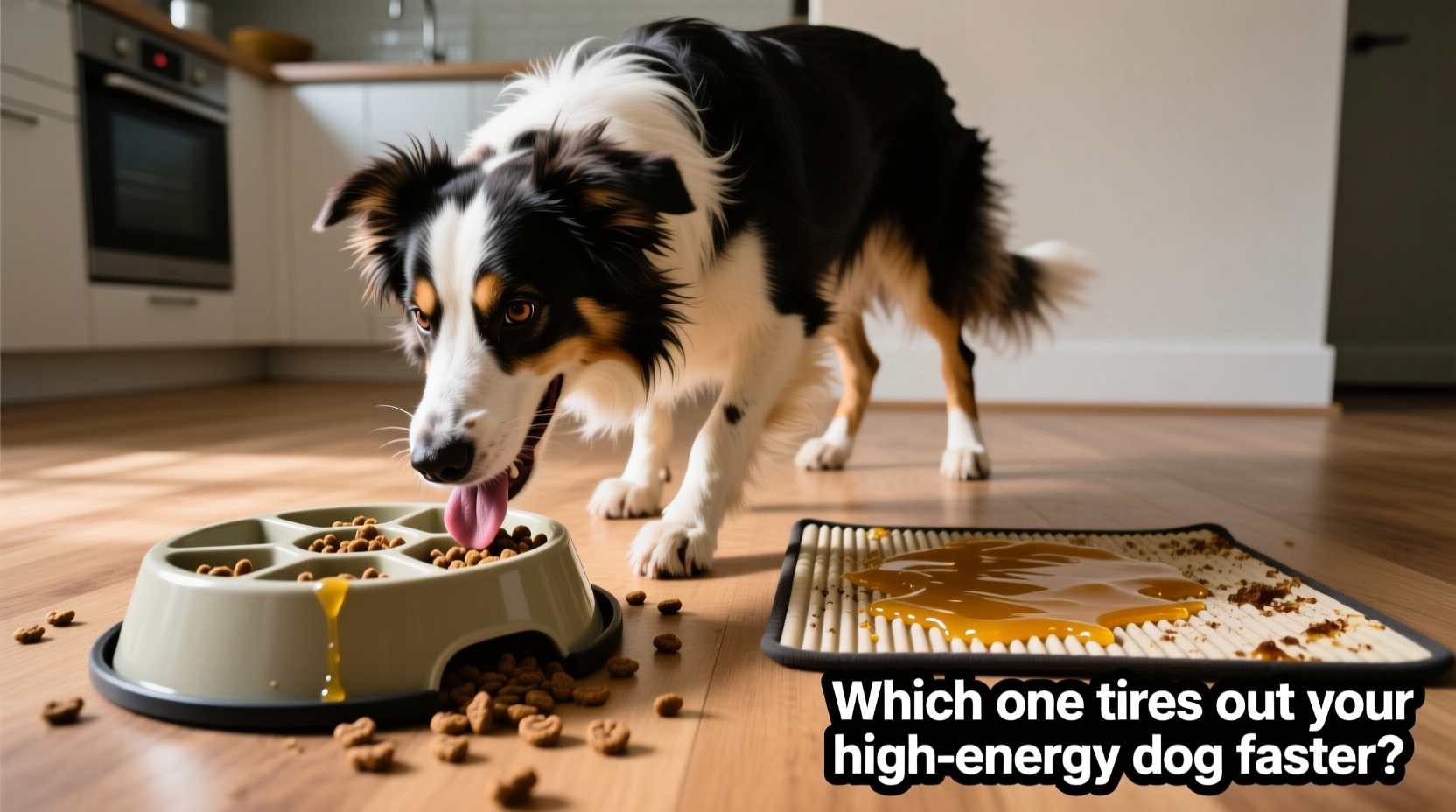
Dogs, especially high-drive breeds, require more than physical exercise. Their brains crave problem-solving, scent tracking, and focused tasks. When a dog engages in mentally demanding activities, their brain consumes glucose at a higher rate, leading to genuine fatigue. This is why a 30-minute puzzle session can leave a dog more relaxed than a 45-minute run.
Dr. Karen Overall, a renowned veterinary behaviorist, explains:
“Dogs don’t need more exercise—they need more engagement. A tired dog is not one who has run far, but one whose brain has been properly challenged.” — Dr. Karen Overall, Veterinary Behavioral Medicine Specialist
This principle underpins the effectiveness of enrichment tools like slow feeders and lick mats. But while both encourage extended feeding times, they do so through different mechanisms—one emphasizes pacing, the other persistence.
Slow Feeder Bowls: Slowing Down Consumption
Slow feeder bowls are designed with raised ridges, mazes, or compartments that force dogs to work around obstacles to access kibble. They originated as a solution for fast eaters prone to bloating, regurgitation, or indigestion. However, their secondary benefit—prolonging mealtime—makes them useful for mental engagement.
Typical models include:
- Rubber maze-style bowls (e.g., Outward Hound Fun Feeder)
- Stainless steel dividers (e.g., Neater Feeder)
- Interactive puzzle inserts that fit standard bowls
The primary function is to extend eating time from minutes to 10–20 minutes. For dogs that inhale food in under two minutes, this added duration provides mild cognitive load. However, once a dog learns the pattern, the novelty wears off. Many dogs adapt quickly, using their nose or paw to flip kibble out rather than navigating the maze.
Tip: Rotate between different slow feeder designs weekly to prevent habituation and maintain interest.Pros and Cons of Slow Feeder Bowls
| Aspect | Advantages | Limitations |
|---|---|---|
| Feeding Speed | Reduces gulping, lowers bloat risk | Effectiveness drops after repeated use |
| Mental Engagement | Moderate; requires focus during initial learning phase | Limited complexity; becomes predictable |
| Durability | Most are dishwasher-safe and chew-resistant | Some rubber versions degrade over time |
| Time Investment | Adds 5–15 minutes to mealtime | Minimal beyond mechanical slowing |
In high-energy dogs, slow feeders provide structure and routine but rarely induce deep mental fatigue. They’re best used as part of a broader enrichment strategy rather than a standalone solution.
Lick Mats: Extended Focus Through Sensory Engagement
Lick mats take a different approach. Made from soft silicone with dense nubs, they’re designed to hold spreadable foods like peanut butter, yogurt, wet dog food, or mashed banana. Dogs must lick repeatedly to extract every bit, turning a 30-second snack into a 20- to 45-minute session.
The act of licking itself has physiological effects. It triggers the release of endorphins and serotonin, promoting calmness and reducing stress. In fact, studies on animal behavior show that repetitive licking can lower heart rate and cortisol levels, similar to meditation in humans.
Because lick mats rely on food texture and placement—not just shape—they offer variable difficulty. Owners can adjust challenge level by:
- Using thicker spreads (e.g., Greek yogurt vs. broth)
- Freezing the mat for longer-lasting engagement
- Layering ingredients to create hidden pockets
This adaptability makes lick mats particularly effective for high-energy dogs. Unlike slow feeders, which follow a fixed path, lick mats demand sustained attention, tongue coordination, and patience. The reward is delayed and earned through effort, making it inherently more tiring.
Real-World Example: Managing a Border Collie’s Energy
Sarah, a dog trainer in Colorado, worked with a 2-year-old border collie named Jasper who exhibited fence-chasing and obsessive barking when left alone. Daily walks weren’t enough. She introduced a structured morning routine: a 20-minute walk followed by a frozen lick mat filled with pumpkin puree, cottage cheese, and blueberries.
Within three days, Jasper’s afternoon restlessness decreased dramatically. “He’d finish the mat and go straight to his bed,” Sarah noted. “It wasn’t just the calories—it was the 35 minutes of focused licking that wore him out mentally.”
In contrast, when she tried a slow feeder bowl with dry kibble, Jasper finished in under eight minutes and remained alert. The lick mat consistently delivered deeper fatigue.
Direct Comparison: Which Tires Out a Dog Faster?
To determine which tool leads to faster fatigue, consider three factors: duration of engagement, cognitive load, and post-activity behavior.
- Duration: Lick mats typically last 20–45 minutes, especially when frozen. Slow feeders average 10–20 minutes, with diminishing returns over time.
- Cognitive Demand: Lick mats require continuous sensory feedback—tongue movement, taste discrimination, and spatial memory. Slow feeders involve motor repetition with minimal adaptation.
- Post-Use Calmness: Dogs often lie down immediately after finishing a lick mat. With slow feeders, many remain alert and ready for play.
A 2022 survey by the Canine Enrichment Society found that 78% of owners reported noticeable relaxation after lick mat use, compared to 43% with slow feeders. While not scientific, the trend aligns with behavioral principles: prolonged, low-intensity focus induces fatigue more effectively than short bursts of mechanical problem-solving.
When to Use Each Tool
Neither tool is universally superior. Context matters. Here’s a checklist to help choose the right one:
Checklist: Choosing Between a Slow Feeder Bowl and Lick Mat- ✔️ Use a slow feeder bowl if your dog eats too fast or needs portion control during regular meals.
- ✔️ Use a lick mat when you want to tire your dog before crating, during storms, or to prevent boredom while working from home.
- ✔️ Combine both: Start with a slow feeder at breakfast, then offer a lick mat mid-morning for deeper fatigue.
- ✔️ Avoid using lick mats with overweight dogs unless calorie content is controlled.
- ✔️ Always supervise first-time use to prevent frustration or choking on large food chunks.
Maximizing Fatigue: A Step-by-Step Routine
To truly exhaust a high-energy dog using enrichment tools, integrate them into a daily schedule. Follow this timeline for optimal results:
- 7:00 AM – Short Walk (15 min): Begin with light physical activity to stimulate alertness and digestion.
- 7:15 AM – Slow Feeder Meal: Serve breakfast in a maze bowl to encourage mindful eating.
- 9:00 AM – Frozen Lick Mat: Prepare the night before with low-calorie, high-fiber ingredients. Let your dog work on it while you prepare for the day.
- 12:00 PM – Quiet Time: After the lick mat, most dogs will nap. Encourage this by dimming lights and minimizing noise.
- 4:00 PM – Active Play or Training: Once rested, engage in fetch, agility drills, or obedience work to burn residual energy.
- 6:30 PM – Dinner in Puzzle Toy: Replace the slow feeder with a more complex puzzle toy to keep mental engagement high.
This rhythm balances physical and mental exertion, preventing overstimulation while ensuring cumulative fatigue. Over time, dogs learn to associate licking and problem-solving with relaxation, reinforcing calm behavior.
Frequently Asked Questions
Can I leave my dog alone with a lick mat?
Yes, if the mat is securely placed (e.g., on a non-slip surface) and the food doesn’t contain harmful ingredients like xylitol. Freezing the mat reduces the risk of rapid consumption or mess. Always test supervision-free use gradually.
Are slow feeder bowls safe for all dogs?
Most are safe, but dogs with brachycephalic syndrome (e.g., pugs, bulldogs) may struggle with deep maze designs. Choose shallow, wide models for flat-faced breeds. Consult your vet if your dog has neck or spine issues.
How often should I use a lick mat?
2–3 times per week is ideal for most dogs. Daily use is fine if calorie intake is managed. Rotate flavors and textures to maintain interest and avoid food boredom.
Conclusion: Prioritize Duration and Focus for True Fatigue
While both slow feeder bowls and lick mats serve valuable roles in canine enrichment, the evidence points clearly to lick mats as the more effective tool for tiring out high-energy dogs. Their ability to sustain engagement for up to 45 minutes, combined with the calming neurochemical effects of licking, makes them unmatched for inducing mental fatigue. Slow feeders, though beneficial for digestive health and moderate pacing, lack the depth of stimulation needed to produce lasting calm.
The key takeaway isn’t to abandon slow feeders—but to use them strategically. Pair them with lick mats, vary textures, and time their use to match your dog’s energy peaks. A well-tired dog isn’t one who’s simply too sore to move, but one whose mind has been gently worn down through purposeful, rewarding effort.
💬 Have you noticed a difference in your dog’s behavior after using a lick mat versus a slow feeder? Share your experience in the comments—your insight could help another overwhelmed dog owner find peace.








