In recent years, a quiet but significant shift has taken place across the gaming landscape. Players who once spent hours in competitive lobbies, ranked matches, or cooperative raids are now turning off their headsets, logging out of servers, and booting up single-player titles instead. The trend isn’t isolated—it spans genres, platforms, and demographics. Gamers are retreating into story-driven, solitary experiences, and many cite exhaustion from the social and mechanical demands of multiplayer gaming as the reason.
This migration reflects more than just changing tastes. It signals a growing awareness of digital fatigue, online toxicity, and the psychological toll of constant performance pressure. As live-service models dominate the industry, demanding endless engagement, players are seeking refuge in games that offer closure, emotional depth, and control over their own pace. The question is no longer whether this shift is happening—but why it’s accelerating, and what it means for the future of game design.
The Rise of Multiplayer Burnout
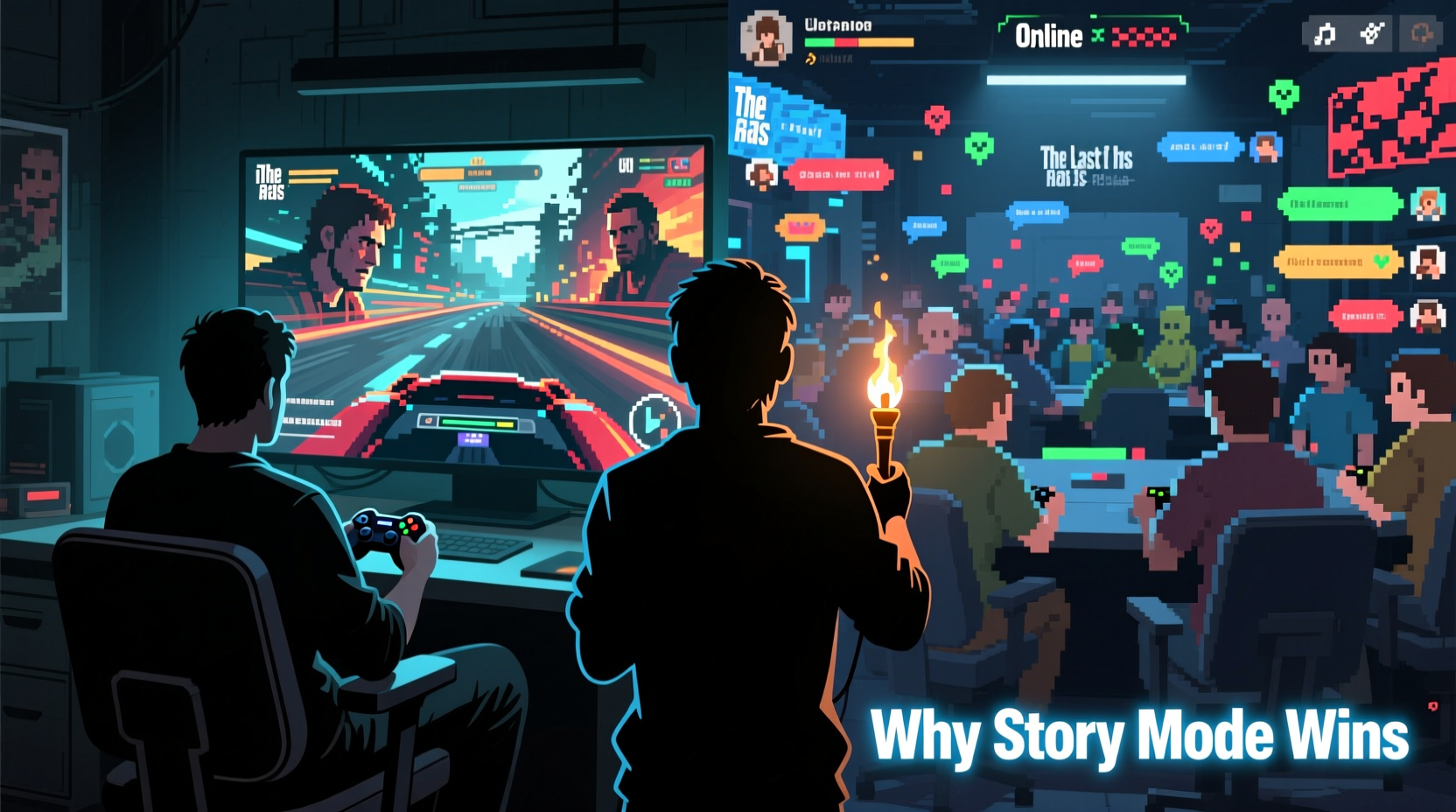
Multilayer games—especially those built on live-service models—thrive on retention. They’re designed to keep players engaged through daily logins, seasonal rewards, progression systems, and social obligations. While these mechanics can be fun initially, they often evolve into burdens. What begins as entertainment starts to feel like work: grinding for loot, chasing rankings, managing guild schedules, or navigating toxic voice chats.
Burnout in multiplayer gaming manifests in several ways:
- Emotional fatigue from exposure to harassment, trolling, or unsportsmanlike behavior.
- Cognitive overload due to complex meta-strategies, fast-paced decision-making, and high-stakes environments.
- Schedule dependency, where players feel pressured to log in at specific times to avoid missing limited-time events.
- Progression guilt, the feeling that stepping away means falling behind peers or losing status.
A 2023 survey by the Entertainment Software Association found that while 65% of gamers still play multiplayer titles regularly, nearly 40% reported taking extended breaks due to stress or frustration. Many cited “toxic communities” and “feeling obligated rather than entertained” as primary reasons for disengagement.
Tip: If you're feeling drained by multiplayer games, try scheduling intentional breaks—even a week offline can reset your motivation and enjoyment.The Allure of Story-Driven Experiences
In contrast to the relentless pace of multiplayer ecosystems, single-player games offer something rare in modern digital life: intentionality. These titles allow players to engage on their own terms—starting, pausing, and finishing when they choose. More importantly, they deliver emotional payoff through narrative arcs, character development, and thematic depth.
Games like The Last of Us Part II, Ghost of Tsushima, and Disco Elysium have demonstrated that video games can be powerful storytelling mediums. They don’t require teammates, internet connections, or adherence to meta builds. Instead, they invite introspection, empathy, and immersion.
According to Dr. Sarah Hodge, a media psychologist at the University of Edinburgh, “Single-player narratives provide psychological safety. You’re not being judged by others. You can make choices, experience consequences, and reflect—all without fear of ridicule or failure in a public arena.”
“Players aren’t rejecting competition—they’re reclaiming agency. In a world where everything feels optimized, story games let them simply *be*.” — Dr. Sarah Hodge, Media Psychologist
This sense of autonomy is critical. Unlike multiplayer games that often punish deviation from optimal strategies, single-player titles reward exploration, experimentation, and personal interpretation. There’s no leaderboard to climb, no clan reputation to uphold—just the journey.
Comparing Player Experiences: A Side-by-Side Look
| Aspect | Multiplayer Games | Single-Player Story Games |
|---|---|---|
| Pacing | Determined by team, match duration, respawns | Controlled entirely by the player |
| Social Pressure | High (voice chat, coordination, expectations) | None (optional companions only) |
| Emotional Payoff | Victory/defeat cycles; short-term dopamine | Narrative resolution; long-term reflection |
| Time Commitment | Ongoing; often requires regular login | Finite; can be completed in set time |
| Toxicity Risk | Common in competitive or anonymous settings | Effectively zero |
| Replay Value | Driven by variety, rank climbs, new content | Driven by branching paths, themes, mood |
The data shows a clear trade-off: multiplayer offers dynamic, unpredictable interactions and social bonding, but at the cost of mental bandwidth and emotional resilience. Single-player games sacrifice spontaneity for stability, offering a space where players can decompress and reconnect with why they started playing in the first place.
Real Example: From Ranked Grind to Narrative Escape
Take Mark, a 29-year-old software developer and longtime Overwatch player. For five years, he played 10–15 hours a week, climbing to Grandmaster rank twice. But by 2023, the experience had soured. Voice chat became hostile, patches invalidated his favorite heroes, and the seasonal grind felt meaningless.
“I’d sit down after work hoping to unwind,” he said, “but I’d end up more stressed than when I started. One night, I deleted the game and booted up Red Dead Redemption 2 instead. I hadn’t touched it in two years. Within an hour, I was crying during a campfire scene. That’s when I realized: I wasn’t quitting competitive play because I didn’t love games anymore. I was quitting because I needed something human.”
Since then, Mark has completed six major story games and hasn’t returned to any live-service titles. He still plays occasional local co-op with friends, but only when everyone agrees on boundaries and tone.
How to Rebalance Your Gaming Habits
If you recognize signs of multiplayer burnout—irritability, dread before logging in, or loss of enjoyment—it may be time to reassess your habits. Here’s a practical checklist to help you regain balance:
- Track your playtime for one week. Note how you feel before, during, and after each session.
- Identify triggers: Is it voice chat? Losing streaks? Fear of letting teammates down?
- Set hard limits on daily or weekly multiplayer hours.
- Replace one session per week with a single-player game or non-digital hobby.
- Curate your environment: Mute toxic players, disable notifications, leave unhealthy communities.
- Try narrative experiments: Play a story game with no guides, no rush—just immersion.
- Reflect monthly: Ask yourself, “Does this game still serve me?”
Industry Response and the Future of Game Design
Game developers are beginning to notice this shift. While blockbuster franchises like Call of Duty and Fortnite continue to invest heavily in multiplayer ecosystems, there’s been a resurgence in premium, single-player AAA releases. Sony’s acquisition of studios like Naughty Dog and Insomniac—and their continued support for narrative-heavy IPs—signals confidence in this market.
Even traditionally multiplayer-focused publishers are adapting. EA recently launched a standalone story expansion for Star Wars Jedi: Survivor, and Ubisoft has emphasized “player choice” and “meaningful downtime” in its next-gen Assassin’s Creed titles.
However, challenges remain. Single-player games are expensive to produce and harder to monetize than live-service models. Yet consumer demand is shifting. Steam’s 2023 year-end report showed that nine of the top 20 most-played games by average playtime were single-player or story-rich experiences, including Elden Ring, Alan Wake 2, and Starfield.
The message is clear: players value completion, emotional resonance, and creative risk-taking. They’re willing to pay full price for experiences that respect their time and intelligence.
Frequently Asked Questions
Is multiplayer burnout the same as gaming addiction?
No. Gaming addiction involves compulsive behavior despite negative consequences, often requiring clinical intervention. Multiplayer burnout, while serious, is typically a temporary state of emotional and mental exhaustion caused by over-engagement with competitive or socially demanding games. It can usually be addressed through rest, boundary-setting, and habit adjustment.
Can I enjoy both multiplayer and single-player games?
Absolutely. Many players maintain a healthy balance by alternating between modes. The key is mindfulness—knowing when one style stops being fun and starts feeling obligatory. Treating gaming as a menu of options, rather than a single requirement, helps sustain long-term enjoyment.
Are developers listening to this trend?
Yes, though slowly. Independent studios have led the charge with narrative-focused titles, but major publishers are responding. Microsoft’s emphasis on narrative in Forza Motorsport’s campaign mode and Nintendo’s continued focus on self-contained adventures show that diverse design philosophies are gaining ground.
Conclusion: Reclaiming Joy, One Story at a Time
The retreat from multiplayer to single-player isn’t a rejection of connection—it’s a redefinition of what meaningful play looks like. Gamers aren’t abandoning challenge or excitement; they’re choosing experiences that honor their emotional well-being, respect their time, and deliver lasting impact.
As the industry evolves, players have more power than ever to shape their digital lives. Whether it’s muting a toxic teammate, uninstalling a draining app, or diving into a richly written RPG, every choice is a step toward intentional engagement. The story doesn’t have to be epic to matter. Sometimes, the most revolutionary act is simply pressing “Start” on a game that lets you breathe.
💬 What’s your go-to story game when you need a break? Share your favorite narrative escape in the comments and inspire others to find theirs.








