Savory sausage balls are a staple of Southern American cuisine and a go-to finger food at potlucks, holiday gatherings, and weekend brunches. Their appeal lies in their simplicity: minimal prep, pantry-friendly ingredients, and maximum flavor. At the heart of most modern recipes is a shortcut that revolutionized home baking—boxed biscuit mix. When combined with spicy sausage, sharp cheddar, and a touch of seasoning, biscuit mix transforms into golden, crumbly morsels that deliver comfort in every bite. This dish exemplifies how convenience products can elevate home cooking without sacrificing quality. Whether you're feeding a crowd or preparing a freezer-friendly snack, sausage balls made with biscuit mix offer reliability, versatility, and deep-rooted culinary tradition.
Definition & Overview
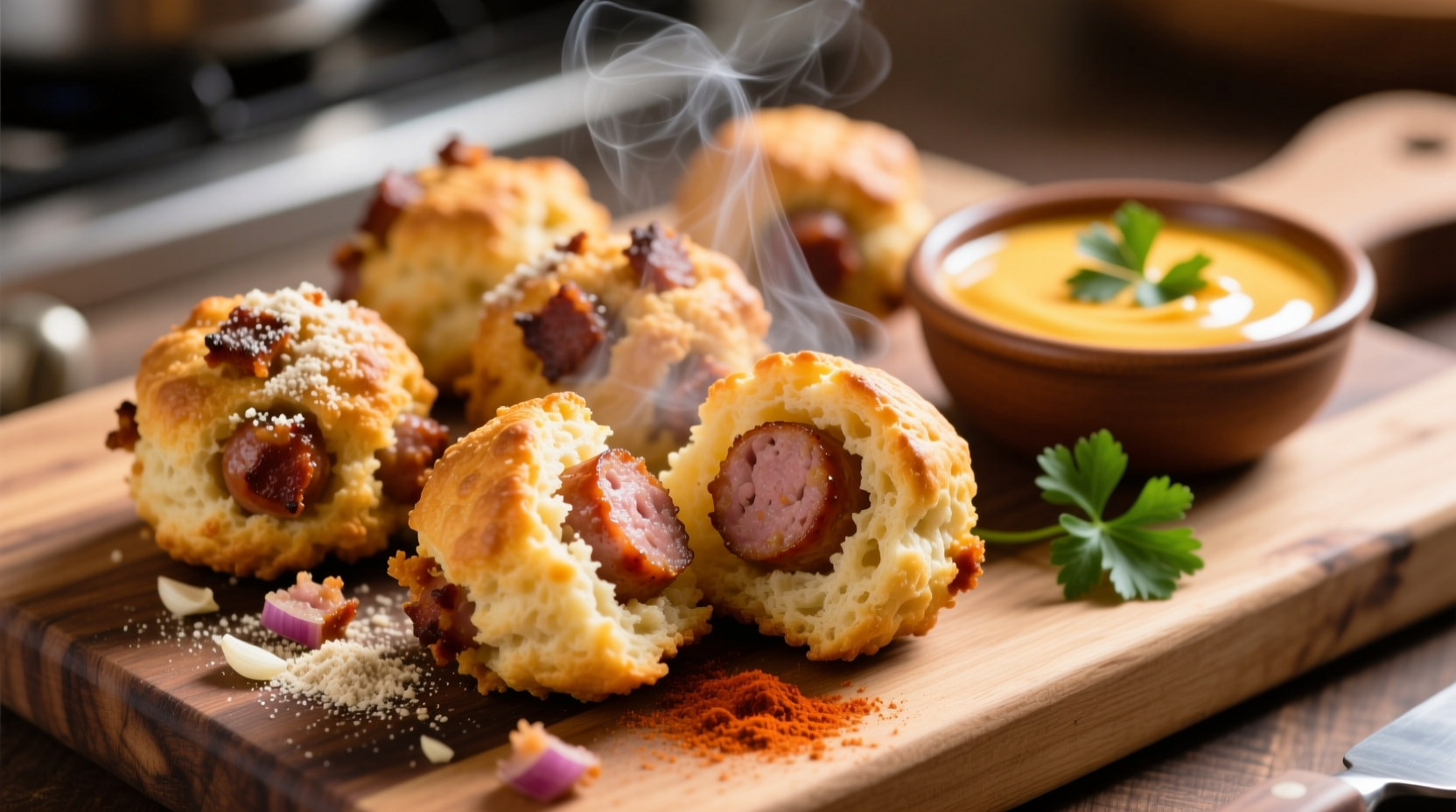
Savory sausage balls are small, baked rounds composed primarily of ground pork sausage, shredded cheese, and dry baking mix—most commonly a ready-made buttermilk biscuit mix. The mixture is rolled into uniform balls, typically about one to one-and-a-half inches in diameter, then baked until golden brown. They are not fried, distinguishing them from hushpuppies or croquettes, nor are they breaded like nuggets. Instead, their texture relies on the leavening agents and flour base in the biscuit mix to create a tender interior with a slightly crisp outer crust.
The origins of sausage balls trace back to mid-20th century American home kitchens, particularly in the South, where resourceful cooks began experimenting with newly available convenience foods. Bisquick, introduced in 1931 by General Mills, became a kitchen staple during wartime rationing and postwar suburban expansion. Its blend of flour, fat, salt, and leavening offered a fast route to biscuits, pancakes, and cobblers—and eventually, creative adaptations like sausage balls. By the 1970s and 1980s, these savory bites appeared in church cookbooks, PTA newsletters, and community fundraisers, cementing their status as a cultural touchstone.
Today, sausage balls remain emblematic of accessible, crowd-pleasing cooking. While variations exist across regions and households, the core formula persists: fat (from sausage), salt (cheese and seasoning), and lift (biscuit mix). The result is a high-protein, carb-balanced appetizer that holds well at room temperature, reheats beautifully, and appeals to both children and adults.
Key Characteristics
- Flavor: Rich, salty, umami-forward with notes of smoked paprika, garlic, and cured pork; balanced by tangy cheese.
- Aroma: Warm, buttery, and meaty when baking; fills the kitchen with inviting scents of roasted sausage and toasted dairy.
- Color/Form: Golden-brown exterior with visible flecks of orange cheddar; spherical shape, usually 1–1.5 inches in diameter.
- Texture: Crisp outer shell giving way to a soft, slightly crumbly interior; holds together when bitten but melts in the mouth.
- Heat Level: Mild to medium, depending on sausage choice; easily adjustable with cayenne, hot sauce, or jalapeños.
- Culinary Function: Appetizer, snack, brunch item, or side dish; often served at ambient temperature.
- Shelf Life: Up to 4 days refrigerated; freezes well for up to 3 months.
Practical Usage: How to Make & Serve Sausage Balls
Creating perfect sausage balls starts with selecting quality components and understanding how they interact during mixing and baking. Follow this detailed process for consistent results.
- Choose Your Sausage: Use raw breakfast sausage—either mild or spicy—with at least 18% fat content. Avoid pre-cooked or turkey-based sausages unless adapting for dietary needs. One pound (450g) yields approximately 24–30 balls.
- Prep the Sausage: Cook sausage in a skillet over medium heat, breaking it into fine crumbles. Drain excess grease thoroughly; too much oil will make the dough greasy and prevent proper binding.
- Select Cheese: Sharp cheddar is traditional, but consider mixing in Parmesan or pepper jack for complexity. Shred your own—pre-shredded cheese contains anti-caking agents that inhibit melt and cohesion.
- Mix Dry Ingredients: In a large bowl, combine one 16-oz box of buttermilk biscuit mix (such as Pillsbury Grands! or Homemade Plus) with 1–2 teaspoons of garlic powder, ½ teaspoon onion powder, and optional spices (cayenne, smoked paprika, mustard powder).
- Combine Wet Components: Add 1 cup shredded cheese and cooled, cooked sausage to the dry mix. Stir with a wooden spoon or hands until uniformly blended. If too dry, add 2–3 tablespoons milk or buttermilk. If too wet, sprinkle in more biscuit mix.
- Shape the Balls: Roll into 1-inch spheres using damp hands to prevent sticking. Place on an ungreased baking sheet lined with parchment or silicone mat, spaced 1 inch apart.
- Bake: Preheat oven to 350°F (175°C). Bake for 18–22 minutes, rotating the pan halfway, until tops are golden and internal temperature reaches 165°F (74°C).
- Cool & Serve: Let rest 5 minutes before serving. They firm up slightly upon cooling.
Pro Tip: For extra browning and sheen, brush baked sausage balls lightly with melted butter and sprinkle with flaky sea salt immediately after removing from the oven.
Serve warm or at room temperature. These pair exceptionally well with dipping sauces such as honey mustard, ranch, pimento cheese, or remoulade. On buffets, they hold heat well in slow cookers set to \"warm\" mode for up to two hours.
Home Cooking Applications
For everyday use, sausage balls excel as grab-and-go breakfast items. Bake a batch Sunday night and reheat in the microwave (15–20 seconds) or toaster oven throughout the week. Parents often pack them in lunchboxes alongside fruit and yogurt. Their portability makes them ideal tailgate fare or picnic staples.
Professional & Catering Uses
In restaurant settings, chefs elevate the base recipe by incorporating gourmet touches: house-blended sausage with fennel and red pepper flakes, aged white cheddar, or herb-infused biscuit mixes. Some establishments serve mini versions (teaspoon-sized) on silver trays with cocktail forks for upscale events. Others stuff each ball with a piece of crispy bacon or a pickled jalapeño slice for surprise texture and heat.
Pairing Suggestions
| Dish Type | Recommended Pairings |
|---|---|
| Brunch Menu | Scrambled eggs, fresh fruit salad, Bloody Marys, mimosas |
| Appetizer Spread | Deviled eggs, pimento cheese crackers, marinated olives, charcuterie board |
| Tailgate/Party | Pulled pork sliders, cornbread muffins, sweet tea, craft beer |
| Snack Box | Apple slices, string cheese, trail mix, granola bars |
Variants & Types
While the classic version uses pork sausage and yellow cheddar, countless regional and dietary adaptations exist. Understanding these variants allows customization based on occasion, audience, and ingredient availability.
1. Spicy Jalapeño-Cheddar
Add ¼ cup finely diced pickled jalapeños (drained) or 2 tablespoons minced fresh peppers. Some bakers include a dash of hot sauce (e.g., Frank’s RedHot) directly into the mix. Ideal for those who enjoy a kick.
2. Gluten-Free Version
Replace standard biscuit mix with a gluten-free alternative like King Arthur Flour’s GF Biscuit Mix or Bob’s Red Mill Baking Mix. Confirm all other ingredients (especially sausage) are certified GF. Texture may be slightly denser; adding 1 tablespoon xanthan gum improves elasticity.
3. Vegetarian Option
Substitute plant-based sausage (e.g., Beyond Meat or Impossible) and vegan cheddar shreds. Note: flavor profile shifts significantly—earthy rather than smoky. Enhance with liquid smoke (¼ tsp) and nutritional yeast (2 tbsp).
4. Gourmet Herb & Cheese Blend
Incorporate 1 tablespoon chopped fresh rosemary, thyme, or sage. Swap half the cheddar for Gruyère or smoked Gouda. Adds sophistication suitable for wine tastings or dinner parties.
5. Mini Muffin Tin Method
Press mixture into greased mini muffin tins and bake 15–18 minutes. Creates neater portions and prevents rolling during baking. Easier to fill with centers like blue cheese or sun-dried tomato.
6. Smoked Sausage Variation
Use precooked smoked sausage (like kielbasa), finely diced and sautéed to render fat. Combine with cream cheese (4 oz, softened) for richer texture. Requires additional biscuit mix to absorb moisture.
Each variant serves a different purpose—from kid-friendly milder versions to bold adult-oriented iterations. Always adjust seasoning incrementally and taste-test a small cooked portion before forming all the balls.
Comparison with Similar Ingredients & Dishes
Savory sausage balls are sometimes confused with other handheld savory treats. Clarifying differences ensures accurate expectations and appropriate usage.
| Dish | Base Ingredient | Cooking Method | Texture | Key Difference |
|---|---|---|---|---|
| Sausage Balls | Biscuit mix + sausage + cheese | Baked | Tender-crumbly | No batter; held together by flour base |
| Hushpuppies | Cornmeal batter | Fried | Crispy outside, dense inside | Sweet corn flavor; deep-fried in oil |
| Meatballs | Ground meat + breadcrumbs + egg | Baked or simmered | Dense, chewy | No cheese in mix; often sauced |
| Cheese Fritters | Bechamel or batter-based | Fried or baked | Gooey center, crisp shell | Require chilling and breading |
| Pigs in a Blanket | Mini hot dogs wrapped in pastry | Baked | Flaky exterior, juicy interior | Encased, not mixed; whole sausage inside |
\"Sausage balls aren’t just food—they’re edible hospitality. They say, 'I made something for you,' without needing a fork.\" — Clara Jenkins, Southern Living Test Kitchen Director (2019)
Practical Tips & FAQs
Can I prepare sausage balls ahead of time?
Yes. Assemble and roll the balls, then store covered in the refrigerator for up to 24 hours before baking. Alternatively, freeze uncooked balls on a tray, then transfer to a freezer bag. Bake frozen, adding 5–7 minutes to cook time.
How do I store leftovers?
Cool completely, then place in an airtight container. Refrigerate for up to 4 days. Reheat in a 325°F oven for 10 minutes or microwave in short bursts to preserve texture.
Why did my sausage balls come out flat or greasy?
This usually results from insufficient draining of sausage fat or using a low-quality biscuit mix with poor absorption. Always blot cooked sausage with paper towels and allow it to cool before mixing.
Can I use self-rising flour instead of biscuit mix?
You can, but you’ll need to replicate the full composition: 2 cups self-rising flour + ⅓ cup powdered milk + ½ cup shortening (cold, grated) + 1 teaspoon baking powder. Mix thoroughly before proceeding. Results vary by brand.
Are there egg-free versions?
Standard recipes don’t require eggs. The biscuit mix provides enough binding power when properly mixed. Eggs are only needed if substituting with watery cheeses or adding liquid ingredients.
What’s the best biscuit mix to use?
Pillsbury Grands! Buttermilk Biscuits (the refrigerated tube kind) yield the flakiest results due to hydrogenated shortening and precise leavening. For scratch-like quality, try Annie’s Homegrown or Craft Biscuit Co. dry mixes.
Can I make them dairy-free?
Yes. Use dairy-free biscuit mix and vegan cheese alternatives. Miyoko’s or Violife brands melt well. Add 1 tablespoon nutritional yeast for cheesy depth.
Do they freeze well?
Exceptionally well. Freeze uncooked or cooked balls in single layers, then bag for long-term storage. No need to thaw before reheating—just extend baking time slightly.
Make-Ahead Checklist:
- ☑ Cook and drain sausage; chill overnight
- ☑ Grate cheese; store separately
- ☑ Measure dry ingredients; combine in advance
- ☑ Mix and shape balls; refrigerate or freeze
- ☑ Label containers with date and contents
Summary & Key Takeaways
Savory sausage balls made with biscuit mix represent the pinnacle of efficient, flavorful home cooking. Rooted in Southern tradition and amplified by modern convenience, they balance richness, salt, and texture in a portable format. Using just five core ingredients—sausage, biscuit mix, cheese, seasonings, and optionally milk—you can produce a crowd-pleasing dish in under 30 minutes of active time.
Success hinges on three principles: thorough drainage of sausage fat, use of freshly shredded cheese, and proper hydration of the dough. Variations abound, allowing adaptation for dietary restrictions, flavor preferences, and event formality. From gluten-free to spicy gourmet versions, the template remains flexible without losing integrity.
Unlike similar fried or sauced items, sausage balls stand out for their ease of preparation, storability, and universal appeal. They bridge generations—from grandmothers using Bisquick to millennials meal-prepping for workweeks. Their presence on a table signals warmth, abundance, and thoughtful effort.
Try the basic recipe this weekend, then experiment with one variation: add jalapeños, swap in herb cheese, or bake in a muffin tin. Share your creation with someone who needs a little comfort on a plate.









