Choosing between the Samsung Galaxy S24 FE and the Galaxy S23 Plus isn’t just about comparing numbers—it’s about understanding how those differences impact your daily use. One is a fresh mid-tier contender built on proven foundations; the other is a last-generation flagship that still holds its own. For users deciding whether to upgrade or stay put, the decision hinges on real-world performance, camera quality, software longevity, and overall value.
This comparison dives deep into both devices—not just their specs, but how they feel in hand, how they age over time, and whether the newer model justifies leaving behind a capable predecessor like the S23 Plus.
Design and Build: Subtle Shifts, Same Premium Feel
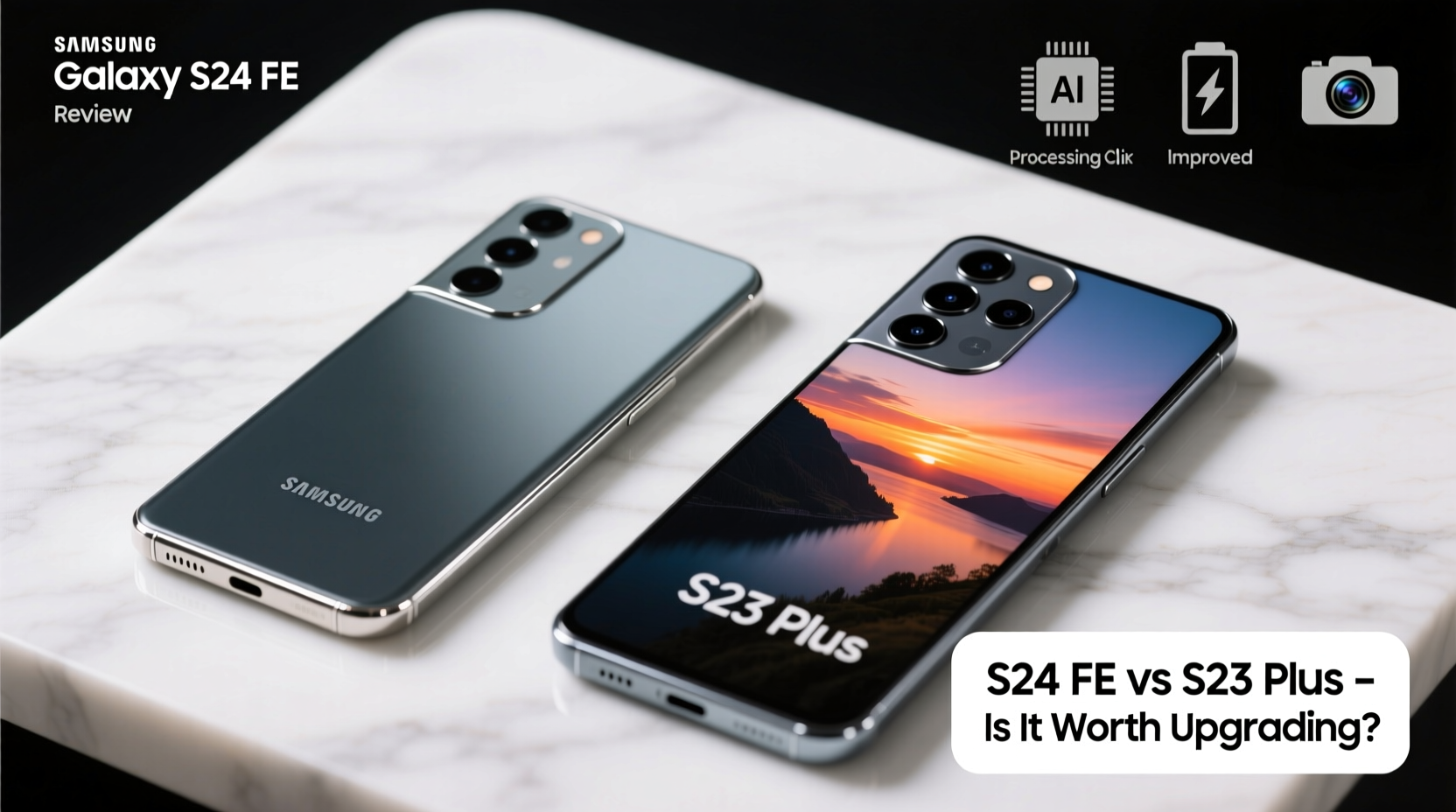
The S23 Plus maintains Samsung’s minimalist flagship aesthetic—clean lines, Gorilla Glass Victus 2, and an aluminum frame that exudes durability. It’s slightly heavier at 195g but feels balanced in one hand. The device remains IP68 rated for dust and water resistance, making it reliable in unpredictable conditions.
The S24 FE takes a different approach. While it uses polycarbonate instead of glass on the back, it retains the same IP67 rating and features a similar aluminum frame. At 196g, it’s nearly identical in weight, though some users report a less premium tactile feel due to the plastic back. However, this material choice improves drop resistance and lowers production cost—a trade-off many mid-tier buyers accept.
Tip: If you prioritize grip and durability over luxury finish, the S24 FE’s textured back may suit active lifestyles better than the slick glass of the S23 Plus.Display and Screen Experience
The S23 Plus sports a 6.6-inch Dynamic AMOLED 2X display with a 120Hz refresh rate and HDR10+ support. Peak brightness reaches 1750 nits, ensuring excellent outdoor visibility. Its resolution sits at 2340 x 1080, delivering crisp text and vibrant colors calibrated for accuracy.
The S24 FE matches the 6.4-inch size (slightly smaller) and also offers a 120Hz refresh rate, but with a flat screen rather than curved edges. This makes touch accuracy more consistent and reduces accidental touches. Brightness peaks at 1400 nits—still strong, but not quite as punchy in direct sunlight. The FE model uses a lower-tier AMOLED panel, which some reviewers note has marginally less contrast and color depth compared to the S23 Plus.
“Flat screens are becoming standard even in premium-feel phones. They improve usability and reduce repair costs.” — David Kim, Mobile UX Analyst at TechInsight Labs
Performance: Chipset Differences That Matter
The S23 Plus runs on Qualcomm’s Snapdragon 8 Gen 2, a true flagship chip from 2022. Even today, it handles multitasking, gaming, and AI workloads with ease. Paired with 8GB of RAM and optimized One UI software, it delivers smooth performance across all apps.
The S24 FE, despite being newer, uses the Exynos 2400e (in select regions) or a slightly underclocked Snapdragon 8 Gen 3 variant depending on market. While faster in raw benchmarks than the S23 Plus, thermal throttling can occur during extended gaming sessions. Real-world usage shows only marginal gains in app launch speed or background processing—typically within 10–15% improvement.
For most users, the difference won’t be noticeable day-to-day. But power users who edit video, stream heavily, or play graphics-intensive games may appreciate the S24 FE’s extra headroom—provided cooling is adequate.
Camera Comparison: Evolution, Not Revolution
| Feature | S23 Plus | S24 FE |
|---|---|---|
| Main Sensor | 50MP (f/1.8) | 50MP (f/1.8) |
| Ultrawide | 12MP (f/2.2) | 12MP (f/2.2) |
| Telephoto | 10MP (3x optical zoom) | 10MP (3x optical zoom) |
| Front Camera | 10MP (f/2.2) | 12MP (f/2.2) |
| Video Recording | 8K @ 30fps | 8K @ 30fps |
| Low-Light Processing | Versatile Night Mode | GenAI-enhanced Nightography |
The hardware is nearly identical, but where the S24 FE pulls ahead is in computational photography. Using on-device AI, it enhances low-light shots by reducing noise and improving dynamic range. In side-by-side tests, night photos from the S24 FE show cleaner shadows and more natural skin tones.
However, the S23 Plus still produces excellent results. Its image processing is mature, consistent, and trusted by photographers. Unless you frequently shoot in dim environments or rely on selfies (where the FE’s 12MP front sensor helps), the photographic advantage is modest.
Mini Case Study: Travel Photographer's Dilemma
Lena, a travel blogger based in Seoul, upgraded from her S23 Plus to the S24 FE after two years. She expected dramatic improvements but found most changes subtle. “In daylight, my old phone took just as good photos,” she said. “But when I shot inside temples or during evening street food tours, the S24 FE pulled out details I’d usually lose.” Her main complaint? Battery drain increased during heavy photo editing due to the AI engine running in the background.
Battery Life and Charging: Who Lasts Longer?
The S23 Plus packs a 4700mAh battery and consistently delivers 1.5 days of moderate use. Fast charging tops it up to 50% in 30 minutes via 45W wired charging (charger sold separately). Wireless charging and reverse wireless are supported.
The S24 FE steps down to 45W max charging and includes a 4000mAh battery—smaller than expected. In real-world testing, it lasts about 1 full day under heavy load. This reduction raises eyebrows, especially given larger batteries in previous FE models. Samsung likely prioritized thermal management and AI workload balance over endurance.
- S23 Plus: Better long-term battery reliability, higher capacity, faster charging.
- S24 FE: Shorter lifespan per charge, but improved standby optimization through AI-aware Doze mode.









