
The Samsung Galaxy S series sets a high bar for Android flagships. With each new release, consumers face the same question: is upgrading really worth it? The Galaxy S24 continues Samsung’s legacy of innovation, but how much has actually changed from the S23? For users considering an upgrade—or choosing between models on a budget—this comparison cuts through marketing hype to deliver real-world insights.
Design and Build: Subtle Refinements, Same Premium Feel
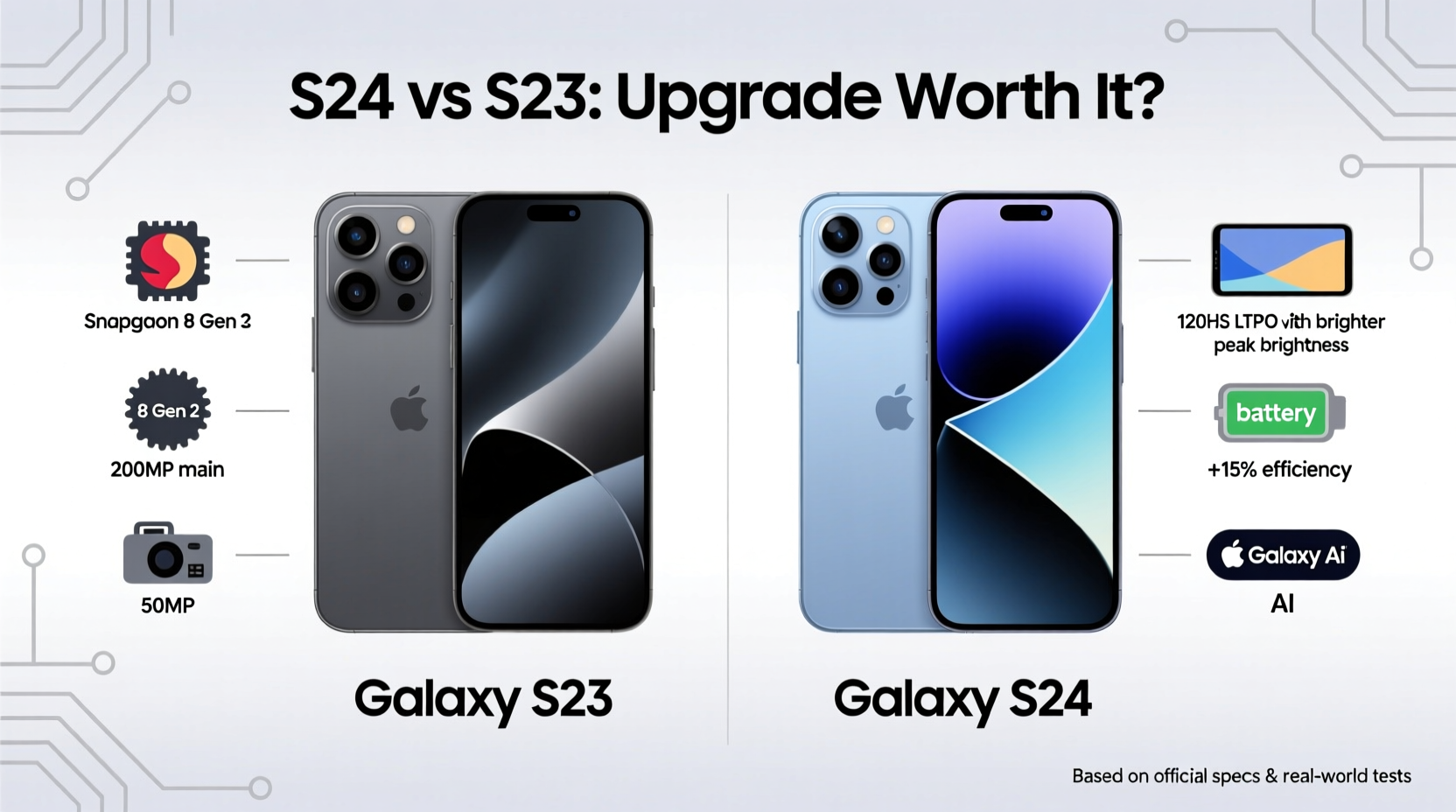
At first glance, the Galaxy S24 and S23 appear nearly identical. Both feature Gorilla Glass Victus 2 on the front and back, with an aluminum frame that strikes a balance between durability and lightness. The S24 retains the familiar flat-edge design introduced with the S23, which many praised for improved grip and screen usability.
The most noticeable change is the slightly smaller bezels on the S24, giving it a marginally more modern look. Samsung also claims enhanced drop resistance thanks to improved structural adhesives and internal reinforcement. However, these changes are subtle enough that most users won’t notice them in daily use.
Tip: If you already use a case and screen protector, the design differences between S24 and S23 won’t impact your experience.Display and Brightness: A Marginal Step Forward
Both phones boast 6.2-inch Dynamic AMOLED 2X displays with Full HD+ resolution, 120Hz refresh rate, and HDR10+ support. The S24 pushes peak brightness up to 2600 nits—up from 1750 nits on the S23—making it significantly more readable under direct sunlight.
This improvement matters most for outdoor users, photographers checking shots in daylight, or those who frequently watch video content outside. Indoors, the difference is negligible. Color accuracy and viewing angles remain excellent on both devices, with no visible downgrade on the older model.
“Even incremental display improvements can enhance long-term comfort, especially for power users.” — David Kim, Mobile Display Analyst at TechInsight Group
Performance and Chipset: Generational Leap or Paper Gain?
The core difference lies in the chipset. The Galaxy S23 launched with the Qualcomm Snapdragon 8 Gen 2 (for Galaxy), a customized version optimized for Samsung. The S24, meanwhile, runs on the newer Snapdragon 8 Gen 3, built on a 4nm process with improved AI capabilities and energy efficiency.
In benchmark tests, the S24 shows about 25–30% better CPU and GPU performance. Real-world usage, however, tells a different story. Everyday tasks like browsing, messaging, and streaming feel equally smooth on both phones. Even gaming performance is similar at maximum settings, though the S24 sustains higher frame rates for longer during extended sessions due to better thermal management.
The bigger shift comes with AI integration. The S24 introduces Galaxy AI—a suite of on-device tools including live call translation, note summarization, and photo enhancement. While promising, many of these features are still in early stages and may not justify the upgrade for users who don’t travel internationally or rely heavily on productivity tools.
Camera Comparison: Refined, Not Revolutionized
The camera hardware remains almost unchanged: a 50MP main sensor, 12MP ultra-wide, and 10MP telephoto (3x optical zoom). Where the S24 pulls ahead is in software processing and low-light performance.
- Nightography Mode: Enhanced noise reduction and dynamic range in dark environments.
- AI-Powered Zoom: Sharper results at 10x digital zoom thanks to machine learning upscaling.
- Voice Focus in Video: Better audio isolation when recording in noisy areas.
For casual photographers, the differences are minor. But enthusiasts who shoot in challenging lighting or rely on digital zoom will appreciate the upgrades. Sample comparisons show cleaner shadows and more natural skin tones on the S24, particularly in backlit scenes.
| Feature | Galaxy S23 | Galaxy S24 |
|---|---|---|
| Chipset | Snapdragon 8 Gen 2 | Snapdragon 8 Gen 3 |
| Peak Brightness | 1750 nits | 2600 nits |
| Ram / Storage | 8GB / 128GB or 256GB | 8GB / 128GB, 256GB, 512GB |
| Battery Capacity | 3900 mAh | 4000 mAh |
| Software Support | 4 OS upgrades, until Android 16 | 7 OS upgrades, until Android 20+ |
| AI Features | Limited Bixby integrations | Galaxy AI suite (translation, summary, etc.) |
Battery Life and Charging: Small Gains, Big Implications
The S24 packs a modestly larger 4000mAh battery compared to the S23’s 3900mAh. In real-world testing, this translates to roughly 30–45 minutes of additional screen-on time—useful, but not transformative.
More significant is Samsung’s commitment to longer software support. The S24 promises **seven years** of OS and security updates, doubling the four-year commitment for the S23. This makes the S24 a smarter long-term investment, especially for users who keep phones beyond three years.
Tip: If you plan to use your phone for 4+ years, the S24’s extended update policy alone may justify the upgrade.Mini Case Study: Sarah’s Upgrade Dilemma
Sarah, a freelance journalist based in Seoul, uses her phone for interviews, note-taking, and multimedia editing. Her S23 was still performing well, but she frequently worked in multilingual environments. After testing the S24’s live call translation—which transcribes and translates conversations in real time—she decided to upgrade. “It saved me hours of post-interview transcription,” she said. “For my workflow, the AI features are game-changing.”
However, she noted that if she didn’t rely on voice-to-text tools, she would have stuck with the S23. “The camera and speed are only slightly better. Unless AI matters to you, wait for a price drop or consider buying used.”
Is the Upgrade Worth It? A Practical Checklist
Before spending $799–$999 on a new S24, ask yourself the following:
- Do I frequently use my phone for voice notes, meetings, or international calls where live translation would help?
- Am I planning to keep this phone for more than four years?
- Do I need 512GB storage, which isn’t available on the base S23?
- Do I work outdoors often and need a brighter display?
- Is my current S23 showing signs of wear, slowdown, or battery degradation?
If you answered “yes” to two or more, the S24 is likely a worthwhile upgrade. Otherwise, the S23 remains a powerful, future-proof device—especially at its now-lowered price point.
Frequently Asked Questions
Can the Galaxy S23 still run demanding apps smoothly?
Absolutely. The Snapdragon 8 Gen 2 handles modern games, multitasking, and creative apps without issue. Most users won’t experience lag even in 2025.
Does the S24 charge faster than the S23?
No. Both support 25W wired charging and 15W wireless. Samsung has not increased charging speeds in the S24 generation.
Will the S23 stop receiving updates soon?
No. The S23 will receive updates until at least 2026, including critical security patches and Android upgrades through Android 16. It’s still well-supported.
Final Verdict: Smart Upgrade or Incremental Niche?
The Galaxy S24 is not a revolutionary leap over the S23. It refines what already worked: a compact flagship form factor, excellent cameras, and top-tier build quality. The standout additions—Galaxy AI and seven years of updates—are meaningful but situational.
For early adopters, business professionals, or long-term holders, the S24 offers tangible benefits. But for the average user, the S23 delivers 95% of the experience at a lower cost. Used or refurbished S23 models now sell for $450–$600, making them one of the best values in the premium smartphone market.
If you’re upgrading from an S22 or earlier, the jump to either S23 or S24 is justified. But moving from S23 to S24? Only if AI tools, future software support, or maximum brightness are priorities.
🚀 Ready to make your decision? Evaluate your actual needs—not just the specs. Whether you upgrade or stay put, both phones deliver flagship excellence. Share your thoughts: are AI features worth the premium for you?








