
Grooming is essential for a cat’s health, helping prevent matting, reduce shedding, and detect skin issues early. Yet, many cats resist handling, making grooming a stressful experience—for both pet and owner. The key isn’t force or restraint, but understanding feline behavior and using compassionate techniques that minimize fear. With patience and the right approach, you can transform grooming from a battle into a bonding ritual.
Understanding Feline Stress During Grooming
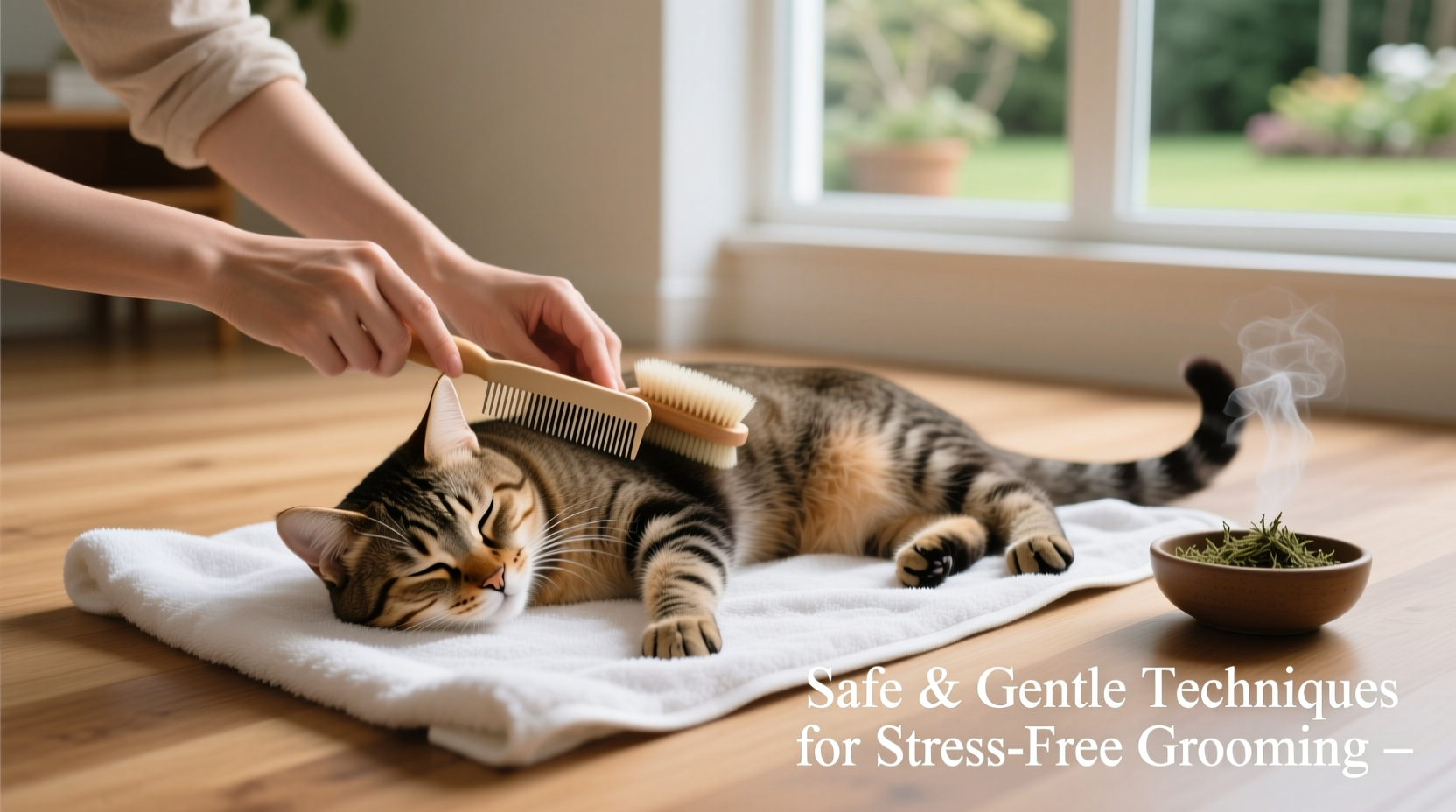
Cats are sensitive creatures whose natural instincts drive them to avoid vulnerability. Being held still triggers primal fears of predation. Signs of stress include flattened ears, dilated pupils, tail flicking, growling, or attempts to escape. Ignoring these cues escalates anxiety and damages trust.
Instead of viewing resistance as defiance, recognize it as communication. A stressed cat isn’t being “difficult”—it’s expressing discomfort. Successful grooming begins long before the brush touches fur. It starts with creating an environment where your cat feels safe, in control, and rewarded for cooperation.
Tip: Always end a grooming session on a positive note—even if it lasted only 30 seconds—by offering a treat or affection.Step-by-Step: Building Positive Grooming Habits
Introduce grooming gradually, especially with kittens or cats new to handling. Use this timeline to condition your cat over days or weeks:
- Day 1–3: Touch without tools. Sit with your cat and gently stroke areas they tolerate (head, chin). Reward with treats.
- Day 4–6: Introduce the brush. Let your cat sniff it. Gently run it near their fur without contact. Praise and reward.
- Day 7–10: Light brushing. Stroke one area (e.g., back) for 5–10 seconds. Stop before resistance appears. Repeat daily.
- Week 3 onward: Extend duration and coverage. Focus on one body part per session until full-body grooming is comfortable.
This method uses positive reinforcement and desensitization—core principles in animal behavior science. Rushing the process undermines progress.
Safe Immobilization Techniques for Necessary Handling
Sometimes, brief immobilization is unavoidable—such as trimming matted fur or cleaning around the rear. The goal is not to overpower, but to gently restrict movement while preserving dignity and minimizing panic.
Two widely recommended methods by veterinary behaviorists are towel wrapping (“burrito method”) and manual restraint with support.
Towel Wrapping Technique
Wrap your cat snugly in a soft towel, exposing only the area you need to groom. This mimics a secure swaddle and prevents scratching or biting.
- Lay a large bath towel flat on a stable surface.
- Place your cat in the center, facing away from one edge.
- Fold the bottom edge over the hind legs.
- Wrap one side across the body, tucking it under the opposite side.
- Fold the top down over the shoulders, leaving the head exposed unless needed.
This technique reduces visual stimuli and limits limb movement without restricting breathing. Never cover the face unless absolutely necessary and only for short durations.
Manual Restraint with Two-Hand Support
For quick tasks like nail trims, use two-handed control:
- Hold the scruff lightly at the neck with one hand—this simulates how a mother cat carries kittens and often induces temporary stillness.
- Support the chest and front legs with your forearm to prevent forward movement.
- Use your other hand to gently extend a paw for clipping.
Note: Scruffing should be minimal and never used as punishment. Some adult cats dislike it; observe your cat’s response and discontinue if signs of distress increase.
| Technique | Best For | Risks to Avoid |
|---|---|---|
| Towel Wrap | Bathing, detangling, medicated wipes | Over-tightening, covering face too long |
| Scruff & Hold | Nail trims, ear cleaning | Excessive pressure, prolonged restraint |
| Chin & Chest Hold | Face brushing, eye cleaning | Restricting breathing, forcing head down |
“Calm grooming starts with emotional safety. When cats feel secure, physical restraint becomes less necessary.” — Dr. Lena Torres, DVM, Feline Behavior Specialist
Creating the Ideal Grooming Environment
Your setting plays a major role in your cat’s comfort. Choose a quiet room free from loud noises, other pets, or foot traffic. Use a non-slip surface like a rubber mat or folded towel on a table or lap.
Timing matters. Groom after meals or playtime when your cat is naturally relaxed. Avoid sessions during high-stress periods like thunderstorms or houseguest visits.
Tools should be cat-specific: slicker brushes for long-haired breeds, soft bristle brushes for short coats, and rounded-tip scissors for mats. Keep all supplies within reach to avoid leaving your cat mid-session.
Tip: Warm metal tools slightly by running them under warm water—cold metal can startle sensitive cats.Real Example: Helping Bella Through Mat Management
Bella, a 7-year-old Persian, had developed severe matting along her flanks due to reduced self-grooming. Her owner, Maria, tried brushing once, but Bella hissed and fled. After consulting a vet behaviorist, Maria adopted a gradual plan.
She began by sitting near Bella daily with the brush on her lap, offering tuna paste when Bella approached. After five days, she touched Bella’s back with the brush for two seconds. Over three weeks, she increased duration and introduced the towel wrap during brief combing sessions.
Within six weeks, Bella tolerated full grooming in two 10-minute segments. Today, she even nudges the brush when it’s time. The transformation wasn’t due to stronger restraint—but consistent trust-building.
Checklist: Preparing for a Stress-Free Grooming Session
- ✅ Choose a quiet time when your cat is calm
- ✅ Gather all tools: brush, clippers, treats, towel
- ✅ Set up a non-slip, stable grooming surface
- ✅ Offer a treat or play session beforehand to relax your cat
- ✅ Start with brief, positive interactions—no forced handling
- ✅ Monitor body language and stop if stress signs appear
- ✅ End with praise or a favorite reward
Frequently Asked Questions
How do I know if my cat is too stressed to continue grooming?
Watch for pinned ears, rapid breathing, tail lashing, growling, or attempts to bite or escape. If any of these occur, pause immediately. Resume later with shorter, gentler contact. Chronic stress may require professional help from a vet or certified behaviorist.
Can I sedate my cat at home for grooming?
Never administer sedatives without veterinary guidance. Some over-the-counter supplements like pheromone sprays (Feliway) or calming chews (containing L-theanine or colostrum) may help mildly anxious cats, but true sedation requires prescription medication and medical supervision.
My cat hates being touched—can grooming ever become easy?
Yes, with patience. Begin by touching only low-sensitivity areas (head, chin), rewarding each acceptance. Progress slowly to the back, then legs. Pair every touch with a high-value treat. Many previously resistant cats learn to tolerate—or even enjoy—grooming when given time and positive associations.
Final Thoughts
Stress-free grooming isn’t about mastering control—it’s about cultivating cooperation. Every gentle touch, every paused moment, and every treat offered builds a foundation of trust. By prioritizing your cat’s emotional well-being, you create a routine that supports both physical health and mental comfort.
Start small. Celebrate progress. Respect boundaries. In time, what once seemed impossible becomes a quiet, shared moment of care.
💬 Have a grooming success story or tip? Share your experience below and inspire fellow cat owners to embrace kindness over force.








