
Carrying a bag shouldn’t feel like a chore. Yet, many people end up with shoulder strain, fumbling at checkouts, or regretting their choice by midday. Two popular options—saddle bags and wristlets—are often praised for style and convenience, but how do they really stack up when it comes to daily wearability? The answer isn’t just about aesthetics; it’s about ergonomics, accessibility, and how well each fits into your routine. This breakdown dives into the real-world experience of using both, backed by practical insights and user behavior patterns.
Understanding the Basics: What Defines Each Bag?
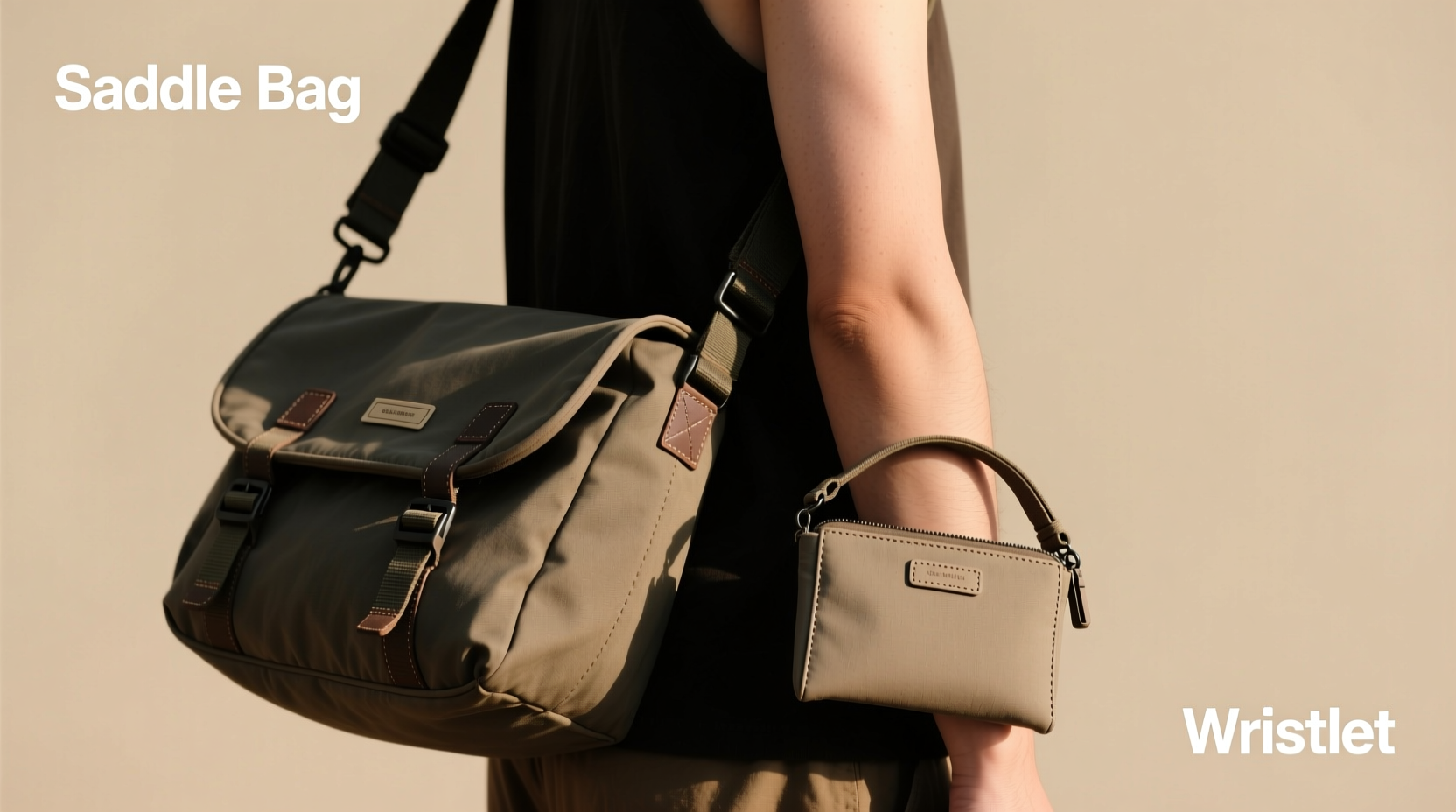
A saddle bag gets its name from its curved, asymmetrical silhouette that drapes over the shoulder or across the body like a horse’s saddle. Typically made of leather or durable fabric, it features a flap closure and adjustable strap, allowing for crossbody or shoulder carry. Its design prioritizes moderate capacity while maintaining a sleek profile.
In contrast, a wristlet is a compact, clutch-style accessory designed to be held or looped around the wrist. It usually lacks a long strap and is intended for minimal essentials—phone, cards, lipstick. Wristlets are common in evening settings or as secondary bags for quick outings.
The fundamental difference lies in function: saddle bags aim to balance utility and mobility, while wristlets emphasize portability at the cost of storage. But comfort isn’t solely determined by size—it’s shaped by weight distribution, ease of access, and how naturally the bag integrates into movement.
Comfort & Ergonomics: Who Wins the Wearability Test?
Long-term comfort hinges on how weight is managed. Saddle bags, especially those worn crossbody, distribute weight across the torso, reducing pressure on any single point. When properly adjusted, the strap rests diagonally across the chest, stabilizing the bag during walking or transit. This makes them ideal for urban commutes, shopping trips, or days when you need more than just the basics.
Wristlets, however, place all weight directly on the wrist. While lightweight in theory, prolonged use can lead to fatigue, especially if you're carrying a larger phone or adding keys. There’s no support system—just grip strength. Over time, this can cause discomfort, particularly for users with wrist sensitivity or arthritis.
Tip: If you frequently switch between bags, reserve the wristlet for short events and rely on the saddle bag for full-day outings.The Posture Factor
Saddle bags encourage neutral posture when worn correctly. The diagonal strap helps center the load, minimizing shoulder hunching. Poorly adjusted straps (too long or too short) can still lead to imbalance, but the design allows for correction.
Wristlets force the arm into a fixed position. Holding one for extended periods often results in raised shoulders and tense forearms—an unnatural stance that disrupts natural gait. In crowded spaces, people tend to lift wristlets higher, increasing upper-body tension.
“From an ergonomic standpoint, any bag that offloads weight from the hands and distributes it across larger muscle groups will reduce fatigue.” — Dr. Lena Torres, Physical Therapist & Posture Specialist
Functionality & Accessibility: How Easy Is It to Use?
Access speed matters. A bag might look elegant, but if you’re struggling to retrieve your card at a coffee shop, it fails a basic usability test.
Saddle bags typically feature magnetic or snap closures under a flap, allowing one-handed opening with practice. Items are organized in compartments, so essentials aren’t buried. Larger models may include interior pockets or zip sections, enhancing organization without sacrificing reach.
Wristlets, while fast to open (often with a simple zipper or fold-over), suffer from clutter due to limited space. Everything is tossed in together—your phone on top of your wallet, keys tangled in cords. Retrieving one item means unpacking half the bag. And because they’re held, using your phone while accessing contents becomes a juggling act.
Real-Life Scenario: The Evening Out
Consider a typical Friday night: dinner, drinks, maybe a walk home. You want your phone, ID, cash, and lip balm handy.
- Wristlet: Starts strong—slim, stylish, easy to slip into a coat pocket. But after two hours of holding it between courses, your wrist aches. When it rains, you have one free hand to manage an umbrella. Paying the bill requires setting it down on a wet table or balancing it awkwardly.
- Saddle Bag: Slung across your body, it stays secure while freeing both hands. Reaching for your card takes seconds. Even when dancing or moving through crowds, it stays put. At the end of the night, you’re not nursing a sore wrist.
This small difference compounds over time. Annoyance isn’t always dramatic—it’s the cumulative effect of minor inconveniences.
Side-by-Side Comparison: Key Decision Factors
| Factor | Saddle Bag | Wristlet |
|---|---|---|
| Weight Distribution | Excellent – balanced across body | Poor – concentrated on wrist |
| Hands-Free Use | Yes – when worn crossbody | No – must be held or hooked |
| Storage Capacity | Moderate to high | Very limited |
| Security in Crowds | High – harder to snatch | Low – easy to drop or grab |
| Fashion Versatility | High – works casual to dressy | High – ideal for formal events |
| Daily Practicality | Strong – suitable for errands, work, travel | Weak – best for short outings |
When Each Option Makes Sense: A Practical Checklist
Neither bag is universally superior. Your lifestyle determines the better fit. Use this checklist to decide:
Choose a Saddle Bag If:- You walk more than 30 minutes daily
- You carry a phone, wallet, keys, and sunglasses
- You value hands-free mobility
- You commute via public transit or bike
- You prefer one bag that transitions from day to night
- You attend formal events where bulk is unflattering
- Your outings rarely exceed two hours
- You already carry a larger tote or backpack
- You prioritize minimalist style over utility
- You only carry essentials: phone, cards, ID
Expert Insight: Design Meets Daily Reality
Fashion designers often prioritize form over function, but wearable design should serve the user—not the runway.
“People don’t reject accessories because they’re ugly—they reject them because they’re inconvenient. The most beautiful bag in the world is useless if you dread carrying it.” — Marcus Reed, Accessory Designer & UX Consultant
Reed emphasizes that modern consumers are shifting toward “effortless utility”—items that blend style with intuitive use. Saddle bags, he notes, have evolved to meet this demand with slimmer profiles, lighter materials, and smarter interiors. Wristlets, while timeless, remain niche due to inherent limitations in autonomy and comfort.
Frequently Asked Questions
Can I wear a saddle bag every day?
Absolutely. Many modern saddle bags are designed specifically for daily wear, with water-resistant fabrics, RFID-blocking pockets, and ergonomic straps. As long as the size suits your needs and the strap is adjusted properly, it can become a reliable everyday companion.
Are wristlets outdated?
Not at all. Wristlets remain popular for formal occasions, concerts, or as secondary bags. Their appeal lies in elegance and minimalism. However, as lifestyles become more active and tech-dependent (larger phones, need for chargers), their practicality has diminished for full-day use.
Isn’t a crossbody bag just a type of saddle bag?
Not exactly. While many saddle bags are worn crossbody, the term refers to the shape and flap design, not just the carry method. Crossbody is a style of wearing; saddle is a silhouette. Some crossbody bags have boxy or structured shapes without the signature curve.
Final Verdict: Which Is Actually Less Annoying?
The saddle bag wins for overall usability. It reduces physical strain, offers greater storage, and supports a mobile lifestyle. While the wristlet has its place in fashion-forward, low-demand scenarios, it introduces friction in everyday life—wrist fatigue, constant handling, and limited space.
Annoyance isn’t just about discomfort; it’s about interruption. Every time you adjust a slipping strap, set down a bag to open a door, or dig for your card while holding a drink, you’re experiencing micro-friction. Saddle bags minimize these moments. They stay put, stay accessible, and stay comfortable.
That said, the smart approach isn’t choosing one over the other permanently—it’s curating a rotation. Keep the wristlet for gallery openings or cocktail parties. Rely on the saddle bag for everything else. Variety, guided by purpose, eliminates annoyance altogether.
💬 What’s your go-to bag for daily wear? Have you switched from wristlets to crossbodies—or vice versa? Share your experience and help others find their perfect carry.








