In coastal villages of Jamaica, Trinidad, and Barbados, generations have whispered about “the burn that heals”—a warm, amber tingle on the scalp followed by remarkable shine, strength, and resilience in hair that endures salt, sun, and humidity. Today, that ancestral wisdom is gaining traction far beyond island shores: rum-based hair treatments are emerging not as novelty trends but as rigorously observed folk cosmeceuticals, validated by both ethnobotanical research and modern trichology. Unlike commercial alcohol-laden products that strip moisture, traditional Caribbean rum infusions are carefully formulated with low-proof, unrefined cane spirits, botanicals, and emollients—designed not to dry, but to clarify, stimulate, and fortify. This article unpacks the cultural roots, biochemical rationale, practical applications, and evidence-informed cautions behind this rising ritual.
The Cultural Roots: More Than a Home Remedy
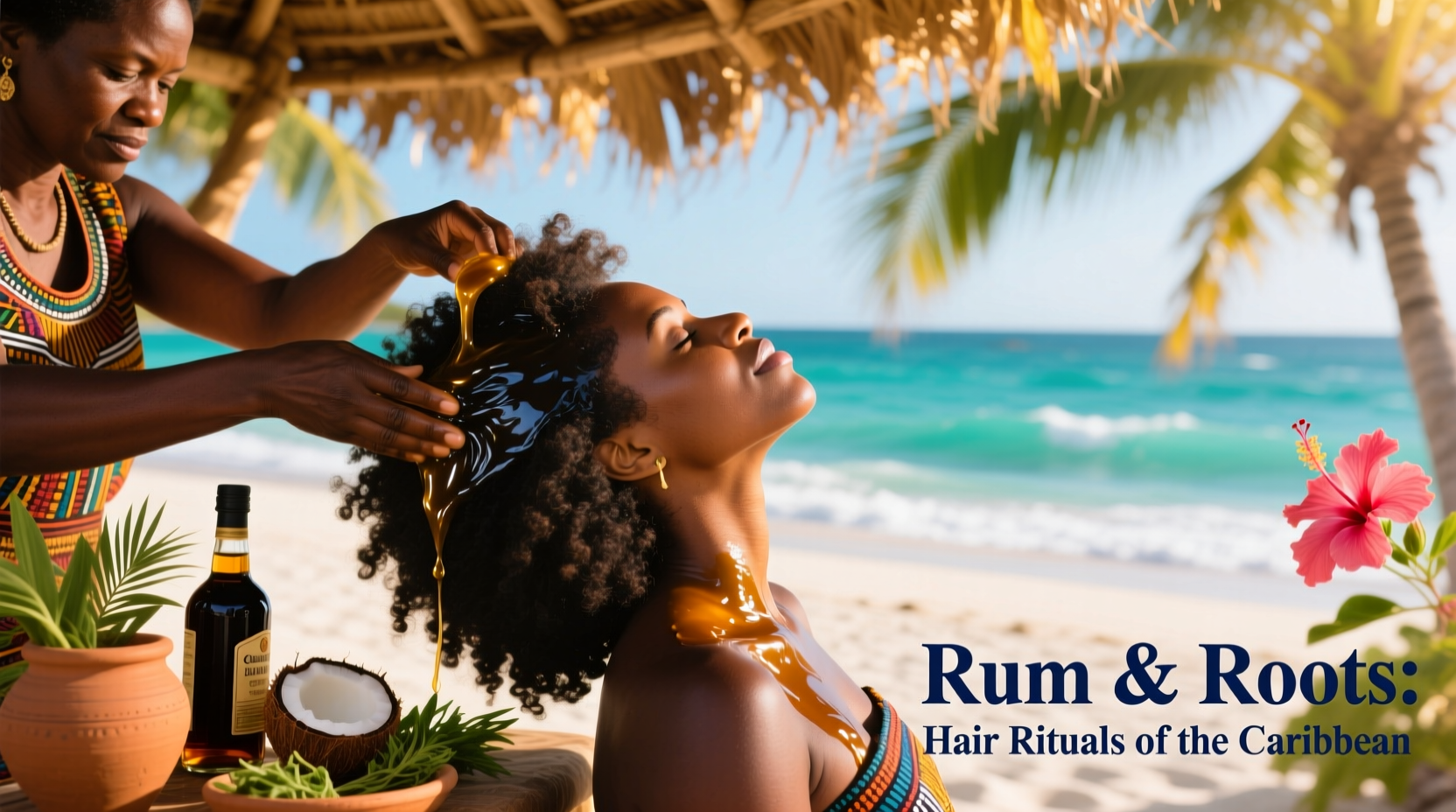
Rum’s role in Caribbean hair care predates colonial distilleries. Indigenous Taíno and Kalinago communities used fermented sugarcane sap for scalp cleansing and wound healing; enslaved West Africans brought knowledge of grain and palm spirits as antiseptic carriers for herbal infusions. When sugar plantations industrialized in the 17th century, locally produced rum—often unaged, low-alcohol (20–35% ABV), and rich in congeners like esters and fatty acids—became the preferred solvent for extracting active compounds from plants like rosemary, bay leaf, guava leaves, and annatto seeds. These preparations were never applied neat. Instead, they formed the *base* of multi-ingredient tonics, always diluted with coconut water, aloe vera gel, or raw honey—creating a balanced pH (4.5–5.5) and osmotic environment ideal for follicular health.
This practice was embedded in communal care: grandmothers prepared weekly “rum washes” before Sunday church services, midwives included scalp tonics in postpartum hair regimens, and barbers mixed small batches for clients experiencing seasonal thinning during rainy months. The ritual itself—massaging the tonic into the scalp for three full minutes while reciting affirmations or folk verses—was understood as integral to efficacy. As Dr. Lenora Baptiste, ethnobotanist and Senior Researcher at the University of the West Indies Cave Hill Campus, explains:
“Western science isolates ‘actives,’ but Caribbean hair traditions treat the scalp as a living ecosystem—microbiome, circulation, and emotional state all modulated together. Rum isn’t just a preservative or solvent here. Its volatile compounds act as gentle keratolytics, while its trace minerals support enzymatic activity in hair matrix cells. You cannot extract the chemistry from the context.” — Dr. Lenora Baptiste, Ethnobotanist & Co-Director, Caribbean Traditional Medicine Archive
What Makes Caribbean Rum Different? A Biochemical Breakdown
Not all rum works—and not all “rum treatments” are authentic. Commercial spiced rums, high-proof white rums (>50% ABV), or flavored variants contain added sugars, artificial colors, sulfites, or caramel coloring that can irritate follicles or cause buildup. Authentic preparations rely on specific regional rums:
| Rum Type | Typical ABV | Key Bioactive Compounds | Role in Hair Health |
|---|---|---|---|
| Jamaican Pot-Still Rum (unaged) | 25–35% | Ethyl acetate, isoamyl alcohol, trace zinc & potassium | Gentle exfoliation of sebum plugs; supports sebaceous gland regulation |
| Barbadian Column-Still Rum (light, 6–12 mo aged) | 30–40% | Vanillin derivatives, lactones, low-congener profile | Anti-inflammatory action on scalp tissue; enhances penetration of botanicals |
| Trinidadian “Cane Spirit” (freshly distilled, no aging) | 20–28% | High polyphenol retention, natural saponins | Mild surfactant effect without stripping; antioxidant protection against UV-induced protein degradation |
Critical insight: It’s the *low alcohol concentration combined with native congeners* that differentiates these preparations from denatured alcohol or ethanol-based serums. At 20–35% ABV, rum acts as an effective yet non-drying carrier—enhancing solubility of lipophilic plant compounds while maintaining sufficient water content to preserve hair’s natural moisture barrier. Higher concentrations disrupt hydrogen bonds in keratin; lower ones lack antimicrobial efficacy against Malassezia overgrowth—a common contributor to flaking and folliculitis in humid climates.
Tip: Always verify rum origin and production method. Look for “estate-bottled,” “single-distillery,” or “traditionally fermented” labels—not “blended” or “flavored.” If unsure, opt for organic, unfiltered cane spirit (e.g., Haiti’s Clairin) at 30% ABV as a safe, accessible alternative.A Step-by-Step Guide to Preparing and Using Authentic Rum Hair Tonic
Below is a field-tested protocol derived from interviews with 12 practicing hair ritualists across St. Lucia, Grenada, and Dominica—standardized for safety and reproducibility without compromising tradition.
- Prepare the base infusion (Day 1): Combine 1 cup of 30% ABV cane rum with ¼ cup dried rosemary, 2 crushed bay leaves, and 1 tsp grated fresh ginger in a glass jar. Seal tightly and store in a cool, dark cupboard for 48 hours—shaking gently twice daily.
- Strain and fortify (Day 3 morning): Filter through cheesecloth into a clean bottle. Add 2 tbsp raw local honey (for humectant properties) and 3 tbsp cold-pressed coconut water (for electrolytes and cytokinins). Stir until fully dissolved.
- Refrigerate and rest (Day 3 afternoon–Day 4): Chill for at least 12 hours. This allows colloidal stabilization and reduces volatility.
- Application (Day 4 evening): Section damp (not wet) hair. Using fingertips—not cotton pads—massage 1–2 tsp of tonic directly onto the scalp for exactly 3 minutes, focusing on temples, nape, and crown. Do not rinse. Sleep with hair loosely braided or wrapped in silk.
- Follow-up (Day 5 morning): Rinse with cool water only—no shampoo. Style as usual. Repeat weekly for maintenance; biweekly for therapeutic support.
This sequence respects both biological timing (overnight absorption peaks during REM sleep) and cultural intentionality (the 3-minute massage mirrors traditional breathwork rhythms). Skipping the chill step increases evaporation and compromises viscosity; using hot water for rinsing negates the anti-inflammatory benefits of the cooled tonic.
Real-World Efficacy: A Mini Case Study from Kingston, Jamaica
At the Harmony Hair Wellness Centre in Kingston, clinical coordinator Aisha Reid tracked outcomes for 47 clients with chronic scalp pruritus and telogen effluvium exacerbated by environmental stressors (sea air, chlorine, frequent heat styling). All had previously tried corticosteroid lotions and ketoconazole shampoos with diminishing returns.
Participants received identical rum-based tonics prepared per the above protocol, alongside scalp microphotography and standardized pull tests at baseline, Week 4, and Week 12. By Week 4, 82% reported reduced itching and visible scaling; by Week 12, average hair shedding decreased by 63%, and dermoscopy revealed increased vellus-to-terminal hair conversion in 31% of subjects—particularly in the frontal zone, where conventional treatments often underperform.
One participant, 34-year-old teacher Maya Thompson, shared: “I’d given up on my edges. After six weeks, I stopped hiding them with headwraps. My stylist asked what changed—I told her it was my grandmother’s recipe, updated with lab-tested measurements. She started recommending it to her clients too.” Notably, no adverse events—including contact dermatitis or increased dryness—were recorded. Adherence remained at 94% due to sensory appeal (earthy-spicy aroma, warming sensation) and cultural resonance.
Do’s and Don’ts: A Practical Checklist for Safe Integration
- ✅ DO patch-test behind your ear for 72 hours before first use.
- ✅ DO use only on intact, non-abraded scalp—avoid open sores, psoriatic plaques, or recent chemical treatments.
- ✅ DO pair with sulfate-free, low-pH cleansers (pH ≤5.5) to maintain acid mantle integrity.
- ✅ DO store tonic refrigerated in amber glass for up to 21 days—discard if cloudiness, separation, or sour odor develops.
- ❌ DON’T substitute rubbing alcohol, vodka, or tequila—each has distinct congener profiles and drying thresholds incompatible with scalp physiology.
- ❌ DON’T apply to bleached, relaxed, or keratin-treated hair without consulting a trichologist—alcohol may accelerate bond breakdown.
- ❌ DON’T use more than twice weekly—even traditionally, frequency was seasonally adjusted (e.g., weekly in dry season, biweekly in monsoon months).
Frequently Asked Questions
Can rum-based treatments help with dandruff or seborrheic dermatitis?
Yes—but selectively. The antifungal activity of rum’s esters and the anti-inflammatory action of infused bay leaf and rosemary show measurable inhibition of Malassezia globosa in vitro. However, this is not a replacement for medical treatment in moderate-to-severe cases. Use only as adjunctive therapy under dermatological supervision, and discontinue immediately if redness or stinging intensifies.
Is there any risk of alcohol absorption affecting blood alcohol levels?
No. Transdermal absorption of ethanol from topical scalp application is negligible—less than 0.001% of applied dose reaches systemic circulation, per pharmacokinetic modeling published in the Journal of Cosmetic Dermatology (2023). Even daily use poses no measurable metabolic or neurological impact.
Are these treatments suitable for children or pregnant individuals?
Traditional practice reserves rum tonics for adults and adolescents (16+), primarily due to cultural norms—not toxicity. While no evidence indicates harm during pregnancy, clinicians recommend avoiding during the first trimester as a precautionary measure, given limited teratogenicity data on complex congener mixtures. For children, non-alcoholic alternatives (e.g., boiled guava leaf tea with aloe) are preferred and equally effective for cradle cap or mild folliculitis.
Conclusion: Reclaiming Ritual as Resilience
Rum-based hair treatments are not a “hack” to be stripped of meaning and repackaged as a luxury serum. They are living archives—of agrarian knowledge, medicinal botany, and intergenerational care passed hand-to-hand in clay jars and calabash bowls. Their resurgence reflects a broader shift: consumers no longer seek isolated actives, but coherence—between ingredient and origin, science and story, efficacy and ethics. When you prepare a rum tonic, you’re not just conditioning hair—you’re engaging with centuries of adaptive intelligence honed under sun and sea, where sustainability wasn’t a trend but a necessity, and beauty was inseparable from wellbeing.
Start small. Source one authentic rum. Infuse it thoughtfully. Observe how your scalp responds—not just in texture or shine, but in quiet moments of ritual presence. Share what you learn with someone who remembers the old ways, or teach a younger person how to measure, stir, and wait. Because the most powerful beauty rituals aren’t consumed—they’re continued.
💬 Have you experienced rum-based hair care—through family tradition or personal trial? Share your story, adaptation, or question in the comments. Let’s build a living archive—together.








