
Every morning, millions of people reach for a deodorant without giving much thought to the form factor—whether it's a roll-on or a stick. Yet, this small choice can influence sweat protection, skin comfort, application ease, and even environmental impact. While both types aim to keep body odor at bay, their differences go beyond packaging. Understanding how each works, who they suit best, and what trade-offs exist can help you make a more informed decision—one that aligns with your skin type, routine, and values.
How Roll-On and Stick Deodorants Work Differently
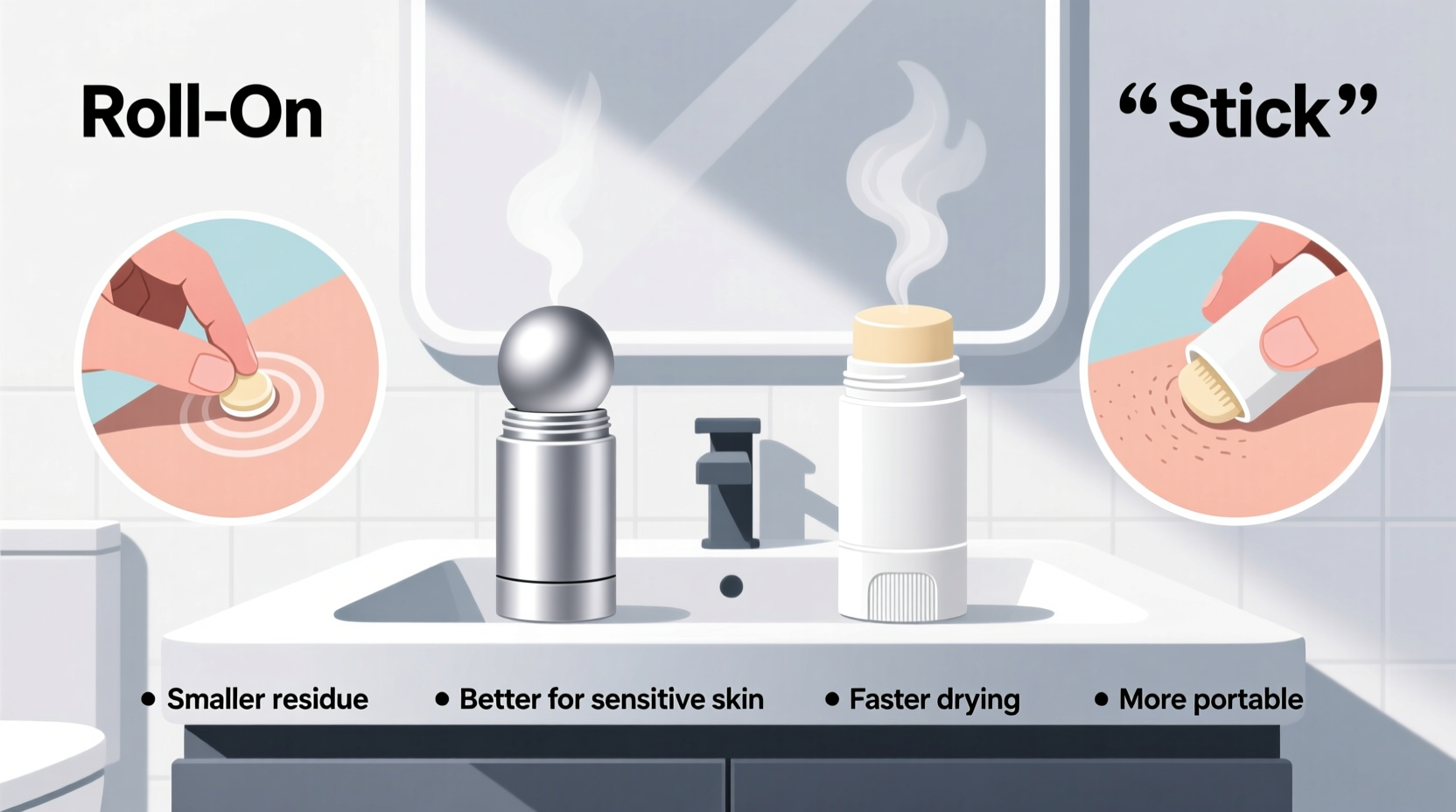
At their core, both roll-ons and sticks are designed to neutralize bacteria that cause odor when sweat interacts with skin. However, their delivery systems create distinct experiences.
Roll-on deodorants contain a liquid or gel formula dispensed via a metal ball that glides across the underarm. The liquid spreads thinly and evenly, absorbing quickly into the skin. Because of their higher water content, roll-ons often feel cooler upon application and are less likely to leave visible residue on clothing.
Stick deodorants, on the other hand, use a solid wax-based matrix that holds active ingredients in place. When swiped under the arm, the friction warms the stick slightly, allowing it to glide and deposit a thin layer. Sticks tend to dry faster and offer a drier finish, making them popular for quick routines or post-shower use.
Tip: If you're prone to staining clothes, apply roll-on deodorant at night and let it dry fully before dressing.Effectiveness: Sweat Protection and Longevity
When it comes to staying power, both formats can be effective—but performance depends heavily on formulation rather than form.
A 2021 dermatological study published in the *Journal of Cosmetic Dermatology* found no significant difference in 24-hour odor control between clinical-strength roll-ons and sticks when active ingredients (like aluminum zirconium or natural salts) were matched. However, user behavior plays a crucial role. Roll-ons allow for more precise application and even coverage, reducing missed spots. Sticks, while convenient, can develop grooves over time, leading to uneven distribution.
That said, stick deodorants often contain more emollients and waxes, which may create a slight physical barrier against moisture. This doesn’t stop sweating but can reduce wetness perception. In contrast, roll-ons with alcohol bases can sting on freshly shaved skin but evaporate quickly, leaving behind active ingredients without greasiness.
“Application consistency matters more than format. A well-formulated product used correctly will outperform a poorly applied premium option.” — Dr. Lena Patel, Board-Certified Dermatologist
Comparing Pros and Cons: A Practical Breakdown
| Feature | Roll-On Deodorant | Stick Deodorant |
|---|---|---|
| Residue | Low – absorbs quickly, rarely leaves marks | Moderate – can transfer to clothes if not dry |
| Drying Time | Slower – requires 30–60 seconds to dry | Faster – sets in under 20 seconds |
| Skin Sensitivity | Better for sensitive skin (alcohol-free options available) | May cause drag or irritation due to friction |
| Portability | Less travel-friendly – risk of leakage | Highly portable – leak-proof and compact |
| Eco-Impact | Glass bottles, recyclable but heavier | Plastic refills common; some brands offer compostable options |
| Cost Efficiency | Often cheaper per ounce | Premium pricing due to branding and convenience |
Real-World Use: Who Benefits From Which?
Consider Sarah, a 34-year-old office manager and yoga instructor. She uses a fragrance-free roll-on during the day because it doesn’t stain her light-colored blouses and feels soothing after teaching hot yoga. At night, she applies it again as part of her skincare-like routine—allowing the aluminum salts to bond with sweat glands while she sleeps, enhancing next-day protection.
In contrast, Mark, a sales executive who travels frequently, relies on a compact stick deodorant. He values speed and reliability. After showering in hotel bathrooms, he needs something that dries instantly and fits in his carry-on without risk of spills. For him, the minor residue on dark shirts is a non-issue, and the confidence of immediate dryness outweighs other concerns.
This illustrates a key point: personal context determines what works best. Active individuals may prefer roll-ons for their cooling effect and lower irritation risk. Busy professionals or travelers often favor sticks for their no-fuss application.
Step-by-Step Guide to Choosing Your Ideal Deodorant
- Assess your skin sensitivity. If you experience redness or itching, try an alcohol-free roll-on with soothing ingredients like aloe or chamomile.
- Evaluate your daily routine. Do you rush in the morning? A fast-drying stick might save time. Do you change clothes multiple times? Residue resistance becomes critical.
- Check ingredient labels. Look for proven actives like aluminum salts (for antiperspirant effect) or magnesium (natural alternative). Avoid parabens and synthetic fragrances if prone to reactions.
- Test one product at a time. Allow 5–7 days to assess effectiveness and skin compatibility before switching.
- Rotate based on season. Use a roll-on in summer for its cooling properties; switch to a moisturizing stick in winter to combat dry underarms.
Environmental and Ethical Considerations
The sustainability angle is increasingly influencing choices. Roll-ons typically come in glass bottles with metal rollers, making them easier to recycle—if local facilities accept mixed materials. Some eco-brands now offer refillable roll-ons to minimize waste.
Sticks have evolved too. While traditional plastic housings contribute to landfill waste, companies like Native and Myro offer compostable cardboard applicators or refillable cartridges. Still, the wax base in many sticks includes petroleum-derived ingredients, whereas roll-on gels often use water as the primary solvent, lowering carbon footprint during production.
If sustainability is a priority, look beyond format: prioritize brands with transparent sourcing, cruelty-free testing, and minimal packaging. A reusable container with a high-performance formula beats a “green” claim with poor results every time.
FAQ: Common Questions Answered
Can I use roll-on deodorant right after shaving?
It depends on the formula. Alcohol-based roll-ons may sting on freshly shaved skin. Opt for alcohol-free versions or apply after a few minutes post-shave. Sticks can also irritate due to friction, so patch testing is recommended.
Do sticks clog pores more than roll-ons?
There’s no strong evidence that either format inherently clogs pores. However, the thicker base in some sticks may trap dead skin cells if not cleansed properly. Regular exfoliation helps prevent buildup regardless of type.
Why does my roll-on stop rolling smoothly?
This usually happens when dried product accumulates around the ball. Rinse the roller mechanism under warm water monthly, or invert the bottle for a few hours to rehydrate the formula.
Final Verdict: Does It Really Matter?
Yes and no. The format itself isn’t the deciding factor—it’s how well the product aligns with your body, habits, and expectations. A high-quality roll-on offers superior spreadability and gentleness, ideal for those focused on skin health and stain prevention. A well-designed stick delivers unmatched convenience and speed, perfect for dynamic lifestyles.
The truth is, most people don’t need to choose one forever. Rotating between formats based on activity, season, or outfit can provide the best of both worlds. What matters most is consistency in use, proper application, and selecting formulas that match your physiology—not marketing trends.
🚀 Ready to optimize your routine? Try a roll-on for evening application and a stick for daytime—track odor control, comfort, and stains over a week. Share your findings with others looking to make smarter choices!








