In today’s fast-paced world, time is a luxury. The promise of a robot vacuum—zipping across your floors while you work, sleep, or relax—sounds like modern magic. On the other hand, stick vacuums offer powerful suction and immediate control at the push of a button. But when it comes to actual cleaning performance, which one delivers better results? And more importantly, is the convenience of automation truly worth the occasional missed spot?
This isn’t just about picking between two appliances. It’s about understanding how each fits into different lifestyles, floor types, and cleaning expectations. For some, a clean home means spotless corners and deep carpet extraction. For others, it means consistently maintained surfaces with minimal effort. Let’s break down the real differences.
How Robot Vacuums Work: Automation with Limitations
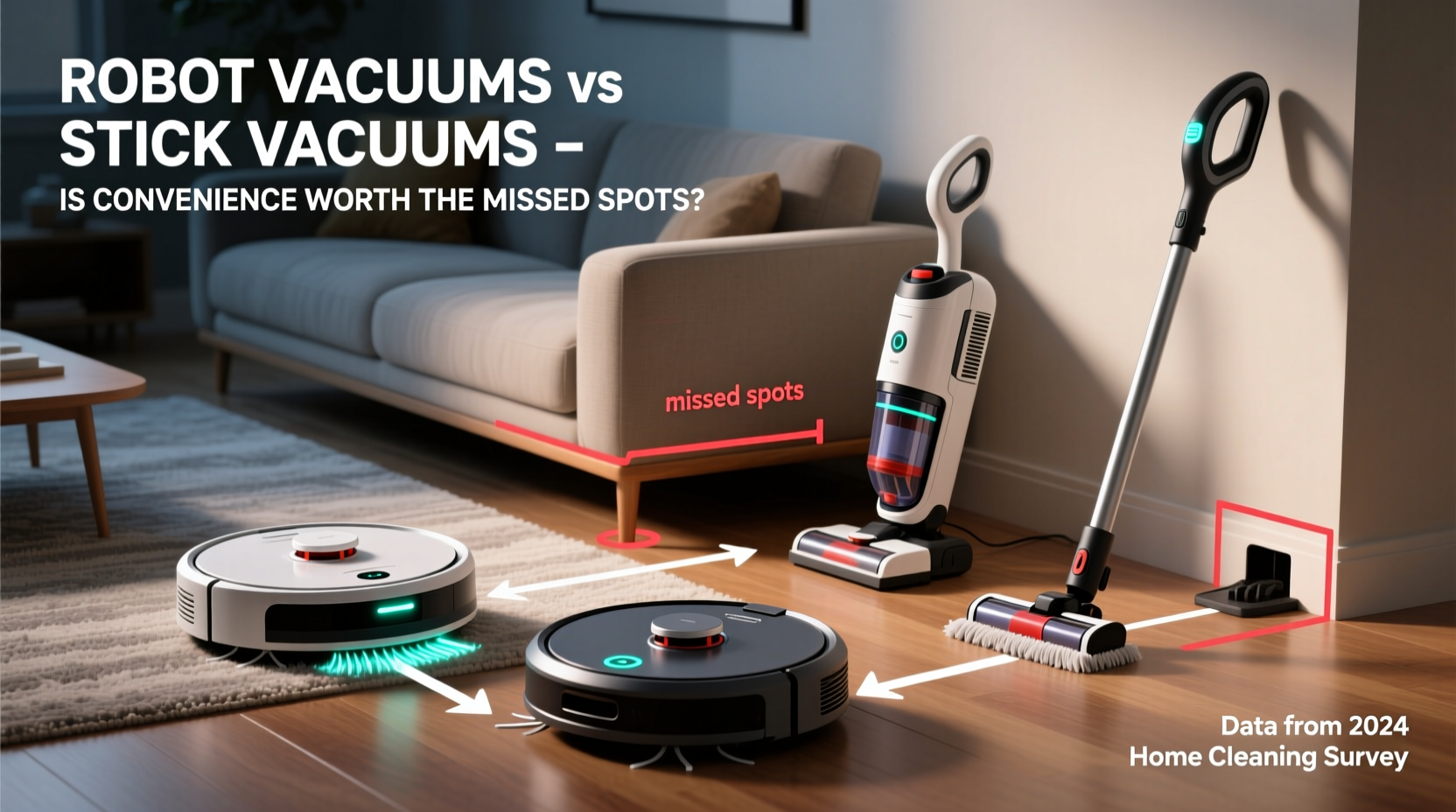
Robot vacuums operate autonomously using sensors, mapping technology, and programmed navigation systems. High-end models use LiDAR or camera-based systems to create detailed maps of your home, allowing them to plan efficient cleaning paths. They return to their charging docks automatically and can be scheduled through smartphone apps or voice assistants.
However, despite advancements in AI-driven navigation, robot vacuums still struggle in certain scenarios. Their compact size limits suction power, dustbin capacity, and brush reach. They often miss edges along walls, get stuck under furniture, or skip areas due to sensor misinterpretation. Low-pile carpets may be cleaned adequately, but high-pile rugs frequently challenge their wheels and brushes.
Tip: Run your robot vacuum daily on a consistent schedule to compensate for incomplete coverage over single sessions.Another limitation is adaptability. While they follow routines, they don’t respond dynamically to visible messes. Spills, pet accidents, or tracked-in mud require manual intervention. Even advanced models with “auto-spot” modes rarely match human judgment in identifying problem zones.
The Strengths of Stick Vacuums: Power and Precision
Stick vacuums are designed for active, targeted cleaning. With strong motors and direct user control, they deliver superior suction compared to most robot models. Cordless versions from brands like Dyson, Shark, and Tineco have redefined lightweight deep cleaning, offering up to 200+ air watts of suction power—far beyond what even premium robots can achieve.
Their slim profiles allow access under sofas, beds, and cabinets. Motorized brush rolls agitate embedded dirt from carpets, while crevice tools and upholstery attachments extend functionality. Unlike robots, stick vacuums clean exactly where you point them, making them ideal for spot-cleaning spills, handling pet hair, or prepping before guests arrive.
Yet, their effectiveness depends entirely on user effort. You must charge them, carry them, and physically guide them across floors. For busy households or individuals with mobility challenges, this can become a barrier to consistent cleaning.
“Stick vacuums remain the gold standard for targeted, high-suction cleaning. No robot currently matches their ability to extract deeply embedded debris.” — Dr. Lena Patel, Home Appliance Research Institute
Direct Comparison: Performance, Convenience, and Maintenance
| Feature | Robot Vacuum | Stick Vacuum |
|---|---|---|
| Suction Power | Moderate (typically 1,500–3,000 Pa) | High (often 100–220 AW / 10,000+ Pa) |
| Cleaning Coverage | Automated but inconsistent; may miss spots | Complete control; no missed areas if used properly |
| User Effort | Minimal (set and forget) | Active participation required |
| Daily Maintenance | Empty bin every 1–3 days; clean brushes weekly | Empty after each use; filter wash monthly |
| Floor Type Adaptability | Good on hard floors; limited on thick rugs | Excellent across all floor types with mode switching |
| Pet Hair Handling | Average; prone to tangles without frequent upkeep | Superior; especially models with anti-tangle tech |
| Price Range (Mid-Tier) | $300–$700 | $250–$600 |
The data shows a clear divide: robot vacuums win on hands-off convenience, while stick vacuums dominate in cleaning efficacy. But the decision isn’t purely technical—it hinges on lifestyle priorities.
Real-World Scenarios: Who Benefits From Which?
Consider Sarah, a working mother of two with a golden retriever and hardwood floors. Her schedule is packed, and she rarely has time for thorough vacuuming. She bought a mid-range robot vacuum and set it to run every evening at 7 PM. While it doesn’t catch every speck near baseboards, it keeps surface dust and loose fur under control. She uses her cordless stick vacuum once a week for deeper cleaning and spill cleanup. In her case, the robot provides consistent baseline maintenance, reducing her overall cleaning burden significantly.
Then there’s Mark, who lives alone in a small apartment with minimal clutter. He values cleanliness and notices every speck of dust. He prefers using his Dyson V12 nightly because he wants guaranteed results. To him, the idea of a machine potentially missing spots feels unacceptable. His routine takes five minutes, and he finds satisfaction in doing it himself.
These examples illustrate that the \"best\" vacuum depends on personal standards and available time. For those seeking consistency over perfection, robots offer tangible benefits. For those prioritizing maximum cleanliness per session, stick vacuums are unmatched.
Tip: Combine both devices for optimal results—use the robot for daily upkeep and the stick vacuum for weekly deep cleans.Step-by-Step: Building an Efficient Cleaning Routine
If you're trying to decide between—or integrate—both types of vacuums, follow this practical timeline to maximize efficiency:
- Assess Your Space: Measure square footage, identify high-traffic zones, and note flooring types. Homes over 1,500 sq ft may require multiple robot runs or stronger stick vacuum usage.
- Determine Cleaning Frequency: Do you need daily maintenance (favor robot) or bi-weekly deep cleans (favor stick)? Families with pets or allergies benefit from daily operation.
- Map Obstacles: Remove cords, secure loose rugs, and close off cluttered rooms. This improves robot navigation accuracy by up to 40%, according to Consumer Reports testing.
- Set Schedules: Program your robot to run during low-activity hours (e.g., midday or late evening). Avoid running it when pets are overly active to prevent interference.
- Supplement Strategically: Use the stick vacuum weekly or as needed for stairs, upholstery, and spot cleaning. Focus on areas robots commonly miss: corners, under furniture, and entryways.
- Maintain Both Devices: Clean robot brushes and sensors monthly. Empty stick vacuum bins after every use and wash filters every 1–2 months to maintain peak performance.
This hybrid approach leverages the strengths of both technologies without relying solely on either.
Common Misconceptions About Robot Vacuums
Many buyers expect robot vacuums to completely replace traditional cleaning methods. Marketing often reinforces this idea with phrases like “fully automatic cleaning” or “cleans like a pro.” The reality is more nuanced.
- Myth: Robots clean every inch of the floor. Most leave gaps along walls unless equipped with advanced side brushes and precise edge detection.
- Myth: They handle large debris well. Gravel, cereal, or paper clips can clog intake ports or damage internal components.
- Myth: They require zero maintenance. Brushes tangle with hair, bins fill quickly, and sensors get dusty—all requiring regular attention.
- Myth: All robots work equally well on carpets. Only high-end models with adaptive suction adjust properly to carpet thickness.
Understanding these limitations helps set realistic expectations. A robot vacuum should be viewed as a maintenance tool, not a replacement for deep cleaning.
When to Choose One Over the Other
Selecting the right vacuum starts with asking three key questions:
- Do I value time savings more than absolute cleaning precision?
- Am I willing to manually clean up after the device occasionally?
- Do I have pets, kids, or high-dirt environments that demand frequent attention?
If you answered “yes” to the first and third questions, a robot vacuum is likely a worthwhile investment. If you prioritize spotless results and don’t mind spending a few minutes daily, a stick vacuum will serve you better.
For renters or people in smaller spaces, stick vacuums offer flexibility and storage advantages. For larger homes with open layouts, robot vacuums can cover ground efficiently over time.
FAQ: Common Questions About Robot and Stick Vacuums
Can a robot vacuum really replace a traditional vacuum?
Not entirely. While robot vacuums excel at daily light cleaning, they lack the suction power and maneuverability for deep carpet cleaning or handling large messes. Most experts recommend keeping a stick or upright vacuum for weekly deep cleans, even if you own a robot.
Are stick vacuums worth it if I already have a robot?
Yes, especially if you want reliable spot cleaning, deal with pet hair, or have mixed flooring. A stick vacuum gives you immediate control and higher performance when needed. Many households now use both in tandem.
Which is better for pet owners?
Stick vacuums generally perform better on pet hair due to stronger suction and specialized attachments. However, robot vacuums with tangle-free brush rolls (like those from Roborock or iRobot’s Anti-Hair Wrap series) can help manage daily shedding between deeper cleanings.
Checklist: Choosing the Right Vacuum for Your Needs
- ☐ Define your primary goal: convenience or cleaning power?
- ☐ Measure your living space and identify high-traffic areas.
- ☐ Check flooring types—do you have thick carpets or delicate hardwood?
- ☐ Consider pet presence and allergy concerns.
- ☐ Evaluate storage space and charging logistics.
- ☐ Decide whether you’re open to a dual-system approach.
- ☐ Read verified customer reviews focusing on edge cleaning and reliability.
- ☐ Test return policies—some brands offer 30–90 day trials.
Conclusion: Balancing Convenience and Cleanliness
The debate between robot vacuums and stick vacuums ultimately comes down to values. Is convenience worth the occasional missed spot? For many, the answer is yes. The ability to maintain cleaner floors with almost no effort represents a meaningful improvement in daily life. For others, only thorough, guaranteed results will suffice—and stick vacuums continue to deliver on that promise.
The smartest solution may lie in integration. Use a robot vacuum to reduce daily dust and debris accumulation, preserving your floors between deeper cleanings. Keep a high-performance stick vacuum on hand for targeted tasks, spills, and weekly refreshes. Together, they form a balanced cleaning ecosystem that maximizes both time and cleanliness.
🚀 Ready to optimize your cleaning routine? Try pairing a robot vacuum with a lightweight stick model—you might find the combination transforms how you think about household chores.








