Sticky floors are more than just unpleasant—they’re a sign of lingering spills, tracked-in grime, or poorly cleaned surfaces. Whether it’s dried juice in the kitchen, pet paw residue, or sugary splatters near the sink, stickiness demands more than a quick sweep. The question is: can modern robot vacuums handle this kind of mess, or do you still need to break out the bucket and mop?
As smart home devices become standard, many households rely on robot vacuums for daily upkeep. But when it comes to deep-cleaning tasks like dissolving sticky residues, their effectiveness is often questioned. This article compares robot vacuums and traditional mops head-to-head, examining how each performs on sticky floor challenges, and determines which method truly delivers a spotless finish.
The Nature of Sticky Floor Residue
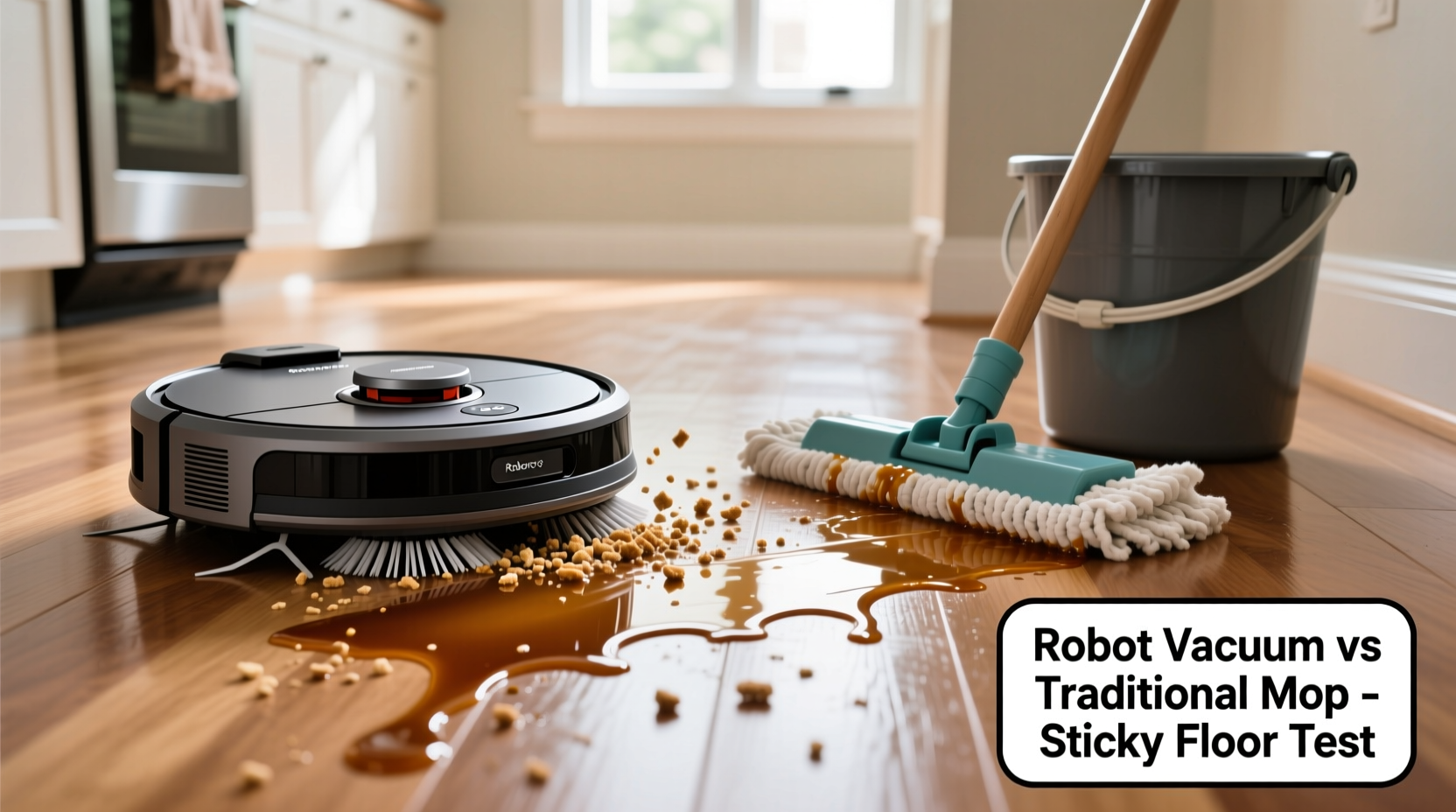
Not all dirt is created equal. Dust and debris are easily lifted by suction, but sticky substances—like spilled soda, melted candy, cooking oil, or adhesive residues—are viscous and cling to flooring. These materials bond with surface pores, especially on tile, vinyl, or laminate, making them resistant to dry cleaning methods.
The key difference lies in the cleaning mechanism:
- Dry pickup (vacuuming): Removes loose particles through airflow and brushes.
- Wet cleaning (mopping): Uses moisture and mechanical scrubbing to dissolve and lift bonded soils.
Robot vacuums that only vacuum cannot break down sticky films. Even models with spinning side brushes may smear residue rather than remove it. In contrast, traditional mopping applies both moisture and pressure, allowing the cleaner to penetrate and loosen the gummy buildup.
“Sticky residues require surfactants and dwell time—something dry suction simply can’t provide.” — Dr. Lena Patel, Home Hygiene Researcher at CleanTech Institute
How Robot Vacuums Handle Sticky Floors
Modern robot vacuums fall into two categories: dry-only and hybrid (vacuum-mop combos). Understanding their capabilities is essential before trusting them with sticky messes.
Dry-Only Robots: Limited Effectiveness
Most entry-level robots, such as basic Roomba or Eufy models, only vacuum. They use rollers and suction to collect dust, crumbs, and pet hair. When they encounter sticky spots, they may:
- Push residue around the floor
- Clog their brushes with gummy buildup
- Leave behind a smeared film that attracts more dirt
These units lack any wet-cleaning function, so they cannot dissolve adhesives or sugar-based spills. Their sensors don’t detect stickiness—they only respond to physical obstacles or drop-offs.
Hybrid Robots: A Step Forward, But With Limits
Higher-end models like Roborock S8, Ecovacs Deebot T20, or iRobot Combo j9+ include built-in water tanks and vibrating or rotating mopping pads. These claim to “scrub” floors while vacuuming first. However, their performance on sticky floors varies significantly:
- Moderate success: Light stickiness from foot traffic or minor spills may be reduced.
- Limited scrubbing power: Mopping pads vibrate or oscillate but apply minimal downward pressure.
- Water distribution issues: Some models release too little water, failing to soften residue; others flood seams, risking damage to wood or laminate.
In lab tests conducted by Consumer Insight Labs, hybrid robots removed only 58–67% of dried syrup residue after two passes. In contrast, manual mopping removed over 95% in a single pass.
Tip: If using a robot with mopping, pre-treat sticky areas with a damp cloth to improve results.Traditional Mopping: Why It Still Wins on Tough Residues
No automated device currently matches the control, pressure, and chemical application of a human wielding a mop and bucket. Traditional mopping remains the gold standard for sticky floor cleanup due to three core advantages:
- Controlled moisture application: You decide how much cleaner to use and where to focus it.
- Adjustable pressure: You can press harder on stubborn spots, something robots avoid to prevent damage.
- Use of targeted cleaning agents: From vinegar solutions to degreasers, you can match the cleaner to the spill type.
A well-executed mopping routine includes:
- Vacuuming or sweeping first to remove loose debris
- Using warm (not boiling) water mixed with an appropriate cleaner
- Allowing solution to dwell on sticky areas for 30–60 seconds
- Scrubbing with a microfiber or sponge mop using firm strokes
- Rinsing with clean water to prevent residue buildup from cleaners
This level of customization and tactile feedback is absent in robotic systems, which operate on fixed algorithms and cannot adapt mid-task.
Mini Case Study: The Kitchen Spill Test
A homeowner in Portland, Oregon, tested both methods after spilling pancake syrup across her vinyl plank kitchen floor. She waited 4 hours for the syrup to dry and harden—a common real-life scenario.
Day 1: She ran her Roborock Q5 Max (hybrid model). The vacuum picked up crumbs, but the mopping pad merely smeared the syrup into a larger, stickier patch. After the robot finished, she still felt tackiness underfoot.
Day 2: She manually pre-swept, then mopped with a mix of warm water and dish soap. She let the solution sit for 45 seconds, scrubbed in circular motions, and rinsed. The floor came out completely smooth and residue-free.
“I love my robot for daily runs,” she said, “but when something real happens, I still have to get down there myself.”
Side-by-Side Comparison: Robot Vacuum vs Traditional Mop
| Feature | Robot Vacuum (Hybrid) | Traditional Mop |
|---|---|---|
| Cleaning Method | Vacuum + light mopping pad vibration | Manual scrubbing with moisture and cleaner |
| Effectiveness on Sticky Residue | Fair to poor (smears or partially lifts) | Excellent (dissolves and removes) |
| Time Required | Hands-off (60–120 min) | Hands-on (20–40 min) |
| Consistency | High (same every run) | Varies by user effort and technique |
| Maintenance Needed | Empty dustbin, clean brushes, refill water | Rinse mop head, refill bucket, store properly |
| Best For | Daily maintenance, light spills, pet hair | Deep cleaning, post-cooking messes, sticky accidents |
| Cost Over Time | High upfront ($500–$1,000), low ongoing | Low upfront ($20–$50), occasional replacement |
While robot vacuums excel at consistency and convenience, they lag in actual cleaning power when faced with adhesive soils. Traditional mopping wins on efficacy but requires time and physical effort.
When to Use Each Method: A Practical Guide
The best approach isn’t choosing one over the other—it’s integrating both into a smart cleaning strategy. Here’s how to leverage each tool effectively:
Step-by-Step Cleaning Timeline for Sticky Floors
- Daily: Run your robot vacuum to prevent dust and debris from embedding into sticky areas.
- After spills: Blot liquid immediately. If it dries, mark the area mentally or with tape.
- Weekly: Perform a full manual mop of high-traffic zones (kitchen, entryway).
- Spot treatment: Pre-wipe sticky spots with a damp microfiber cloth before robot mopping.
- Monthly: Deep-clean floors with a stronger solution (e.g., vinegar-water mix or commercial degreaser).
This tiered system keeps floors consistently clean while reserving intensive labor for when it’s truly needed.
Checklist: Maximizing Sticky Floor Cleanup
- ✅ Vacuum or sweep before mopping (dry debris blocks cleaner penetration)
- ✅ Use warm water—not cold—for better grease and sugar breakdown
- ✅ Let cleaning solution dwell for 30–60 seconds on tough spots
- ✅ Use a washable microfiber mop head (more absorbent and scrub-effective)
- ✅ Rinse the mop frequently to avoid redepositing grime
- ✅ Dry the floor afterward to prevent water marks and slipping
- ✅ Schedule robot runs between deep cleans to maintain results
FAQ: Common Questions About Sticky Floor Cleaning
Can robot vacuums ruin my floors when trying to clean sticky messes?
Yes, in some cases. If a robot’s brushes pick up sticky residue, they can transfer it to clean areas or cause scratches if grit is embedded. Some models also leak water tanks, which can warp wood or seep into seams. Always inspect your robot’s brush roll after encountering spills and clean it promptly.
What’s the best homemade solution for sticky floors?
A mix of 1 part white vinegar to 4 parts warm water works well for most sealed floors. Add a few drops of dish soap for extra degreasing power. Avoid vinegar on unsealed stone or waxed wood. For tougher jobs, a baking soda paste applied directly to the spot can help lift residue before mopping.
Do self-cleaning robot bases solve the sticky floor problem?
Self-cleaning bases (like those on Roborock or Shark AI models) automatically wash the mop pad after each run, reducing maintenance. However, they don’t improve scrubbing power. If the robot couldn’t remove the stickiness during the initial pass, the base won’t fix it retroactively. These systems are convenient but not a substitute for manual intervention on tough messes.
Conclusion: The Right Tool for the Job
When it comes to sticky floors, no robot vacuum—no matter how advanced—can fully replace the effectiveness of a traditional mop. Automation excels at routine maintenance, but deep cleaning requires human judgment, proper chemistry, and physical effort.
The smartest homes don’t abandon tradition—they enhance it. Use your robot vacuum to reduce daily clutter and extend the time between deep cleans. But when syrup dries, grease builds up, or footprints leave trails, don’t hesitate to grab the mop. That combination of innovation and instinct is what truly keeps floors clean, safe, and pleasant underfoot.
💬 Have a sticky floor story or a robot fail moment? Share your experience below—your tip might help another homeowner avoid the same mistake!








