For pet owners, managing fur-covered floors is a daily chore. Whether it’s clumps of dog hair on hardwood or cat fur clinging to carpet fibers, pet hair demands consistent cleaning. Two popular tools have emerged to ease this burden: robot vacuums and stick vacuums. Both offer convenience, but they serve different needs. Choosing between them isn’t about which is universally superior—it’s about which aligns best with your lifestyle, home layout, and pet habits.
This guide breaks down the strengths and limitations of each type, focusing specifically on how they handle pet hair. From suction power and maintenance to scheduling and deep-cleaning capabilities, you’ll get a clear picture of what works—and what doesn’t—when living with shedding pets.
How Pet Hair Challenges Modern Vacuums
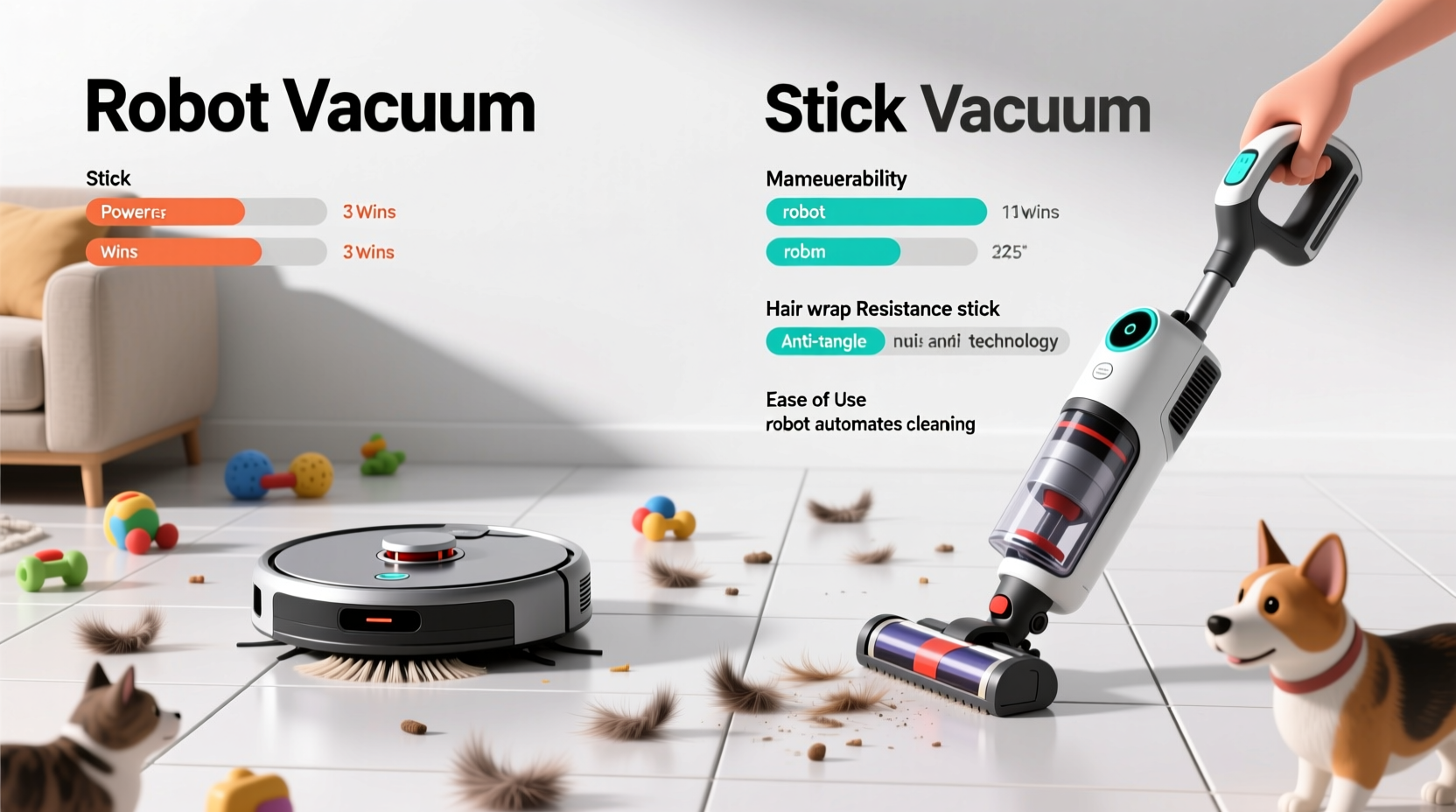
Pet hair is more than just an aesthetic issue. It tangles easily, clogs filters, wraps around brush rolls, and embeds deeply into carpets. Unlike dust or crumbs, pet hair resists casual suction and requires targeted mechanical action to lift from floor surfaces.
Long-haired breeds like Golden Retrievers, Maine Coons, or Huskies produce especially stubborn shedding. Even short-haired pets shed seasonally, creating sudden surges in floor debris. A vacuum that performs well under these conditions must combine strong suction, effective agitation, and low-maintenance design.
Additionally, allergens like dander often cling to pet hair, making filtration and thoroughness critical—not just for cleanliness, but for indoor air quality.
“Pet hair testing shows that sustained suction and anti-tangle brush systems are the biggest predictors of long-term cleaning success.” — Dr. Lena Patel, Home Appliance Research Institute
Robot Vacuums: The Hands-Off Approach to Daily Maintenance
Robot vacuums operate autonomously, following programmed routes to clean floors on a schedule. Models like the Roomba j7+, Roborock S8, and Ecovacs Deebot X2 are designed with pet owners in mind, featuring tangle-free brush rolls, self-emptying bins, and smart navigation.
Their primary advantage lies in consistency. With daily or bi-daily runs, robot vacuums prevent pet hair from accumulating into visible piles. This makes them ideal for maintaining baseline cleanliness between deeper cleanings.
Modern robot vacuums use AI-powered obstacle detection to avoid pet toys, cords, and even puddles of water. Some can distinguish between a sock and a piece of kibble, reducing false stops. They also integrate with voice assistants and apps, allowing remote start commands or zone-specific cleaning.
Tip: Schedule robot vacuum runs during daytime hours when pets are active—this captures freshly shed hair before it spreads across the house.However, robot vacuums have notable limitations. Most rely on side brushes and central rollers to gather debris, which can still lead to occasional tangles with thick fur. Their compact size means smaller dustbins, requiring frequent emptying unless equipped with a self-empty dock. And while they excel on hard floors, many struggle on high-pile carpets without manual intervention.
Stick Vacuums: Power and Precision for Immediate Results
Stick vacuums like the Dyson V15 Detect, Shark Vertex, or LG CordZero deliver higher suction power and direct user control. They’re engineered for spot cleaning, quick pickups, and deep carpet penetration—exactly what’s needed after a pet sheds heavily or tracks dirt indoors.
Unlike robots, stick vacuums allow you to target specific areas instantly. If your dog shakes off after coming inside, you can grab the vacuum and clear the entryway in under two minutes. Most models come with motorized pet tools designed to pull hair directly from upholstery, stairs, and car seats—areas robots can’t reach.
Battery life has improved significantly, with top-tier models offering 60+ minutes of runtime. Many include washable filters and tangle-free brush heads that reduce maintenance hassles. Cyclonic filtration systems help maintain suction over time, even as pet hair builds up in the bin.
The trade-off is effort. Stick vacuums require physical operation and storage space. You must remember to charge them and manually clean filters and brush rolls. For busy households, this adds friction compared to set-and-forget automation.
Head-to-Head Comparison: Robot vs Stick Vacuum for Pet Hair
| Feature | Robot Vacuum | Stick Vacuum |
|---|---|---|
| Suction Power | Moderate to high (1500–3000 Pa) | Very high (up to 240 AW / 200+ kPa) |
| Daily Maintenance | Fully automated; self-emptying models reduce effort | Manual operation required |
| Pet Hair Pickup (Carpet) | Good on low-pile; inconsistent on deep pile | Excellent with motorized tools |
| Pet Hair Pickup (Hard Floors) | Very good with rubberized rollers | Excellent with crevice tools |
| Filtration (Allergens) | HEPA options available; varies by model | Most have sealed HEPA systems |
| Reach Beyond Floors | No—limited to ground level | Yes—upholstery, stairs, furniture |
| Obstacle Navigation | AI-driven; avoids pet items | User-controlled; no auto-navigation |
| Price Range (USD) | $300–$1,000+ | $200–$800 |
| Maintenance Frequency | Weekly brush roll checks; monthly filter clean | After every few uses; brush roll cleaning essential |
Real-World Example: Managing a Multi-Pet Home
Consider the Martinez family in suburban Denver. They own two dogs—a Labrador and a Shiba Inu—and a long-haired cat. Their 1,800-square-foot home includes hardwood, area rugs, and a medium-pile living room carpet. Before investing in cleaning tech, they spent nearly an hour daily sweeping and vacuuming.
They first tried a mid-range robot vacuum. It kept hard floors acceptable and reduced daily foot traffic trails. However, it struggled in the carpeted living room, leaving behind clumps of Shiba fur. The brush roll required weekly untangling.
After adding a cordless stick vacuum to their routine, they shifted strategy: the robot runs every morning on a scheduled route, handling light debris and loose hair. The stick vacuum is used twice a week for deep carpet passes and immediate post-shedding cleanup. The combination cut their total cleaning time by 70%, and allergy symptoms in the household decreased noticeably.
Their experience reflects a growing trend: using both devices in tandem, not as competitors.
Actionable Checklist: Choosing the Right Tool for Your Pet Home
- ✅ Assess your flooring: More carpet = stronger need for stick vacuum power.
- ✅ Evaluate pet shedding level: Heavy shedders benefit from daily robot runs.
- ✅ Consider home size: Larger homes may need multiple robot units or longer stick vacuum runtime.
- ✅ Check for pet obstacles: Furniture layout affects robot navigation efficiency.
- ✅ Prioritize filtration: Look for sealed HEPA systems if allergies are a concern.
- ✅ Think about storage: Stick vacuums need wall mounts or closet space; robots need docking clearance.
- ✅ Budget for accessories: Extra filters, replacement brushes, and self-empty docks add cost.
When to Choose a Robot Vacuum
A robot vacuum is the better choice if:
- You want consistent, hands-free cleaning without remembering to vacuum.
- Your home is mostly hard flooring with minimal area rugs.
- You have moderate shedding pets and prioritize prevention over deep cleaning.
- You value smart features like app control, voice commands, and scheduling.
- You’re willing to perform minor maintenance (emptying bin, cleaning sensors).
Top-performing models for pet owners include the iRobot Roomba Combo j9+ (with mopping), Roborock Qrevo (dual rubber brushes), and Eufy CleanGlide (tangle-resistant design). These feature anti-hair wrap technology and high-efficiency filters tailored for dander.
When to Choose a Stick Vacuum
A stick vacuum wins when:
- You need powerful, immediate cleanup after pet accidents or heavy shedding.
- Your home has thick carpets where embedded hair resists standard suction.
- You clean upholstery, stairs, or car interiors regularly.
- You prefer full control over cleaning intensity and direction.
- You already manage other chores manually and don’t mind adding vacuuming.
Models like the Dyson Outsize+ offer whole-machine HEPA filtration and a wide nozzle for rapid coverage. The Shark FlexStyle Pro includes a detachable handheld unit ideal for pet beds and window sills. These are best suited for users who want maximum power and versatility on demand.
Frequently Asked Questions
Can robot vacuums handle long pet hair without getting clogged?
Some can, but not all. Look for models with tangle-free brush rolls made of rubber or silicone instead of bristles. Brands like Roborock and Eufy advertise “anti-tangle” designs that minimize hair wrap. Even then, weekly inspection is recommended, especially in homes with long-haired pets.
Do stick vacuums last longer than robot vacuums?
Lifespan depends on usage and maintenance. Stick vacuums typically last 5–7 years with proper care. Robot vacuums, due to constant navigation wear and sensor exposure, average 3–5 years. However, self-emptying models may extend longevity by reducing internal dust exposure.
Is it worth buying both a robot and a stick vacuum?
For many pet owners, yes. The robot handles routine maintenance, while the stick vacuum delivers deep cleaning and flexibility. This hybrid approach optimizes time, effort, and results—especially in larger homes or those with multiple shedding animals.
Final Recommendation: Match the Tool to Your Lifestyle
There is no single “best” option between robot and stick vacuums for pet hair. The decision hinges on your priorities: automation versus power, consistency versus control.
If your goal is to reduce daily effort and maintain clean floors with minimal input, a high-quality robot vacuum—especially one with self-emptying and tangle-resistant features—is a smart investment. It won’t replace deep cleaning, but it will dramatically reduce the frequency and severity of messes.
If you value immediate, powerful results and have carpets or heavy shedders, a stick vacuum offers unmatched performance. Its ability to transition from floor to furniture makes it indispensable for comprehensive pet hair management.
The most effective solution for many households is not choosing one over the other, but integrating both. Let the robot manage the baseline. Use the stick vacuum for reinforcement. Together, they form a balanced, efficient system that keeps pet hair under control without dominating your time.
💬 Have a pet-friendly vacuum setup that works for you? Share your experience in the comments—your insights could help another pet owner find the perfect solution.








