For pet owners, keeping floors clean is a constant battle. Whether it's dog hair clinging to baseboards, tracked-in mud from backyard adventures, or the occasional litter box spill, pet messes demand frequent attention. This raises an important question: Should you invest in a robot vacuum like a Roomba, or stick with a traditional stick vacuum for better control and power? The answer isn’t one-size-fits-all, but understanding how each performs in real pet-friendly homes can help you make a smarter decision.
How Robot Vacuums Handle Pet Hair and Messes
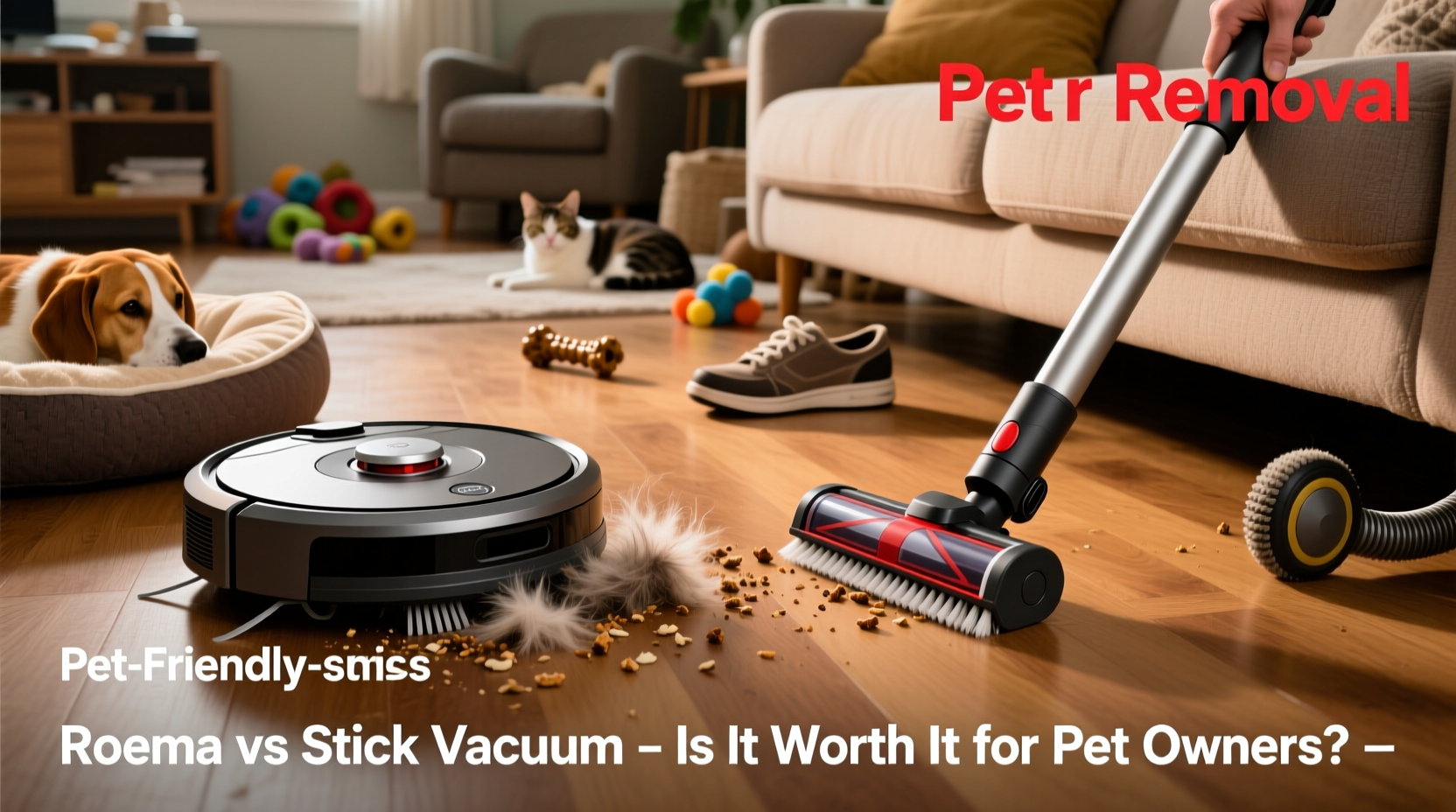
Robot vacuums, particularly models like iRobot’s Roomba series, are designed to automate routine cleaning. For pet owners, this means daily maintenance without lifting a finger. Most modern robot vacuums feature tangle-free brush rolls, high-efficiency filters (often HEPA), and strong suction tailored for pet hair.
Roombas use a combination of side brushes, main rollers, and multi-surface rubber extractors to pull in debris from both hard floors and carpets. Their low profile allows them to glide under furniture where pet hair accumulates. Many newer models include advanced sensors that detect high-traffic zones—exactly where pets spend most of their time—and automatically increase cleaning intensity.
However, limitations exist. While robot vacuums excel at surface-level pickup, they struggle with deep-pile rugs and embedded fur. They also lack the precision needed for spot-cleaning accidents. A spilled bowl of kibble or a muddy paw print won’t be fully resolved by a robot unless manually pre-treated.
Tip: Run your robot vacuum daily on a schedule when pets aren’t active to avoid interference and maximize cleaning efficiency.Stick Vacuums: Power and Precision for Pet Homes
Stick vacuums offer immediate, targeted cleaning—ideal for addressing pet messes as they happen. Brands like Dyson, Shark, and Tineco deliver powerful suction, often exceeding what robot vacuums can achieve. With detachable handheld units, crevice tools, and motorized pet brushes, stick vacuums allow you to tackle upholstery, stairs, and tight corners where pet dander hides.
Their lightweight design makes them easy to grab and use quickly, which is crucial when dealing with fresh spills or tracking. Some models even come with wet-dry capabilities, enabling light mopping after dry pickup—useful for sticky paws or litter residue.
On the downside, stick vacuums require manual operation. That means relying on your own schedule and effort. For busy households or those with mobility challenges, this can lead to inconsistent cleaning. Battery life, while improving, still limits runtime—typically 30–60 minutes per charge—so large homes may need multiple sessions.
Comparing Key Features: Robot vs Stick Vacuum
| Feature | Robot Vacuum (e.g., Roomba) | Stick Vacuum (e.g., Dyson V15) |
|---|---|---|
| Suction Power | Moderate to high (varies by model) | Very high (especially cordless models) |
| Pet Hair Handling | Good on flat surfaces; struggles with thick carpet | Excellent with motorized pet tools |
| Automation | Full (scheduling, self-emptying bins) | None (manual use only) |
| Cleaning Frequency | Daily (if scheduled) | As-needed (user-dependent) |
| Spot Cleaning Ability | Limited | Excellent |
| Price Range | $300–$1,000+ | $200–$700 |
| Maintenance | Regular filter and brush cleaning | Battery care, emptying, filter cleaning |
Real-World Example: A Multi-Pet Household Test
Consider Sarah, a dog trainer living in a two-story suburban home with two shedding dogs (a Golden Retriever and a Husky) and a cat that tracks litter. She initially relied solely on a premium stick vacuum but found herself spending over an hour weekly just managing loose hair and tracked debris.
After purchasing a Roomba j7+, she programmed it to run every morning at 9 AM. Within weeks, she noticed a significant reduction in visible pet hair on hardwood and area rugs. The robot handled daily maintenance so well that her stick vacuum was now reserved for bi-weekly deep cleans and accident cleanup.
“The Roomba doesn’t replace my Dyson,” she said, “but it cuts down the daily grind. I used to vacuum three times a week—now I do it once, and the house still looks cleaner.”
This hybrid approach—automation for consistency, manual tools for precision—proved highly effective. It highlights a growing trend among pet owners: using both types of vacuums in tandem rather than choosing one over the other.
“Pet owners benefit most from layered cleaning strategies. Automation maintains baseline cleanliness, while targeted tools handle what robots miss.” — Dr. Lena Patel, Home Hygiene Researcher at CleanLiving Institute
Is a Roomba Worth It If You Have Pets?
The short answer: Yes, but with conditions. A Roomba—or any high-quality robot vacuum—can be a worthwhile investment for pet owners who value convenience and consistent floor maintenance. However, its value depends heavily on your lifestyle, home layout, and expectations.
Worthwhile features for pet owners include:
- Tangle-free rollers: Prevents hair from wrapping around brushes, reducing maintenance.
- Self-emptying bin: Models like the Roomba Combo j9+ can hold up to 60 days of debris, ideal for homes with heavy shedding.
- Smart mapping and room targeting: Allows you to schedule cleanings in high-pet-traffic areas like the living room or kitchen.
- Pet-friendly navigation: Advanced models avoid pet waste using AI object recognition—a key selling point for Roomba j7 and later.
But a Roomba isn’t magic. It won’t clean under-heavy furniture consistently, may miss edges near walls, and requires regular upkeep. Filters need monthly washing, brushes should be cleared of hair weekly, and sensors must be wiped clean to maintain performance.
Tip: Pair your Roomba with virtual walls or lighthouses to block off areas with pet bowls or fragile items during cleaning cycles.Step-by-Step Guide: Choosing the Right Vacuum for Your Pet Home
- Assess your pet’s impact. How much do they shed? Do they track dirt indoors? Are there frequent spills or accidents? High-mess pets justify more robust cleaning tools.
- Evaluate your flooring. Hardwood and tile favor robot vacuums. Thick carpets may require the stronger suction of a stick vacuum.
- Consider your schedule. If you’re rarely home or too busy to vacuum regularly, automation provides real value.
- Set a budget. Entry-level Roombas start around $300, while self-emptying models exceed $800. Stick vacuums vary widely but generally cost less upfront.
- Test hybrid solutions. Use a robot for daily maintenance and keep a stick vacuum for weekly deep cleaning and emergencies.
- Read pet-specific reviews. Look for feedback from users with similar pets and home layouts. Real-world insights often outweigh marketing claims.
Checklist: Must-Have Features for Pet-Friendly Vacuums
- ✅ Strong suction (at least 2000Pa for robots, 150+ AW for sticks)
- ✅ Tangle-resistant brush roll or rubber extractors
- ✅ HEPA filtration to capture allergens and dander
- ✅ Large dustbin or self-emptying compatibility
- ✅ Edge-cleaning capability
- ✅ App control and scheduling
- ✅ Voice assistant integration (Alexa, Google Assistant)
- ✅ Obstacle avoidance (especially for pet waste)
Frequently Asked Questions
Can a robot vacuum clean up pet vomit or poop?
No, and doing so can damage the machine. While some Roomba models (like the j7+) use AI to detect and avoid pet waste, they are not designed to clean it up. Always remove biological messes manually before resuming automated cleaning.
Do robot vacuums scare pets?
Some pets are initially startled by the noise and movement, but most acclimate within a few days. Starting with shorter runs and allowing pets to observe from a distance helps ease the transition. Cats often learn to walk over them, while dogs may follow curiously.
Which is better for allergies: robot or stick vacuum?
Both can be effective if equipped with HEPA filters. Stick vacuums offer more thorough cleaning per session, but robot vacuums reduce allergen buildup through daily operation. For allergy sufferers, combining both yields the best results—daily robot runs plus weekly stick vacuuming of upholstery and high-touch areas.
Final Verdict: Complement, Don’t Replace
The debate between robot vacuums and stick vacuums isn’t about superiority—it’s about synergy. For pet owners, the real advantage lies in using both tools strategically. A Roomba maintains baseline cleanliness, handling the relentless cycle of shedding and tracked debris. A stick vacuum steps in for deep cleaning, spot treatment, and areas robots can’t reach.
If you're considering a Roomba, focus on models built for pet owners: look for tangle-free tech, strong suction, smart navigation, and ideally, self-emptying functionality. But don’t expect it to eliminate the need for hands-on cleaning entirely. Instead, view it as a tireless helper that reduces your workload and keeps your home consistently tidy.
In homes with pets, cleanliness isn’t a one-time task—it’s an ongoing process. The right tools make that process sustainable. Whether you opt for full automation, manual control, or a balanced mix, prioritize solutions that fit your routine and support a healthier, happier living environment for both you and your pets.
🚀 Ready to simplify pet mess cleanup? Evaluate your current routine, consider a trial run with a rental robot vacuum, and build a cleaning strategy that works—every single day.








