
For pet owners, managing fur-covered floors is a daily challenge. Whether it’s tumbleweeds of cat hair or clumps of dog fur stuck in carpet fibers, cleaning becomes more than just routine—it’s a necessity. As technology evolves, two dominant players have emerged: the robot vacuum (like the Roomba) and the stick vacuum. But when it comes to tackling pet hair, which one delivers real value? And specifically, is investing in a Roomba truly worth it?
This guide breaks down performance, convenience, cost, and real-world usability to help you decide whether a robot vacuum like a Roomba outperforms a traditional stick vacuum in homes with pets.
Understanding the Core Differences
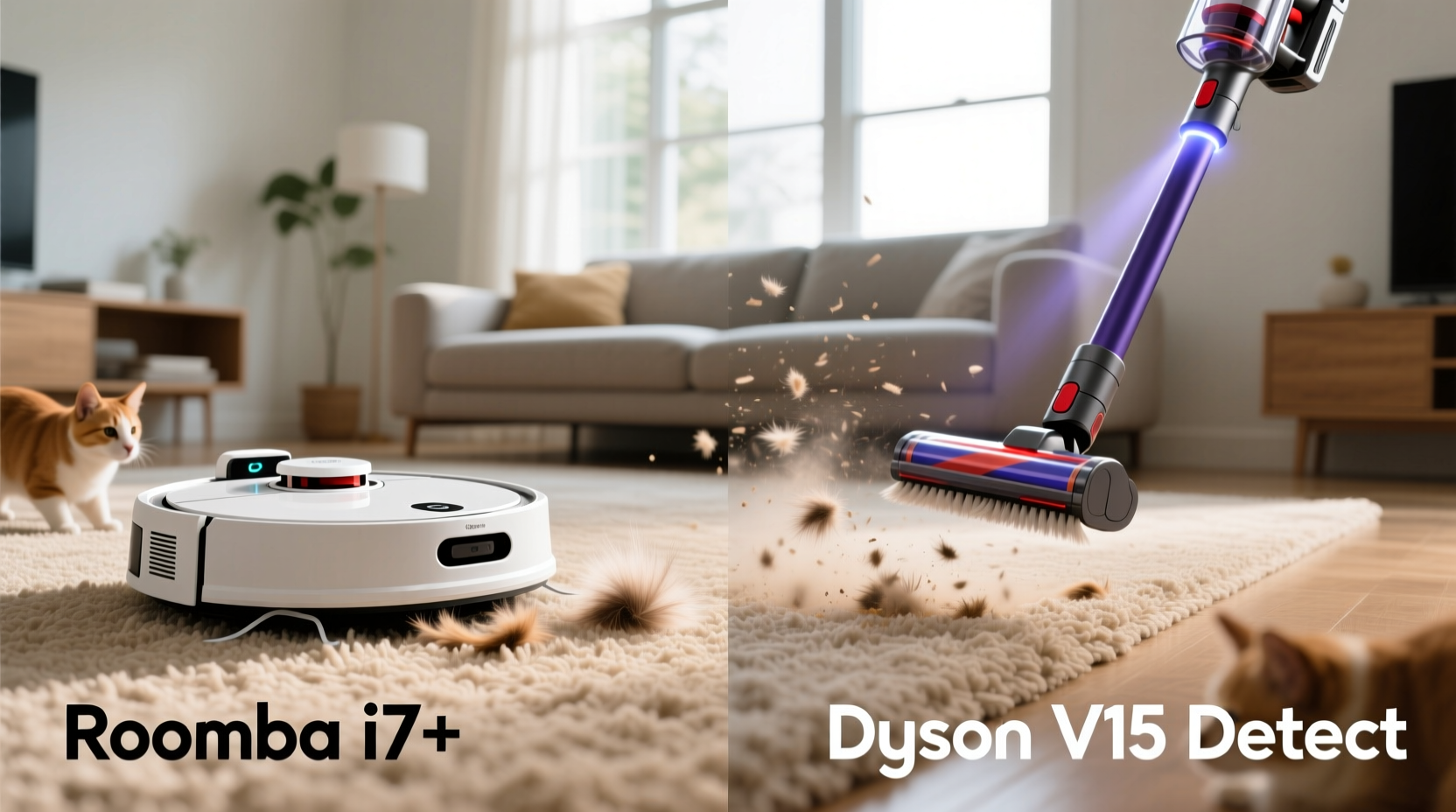
Before diving into specifics, it's important to understand what sets robot vacuums and stick vacuums apart in design, function, and user experience.
- Robot vacuums are autonomous devices that navigate your home on a schedule, using sensors and mapping technology to clean floors without direct supervision.
- Stick vacuums are lightweight, handheld devices typically cordless and manually operated—ideal for quick cleanups and spot treatments.
While both can handle pet hair, their approach differs significantly. Robot vacuums emphasize automation and consistency; stick vacuums prioritize power and immediate control.
Tip: If you're frequently at home during the day, a robot vacuum may run into obstacles like dropped toys or food bowls. Schedule cleanings when the space is clear.Performance on Pet Hair: Where Each Excels
Pet hair presents unique challenges: it tangles easily, sticks to surfaces, and embeds deeply in carpets. Let’s compare how each vacuum type handles these issues.
Robot Vacuums (e.g., Roomba)
Modern Roombas, especially models like the i7+, j7+, and s9+, are engineered with pet owners in mind. Key features include:
- Dual rubber extractors that resist tangling with long pet hair.
- High-efficiency filters that capture dander and allergens.
- Self-emptying dustbins (on premium models), reducing exposure to fur and debris.
- Smart mapping that learns room layouts and avoids pet messes (like accidents).
The iRobot Roomba j7+ even uses AI-powered obstacle recognition to steer clear of pet waste—a game-changer for dog owners.
Stick Vacuums (e.g., Dyson V15, Shark Vertex)
Stick vacuums often boast stronger suction (measured in air watts) than robot models. They’re designed for deep cleaning and precision work. Strengths include:
- Suction power up to 240 AW (Dyson models), making them effective on embedded pet hair.
- Motorized brush rolls optimized for carpets and upholstery.
- Attachments like crevice tools and pet nozzles for targeted cleaning.
- Manual control over where and how long you clean.
However, they require time and effort—something many busy pet owners lack.
“Automated cleaning tools like Roomba reduce the mental load of pet ownership. For people with allergies or mobility issues, this isn’t just convenient—it’s health-critical.” — Dr. Lena Patel, Indoor Air Quality Researcher, University of Michigan
Comparison Table: Robot Vacuum vs Stick Vacuum for Pet Hair
| Feature | Robot Vacuum (Roomba) | Stick Vacuum |
|---|---|---|
| Suction Power | Moderate to high (up to 40x air lift in s9+) | Very high (up to 240 AW in Dyson V15 Detect) |
| Pet Hair Tangle Resistance | Excellent (rubber brushes prevent clogs) | Good (but bristle brushes may require frequent cleaning) |
| Frequency of Use | Automatic (daily or scheduled) | Manual (user-dependent) |
| Convenience | High (set-and-forget operation) | Moderate (requires charging, storage, physical use) |
| Deep Cleaning Ability | Fair to good (depends on model and carpet pile) | Excellent (especially on thick rugs) |
| Allergen Filtration | HEPA-grade in most newer models | HEPA standard in mid-to-high-end models |
| Price Range | $300–$1,400 (self-emptying adds $200+) | $200–$700 |
| Best For | Daily maintenance, allergy sufferers, multi-pet homes | Spot cleaning, deep carpet cleans, quick spills |
Real-World Case Study: The Thompson Family’s Two-Dog Home
The Thompsons own two golden retrievers—Max and Bella—who shed year-round. Their 1,500-square-foot home has hardwood floors and area rugs. Initially, they relied solely on a Dyson V11 stick vacuum, spending about 20 minutes every other day battling fur buildup.
After six months, they invested in a Roomba j7+. They programmed it to run daily at noon while they were at work. Within a week, visible fur accumulation decreased by an estimated 60%. The Roomba handled daily surface cleaning, while they used the Dyson only weekly for deeper carpet treatment.
“It’s not that the Roomba replaced our stick vacuum,” says Sarah Thompson. “It’s that it took over the boring, repetitive part of cleaning. Now we only pull out the Dyson when the dog shakes water indoors or tracks mud.”
This hybrid approach—automation for maintenance, manual for deep cleaning—is increasingly common among pet owners.
When a Roomba Is Worth It (And When It’s Not)
The question isn’t just about capability—it’s about lifestyle fit. Here’s a step-by-step guide to help determine if a Roomba makes sense for your pet-filled home.
Step-by-Step Decision Guide
- Assess your pet shedding level: Do you have one short-haired cat or three long-haired dogs? High-shedding households benefit more from daily automated cleaning.
- Evaluate your floor layout: Open spaces with minimal clutter suit robot vacuums. Homes with lots of cords, low furniture, or scattered toys may cause navigation issues.
- Consider your schedule: If you’re rarely home or too tired to clean nightly, automation adds real value. If you prefer hands-on control, a stick vacuum might be better.
- Check for allergies: Roombas with HEPA filters and sealed airflow systems can reduce airborne dander, improving indoor air quality.
- Budget for long-term use: A Roomba costs more upfront but may save labor over time. Factor in self-emptying docks and replacement parts (brushes, filters).
Hybrid Strategy: Combining Both for Optimal Results
Many experts recommend a dual-vacuum strategy for pet owners. Think of it as having both a janitor and a detailer:
- Robot vacuum = maintenance cleaner: Runs daily to prevent hair buildup, captures loose dander, and keeps floors visibly tidy.
- Stick vacuum = deep cleaner: Used weekly or biweekly to extract deeply embedded hair from rugs, clean under furniture, and tackle accidents.
This approach maximizes efficiency without sacrificing performance. You get consistent cleanliness without daily effort, plus the power to deep-clean when needed.
Checklist: Building Your Pet-Friendly Vacuum System
- ✅ Choose a robot vacuum with rubber brushes (not bristles) to avoid hair wrap.
- ✅ Opt for a model with HEPA filtration if anyone has allergies.
- ✅ Invest in a self-emptying base if you hate touching pet debris.
- ✅ Pair with a cordless stick vacuum that has a motorized pet tool.
- ✅ Schedule robot runs during low-activity hours (e.g., midday).
- ✅ Clean robot brushes weekly to maintain suction efficiency.
- ✅ Replace filters every 6–12 months, depending on usage.
Common Misconceptions About Robot Vacuums and Pets
Despite advancements, several myths persist:
- Myth: Robot vacuums can’t handle pet hair. Modern models like the Roomba j7+ are specifically designed for pet homes and outperform earlier generations significantly.
- Myth: They’ll spread messes. While early robots did this, current AI-driven models detect and avoid wet spots and solid waste.
- Myth: Stick vacuums are always more powerful. While peak suction favors stick models, consistent daily cleaning with a robot often results in cleaner overall floors.
The key is understanding that \"power\" isn’t everything. Frequency and consistency matter just as much—sometimes more.
FAQ: Your Top Questions Answered
Can a Roomba replace my stick vacuum completely?
In most cases, no. While Roombas excel at daily maintenance, they lack the suction intensity and maneuverability for deep carpet cleaning or sudden spills. Most pet owners find a stick vacuum still necessary for weekly deep cleans or emergencies.
Do Roombas work well on carpets with pet hair?
Yes, especially models with adaptive suction and tangle-free rollers. The Roomba s9+ and j7+ perform exceptionally well on medium-pile carpets. However, very thick or shaggy rugs may still require a stick vacuum for full penetration.
How often should I maintain my robot vacuum in a pet-heavy home?
Clean the brushes and filter at least once a week. Empty the bin after every few cycles (or daily with self-emptying). Check sensors monthly for dust buildup, which can impair navigation.
Final Verdict: Is a Roomba Worth It for Pet Hair?
The answer depends on your priorities. If you value time, consistency, and reduced daily effort, then yes—a Roomba is absolutely worth it for pet hair. Models like the i7+, j7+, and s9+ are engineered with pet owners in mind, offering tangle-free cleaning, smart navigation, and allergen reduction.
However, it shouldn’t be your only tool. Pairing a Roomba with a high-quality stick vacuum creates a balanced, efficient system: one handles the grind, the other delivers power when needed.
For homes with multiple pets, shedding animals, or allergy concerns, the investment pays off in cleaner air, less stress, and more time spent with your furry family—not fighting their fur.
💬 Ready to simplify pet cleanup? Start by testing a Roomba on a trial basis or reading verified owner reviews. Share your experience below—your insights could help another pet parent make the right choice!








