
When it comes to modern home cleaning, two appliances dominate the conversation: robot vacuums and stick vacuums. One promises hands-free convenience; the other delivers targeted power on demand. But for many homeowners, a critical question remains—do robot vacuums actually clean corners effectively? After all, corners are where dust, pet hair, and debris tend to accumulate, often escaping notice until they become visible.
This isn’t just about marketing claims or sleek designs. It’s about real performance in real homes. To answer this thoroughly, we need to compare how each type of vacuum approaches corner cleaning, examine their design limitations, and evaluate actual user experiences. The goal is simple: help you decide which tool truly earns its place in your cleaning routine.
How Robot Vacuums Approach Corner Cleaning
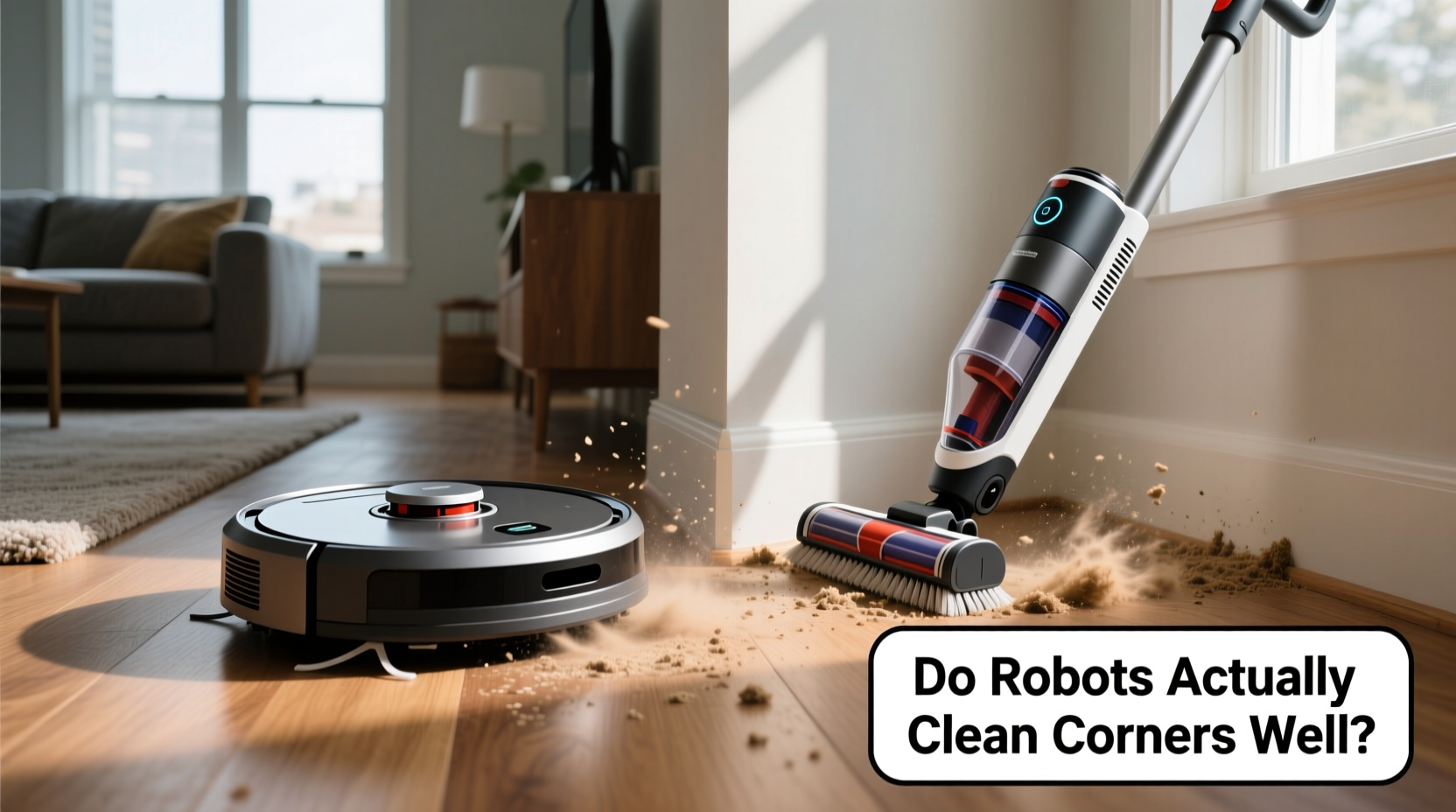
Robot vacuums are engineered for autonomy. They use sensors, mapping algorithms, and rotating side brushes to navigate rooms and collect debris. Most high-end models today rely on LiDAR or camera-based navigation to create floor plans, allowing them to return to base, avoid obstacles, and optimize cleaning paths.
However, when it comes to corners, physics and design impose hard limits. A round robot has inherent difficulty reaching into 90-degree angles. Even with precise navigation, there's always a small gap between the edge of the robot and the wall. This creates what engineers call the “cleaning radius problem.”
To compensate, manufacturers equip robot vacuums with one or more side brushes—usually a single spinning bristle brush on the right side. As the robot moves along a wall, this brush sweeps debris from the edge toward the main suction inlet. In theory, this works well. In practice, effectiveness depends on several factors:
- The length and stiffness of the side brush
- The proximity of the robot to the wall
- The speed and pattern of movement near edges
- The size and shape of debris (fine dust vs. cereal crumbs)
Some advanced models, like the Roborock S8 series or Ecovacs Deebot X2, feature dual side brushes or adaptive edge-cleaning modes that slow down and angle the robot slightly toward walls. These improvements reduce missed spots but don’t eliminate them entirely.
Tip: Run your robot vacuum twice in \"edge mode\" if available—many users report significantly better corner coverage with a second pass.Stick Vacuums: Precision Where It Matters
Stick vacuums offer direct control. With a lightweight body and swivel head, they’re designed for agility. When cleaning corners, users can tilt the nozzle vertically, press it flush against baseboards, and manually guide it into tight spaces. This level of precision is unmatched by autonomous devices.
Most cordless stick vacuums—such as the Dyson V15 Detect, Shark Vertex, or LG CordZero—feature motorized brushrolls and high suction power (typically 150+ AW). Their slim profiles allow access behind furniture and into room perimeters that robots simply can’t reach without bumping or retreating.
Moreover, stick vacuums often come with specialized attachments: crevice tools, dusting brushes, and upholstery nozzles. These enable spot treatment of window tracks, radiator grilles, and cabinet edges—areas where dust accumulates silently over time.
The trade-off? Stick vacuums require effort. You must push them around, empty the bin, charge the battery, and store them properly. For daily maintenance, this barrier often leads to inconsistent use. Robot vacuums win on frequency, even if they lose on precision.
“While robot vacuums have improved dramatically, they still struggle with geometric constraints. No algorithm can overcome the physical reality of a circular chassis trying to clean a square corner.” — Dr. Alan Zhou, Robotics Engineer at MIT CSAIL
Performance Comparison: Real-World Testing Insights
To assess corner-cleaning ability objectively, independent labs and consumer reviewers often conduct controlled tests using standardized debris patterns. Common methods include placing pepper, sand, or paper confetti in room corners and measuring pickup efficiency after one cleaning cycle.
Results consistently show a gap:
| Vacuum Type | Avg. Corner Pickup Rate | Key Limitations | Best Use Case |
|---|---|---|---|
| Premium Robot Vacuum (e.g., Roborock S8) | 65–75% | Round shape limits full contact; relies on side brush sweep | Daily light cleaning, open-floor homes |
| Midspec Robot Vacuum (e.g., iRobot Roomba j7+) | 50–60% | Inconsistent side brush activation; may skip tight zones | Carpeted areas with minimal clutter |
| Stick Vacuum (e.g., Dyson V15) | 90–98% | Requires manual operation; not self-charging | Deep cleaning, spot treatment, edge-focused tasks |
| Stick Vacuum + Crevice Tool | ~100% | Niche accessory; not used for full-room cleaning | Precision cleanup in corners, vents, under appliances |
The data makes one thing clear: while top-tier robots can handle moderate debris near walls, they leave behind measurable residue in corners. Stick vacuums, especially when used deliberately, achieve near-total removal.
A Mini Case Study: The Suburban Living Room
Sarah M., a homeowner in Austin, Texas, uses a Roborock Q5 daily to maintain her hardwood floors. She has two cats and notices fur collecting along baseboards, particularly in the back corners of her living room. After running the robot every morning for a week, she inspected the corners closely. Despite the robot’s side brush and edge-cleaning mode, she found visible clumps of cat hair and dust bunnies untouched.
On Saturday, she followed up with her Shark Vertex stick vacuum. Tilting the nozzle into each corner and using slow, deliberate strokes, she extracted far more debris than expected—even after seven robot runs. “It was shocking,” she said. “I thought the robot had it covered. But clearly, it wasn’t doing the full job.”
Since then, Sarah adopted a hybrid approach: daily robot runs for general upkeep, plus a weekly stick vacuum session focused on edges and corners. Her floors now stay visibly cleaner, and she reports fewer allergy symptoms.
Bridging the Gap: Can Robots Improve Corner Performance?
Manufacturers are actively addressing the corner-cleaning challenge. Recent innovations include:
- Dual Side Brushes: Found on select models like the Ecovacs Deebot T20 Omni, these brushes extend from both sides, improving symmetry in edge cleaning.
- Square-Nosed Designs: Some prototypes feature flattened front corners to minimize dead zones, though this complicates turning mechanics.
- AI-Powered Edge Detection: Cameras and machine learning help robots recognize wall junctions and adjust trajectory for closer passes.
- Zoned Re-Cleaning: Users can mark “dirty zones” in apps, prompting the robot to revisit problem areas with slower, more thorough motions.
Despite progress, fundamental compromises remain. A robot must balance edge access with maneuverability, battery life, and durability. Over-engineering for corners could make units bulkier, less reliable, or more expensive.
Meanwhile, stick vacuum technology continues advancing too. Newer models offer longer runtimes (up to 80 minutes), self-emptying bases, and laser dust illumination (like Dyson’s green LED) that reveals invisible particles. These features enhance visibility and motivation to clean thoroughly—including corners.
Checklist: Maximizing Corner Cleanliness in Your Home
Whether you rely on a robot, a stick vacuum, or both, follow this checklist to ensure corners stay clean:
- ✅ Run your robot vacuum in “edge” or “wall-following” mode if available
- ✅ Clean or replace side brushes every 1–2 months to maintain effectiveness
- ✅ Schedule a weekly manual pass with a stick vacuum focusing on room perimeters
- ✅ Use a crevice tool monthly to remove built-up dust in baseboard gaps
- ✅ Rearrange furniture occasionally to expose hidden corners to both robot and manual cleaning
- ✅ Keep floors decluttered—robots can’t clean corners blocked by chairs or rugs
Frequently Asked Questions
Do robot vacuums miss more in carpeted rooms?
Yes. Carpets trap debris deeper within fibers, and the gap between the robot’s edge and the wall becomes more problematic. Additionally, thick pile can lift the robot slightly, reducing suction efficiency near borders. Regular grooming of carpet edges with a stick vacuum is recommended.
Can I program my robot to clean only along walls?
Some high-end models support “perimeter cleaning” or “edge-only” modes via their mobile app. For example, the Roborock app allows virtual barriers and custom zone selection. You can draw a narrow strip along walls for focused cleaning. However, this feature isn’t universal across brands.
Is it worth buying a robot vacuum if I still need a stick vacuum?
Absolutely—if your goal is consistent maintenance. Robot vacuums excel at removing surface dust and preventing buildup between deep cleans. Think of them as “floor janitors” handling daily upkeep, while your stick vacuum acts as the “deep cleaner” for weekly or biweekly refreshes. Together, they form a powerful cleaning duo.
Conclusion: Choosing the Right Tool for the Job
The debate between robot vacuums and stick vacuums isn’t about declaring a single winner—it’s about understanding strengths and limitations. Robot vacuums bring unmatched convenience and consistency, making them ideal for maintaining cleanliness in open areas. But when it comes to corners, their round shape and reliance on peripheral brushes mean they’ll never match the precision of a human-guided stick vacuum.
If pristine corners matter to you—and let’s be honest, they do in well-maintained homes—the smart solution is integration. Let the robot handle daily patrols, capturing loose debris before it settles. Then, reserve the stick vacuum for targeted edge work, ensuring no speck of dust hides unnoticed.
Cleaning isn’t about perfection in one step. It’s about building systems that work together over time. By combining automation with intentional effort, you achieve what neither device can deliver alone: truly clean floors, from center to corner.
🚀 Ready to optimize your cleaning routine? Try a 30-day hybrid plan: robot vacuum every day, stick vacuum every weekend. Track the difference in corner cleanliness—and share your results with others looking to upgrade their home care strategy.








