
For pet owners, managing fur is a constant battle. Whether it's a long-haired dog shedding across hardwood floors or a cat that leaves tumbleweeds of hair in corners, daily cleanup is non-negotiable. The choice between robot vacuums and manual sweeping has become central to modern home maintenance. While both methods have their place, the question remains: which one truly handles pet hair more effectively on a day-to-day basis? The answer depends on lifestyle, flooring type, pet behavior, and expectations for cleanliness.
How Pet Hair Challenges Daily Cleaning
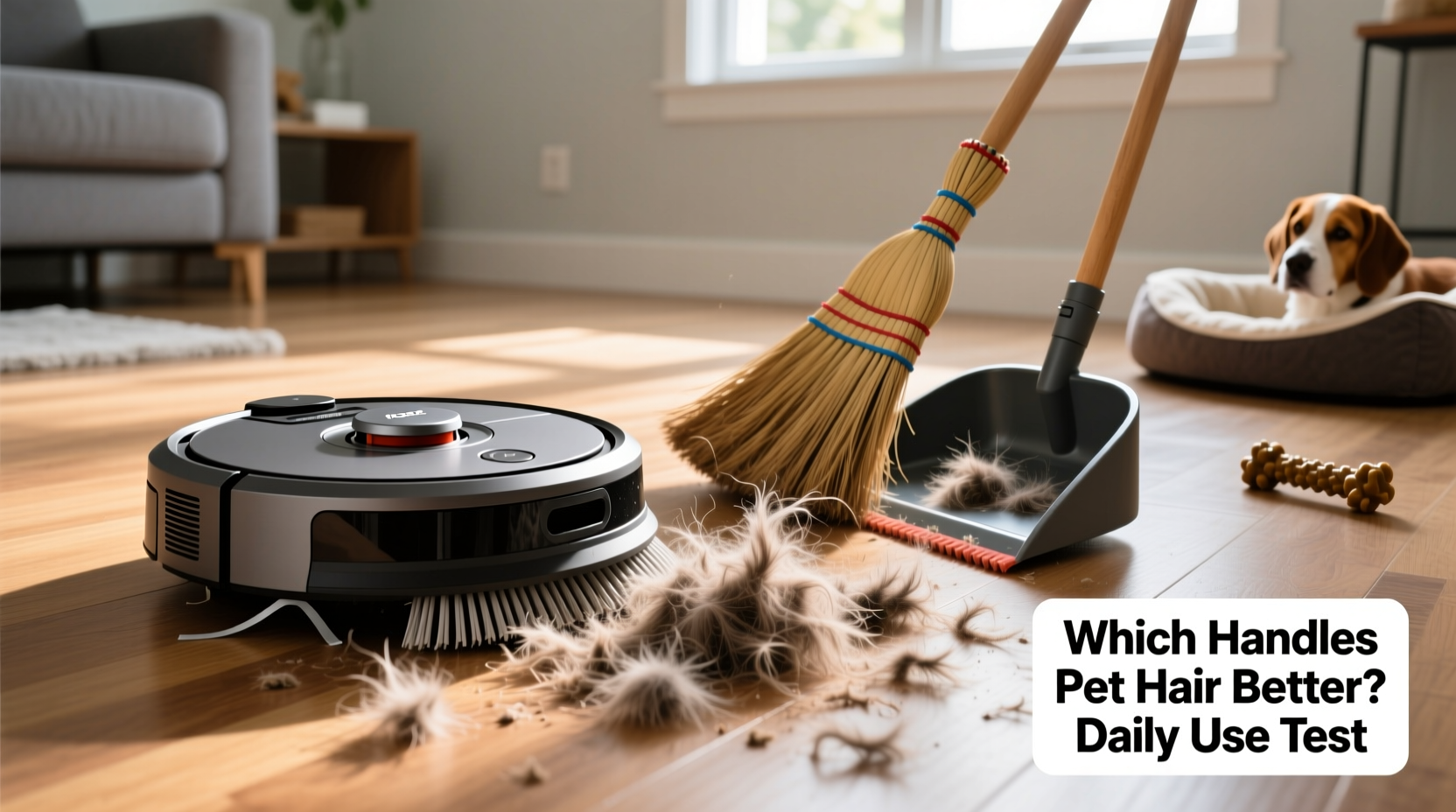
Pet hair isn’t just unsightly—it’s persistent. Unlike dust or crumbs, animal fur clings to surfaces, embeds into carpets, and resists casual removal. Static electricity causes hair to stick to baseboards and under furniture, while high-traffic areas accumulate layers that traditional brooms often push around instead of collecting. This makes consistency crucial. Daily intervention prevents buildup, reduces allergens, and maintains air quality, especially in homes with allergy-prone individuals.
The texture and volume of pet hair vary significantly by breed. A Husky can shed up to 2 pounds of fur per season, creating dense mats on rugs, while a short-haired Dachshund may leave fine strands scattered across tile. These differences influence how well any cleaning method performs over time.
Tip: Vacuuming before sweeping (if using a hybrid approach) lifts embedded hair from carpets, making surface cleaning more effective.Manual Sweeping: Simplicity with Limitations
Manual sweeping remains a go-to for quick cleanups. A lightweight broom allows targeted cleaning—ideal for knocking debris off hard floors or clearing small spills. However, when it comes to pet hair, its limitations quickly surface.
Brooms typically push hair into corners rather than lifting it. Most bristle types lack the agitation needed to dislodge hair caught in floor seams or grout lines. Even microfiber sweepers, which generate static to attract dust, struggle with larger clumps. Moreover, manual sweeping doesn’t address allergens trapped beneath the surface; it merely redistributes them.
For homes with mostly tile, vinyl, or sealed hardwood, light daily sweeping might suffice if followed by a damp mop. But in multi-surface homes or those with area rugs, sweeping alone is insufficient. It requires additional tools—like lint rollers or handheld vacuums—to complete the job, increasing effort and time.
“Sweeping can be part of a routine, but it’s not a standalone solution for pet hair. You need suction to remove what’s clinging below the surface.” — Dr. Lena Patel, Indoor Air Quality Researcher at CleanAir Labs
Robot Vacuums: Automation Built for Consistency
Robot vacuums excel in consistency—a key factor in pet hair management. Designed for scheduled, autonomous operation, they clean daily without human intervention. High-end models feature tangle-free brush rolls, strong suction (2000+ Pa), and intelligent navigation that targets high-shed zones like pet beds or entryways.
Modern units use rubber extractors instead of bristle brushes, reducing hair wrap and improving durability. Brands like iRobot, Roborock, and Ecovacs offer specialized pet modes that increase suction power and adjust cleaning patterns for carpeted areas. Some even self-empty into disposable bags, allowing weeks of hands-free operation.
Sensors detect concentrated debris, prompting the robot to linger longer in problem spots. Over time, this proactive cleaning prevents hair accumulation, minimizing deep-cleaning needs. For busy households, this automation translates to cleaner floors with minimal effort.
When Robot Vacuums Fall Short
Despite their advantages, robot vacuums aren’t flawless. They struggle with large clumps of matted hair, especially if tangled near furniture legs or under low-clearance sofas. Their compact dustbins require frequent emptying in heavy-shed environments. Additionally, cheaper models may miss edges or fail to transition smoothly between carpet and hard floors, leaving streaks of hair behind.
They also can’t replace spot-cleaning. If your dog tracks mud indoors, a robot may smear it before suctioning. Similarly, sudden shedding after grooming demands immediate attention—something a scheduled robot might not provide unless manually triggered.
Comparative Analysis: Key Performance Factors
| Factor | Manual Sweeping | Robot Vacuum |
|---|---|---|
| Daily Consistency | Depends on user discipline; often inconsistent | High—runs automatically on schedule |
| Pet Hair Pickup (Hard Floors) | Fair—moves hair but rarely collects fully | Excellent—with side brushes and suction |
| Pet Hair Pickup (Carpets) | Poor—no agitation or suction | Good to Excellent—depends on suction power |
| Allergen Removal | Limited—hair stays airborne | High—sealed systems trap allergens |
| Time Investment | 5–10 minutes per session, daily | Near-zero after setup |
| Maintenance Required | Low—rinse broom occasionally | Moderate—empty bin, clean brushes weekly |
| Cost Over 3 Years | $15–$30 (broom replacement) | $200–$700 (unit + filters + bags) |
The data shows robot vacuums outperform manual sweeping in nearly every category related to pet hair management. The primary trade-offs are upfront cost and reliance on technology. However, for households where time is scarce and shedding is heavy, the investment pays off in long-term cleanliness and convenience.
Real-World Example: The Thompson Family’s Shedding Challenge
The Thompsons adopted a Golden Retriever named Max. Within weeks, his golden fur coated every surface. Initially, they relied on a broom for nightly sweeps. “We’d spend ten minutes each evening pushing hair into piles, only for it to scatter again the next morning,” says Sarah Thompson. “It felt like we were chasing dust bunnies.”
After two months, they purchased a mid-tier robot vacuum with a tangle-free roller and HEPA filter. They set it to run at 9 a.m. and 7 p.m.—after Max’s walks and play sessions. Within a week, visible hair dropped by 70%. “We still do a deep vacuum on weekends, but daily messes are gone. The robot gets under the couch where we never reached,” Sarah notes.
Their experience reflects a growing trend: robot vacuums don’t eliminate the need for occasional manual cleaning, but they drastically reduce the burden of daily upkeep.
Action Plan: Optimizing Pet Hair Management
Neither tool is perfect in isolation. The most effective strategy combines both methods strategically. Follow this step-by-step guide to maximize results:
- Assess Your Flooring Mix: Identify high-risk zones—carpet runners, entry mats, pet sleeping areas—and prioritize them for robotic cleaning.
- Choose the Right Robot: Look for models with rubberized rollers, at least 2000Pa suction, edge-cleaning brushes, and app scheduling.
- Set a Daily Schedule: Program the robot to run during or after peak shedding times (e.g., post-walk or post-play).
- Pre-Clean Large Clumps: Use a lint roller or handheld vacuum to remove matted hair before the robot runs to prevent clogs.
- Maintain the Unit Weekly: Clear the brush roll, empty the bin, and wipe sensors to ensure peak performance.
- Supplement with Manual Sweeping Monthly: Use a microfiber dry mop for quick touch-ups on hard floors between robot cycles.
- Deep Clean Carpets Biweekly: Run a full-sized upright vacuum to extract deeply embedded hair and dander.
Essential Checklist for Pet Owners
- ✅ Choose a robot vacuum with a tangle-free brush roll
- ✅ Enable daily cleaning schedules (minimum 1x/day)
- ✅ Empty dustbin after every 2–3 runs in heavy-shed seasons
- ✅ Clean brush rolls weekly to prevent hair buildup
- ✅ Use virtual barriers to block off cluttered or delicate zones
- ✅ Pair with an air purifier to capture airborne dander
- ✅ Groom pets regularly to reduce shedding volume
Frequently Asked Questions
Can a robot vacuum completely replace manual sweeping?
In most homes with pets, yes—provided the model is designed for pet hair and maintained properly. Robot vacuums handle daily maintenance far better than manual sweeping. However, occasional spot-cleaning with a handheld tool or mop may still be needed for accidents or tracked-in debris.
Do robot vacuums work on all floor types with pet hair?
Most high-quality models transition seamlessly between hardwood, tile, and low-pile carpets. However, thick or shaggy rugs can challenge navigation and suction efficiency. Check manufacturer guidelines for carpet compatibility, and consider a robot with adaptive height adjustment for mixed flooring.
How often should I groom my pet to reduce vacuuming frequency?
Brushing your pet 2–3 times per week can reduce loose hair by up to 80%. During seasonal shedding peaks (spring and fall), daily brushing is ideal. Less hair on the floor means less strain on your cleaning system, whether manual or automated.
Conclusion: Making the Right Choice for Your Home
When it comes to daily pet hair management, robot vacuums offer superior performance, consistency, and long-term ease compared to manual sweeping. While a broom is inexpensive and simple, it lacks the suction, reach, and automation needed to keep up with relentless shedding. A well-chosen robot vacuum acts as a silent partner in household hygiene, tackling hair before it becomes a problem.
This doesn’t mean abandoning manual tools entirely. Strategic use of microfiber mops, lint rollers, and regular grooming enhances any system. But for the core task of daily pet hair control, automation wins. Investing in a capable robot vacuum isn’t about luxury—it’s about sustainability in a pet-friendly home.
💬 Have a pet hair horror story or a robot vacuum win? Share your experience in the comments—your tip could help another pet owner reclaim their floors!








