
For pet owners, managing pet hair is a daily battle. Whether it’s clumps of fur on hardwood floors or embedded strands in carpets, loose hair spreads quickly and sticks to everything. The two most common approaches—robot vacuums and manual sweeping—are often pitted against each other. But which one truly wins when it comes to controlling pet hair? The answer isn’t as straightforward as “one is better.” It depends on lifestyle, home layout, flooring type, and the specific challenges posed by your pets. This article dives deep into both methods, backed by practical insights, expert opinions, and real-life scenarios, to help you decide what works best—or whether a combination might be the real solution.
How Pet Hair Challenges Cleaning Routines
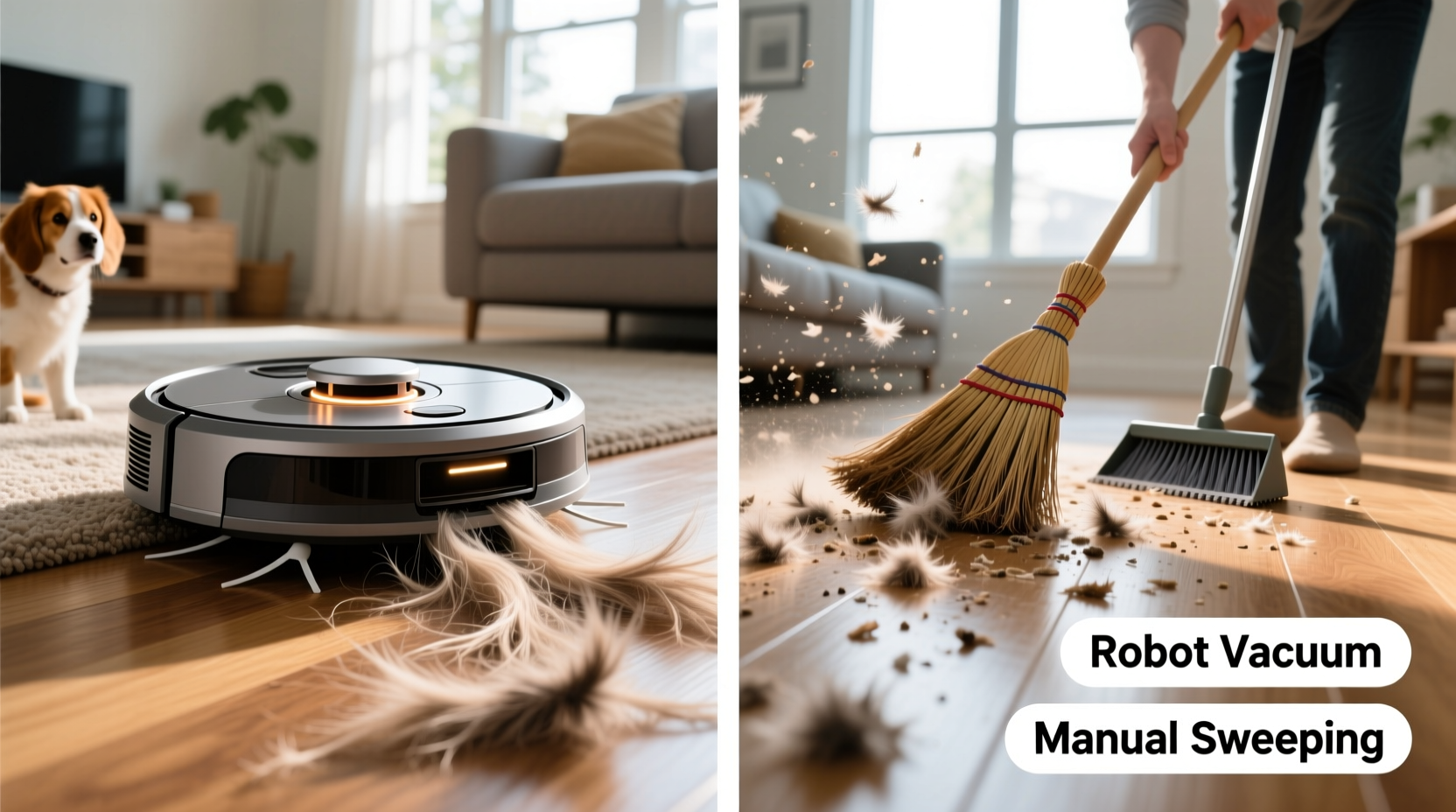
Pet hair behaves differently from typical household dust. It’s lightweight, static-prone, and tends to cling to surfaces due to natural oils. Long-haired breeds like Maine Coons, German Shepherds, or Golden Retrievers can shed hundreds of grams of fur weekly. Even short-haired pets contribute significantly over time. Unlike dust particles that settle and stay put, pet hair drifts with air currents, gets trapped in corners, and embeds itself in carpet fibers. Over time, this accumulation can trigger allergies, reduce indoor air quality, and wear down flooring finishes.
Effective cleaning must do more than just push hair around—it needs to capture and remove it entirely. That’s where the limitations of traditional sweeping become apparent. Brooms often scatter hair rather than collect it, especially on hard surfaces. Dustpans miss fine strands, and the effort required discourages frequent cleaning. Robot vacuums, meanwhile, promise hands-free operation and consistent maintenance, but their performance varies widely based on model, suction power, and brush design.
“Pet hair is one of the most persistent allergens in homes with animals. Effective removal requires not just surface cleaning but deep agitation and sealed filtration.” — Dr. Linda Harper, Indoor Air Quality Specialist
Manual Sweeping: Simplicity vs. Limitations
Manual sweeping remains a go-to method for quick cleanups. A standard broom and dustpan are inexpensive, require no charging, and offer immediate access. For spot cleaning—a pile of fur behind the couch or a cluster near the entryway—manual tools can be effective. However, their shortcomings grow evident with larger areas or recurring shedding.
The primary issue is inefficiency. Sweeping often redistributes hair instead of removing it. Lightweight bristles fail to lift hair from grout lines or textured tiles. On carpets, brooms barely penetrate the pile, leaving the majority of hair untouched. Even with a high-quality push broom, the process is labor-intensive and inconsistent. Most people sweep once or twice a week at most, allowing hair to accumulate between sessions.
Tip: Use a microfiber dry mop instead of a traditional broom for hard floors—it traps hair more effectively and reduces static dispersion.When Manual Sweeping Makes Sense
- Small spaces: Apartments or compact homes where full vacuuming feels excessive.
- Immediate cleanup: After grooming your pet or noticing a fresh clump of shed fur.
- Budget constraints: When investing in smart cleaning tech isn’t feasible.
- Spot treatment: Targeted areas like under furniture or along baseboards.
Still, manual sweeping should be viewed as a supplementary tactic—not a complete solution for pet hair management.
Robot Vacuums: Automation with Nuances
Robot vacuums have evolved dramatically in the past decade. Modern models feature advanced navigation (like LiDAR or camera-based mapping), powerful suction (up to 5,000 Pa), tangle-free brush rolls, and HEPA filtration—features specifically designed to handle pet hair. Brands like iRobot, Roborock, and Ecovacs now offer pet-focused models with self-emptying bins and anti-tangle technology.
The key advantage is consistency. A robot vacuum scheduled to run daily removes hair before it becomes deeply embedded. Many units automatically return to their dock, recharge, and resume cleaning, covering entire homes over multiple sessions. Some even detect high-traffic zones and increase suction in those areas.
However, not all robot vacuums are created equal. Lower-end models struggle with thick fur, get tangled easily, and lack the suction to pull hair from carpets. They may also miss edges or require frequent human intervention to clear jams. Without proper maintenance, their filters clog, and performance declines.
Features That Matter for Pet Hair Control
- Tangle-free brush roll: Rubber extractors or dual rubber brushes prevent hair wrap.
- Suction power (≥2,500 Pa): Higher suction lifts hair from carpets and crevices.
- HEPA filtration: Traps dander and fine particles, improving air quality.
- Edge-cleaning mode: Focuses on walls and corners where hair accumulates.
- Self-emptying base: Reduces exposure to collected allergens during disposal.
Head-to-Head Comparison: Robot Vacuum vs Manual Sweeping
| Factor | Robot Vacuum | Manual Sweeping |
|---|---|---|
| Frequency of Use | Daily automation possible | Limited by effort (typically 1–3x/week) |
| Pet Hair Removal Efficiency | High (with proper model) | Low to moderate (surface-level only) |
| Coverage | Full home, including under furniture | Partial, often skips tight spaces |
| Time Investment | Near zero (after setup) | 10–30 minutes per session |
| Upfront Cost | $300–$800+ | $10–$30 |
| Maintenance Required | Weekly filter cleaning, bin emptying | None beyond storage |
| Allergen Control | Superior (sealed system, HEPA) | Poor (hair often stirred into air) |
The table illustrates a clear trade-off: higher initial investment and maintenance for vastly superior long-term results. While manual sweeping wins on simplicity and cost, it falls short in consistency and thoroughness—two critical factors in pet hair control.
Real-World Case: The Thompson Family’s Experience
The Thompsons, a family of four in Portland, adopted a rescue husky named Luna. Within weeks, her double coat began shedding heavily across their 1,400-square-foot home with mixed hardwood and area rugs. Initially, they relied on a traditional broom and handheld vacuum. Despite daily sweeping, fur piled up in corners, and family members with mild allergies reported increased symptoms.
After three months of frustration, they invested in a mid-tier robot vacuum with a tangle-free brush and HEPA filter. They scheduled it to run every morning at 8 AM. Within two weeks, visible fur decreased by an estimated 70%. Allergy symptoms improved. The robot handled 90% of routine cleaning, with manual touch-ups only needed weekly for stubborn spots.
“We were skeptical at first,” said Sarah Thompson. “But seeing how much fur the robot collects daily—even on ‘clean’ days—changed our minds. It’s not perfect, but it’s doing the work we weren’t consistent with.”
This case highlights a common pattern: robot vacuums don’t eliminate the need for manual cleaning but dramatically reduce its frequency and burden, making pet hair management sustainable.
Best Practices for Maximizing Pet Hair Control
Whether you choose a robot vacuum, manual sweeping, or a hybrid approach, certain strategies improve outcomes. These steps form a comprehensive plan for keeping pet hair under control:
- Groom pets regularly: Brushing your dog or cat outdoors 2–3 times a week removes loose hair before it enters your home.
- Use washable pet bedding: Machine-washable covers trap hair and can be cleaned weekly.
- Place mats at entry points: Reduce tracked-in dirt and hair from spreading.
- Run robot vacuums daily: Set schedules to coincide with low-activity times (e.g., during work hours).
- Clean filters weekly: Clogged filters reduce suction and filtration efficiency.
- Supplement with a cordless vacuum: For stairs, upholstery, and deep carpet cleaning.
Frequently Asked Questions
Can a robot vacuum completely replace manual sweeping for pet owners?
For most households, yes—provided you choose a high-quality model designed for pet hair. Robot vacuums excel at daily maintenance, but occasional manual cleaning is still recommended for edges, under heavy furniture, and during seasonal deep sheds.
Do robot vacuums get damaged by pet hair?
Lower-end models with bristle brushes are prone to hair wrap, which can strain motors and require frequent cleaning. However, modern robots with rubberized, tangle-free rollers are engineered to resist this issue. Regular maintenance (clearing brushes monthly) prevents damage.
Is manual sweeping ever better than a robot vacuum?
In very small spaces or for instant cleanup of a visible fur pile, manual tools are faster and more direct. However, for ongoing, whole-home pet hair control, robot vacuums deliver far better long-term results through consistent, automated cleaning.
Conclusion: The Smart Path to a Cleaner Home
When it comes to managing pet hair, consistency is king. Manual sweeping, while accessible, rarely provides the frequency or depth needed to stay ahead of daily shedding. Robot vacuums, particularly those built for pet owners, offer a transformative solution: automated, thorough cleaning that fits seamlessly into busy lives. They’re not a magic fix—regular grooming, good filtration, and occasional manual touch-ups remain essential—but they shift the balance from reactive to proactive care.
The best approach for most pet owners is a hybrid strategy: rely on a capable robot vacuum for daily floor maintenance, supplement with targeted manual cleaning when needed, and support the system with pet grooming and smart home habits. This layered method doesn’t just reduce visible fur—it improves indoor air quality, minimizes allergens, and makes living with pets more enjoyable.
🚀 Ready to take control of pet hair? Evaluate your current routine, consider a robot vacuum with pet-specific features, and build a sustainable cleaning system that works while you live your life.








