For pet owners who suffer from allergies, managing household allergens is a daily challenge. Pet dander, fur, saliva, and tracked-in outdoor pollutants can trigger sneezing, itchy eyes, and respiratory discomfort. While regular cleaning is essential, the right vacuum can make all the difference in maintaining an allergen-reduced environment. Two popular options—robot vacuums and handheld cordless vacuums—offer convenience but serve different needs. Understanding their strengths and limitations helps allergy-prone pet owners make informed decisions.
Understanding Allergens and How They Spread
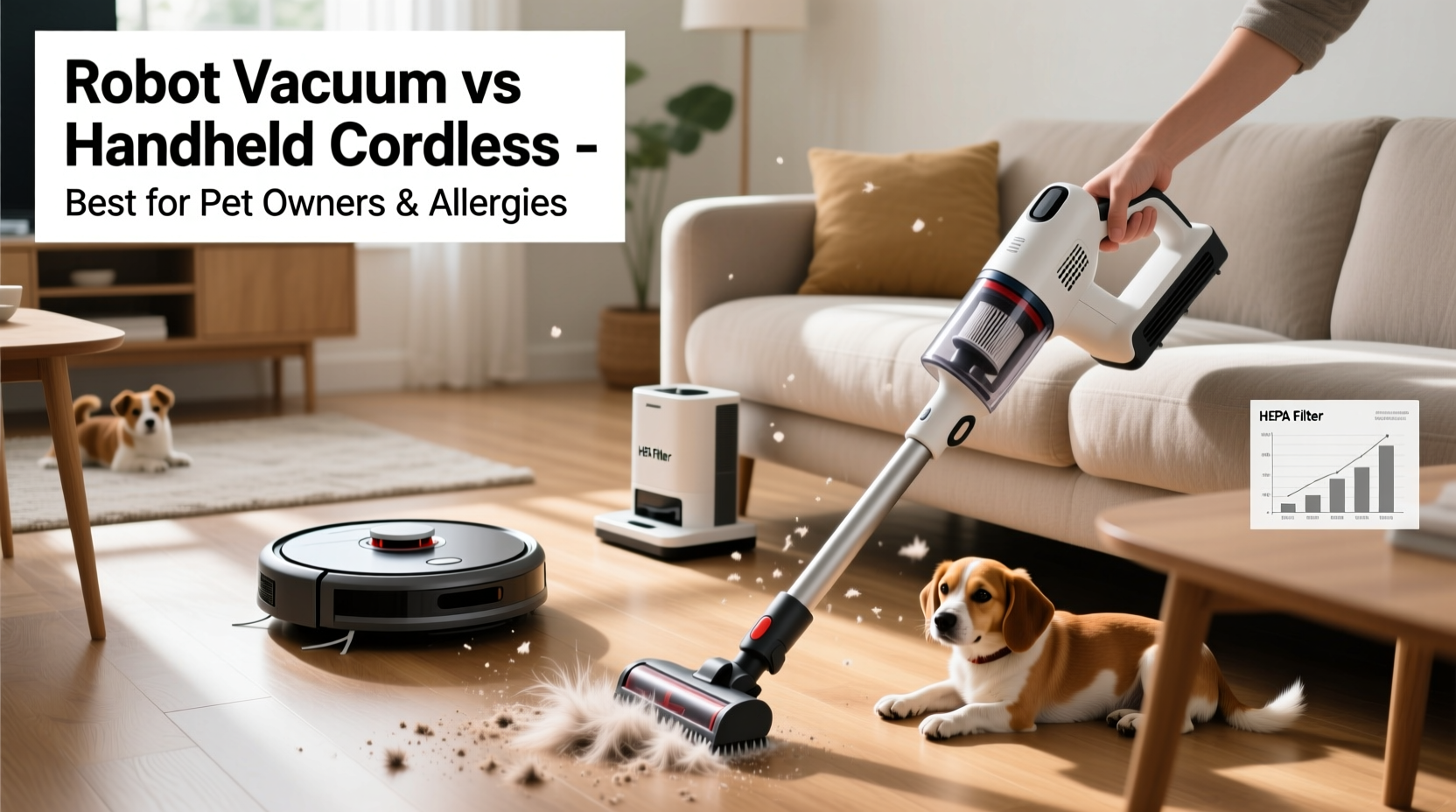
Pet-related allergens are not limited to visible fur. The primary culprits are microscopic proteins found in pet dander (dead skin cells), saliva, and urine. These particles become airborne and settle on floors, carpets, furniture, and even walls. Once disturbed, they can remain suspended in the air for hours, increasing exposure risk.
Carpets and rugs act as reservoirs, trapping allergens until agitation—such as walking or vacuuming—releases them. Hard floors may appear cleaner but still accumulate fine particles in grout lines and under baseboards. Effective vacuuming must capture these allergens at the source and prevent re-circulation into the breathing zone.
“Consistent removal of pet dander through high-efficiency filtration can significantly reduce allergic symptoms.” — Dr. Lena Patel, Board-Certified Allergist
Robot Vacuums: Automation with Limitations
Robot vacuums have gained popularity for their ability to clean autonomously. Models from brands like iRobot, Roborock, and Ecovacs offer scheduling, app control, and smart navigation. For pet owners, this means daily maintenance cleaning without lifting a finger.
Many modern robot vacuums feature HEPA-like filters or certified HEPA systems that trap 99.97% of particles as small as 0.3 microns—effective against pet dander and dust mites. Some include tangle-free brush rolls designed to handle long pet hair without frequent jams.
However, robot vacuums have notable drawbacks. Their compact size limits suction power compared to full-sized units. They struggle with deep carpet pile, tight corners, and elevated surfaces like stairs or furniture. Spills, tracked-in mud, or concentrated pet hair clumps often require manual follow-up. Most cannot empty their bins automatically unless paired with a self-emptying dock—a costly upgrade.
Tip: Run your robot vacuum daily on a schedule just after pets leave a room to minimize allergen buildup.Handheld Cordless Vacuums: Precision and Power
Handheld cordless vacuums like the Dyson V8, Shark WandVac, or Tineco A10 offer targeted cleaning with strong suction in a portable format. They excel in spot-cleaning accidents, upholstery, car interiors, stairs, and under furniture—areas where allergens concentrate but robots can’t reach.
These models typically use cyclonic technology and multi-stage filtration, including HEPA filters, to capture fine particles. Their lightweight design allows quick response to messes: a spilled treat, a patch of shed fur, or dander-laden cushions. Many come with specialized tools such as motorized pet brushes, crevice nozzles, and upholstery attachments.
The trade-off is frequency and consistency. Unlike robot vacuums, handhelds require active user involvement. Without a routine, cleaning gaps emerge. Battery life—typically 20–60 minutes—limits whole-home sessions unless recharged mid-task. Dustbin capacity is smaller, requiring more frequent emptying, which risks allergen exposure if not handled carefully.
Comparative Analysis: Key Factors for Allergy Sufferers
| Feature | Robot Vacuum | Handheld Cordless |
|---|---|---|
| Allergen Capture | Good (with HEPA filter); consistent daily pickup | Excellent (high suction + HEPA); deep cleaning per session |
| Coverage & Consistency | Full-floor, scheduled cleaning; minimal effort | User-dependent; selective areas only |
| Reach & Accessibility | Limited to flat floors; struggles with stairs, furniture | Excellent for stairs, upholstery, ceilings, tight spaces |
| Pet Hair Handling | Improved in newer models; some tangle resistance | Superior with motorized pet tools; less clogging |
| Maintenance Effort | Low (if self-emptying); moderate otherwise | High (daily charging, emptying, tool swaps) |
| Best For | Daily maintenance, open floor plans, prevention | Spot cleaning, allergen hotspots, immediate response |
Real-World Scenario: The Smith Family’s Solution
The Smiths live in a two-story home with two dogs, one cat, and a toddler. Both parents have seasonal allergies exacerbated by pet dander. Initially, they purchased a premium robot vacuum hoping for hands-free relief. It worked well on hardwood floors and reduced visible fur, but missed allergens on stairs, couches, and bedroom carpets.
After consulting an allergist, they added a cordless handheld vacuum with a motorized pet tool. Now, they run the robot every morning while the family is out. Each evening, they spend 10 minutes vacuuming upholstery, stairs, and the toddler’s play area. Within three weeks, both parents reported fewer allergy symptoms and less nighttime congestion.
Their experience highlights a growing trend: combining both technologies offers optimal results. The robot handles baseline cleanliness; the handheld tackles allergen hotspots.
Expert Recommendations for Maximum Allergen Control
According to indoor air quality specialists, reducing allergens requires more than powerful suction—it demands consistency, filtration efficiency, and proper technique.
- Filtration matters most: Ensure any vacuum uses a true HEPA filter, not just “HEPA-like.” Look for sealed systems that prevent leaks.
- Vacuum frequency is critical: Daily cleaning reduces cumulative allergen load. Weekly runs allow buildup.
- Don’t skip hard-to-reach zones: Dander accumulates behind radiators, under beds, and along baseboards—common robot blind spots.
- Empty bins outdoors: To avoid stirring up captured allergens, dispose of debris outside when possible.
“The ideal setup combines automated maintenance with targeted intervention. No single device does it all.” — Mark Tran, Indoor Air Quality Consultant
Action Plan: Building an Allergy-Friendly Cleaning Routine
Follow this step-by-step guide to optimize your vacuum strategy for pet allergies:
- Assess your home layout: Identify high-traffic pet areas, carpeted rooms, and allergen traps like sofas and stairs.
- Choose a robot vacuum with HEPA filtration: Prioritize models with strong suction (≥2000 Pa), tangle-free brushes, and scheduling features.
- Select a cordless handheld with pet tools: Opt for one with a motorized brush, washable filter, and at least 30 minutes of runtime.
- Schedule daily robot runs: Set it to clean during low-occupancy times (e.g., mid-morning) to capture settled dander.
- Establish a nightly handheld routine: Spend 5–10 minutes on upholstery, pet bedding, and stair treads.
- Maintain both devices weekly: Clean filters, clear brush rolls, and check seals to preserve performance.
- Supplement with other measures: Use allergen-proof mattress covers, wash pet bedding weekly, and consider an air purifier.
Checklist: Choosing the Right Vacuum Combo for Allergies
Use this checklist when evaluating options:
- ✅ Does the robot vacuum have a certified HEPA filter?
- ✅ Is the suction power sufficient for carpets (≥2000 Pa recommended)?
- ✅ Does the handheld model include a motorized pet tool?
- ✅ Can both vacuums be easily maintained by all household members?
- ✅ Is battery life adequate for your home size?
- ✅ Are replacement filters affordable and readily available?
- ✅ Does the robot navigate well around pet obstacles (toys, food bowls)?
- ✅ Can the handheld reach under furniture without back strain?
Frequently Asked Questions
Can a robot vacuum completely replace a traditional vacuum for allergy sufferers?
No. While robot vacuums reduce allergen accumulation through daily cleaning, they lack the power and reach to perform deep cleans. They should complement, not replace, manual vacuuming—especially on upholstery and stairs.
Do handheld vacuums release allergens back into the air when emptied?
They can, if not designed properly. Choose models with sealed filtration and “point-and-empty” bins that minimize contact with debris. Emptying outside or in a well-ventilated area reduces exposure.
How often should I replace vacuum filters if I have pets and allergies?
Washable HEPA filters should be cleaned monthly and replaced every 6–12 months. Pre-motor filters may need monthly rinsing. Always follow manufacturer guidelines, but increase frequency in high-pet homes.
Final Recommendation: Combine Both for Best Results
When it comes to managing pet allergens, relying solely on a robot vacuum or a handheld cordless unit leaves gaps. Robot vacuums provide invaluable consistency, reducing the daily burden of allergen accumulation. Handheld cordless models deliver the precision and power needed to attack concentrated sources of dander on furniture, stairs, and tight spaces.
The most effective approach is integration. Use a robot vacuum as your first line of defense—automatically maintaining baseline cleanliness. Pair it with a high-performance handheld for targeted interventions, especially after pets shed heavily or track in pollen. This dual-system strategy minimizes airborne allergens, supports respiratory health, and creates a more comfortable living environment for sensitive individuals.
Investing in both types may seem redundant, but for allergy-prone pet owners, the synergy between automation and control delivers measurable improvements in air quality and well-being.
🚀 Ready to breathe easier? Evaluate your current cleaning routine, identify allergen hotspots, and consider adding the missing piece—whether it’s automation or precision—to build a truly allergen-smart home.








