For pet owners, managing loose fur is a daily challenge. Whether it’s clumps of dog hair on the sofa or fine cat dander drifting across hardwood floors, pet hair finds its way into every corner of the home. Two popular solutions—robot vacuums and cordless stick vacuums—offer hands-free convenience and powerful cleaning, but they serve different needs. Understanding how each performs in real-life scenarios with pets can help you choose the right tool for keeping your space fur-free.
How Pet Hair Challenges Home Cleaning
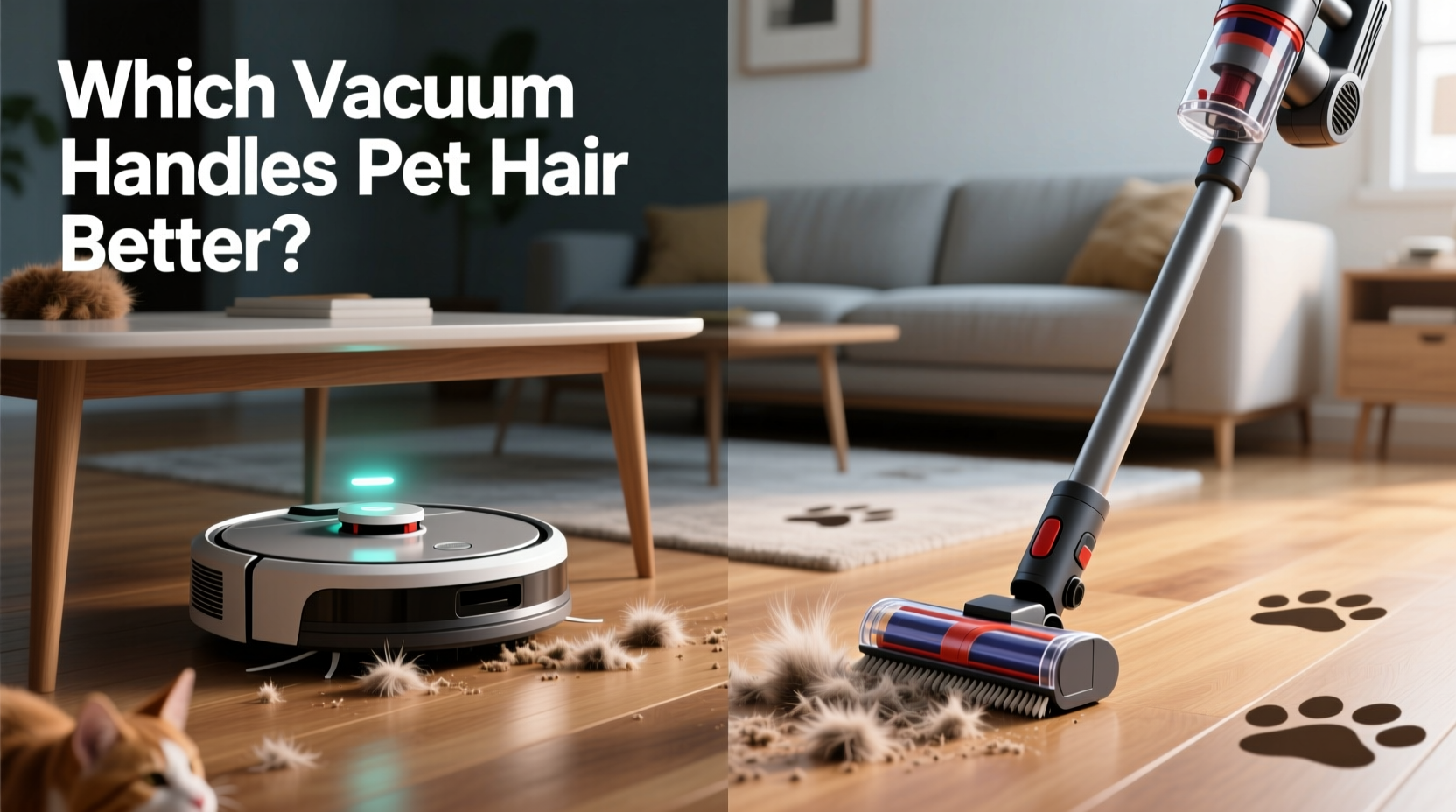
Pet hair isn’t just unsightly; it’s persistent. It tangles in carpet fibers, sticks to baseboards, and accumulates in hard-to-reach areas like under furniture. Unlike dust or crumbs, pet hair has static cling and length that make it harder to lift and trap. Additionally, pet owners often deal with tracked-in dirt, dander, and occasional accidents, all of which compound the mess. A vacuum must not only pick up hair but also prevent it from being redistributed or clogging internal components.
The ideal vacuum for pet hair requires strong suction, effective brush design, large dustbin capacity, and easy maintenance. However, convenience and frequency of use are equally important. This is where robot and cordless stick vacuums diverge in philosophy and performance.
Robot Vacuums: The Set-and-Forget Option
Robot vacuums are designed for autonomy. Once scheduled, they clean daily without human intervention, making them excellent for consistent surface maintenance. High-end models like the Roomba j7+, Roborock S8, and Ecovacs Deebot X2 Omni feature advanced sensors, self-emptying docks, and AI-powered obstacle avoidance—especially useful in homes cluttered with pet toys or furniture.
When it comes to pet hair, modern robot vacuums have improved significantly. Many now include tangle-free brushrolls specifically engineered to resist hair wrap. For example, iRobot’s AeroForce extractors use rubber fins instead of bristles, minimizing hair buildup. Some models even detect carpet edges and increase suction automatically.
However, limitations remain. Most robot vacuums have smaller dustbins (typically 0.6L), requiring frequent emptying in high-shed households. Their low-profile design limits reach under very low furniture, and their random or spiral cleaning patterns may miss concentrated fur piles if not run multiple times. They’re best suited for maintenance rather than deep cleaning.
Tip: Run your robot vacuum daily during peak shedding seasons to prevent hair buildup between deep cleans.Strengths of Robot Vacuums for Pet Hair
- Daily automated cleaning prevents accumulation
- Tangle-resistant brushrolls reduce maintenance
- Self-emptying bins minimize contact with fur and dander
- Navigational intelligence avoids pet obstacles (food bowls, beds)
- Quiet operation won’t startle sensitive pets
Limits to Consider
- Less suction power than premium stick vacuums
- May struggle with thick carpets or dense hair clumps
- Requires clear floor space and charging dock access
- Higher upfront cost with recurring filter/bag expenses
Cordless Stick Vacuums: Power and Precision
Cordless stick vacuums like the Dyson V15 Detect, Shark Vertex, and LG CordZero A9 deliver high suction power (often 200+ AW) and direct user control. They’re built for spot cleaning, deep carpet agitation, and targeted removal of stubborn debris—including matted pet hair.
These vacuums typically feature motorized multi-surface brushes, crevice tools, and upholstery attachments, allowing users to clean stairs, sofas, and car interiors where pet hair accumulates heavily. Their larger dustbins (up to 1L) handle more debris before needing to be emptied, and many offer washable filters to reduce long-term costs.
Unlike robots, stick vacuums let you see exactly where and how you're cleaning. You can linger on problem spots, adjust suction modes instantly, and reach tight corners with specialized nozzles. For homes with heavy shedders or mixed flooring, this level of control is invaluable.
“While robot vacuums help manage daily messes, nothing replaces a high-powered stick vacuum for removing deeply embedded pet hair from carpets.” — Dr. Linda Harper, Indoor Air Quality Researcher at CleanAir Labs
Advantages for Pet Owners
- Superior suction for embedded hair in carpets and rugs
- Versatile attachments for furniture, stairs, and tight spaces
- Faster cleaning cycles for immediate messes
- Better edge cleaning along walls and baseboards
- Often includes HEPA filtration for allergen reduction
Drawbacks to Keep in Mind
- Requires manual operation—no automation
- Battery life limits cleaning time (typically 30–60 minutes)
- Needs storage space and regular charging
- Higher physical effort compared to robotic models
Head-to-Head Comparison: Key Factors
| Feature | Robot Vacuum | Cordless Stick Vacuum |
|---|---|---|
| Suction Power | Moderate to high (100–180 AW) | High to very high (150–240 AW) |
| Pet Hair Pickup (Carpets) | Good, with tangle-free rollers | Excellent, especially with powered heads |
| Daily Maintenance | Minimal (if self-emptying) | Manual cleaning after each use |
| Convenience | Automated, hands-off | On-demand, requires effort |
| Furniture & Stairs | Limited reach | Full access with attachments |
| Allergen Filtration | Most have HEPA options | Standard on premium models |
| Price Range | $300–$1,000+ | $200–$800 |
Real-World Scenario: The Multi-Pet Household
Consider Sarah, a pet owner in Denver with two golden retrievers and a cat. Her home has a mix of hardwood, area rugs, and stairs. During spring shedding season, she noticed fur piling up behind doors and under the couch. She first tried a mid-tier robot vacuum, which ran daily and kept surfaces minimally dusty. But clumps of fur remained in corners and on stair treads.
After adding a cordless stick vacuum to her routine, she began weekly deep cleans. Using the motorized pet tool, she extracted years’ worth of compacted hair from her area rugs. She now uses the robot for daily upkeep and the stick vacuum every 3–4 days during heavy shedding. This hybrid approach reduced airborne dander and improved air quality, confirmed by her daughter’s reduced allergy symptoms.
Sarah’s experience reflects a growing trend: combining both technologies for optimal results. The robot handles consistency; the stick vacuum delivers intensity.
Choosing Based on Your Lifestyle
Your choice depends less on technology and more on your living habits and pet situation.
If You Value Convenience Over Control
A robot vacuum is ideal if you want minimal effort and consistent cleaning. It works well in open-floor homes with light to moderate shedding. Models with self-emptying stations and anti-hair wrap tech reduce maintenance. Schedule it to run during work hours or while you’re out, ensuring clean floors upon return.
If You Prioritize Deep Cleaning and Flexibility
A cordless stick vacuum suits those who deal with heavy shedding, multiple pets, or mixed surfaces. Its ability to switch tools and focus on trouble zones makes it indispensable for thorough cleaning. If you’re already spending time grooming your pet or wiping down furniture, integrating a quick vacuum session is a natural extension.
Tip: Pair a robot vacuum with a cordless stick model for best results—automation for maintenance, power for deep cleans.Action Plan: Optimizing Pet Hair Management
- Assess your pet’s shedding level: Light (short-haired cat), moderate (small dog), or heavy (double-coated breeds like huskies).
- Evaluate your flooring: Hardwood and tile show hair easily but are easier to clean; carpets trap hair and require stronger suction.
- Determine your availability: Can you vacuum daily, or do you need automation?
- Budget for both upfront and ongoing costs: Include replacement filters, brushes, and bags.
- Test combinations: Start with one type, then add the other if needed.
Checklist: What to Look for in a Pet Hair Vacuum
- ✅ Tangle-free or rubberized brushroll
- ✅ HEPA or high-efficiency filtration
- ✅ Strong suction (150+ AW recommended)
- ✅ Large, easy-to-empty dustbin
- ✅ Washable or affordable replacement filters
- ✅ Specialized pet tool (for stick vacuums)
- ✅ Self-emptying base (for robots)
- ✅ Smart navigation to avoid pet messes
Frequently Asked Questions
Can robot vacuums handle long pet hair?
Yes, but only models with tangle-resistant brushrolls. Traditional bristle brushes quickly become clogged with long fur. Opt for rubber fins or anti-wrap designs, and clean the roller weekly to maintain performance.
Do cordless vacuums last long enough for whole-home cleaning?
Most last 30–60 minutes on standard mode. For larger homes, choose models with swappable batteries or dual-chamber systems. Use eco mode for quick pickups and boost mode only when necessary.
Which is better for allergies caused by pets?
Both can help, but only if they have sealed HEPA filtration. Cordless stick vacuums often provide more complete allergen capture due to higher airflow and better sealing. However, daily robot use reduces overall dander levels over time.
Final Recommendation
There’s no single winner in the robot vacuum vs cordless stick vacuum debate when it comes to pet hair. Each excels in different areas: robot vacuums win on convenience and consistency; cordless stick vacuums dominate in power and versatility. For most pet owners, the best strategy isn’t choosing one—it’s using both.
Start with a reliable robot vacuum to maintain baseline cleanliness. Then, supplement with a high-performance cordless stick vacuum for weekly deep cleans, furniture detailing, and emergency messes. This dual-system approach reduces the burden of pet hair while protecting your home’s air quality and surfaces.
🚀 Take action today: Evaluate your current cleaning routine, identify gaps, and consider how automation and power can work together to keep pet hair under control—for good.








