In the evolving world of home cleaning, two devices have emerged as front-runners in modern households: the robot vacuum and the cordless stick vacuum. Both promise freedom from cords and convenience, but they deliver very different experiences. The robot vacuum offers true hands-off operation—set it and forget it—while the cordless stick vacuum gives you powerful, targeted cleaning with full control. But when push comes to shove, is the robot’s convenience worth the trade-off of missed corners, inconsistent edge cleaning, and lower suction power? For many homeowners, this isn’t just a matter of preference—it’s about real-world effectiveness.
The answer depends on your lifestyle, floor types, time availability, and cleanliness standards. While robot vacuums have made significant strides in navigation, battery life, and smart features, they still struggle with certain tasks that cordless stick vacuums handle effortlessly. This article breaks down the strengths and weaknesses of each, evaluates real-world performance, and helps you decide whether automation truly compensates for compromised cleaning results.
How Robot Vacuums Work—and Where They Fall Short
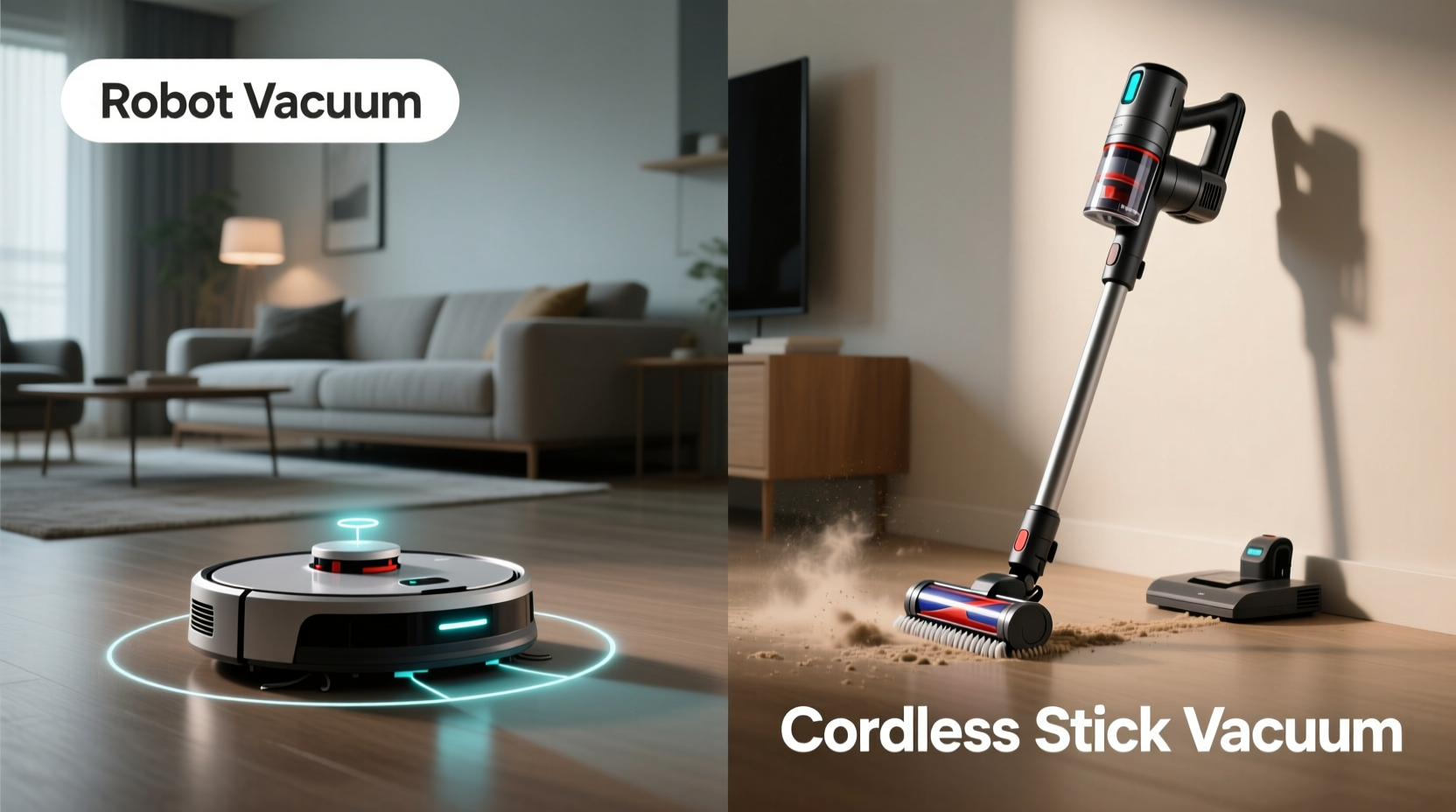
Robot vacuums operate autonomously using sensors, mapping technology, and programmed cleaning patterns. Most modern models use LiDAR or camera-based systems to map your home, remember room layouts, and avoid obstacles. Once set up, they can run daily on a schedule, returning to their dock to recharge. This level of automation is unmatched in convenience—ideal for people with busy schedules or those who simply dislike vacuuming.
However, convenience doesn’t always equal thoroughness. Despite advanced navigation, robot vacuums often miss edges and corners due to suboptimal brush placement and limited side brush reach. Their compact size means smaller dustbins and less powerful motors, which translates to weaker suction compared to upright or stick vacuums. They also struggle with high-pile rugs, pet hair tangles, and larger debris like cereal or paper clips.
Tip: Run your robot vacuum every day to compensate for its shallow clean—consistency matters more than depth.Additionally, robot vacuums require maintenance: brushes need regular cleaning, sensors must be wiped free of dust, and bins should be emptied frequently. If neglected, performance drops quickly. And while app integration and voice commands are impressive, they don’t fix fundamental limitations in cleaning ability.
Cordless Stick Vacuums: Power, Precision, and Control
Cordless stick vacuums represent the evolution of handheld cleaning. Brands like Dyson, Shark, and Tineco have engineered lightweight, high-suction models that rival traditional uprights. With direct motor-to-brushroll designs and cyclonic filtration, they capture fine dust, allergens, and embedded debris far more effectively than most robot vacuums.
What sets them apart is user control. You guide the vacuum exactly where needed, tilt it under furniture, stand it upright for stairs, and switch attachments for crevices, upholstery, or ceilings. Their longer reach and stronger airflow make them ideal for spot cleaning, post-meal kitchen sweeps, or handling pet accidents. Many models now offer 40–60 minutes of runtime—more than enough for a full home clean.
But this control comes at a cost: time and effort. Unlike robots, stick vacuums require active participation. You must charge them, store them properly, and commit to using them regularly. For some, that’s a dealbreaker. For others, it’s a fair trade for superior results.
“While robot vacuums excel in maintenance cleaning, they’re not replacements for deep-cleaning tools. A cordless stick vacuum remains essential for allergy sufferers and homes with pets.” — Dr. Lena Patel, Indoor Air Quality Researcher, Clean Living Institute
Performance Comparison: Robot vs Stick Vacuum
| Feature | Robot Vacuum | Cordless Stick Vacuum |
|---|---|---|
| Suction Power (AW) | 10–30 Air Watts | 100–150+ Air Watts |
| Floor Type Effectiveness | Best on hard floors; struggles with thick carpets | Excellent on all surfaces with adjustable settings |
| Edge & Corner Cleaning | Limited; misses up to 30% of perimeter | Precise; designed for edges with motorized tools |
| Daily Maintenance Cleaning | Excellent (fully automated) | Requires manual effort |
| Deep Cleaning Capability | Poor; lacks agitation and suction | Superior; strong suction + brushroll action |
| Pet Hair Handling | Fair; prone to tangles and clogs | Excellent; anti-tangle tech standard |
| Time Investment | Nearly zero (after setup) | 10–30 minutes per session |
| Price Range (USD) | $250–$1,200 | $200–$700 |
The data shows a clear divide: robot vacuums win on automation and frequency, while stick vacuums dominate in cleaning efficacy. If your goal is to reduce visible dust and maintain baseline cleanliness, a robot may suffice. But if you want truly clean floors—especially in homes with kids, pets, or allergies—a cordless stick vacuum delivers what robots cannot.
Real-World Example: The Pet Owner’s Dilemma
Consider Sarah, a dog owner living in a 1,200-square-foot apartment with hardwood and area rugs. She adopted a medium-sized Labrador mix known for shedding heavily. Initially, she bought a premium robot vacuum ($800) hoping it would manage daily fur accumulation. It ran every morning, mapped her space accurately, and emptied itself into a self-emptying base. On the surface, it seemed perfect.
But within weeks, she noticed persistent hair buildup along baseboards and under furniture. Her dog’s paws tracked mud after rain, and the robot either avoided the spot or smeared it. Weekly deep cleans were still necessary with a separate vacuum. Frustrated, she sold the robot and invested in a mid-tier cordless stick vacuum ($350). Though she now spends 15 minutes every other day cleaning, she sees dramatically cleaner floors, especially around corners and beneath the couch. “I get actual results,” she says. “The robot was busy, but not effective.”
Sarah’s experience reflects a common pattern: robots maintain, but don’t transform, cleanliness. For light-duty homes, that’s acceptable. For messier environments, it’s insufficient.
When Robot Convenience Makes Sense
Despite their limitations, robot vacuums shine in specific scenarios. They are ideal for:
- Small apartments or open-concept homes with mostly hard flooring.
- People with mobility issues or chronic fatigue who can’t operate traditional vacuums.
- Homes with minimal clutter and few pets.
- Individuals who value consistency over intensity—those who prefer floors that are “mostly clean” every day rather than “deep cleaned” once a week.
Moreover, newer hybrid models—like robotic vacuums with mopping functions or self-emptying bins—add value by reducing maintenance frequency. When paired with a good cordless stick vacuum for weekly deep cleans, they form a balanced cleaning ecosystem.
Tip: Use your robot for daily upkeep and your stick vacuum for weekend deep cleans—best of both worlds.Step-by-Step: Building an Efficient Cleaning Routine
If you’re considering both devices—or deciding between them—follow this practical routine to maximize efficiency without sacrificing cleanliness:
- Assess Your Home’s Needs: Count high-traffic zones, pet areas, carpeted rooms, and clutter levels. High mess = higher need for manual power.
- Choose Your Primary Tool: Opt for a cordless stick vacuum if deep cleaning is a priority. Choose a robot if convenience and automation are non-negotiable.
- Set Up Scheduling (for Robots): Program your robot to run during work hours or while you're out. Exclude messy zones if needed.
- Supplement Weekly: Dedicate 20–30 minutes weekly to a full pass with a stick vacuum, focusing on edges, under furniture, and high-debris areas.
- Maintain Both Devices: Clean robot brushes weekly, empty bins after every 2–3 runs, and check stick vacuum filters monthly.
- Evaluate Monthly: Ask: Are corners clean? Is pet hair under control? Do I still need to re-vacuum manually? Adjust tools accordingly.
FAQ: Common Questions Answered
Can a robot vacuum replace a cordless stick vacuum completely?
For most households, no. While robot vacuums handle light debris and daily maintenance well, they lack the suction, reach, and precision needed for deep cleaning. Homes with pets, children, or carpets will still require a stick vacuum for thorough results.
Do robot vacuums clean corners effectively?
Not reliably. Most robot vacuums use a single side brush that extends only 1–2 inches beyond the unit’s edge. Due to navigation inaccuracies and bumping behavior, they often leave 10–30% of corners untouched. Manual vacuuming or spot-cleaning is usually required.
Are expensive robot vacuums worth it?
Only if you value advanced features like precise mapping, multi-floor memory, or self-emptying docks. Higher price doesn’t guarantee better corner cleaning. Even top-tier models like the Roomba j9+ or Roborock S8 Pro Ultra struggle with edge performance compared to a basic $200 stick vacuum.
Checklist: Choosing the Right Vacuum for Your Lifestyle
- ☐ Assess your home’s square footage and floor types.
- ☐ Determine how much time you’re willing to spend cleaning weekly.
- ☐ Consider pet presence, shedding levels, and allergy concerns.
- ☐ Decide whether automation or cleaning power is your top priority.
- ☐ Test models in-store or read verified user reviews focused on edge cleaning.
- ☐ Budget for both initial cost and long-term maintenance (filters, brush replacements).
- ☐ Consider buying one now and adding the other later for a hybrid solution.
Conclusion: Balancing Convenience and Cleanliness
The debate between robot vacuums and cordless stick vacuums isn’t about which is “better”—it’s about alignment with your needs. The robot’s convenience is undeniable: it cleans while you sleep, works unattended, and maintains a baseline level of tidiness. But that convenience comes at the cost of corners left dusty, rugs inadequately cleaned, and debris overlooked.
If your standard for cleanliness is high—if you notice every speck of dirt or share your home with messy companions—then the cordless stick vacuum remains indispensable. Its power, precision, and versatility deliver results robots simply can’t match. However, pairing both devices allows you to enjoy the best of both worlds: daily robotic maintenance and weekly deep cleaning with a stick vacuum.
Don’t let marketing hype convince you that automation equals effectiveness. True cleanliness requires attention to detail, and sometimes, that means getting your hands on a vacuum handle. Evaluate your priorities honestly. Then choose the tool—or combination of tools—that keeps your home not just tidy, but genuinely clean.
🚀 Ready to upgrade your cleaning routine? Start by testing one device for two weeks—track how often you re-clean areas, how much time you save, and how satisfied you feel with the results. Share your experience below and help others find their perfect cleaning balance.








