For pet owners, managing fur-covered floors is a daily battle. Whether it's clumps of shedding dog hair or fine cat dander drifting across hardwood, keeping your home clean demands consistent effort. In recent years, two types of vacuums have emerged as front-runners in the fight against pet mess: robot vacuums and cordless stick vacuums. But which one truly handles pet hair better? More importantly, can a robot vacuum actually keep up with the relentless shedding that comes with pet ownership?
The answer isn't straightforward. While robot vacuums promise hands-free convenience, cordless stick vacuums offer powerful suction and targeted cleaning. This article breaks down their capabilities, strengths, and limitations when it comes to tackling pet hair—helping you decide whether automation lives up to the hype.
How Robot Vacuums Handle Pet Hair: Strengths and Limitations
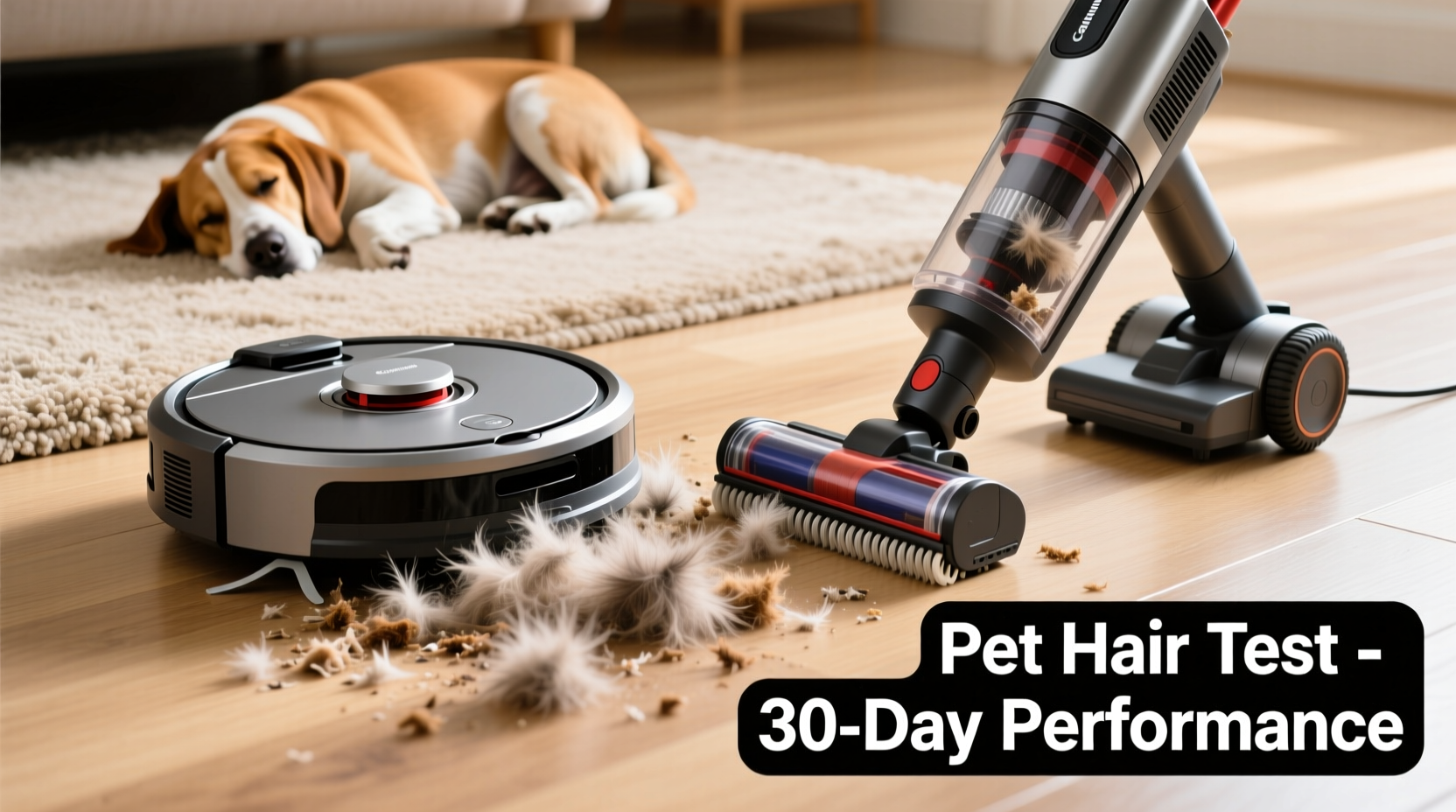
Robot vacuums are designed for maintenance cleaning. They operate on schedules, navigate around furniture, and return to their docks autonomously. For pet owners, this means less manual sweeping between deep cleans. However, their effectiveness depends heavily on design, brush type, suction power, and maintenance habits.
Modern robot vacuums often come with high-torque motors and tangle-free brush rolls specifically engineered to resist pet hair wrapping. Brands like iRobot (Roomba), Roborock, and Ecovacs have introduced rubberized extractors instead of bristle brushes, reducing clogs and improving hair pickup. These rollers don’t attract hair like traditional bristles, making them more efficient for long-haired pets.
Still, robot vacuums face challenges. Their low profile limits dustbin capacity, meaning they may need frequent emptying in homes with heavy shedders. Suction power, while improved, still lags behind upright or stick vacuums. On carpets, especially plush or shag, many robots struggle to lift deeply embedded pet hair without multiple passes.
Tip: Choose a robot vacuum with a rubber extractor roll and self-emptying base if you have pets—it reduces maintenance and improves long-term performance.Cordless Stick Vacuums: Power and Precision for Pet Hair
Cordless stick vacuums have revolutionized home cleaning with lightweight designs, strong suction, and versatile attachments. When it comes to pet hair, they excel in both reach and power. Most models offer suction levels exceeding 150 AW (air watts), far surpassing the average robot vacuum’s 20–50 AW range.
These vacuums typically include motorized pet tools designed to agitate carpet fibers and pull out trapped hair from upholstery, stairs, and car seats. The ability to switch between floor heads and handheld modes makes them ideal for spot-cleaning accidents, such as a pile of fur near the pet bed or tracked-in dirt after a walk.
However, their strength lies in user control—not automation. You must operate them manually, which means time investment. Battery life ranges from 20 to 60 minutes depending on suction mode, so large homes may require recharging mid-clean. They also demand regular filter cleaning and bin emptying, just like robots—but without the convenience of self-docking or scheduling.
“Cordless vacuums give pet owners unmatched flexibility. If you need to clean right after your dog shakes off water or sheds during grooming, there’s no substitute for immediate, powerful suction.” — Mark Tran, Home Appliance Analyst at CleanTech Review
Direct Comparison: Robot Vacuum vs Cordless Stick for Pet Hair
To evaluate real-world performance, consider key factors relevant to pet owners. The table below compares robot vacuums and cordless stick vacuums across critical categories:
| Feature | Robot Vacuum | Cordless Stick Vacuum |
|---|---|---|
| Suction Power | Moderate (20–60 AW) | High (100–220 AW) |
| Pet Hair Pickup on Hard Floors | Good with rubber rollers | Excellent with soft roller tools |
| Pet Hair Pickup on Carpets | Fair to good (depends on model) | Excellent with motorized brush |
| Upholstery & Furniture Cleaning | Limited (no attachments) | Excellent with crevice and pet tools |
| Automation & Scheduling | Full (daily runs, app control) | None (manual use only) |
| Maintenance Frequency | Daily/weekly (empty bin, clean brushes) | After each use (empty, wipe filters) |
| Best For | Preventative cleaning, busy households | Deep cleaning, spot treatment, pet accidents |
The data shows a clear trade-off: robot vacuums win on convenience and consistency, while cordless sticks dominate in raw cleaning power and versatility.
Real-World Scenario: A Multi-Pet Household Test
Jessica M., a dog trainer in Austin, TX, owns two Golden Retrievers and a long-haired cat. Her home sees constant shedding, especially during seasonal changes. She tested both a Roomba j7+ and a Dyson V15 Detect over three months to see which better managed pet hair.
Initially, she relied solely on the Roomba, scheduling it twice daily. It kept hard floors relatively clear and reduced visible fur buildup. However, she noticed persistent clumps under furniture and along baseboards—areas the robot either missed or couldn’t reach due to navigation limits. Carpeted bedrooms showed matted hair after two weeks, despite daily runs.
When she added the Dyson into her routine—using it weekly on carpets and monthly on furniture—the improvement was immediate. The laser dust detection highlighted hidden pet debris, and the torque-driven cleaner head extracted deeply embedded fur. After switching to a hybrid approach (robot for maintenance, stick for deep cleans), her home stayed consistently cleaner.
Her takeaway: “The robot helps me stay ahead, but it doesn’t replace a thorough vacuum. I need both to keep up with my pets.”
Tip: Use a robot vacuum for daily surface cleaning and a cordless stick vacuum weekly for deep carpet and furniture maintenance.Choosing the Right Tool: A Step-by-Step Decision Guide
Selecting between a robot and a cordless stick vacuum shouldn’t be arbitrary. Follow this practical decision-making process based on your lifestyle and pet situation:
- Assess Your Pet’s Shedding Level
Do you have a heavy shedder (e.g., Husky, Maine Coon) or a low-shed breed (e.g., Poodle, Bichon)? High-shed homes benefit from frequent cleaning, making automation more valuable. - Evaluate Your Flooring Type
If your home has mostly hard floors, a robot vacuum performs well. For thick carpets or mixed surfaces, a cordless stick with adjustable suction and a motorized head is superior. - Consider Your Time Availability
Are you frequently away or too busy for daily cleaning? A robot offers passive upkeep. If you prefer quick, targeted cleaning sessions, a cordless stick fits better. - Budget for Long-Term Use
Robots are a higher upfront cost ($300–$800) but save labor over time. Cordless vacuums range from $200–$700 and may need battery replacements. Consider total cost of ownership. - Decide on Maintenance Tolerance
Robots require weekly brush cleaning and occasional filter replacement. Cordless models need post-use care. If you dislike maintenance, opt for a robot with a self-emptying dock.
Ultimately, the best choice aligns with your living pattern, not just specs on paper.
Maximizing Performance: Tips for Both Types
No vacuum works perfectly out of the box. Proper use and care determine how well they handle pet hair over time. Here’s how to get the most from each:
- For Robot Vacuums:
- Clear clutter before runs to prevent entanglement.
- Clean side brushes and extractors weekly to maintain efficiency.
- Use virtual boundaries to block off messy areas (like litter boxes).
- Upgrade to a self-emptying base to reduce interaction frequency.
- For Cordless Stick Vacuums:
- Use the motorized pet tool for carpets and upholstery.
- Empty the bin immediately after picking up wet or clumped hair.
- Wash filters monthly to maintain suction power.
- Store with attachments organized for quick access.
“The biggest mistake pet owners make is expecting one device to do everything. Combining automated maintenance with periodic deep cleaning yields the best results.” — Dr. Lena Patel, Consumer Behavior Researcher at HomeTech Labs
FAQ: Common Questions About Robot Vacuums and Pet Hair
Can robot vacuums pick up wet pet hair or accidents?
No. Most robot vacuums are not designed for wet messes. Attempting to vacuum damp fur or urine can damage internal components and create odors. Always clean liquid spills manually first.
Do robot vacuums work on dark-colored carpets with black pet hair?
Some older models struggle because optical sensors misread dark surfaces as drop-offs (like stairs). However, newer models with LiDAR or advanced camera navigation (e.g., Roborock S8, Roomba Combo j9+) handle dark floors effectively. Check product specs for \"dark floor compatibility.\"
Which is better for allergies caused by pet dander?
Both can help, but only if equipped with HEPA filtration. Cordless vacuums often have superior sealed systems, capturing 99.97% of particles as small as 0.3 microns. Robots with HEPA filters (e.g., Roomba i3+, DreameBot L10 Pro) are effective but require regular filter changes to maintain performance.
Final Recommendation: A Hybrid Approach Wins
After evaluating performance, user scenarios, and expert insights, the conclusion is clear: relying solely on a robot vacuum to handle all pet hair is unrealistic for most households. While modern robots have made impressive strides—especially with tangle-free rollers and smart navigation—they lack the suction depth and versatility needed for comprehensive pet cleanup.
Conversely, depending only on a cordless stick vacuum means missing out on the benefits of daily maintenance cleaning. Without consistent light sweeps, pet hair accumulates, embeds into fibers, and becomes harder to remove over time.
The optimal solution? Combine both. Use a robot vacuum to manage daily surface debris and reduce visible fur buildup. Pair it with a weekly or bi-weekly session using a cordless stick vacuum to deep-clean carpets, corners, and furniture. This hybrid strategy leverages automation where it excels and applies human-powered power where it’s needed most.
Technology hasn’t yet replaced the need for intentional care—but it can significantly reduce the burden. For pet owners, the goal isn’t perfection; it’s sustainability. A clean home isn’t about eliminating every strand of fur. It’s about creating a system that keeps your space livable, healthy, and comfortable for both you and your furry companions.
🚀 Ready to upgrade your pet-friendly cleaning routine? Start by testing a robot for daily upkeep, then invest in a high-performance cordless stick for deep cleans. Share your experience or ask questions in the comments—your journey might help another pet owner find balance too.








