For many modern households, the dream of effortless cleaning is closer than ever—thanks to robot vacuums that glide across floors while you sip coffee or work from home. At the same time, cordless stick vacuums have revolutionized spot cleaning with powerful suction and lightweight maneuverability. But when it comes to maintaining a consistently clean home, one question persists: Can a robot vacuum truly replace the thoroughness of a weekly deep clean with a cordless stick vacuum?
The answer isn’t a simple yes or no. It depends on your lifestyle, flooring type, pet situation, and expectations for cleanliness. While robot vacuums excel in convenience and daily maintenance, cordless stick vacuums still dominate in raw power and targeted deep cleaning. Understanding their strengths and limitations helps determine whether you need both—or if one can carry the load alone.
Daily Maintenance vs. Weekly Deep Cleaning
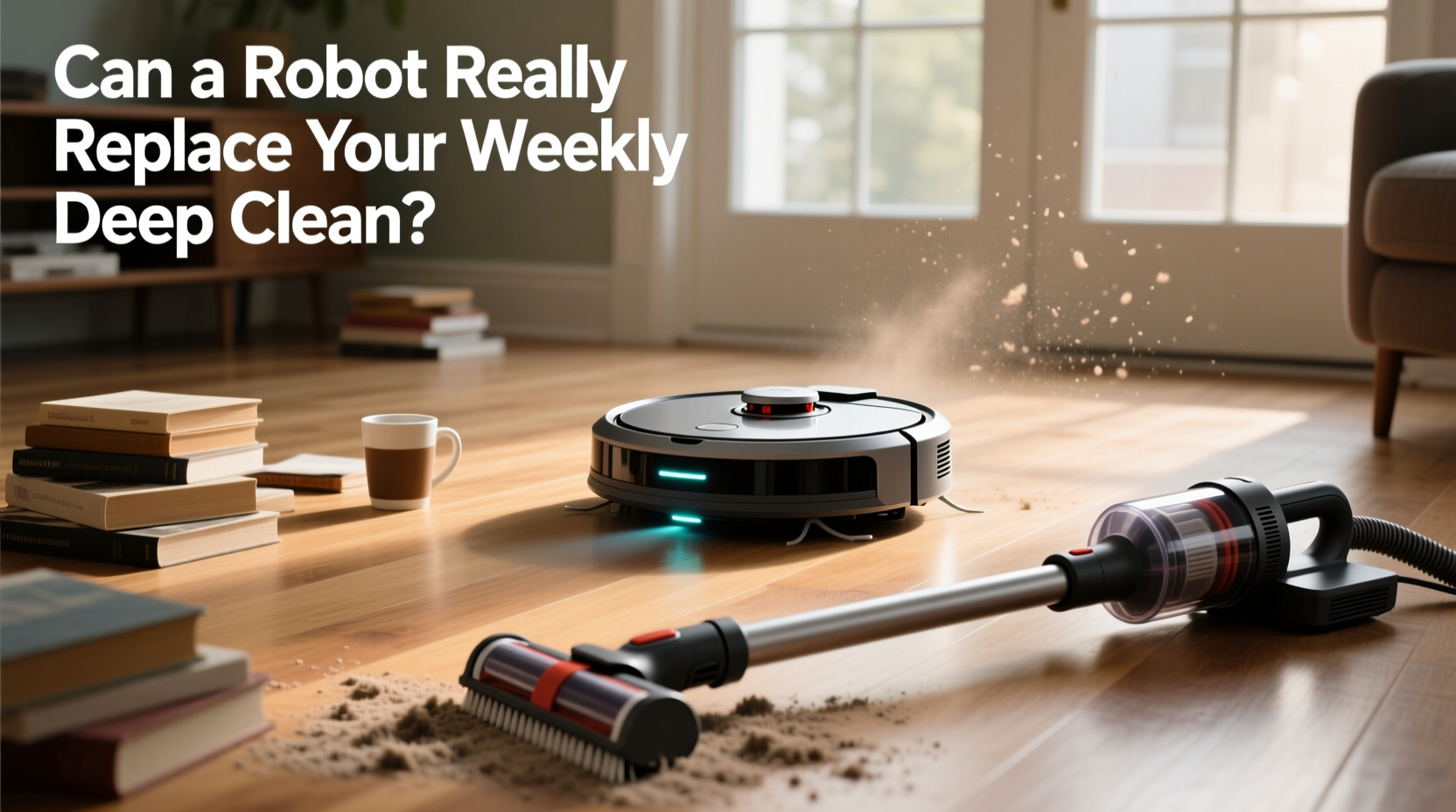
Robot vacuums are designed for consistency. They operate on schedules, autonomously handling light debris like dust, crumbs, and pet hair every day. This constant upkeep prevents dirt from embedding into carpets or spreading across hard floors. For homes with minimal mess, this routine may be enough to maintain acceptable cleanliness between more intensive sessions.
In contrast, cordless stick vacuums are built for intensity. With higher suction power (often 150+ AW), larger dustbins, and specialized tools for crevices, upholstery, and stairs, they tackle accumulated grime that robots simply can’t reach. A weekly deep clean typically involves moving furniture, vacuuming under beds, wiping baseboards, and treating high-traffic zones—all tasks beyond the scope of most autonomous models.
Tip: Use your robot vacuum for daily surface cleaning, but reserve your cordless stick for weekly edge-to-edge refreshes.Performance Comparison: Suction, Reach, and Smart Features
Suction power is where cordless stick vacuums hold a decisive advantage. Premium models like the Dyson V15 Detect or Shark Vertex deliver over 200 air watts of suction—far exceeding even high-end robots like the Roborock S8 or Ecovacs Deebot X2, which typically max out around 6,000 Pa (roughly equivalent to 80–100 AW). This makes sticks far more effective on deeply embedded dirt, carpet pile, and fine allergens.
Reach is another differentiator. Cordless vacuums come with extendable wands, motorized brushrolls, crevice tools, and upholstery attachments, enabling cleaning of stairs, car interiors, blinds, and ceiling corners. Robots, meanwhile, are limited by size and navigation constraints—they can't climb stairs, struggle with thresholds over half an inch, and often miss tight spaces behind toilets or under low cabinets.
On the intelligence front, robot vacuums win hands-down. Many now feature LiDAR navigation, AI obstacle recognition (like identifying shoes or cords), room-specific cleaning modes, and app-based scheduling. Some even empty their own bins via docking stations and mop simultaneously. These smart capabilities make them ideal for consistent, set-and-forget operation—but not necessarily for complete floor restoration.
“Automation improves hygiene through frequency, but physical effort still wins for depth.” — Dr. Lena Patel, Indoor Air Quality Researcher at MIT
Real-World Effectiveness: Who Benefits Most From Each?
Families with pets and children generate more daily debris—dander, tracked-in mud, spilled food—making daily robot runs highly beneficial. However, sticky spills, clumped litter, or hair tangled in carpet fibers require manual intervention. In these cases, the robot handles containment; the stick vacuum delivers resolution.
Apartments and minimalist homes with mostly hard flooring benefit significantly from robot vacuums. With fewer obstacles and less accumulation, automated cleaning can maintain a visibly clean environment with minimal human input. One user in a downtown studio reported going 18 months without using her cordless vacuum after purchasing a Roomba j7+, relying solely on nightly cleanings and occasional mopping bots.
Mini Case Study: The Two-Vacuum Household
Sarah, a working mother of two in Austin, TX, uses both a robot and a cordless stick vacuum. Her iRobot Combo j9+ runs every evening at 8 PM, mapping her open-concept living area and kitchen. It picks up Cheerios, dog hair, and dust throughout the week. Every Sunday morning, she spends 20 minutes with her Shark WandVac, focusing on corners, under the sofa, and the entryway mat where rain and mud collect. “The robot keeps things from getting gross,” she says. “But I still want that *deep* clean feeling once a week. The stick gets under doorsills and pulls out stuff the robot never touches.”
This hybrid approach reflects a growing trend: using robots for maintenance and sticks for reset. It reduces overall cleaning labor while preserving standards.
When a Robot Might Be Enough
Certain conditions allow a robot vacuum to function as a primary cleaner:
- Low-pile or hard flooring – Robots perform best on smooth surfaces where debris is easily accessible.
- No pets or light shedding breeds – Less hair means less clogging and better long-term performance.
- Minimal clutter – Open floor plans with few rugs or obstacles improve navigation success.
- Use of self-emptying docks – Models like the Roomba Combo j9+ Max or Roborock Qrevo automatically dispose of collected dust, reducing maintenance to near-zero.
- Mopping capability – Hybrid robot vacuums with scrubbing pads can handle light spills and footprints on tile or sealed wood.
Even in these ideal scenarios, seasonal deep cleans—spring cleaning, post-holiday tidying—are still recommended with a traditional vacuum. Dust bunnies accumulate behind furniture, and baseboards rarely get attention from robots unless specifically targeted in custom zone cleans.
Limitations of Current Robot Technology
Despite rapid advancements, robot vacuums still face key limitations:
- Edge coverage: While side brushes help, robots often leave narrow strips along walls uncleaned, especially in complex layouts.
- Reactivity to messes: Unless manually triggered, robots won’t respond immediately to spills or tracked-in dirt.
- Bin capacity: Small dustbins fill quickly in messy homes, requiring frequent emptying.
- Carpet penetration: Most lack the agitation and suction needed to lift deeply embedded particles from medium- to high-pile carpets.
- Obstacle avoidance: Though improving, robots still occasionally get stuck on cords, dark rugs, or pet toys.
These shortcomings mean that even the most advanced robot cannot replicate the tactile control and precision of a person wielding a wand and nozzle.
Do’s and Don’ts: Maximizing Your Cleaning Setup
| Scenario | Do | Don’t |
|---|---|---|
| Daily upkeep | Run robot vacuum nightly or every other day | Rely solely on it for large spills or tracked-in mud |
| Pet owners | Use robot for hair pickup, stick vacuum weekly for embedded fur | Ignore brushroll maintenance on either device |
| Hardwood floors | Leverage robot mopping features with fresh water tanks | Use dirty mop pads or skip filter cleaning |
| Weekly deep clean | Move furniture slightly and use stick vacuum with motorized head | Assume robot reached under the bed or sofa fully |
| Allergy sufferers | Choose devices with HEPA filtration and clean filters weekly | Run robot without checking filter saturation |
Step-by-Step: Building a Balanced Cleaning Routine
To optimize efficiency without sacrificing cleanliness, follow this practical weekly plan:
- Set your robot’s schedule: Program it to run daily during low-traffic hours (e.g., midday or after dinner).
- Define high-traffic zones: Use app zoning to prioritize kitchens, entries, and living rooms.
- Empty the bin weekly: Even with self-emptying docks, inspect the main unit’s filter and brushroll.
- Conduct a Saturday/Sunday sweep: Walk through each room with your cordless stick vacuum, focusing on edges, stairs, and areas robots miss.
- Deep-clean carpets monthly: Use the stick vacuum’s highest suction mode and zig-zag slowly to extract hidden dust.
- Maintain both machines: Clean sensors, replace filters, and check for tangled hair every 7–10 days.
Checklist: Can Your Robot Replace Your Stick Vacuum?
Answer the following to assess whether you can go all-in on automation:
- ☑ Do you have mostly hard floors with minimal rugs?
- ☑ Are there no pets or only one non-shedding pet?
- ☑ Is your home layout open and free of clutter?
- ☑ Does your robot have strong suction (5,000 Pa+) and a self-empty dock?
- ☑ Are you comfortable doing a manual cleanup once every 4–6 weeks?
If you answered “yes” to all five, a robot may suffice as your primary cleaner—with rare exceptions. If two or more are “no,” keeping a cordless stick vacuum is strongly advised.
FAQ
Can robot vacuums clean under furniture?
Yes, most modern robots (under 3.5 inches tall) can fit under sofas, beds, and dining tables. However, they may avoid these areas if sensors detect low lighting or navigation challenges. Regular cleaning under furniture should still be done manually every few months to remove accumulated dust bunnies.
Do robot vacuums reduce allergy symptoms?
They can help—especially models with HEPA filters and daily operation—which reduces airborne particulates. However, they don’t replace the deep extraction of allergens from carpets provided by high-suction stick vacuums. For severe allergies, experts recommend combining both methods.
How often should I run my robot vacuum?
For optimal results, run it 3–7 times per week. High-traffic homes or those with pets benefit from daily runs. Less active households can reduce frequency to every other day without noticeable buildup.
Conclusion
A robot vacuum brings undeniable convenience and can dramatically reduce the burden of daily floor care. But when it comes to restoring freshness, removing embedded debris, and achieving true deep-clean satisfaction, the cordless stick vacuum remains unmatched. Rather than viewing them as competitors, the smartest approach is to treat them as partners: the robot for consistency, the stick for completeness.
Technology continues to close the gap—future robots may offer stronger suction, stair-climbing ability, and smarter sensing. Until then, embracing both tools allows you to enjoy the best of automation and human control. Whether you're short on time or striving for spotless perfection, integrating both systems creates a cleaning strategy that's sustainable, thorough, and genuinely effective.
🚀 Ready to optimize your cleaning routine? Audit your current setup today—schedule a robot run, test your stick vacuum’s suction, and decide where automation ends and hands-on care begins. Share your experience in the comments!








