Right side neck pain affects millions of people each year, ranging from mild stiffness to sharp, radiating discomfort. While occasional soreness may result from poor posture or sleeping awkwardly, persistent or severe pain can signal underlying conditions requiring attention. Understanding the root causes and knowing which treatments are most effective empowers individuals to take control of their health and avoid long-term complications.
Common Causes of Right Side Neck Pain
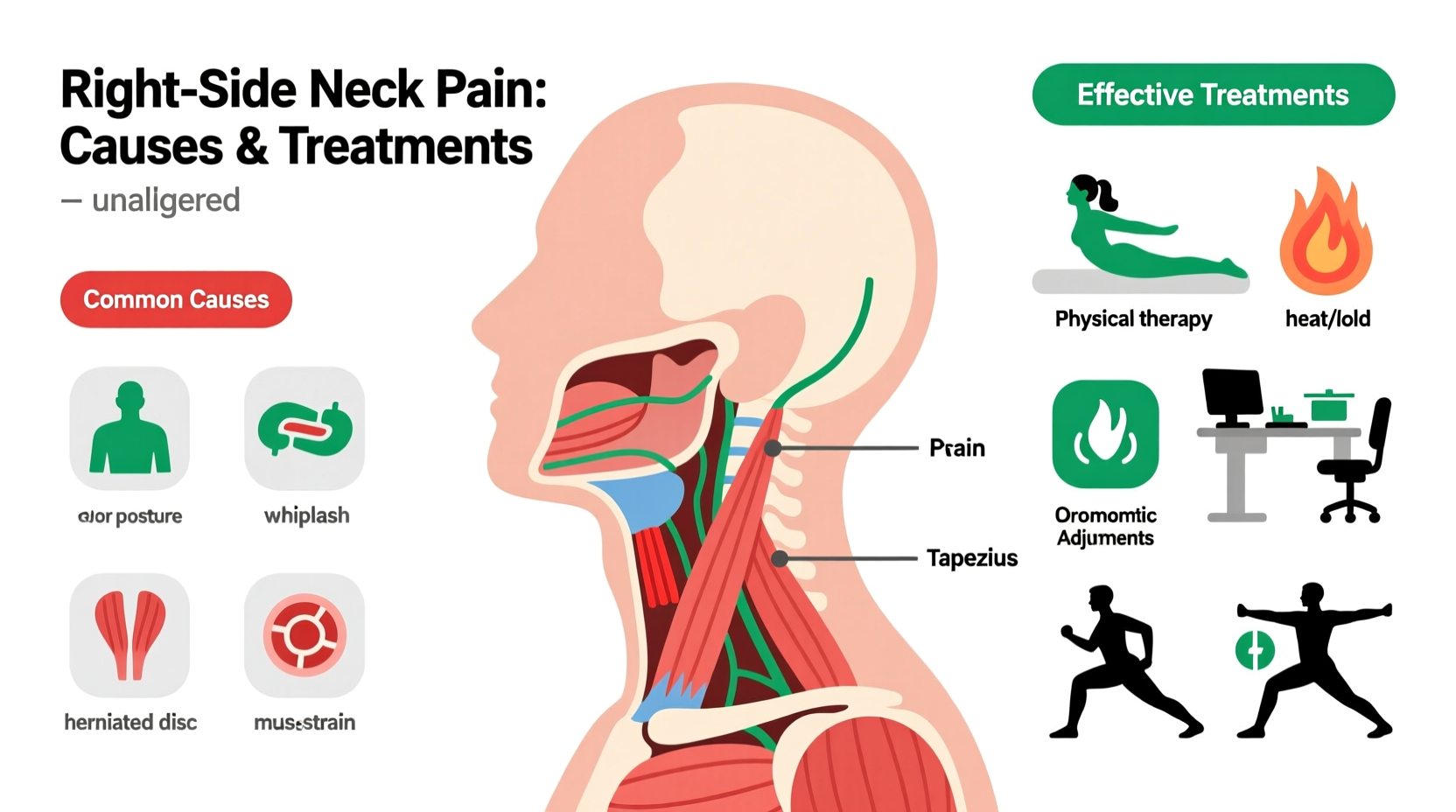
Neck pain localized to the right side often stems from mechanical strain, but neurological, inflammatory, or systemic issues can also be responsible. Identifying the cause is essential for selecting the appropriate treatment.
- Muscle strain: Overuse, sudden movements, or holding the head in a strained position (e.g., cradling a phone) can lead to muscle tension on one side.
- Poor posture: Prolonged sitting at desks with slouched or forward-head posture places uneven stress on cervical muscles.
- Cervical herniated disc: A bulging or ruptured disc in the neck can compress nerves, causing unilateral pain that may radiate into the shoulder or arm.
- Cervical spondylosis: Age-related wear and tear of spinal discs and joints often leads to stiffness and nerve irritation, typically worse on one side.
- Pinched nerve (cervical radiculopathy): Compression of a nerve root due to bone spurs or disc issues commonly results in sharp, shooting pain down one arm.
- Torticollis (wry neck): Sudden contraction of neck muscles can twist the head to one side, causing acute pain and limited movement.
- Whiplash injury: Often from car accidents, this trauma strains soft tissues asymmetrically, especially if impact comes from an angle.
- Infections or tumors: Rare but serious causes include spinal infections or growths pressing on nerves or vertebrae.
Effective Treatments for Right Side Neck Pain
Treatment depends on the severity and origin of the pain. Most cases respond well to conservative management, while others may require medical intervention.
1. Rest and Activity Modification
Avoid activities that worsen symptoms, such as heavy lifting or repetitive neck motions. However, complete immobilization should be limited to short durations to prevent stiffness.
2. Heat and Cold Therapy
Apply ice packs during the first 48 hours to reduce inflammation. Afterward, use moist heat to relax tight muscles and improve blood flow.
3. Over-the-Counter Medications
Nonsteroidal anti-inflammatory drugs (NSAIDs) like ibuprofen or naproxen help reduce pain and swelling. Acetaminophen may be used for pain relief if NSAIDs are contraindicated.
4. Physical Therapy
A physical therapist can design a targeted program including stretching, strengthening, and postural correction exercises. Manual therapy techniques such as mobilization or soft tissue release are often beneficial.
5. Ergonomic Adjustments
Optimize your workspace: align your computer screen at eye level, use an ergonomic chair, and take frequent breaks to stretch. These changes reduce chronic strain.
6. Prescription Treatments
In more severe cases, doctors may prescribe muscle relaxants, oral corticosteroids, or recommend epidural steroid injections to reduce nerve inflammation.
7. Surgical Options
Surgery is considered only when there’s significant nerve compression unresponsive to conservative care, such as in advanced disc herniation or spinal stenosis.
“Most patients with unilateral neck pain improve significantly within six weeks using non-invasive strategies. Early movement and guided exercise are key.” — Dr. Alan Reyes, Board-Certified Spine Specialist
Step-by-Step Guide to Managing Acute Neck Pain
If you're experiencing new-onset right side neck pain, follow this timeline to promote recovery and prevent worsening:
- Day 1–2: Apply ice for 15 minutes every hour. Limit strenuous activity but avoid staying completely still.
- Day 3–7: Switch to heat therapy. Begin gentle range-of-motion exercises: slow head turns, chin tucks, and shoulder rolls.
- Week 2: Introduce light stretching. Focus on the upper trapezius, levator scapulae, and sternocleidomastoid muscles.
- Week 3–4: Incorporate strengthening exercises like isometric neck presses. Evaluate ergonomics and adjust daily habits.
- After 4 Weeks: If pain persists, consult a healthcare provider for imaging or referral to a specialist.
Do’s and Don’ts: Quick Reference Table
| Do’s | Don’ts |
|---|---|
| Use proper pillow support (contour or cervical pillows) | Sleep on your stomach, which hyperextends the neck |
| Take frequent breaks from screens | Crane your neck forward for extended periods |
| Practice good posture throughout the day | Carry heavy bags on one shoulder regularly |
| Perform gentle neck stretches daily | Force your neck into painful positions |
| Seek professional evaluation if numbness or weakness develops | Ignore symptoms that persist beyond four weeks |
Real Example: Recovery from Work-Related Neck Strain
Mark, a 38-year-old software developer, began experiencing sharp right-side neck pain after transitioning to remote work. He spent 10-hour days hunched over a laptop placed on a coffee table. Initially dismissing it as “just stress,” his pain intensified over three weeks, spreading to his right shoulder with tingling in his forearm.
After visiting a physical therapist, Mark was diagnosed with cervical radiculopathy due to poor ergonomics and muscle imbalance. His treatment included workstation redesign (using a standing desk and external monitor), daily therapeutic exercises, and manual therapy. Within six weeks, his pain decreased by 80%, and he regained full function without medication.
This case illustrates how seemingly minor lifestyle changes can have major consequences—and how structured interventions yield strong results.
Prevention Checklist
To minimize future episodes of right side neck pain, follow this actionable checklist:
- ✅ Set up an ergonomic workspace with monitor at eye level
- ✅ Use a supportive pillow that maintains natural neck alignment
- ✅ Take a 5-minute break every hour to stretch and move
- ✅ Perform daily neck and shoulder stretches
- ✅ Strengthen core and upper back muscles twice weekly
- ✅ Avoid prolonged phone use with head bent forward (“text neck”)
- ✅ Stay hydrated and maintain a healthy weight to reduce spinal load
Frequently Asked Questions
When should I see a doctor for right side neck pain?
Seek medical advice if your pain follows an injury, lasts longer than four weeks, or is accompanied by numbness, weakness, headaches, dizziness, or fever. These could indicate nerve damage, infection, or other serious conditions.
Can stress cause neck pain on one side?
Yes. Emotional stress increases muscle tension, particularly in the trapezius and shoulders. This tension often manifests asymmetrically, leading to one-sided discomfort. Breathing exercises, mindfulness, and regular movement can help manage stress-related pain.
Is massage helpful for right side neck pain?
Therapeutic massage can relieve muscle knots and improve circulation, especially when combined with stretching and postural correction. However, avoid deep tissue work during acute flare-ups, as it may aggravate inflammation.
Conclusion: Take Action Before Pain Becomes Chronic
Right side neck pain is more than just a temporary nuisance—it can disrupt sleep, impair concentration, and limit daily activities. The good news is that most causes are manageable with early intervention and consistent self-care. By understanding the triggers, applying evidence-based treatments, and making sustainable lifestyle adjustments, you can restore comfort and mobility.
💬 Have you overcome persistent neck pain? Share your story or tips in the comments—your experience could help someone find relief today.








