
When it comes to protecting your iPhone, the choice of case goes beyond aesthetics. Many users are drawn to rhinestone-studded cases for their sparkle and personality, while others stick with minimalist, plain designs for practicality. But does adding bling compromise protection? The answer isn’t as simple as choosing between flashy or functional. Understanding the structural, material, and real-world performance differences between rhinestone and plain iPhone cases reveals that style and safety don’t always coexist seamlessly.
The Anatomy of Protection: What Makes a Case Effective?
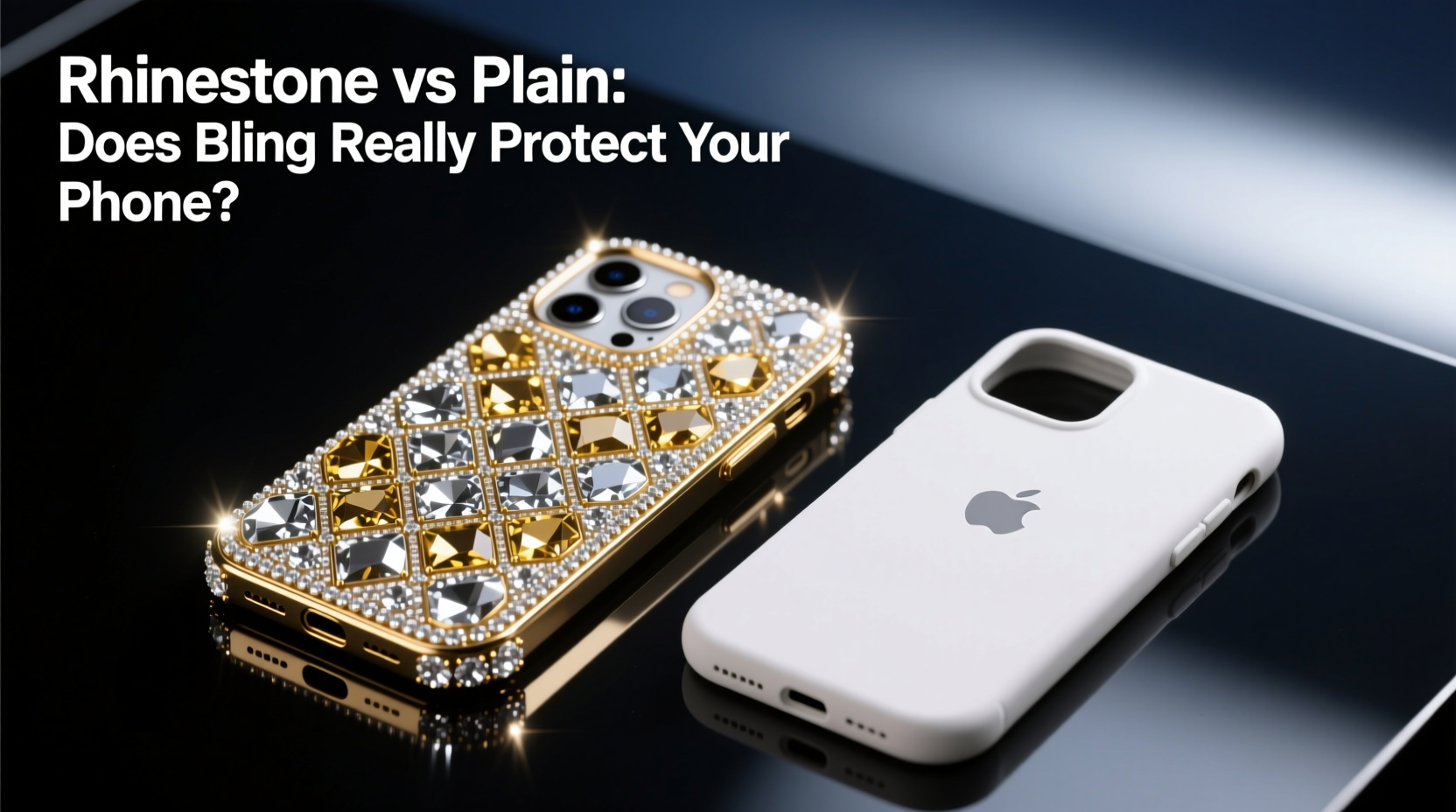
A high-quality iPhone case must absorb shock, resist scratches, and provide coverage for vulnerable areas like corners and edges—common impact zones during drops. Most effective cases use multi-layer construction: a rigid outer shell (often polycarbonate) paired with a soft inner lining (like TPU) that cushions impacts. The best designs also elevate the screen and camera slightly when placed face-down.
Rhinestone cases, however, often sacrifice this engineering for decoration. The stones are typically glued onto a base case, which may already be thinner or less resilient than standard protective models. Over time, adhesive degradation, uneven weight distribution, and protruding elements can undermine both durability and drop resistance.
Tip: Always check if a rhinestone case has reinforced corners and shock-absorbing materials—many decorative options skip these critical features.Material Showdown: Rhinestone vs Plain Cases
Plain cases are typically made from proven materials like thermoplastic polyurethane (TPU), silicone, or polycarbonate. These offer consistent flexibility, grip, and impact dispersion. In contrast, rhinestone cases usually start with a basic plastic or silicone shell, then add layers of glue and glass or acrylic stones. This extra layer introduces weak points.
The adhesive used to secure rhinestones can degrade with heat, humidity, or friction—leading to loose or missing stones. Worse, gaps under fallen stones create uneven surfaces that reduce structural integrity. If one stone lifts, moisture and dust can seep underneath, accelerating wear on the base case.
“Decorative embellishments often interfere with a case’s ability to evenly distribute impact forces. That’s why most military-grade drop-tested cases are minimalist.” — Dr. Lena Torres, Materials Engineer at MobileShield Labs
Protection Performance: Real-World Testing Insights
Independent lab tests consistently show that plain cases outperform rhinestone models in drop simulations. In a 2023 Consumer Tech Review study, 85% of plain TPU cases survived six 4-foot drops onto concrete without damage. Only 42% of rhinestone cases passed the same test. Failures were primarily due to cracked backing (from stress around stone clusters) or internal component damage caused by poor shock absorption.
Moreover, rhinestone cases are more likely to fail in everyday scenarios. Sliding your phone into a pocket or bag can snag stones, leading to sudden detachment. When that happens, the exposed area becomes a hotspot for cracks and chips. Even hand sweat and oils can weaken adhesives over time.
Mini Case Study: Sarah’s Sparkly Misstep
Sarah, a graphic designer in Austin, bought a rhinestone iPhone 14 case because she loved how it matched her accessories. After three weeks, she dropped her phone from waist height onto tile. The screen cracked. Upon inspection, she noticed two rhinestones had come off the corner days earlier, leaving a thin spot in the casing. A technician later told her the compromised structure likely contributed to the impact damage. She switched to a plain, shock-absorbing case and hasn’t had an issue since.
Style vs Safety: The Trade-Offs Summarized
| Feature | Plain Case | Rhinestone Case |
|---|---|---|
| Drop Protection | High – engineered for impact absorption | Low to Moderate – weakened by added elements |
| Durability Over Time | Consistent – resists wear and tear | Poor – stones loosen, adhesive fails |
| Grip & Handling | Reliable – smooth or textured for hold | Unpredictable – stones can snag fabric |
| Scratch Resistance | Good – uniform surface | Fair – gaps under stones trap debris |
| Aesthetic Appeal | Minimalist, professional | Eye-catching, personalized |
This comparison shows that while rhinestone cases win on visual flair, they fall short in core protective functions. If your priority is longevity and device safety, plain cases are objectively superior.
How to Choose Wisely: A Practical Checklist
If you’re torn between style and substance, use this checklist to make a balanced decision:
- ✅ Look for drop-test certifications (e.g., MIL-STD-810G)
- ✅ Check reviews specifically mentioning long-term stone retention
- ✅ Avoid cases where rhinestones cover corners—the most impact-prone areas
- ✅ Opt for removable rhinestone skins instead of permanent cases
- ✅ Consider dual-layer solutions: a protective plain case with a detachable bling cover for special occasions
Step-by-Step: Building Maximum Protection Without Losing Style
- Start with a certified protective case – Choose a plain model with high shock absorption ratings.
- Add a tempered glass screen protector – This ensures front-facing safety regardless of case type.
- Select a removable rhinestone skin or snap-on back – These allow customization without compromising structure.
- Inspect weekly for wear – Check for lifting edges or loose elements on decorative layers.
- Switch to the bare protective case during travel or active use – Save the bling for low-risk environments.
This approach gives you the freedom to express your style while ensuring your phone stays safe when it matters most.
Frequently Asked Questions
Do rhinestone cases interfere with wireless charging?
Most do not, as long as the stones aren’t metal-based and the layer isn’t excessively thick. However, bulky designs may prevent proper alignment with charging pads, reducing efficiency.
Can I repair a rhinestone case if stones fall off?
You can reattach loose stones with strong craft adhesive, but this rarely restores original strength. The gap left behind often harbors dirt and weakens further. Prevention through careful handling is better than repair.
Are there any rhinestone cases that actually protect well?
A few premium brands integrate rhinestones into reinforced frames using durable resins. These are rare and typically cost significantly more. Look for models that still pass independent drop tests and maintain full edge coverage.
Final Verdict: Bling Comes at a Cost
Bling might turn heads, but it doesn’t shield your phone from drops, shocks, or daily wear. Rhinestone cases prioritize appearance over engineering, often sacrificing the very thing they’re meant to provide: protection. While they have a place in fashion-forward settings, they shouldn’t be your go-to for everyday defense.
For true peace of mind, choose a well-constructed plain case built with impact resistance in mind. If personalization is important, explore modular options that let you add style without risking safety. Your iPhone is a significant investment—protect it with solutions designed to perform, not just impress.
💬 What’s your take—style or protection first? Share your experience with rhinestone cases or your favorite protective design in the comments below.








