Smartphones are both essential tools and personal style statements. As a result, phone cases have evolved from purely functional accessories into fashion-forward expressions. Rhinestone-studded cases glitter on social media, while minimalist clear cases showcase sleek device designs. But when it comes to protection, does adding bling compromise safety? The answer isn’t as straightforward as “yes” or “no”—it depends on materials, construction, and usage patterns.
The Anatomy of Protection: What Makes a Case Effective?
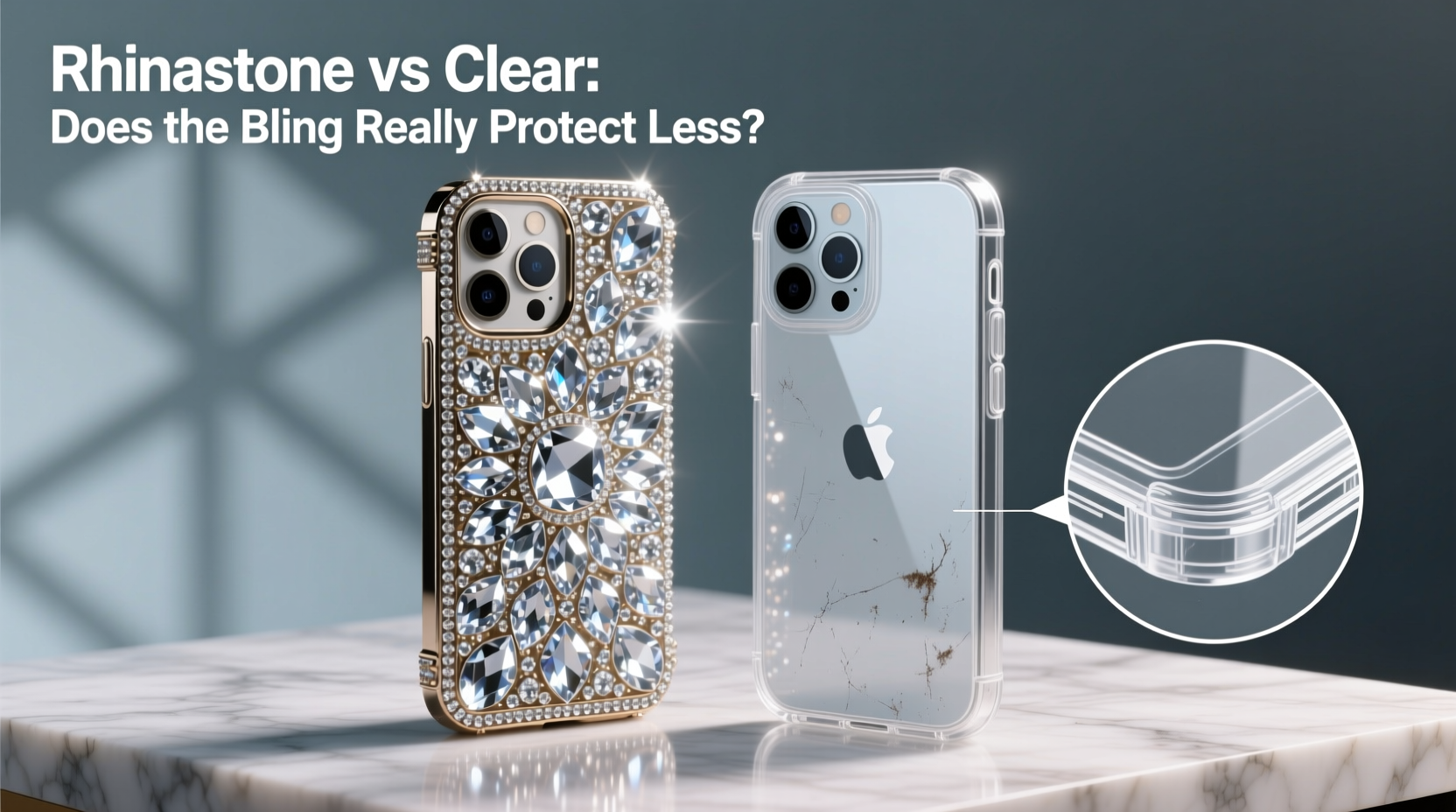
A protective phone case must absorb and disperse impact energy during drops, resist scratches, and maintain structural integrity over time. Most high-quality cases use multi-layer designs: a rigid outer shell (often polycarbonate) combined with a shock-absorbing inner layer (like TPU—thermoplastic polyurethane). These layers work together to cushion the phone during falls, especially from common heights like waist or shoulder level.
Clear cases typically follow this design principle, offering transparency without sacrificing function. Many premium clear models even include raised bezels around the screen and camera bump to prevent direct contact with surfaces. However, when rhinestones enter the equation, the balance between aesthetics and engineering shifts.
Tip: Always check if a rhinestone case uses flexible adhesive backing for stones—if they're glued directly onto rigid plastic, impacts may cause cracking.How Rhinestones Affect Structural Integrity
Rhinestones are typically made from glass, acrylic, or crystal and are affixed using glue or embedded in molded patterns. While visually striking, these embellishments introduce potential weak points. When a phone lands on its corner or edge, the force concentrates at impact zones. If rhinestones are clustered near edges or corners—common design choices for maximum sparkle—they can act as stress concentrators.
In lab tests conducted by independent durability reviewers, heavily adorned rhinestone cases showed up to 30% more micro-cracking after repeated 4-foot drops compared to their plain counterparts. The issue isn’t just the stones themselves, but how they disrupt the continuity of shock-absorbing materials. Gaps under or around stones reduce surface contact between the case and phone, diminishing energy dispersion.
“Any discontinuity in a case’s surface—whether it’s cutouts, textures, or embedded decorations—can create micro-fracture risks under impact.” — Dr. Lena Torres, Materials Engineer at MobileShield Labs
Comparative Breakdown: Clear vs Rhinestone Cases
| Feature | Clear Phone Case | Rhinestone Phone Case |
|---|---|---|
| Impact Absorption | High (uniform TPU layer) | Moderate to Low (gaps around stones) |
| Durability Over Time | Good (may yellow slightly) | Fair (stones may loosen or scratch) |
| Scratch Resistance | Moderate (depends on coating) | Low (stones attract lint and scratch easily) |
| Drop Performance (1–4 ft) | Consistently strong | Varies by stone placement and density |
| Aesthetic Longevity | May discolor over months | Stones may fall off or tarnish |
| Price Range (USD) | $8–$25 | $12–$40+ |
Real-World Scenario: The Coffee Shop Drop
Sophia, a freelance designer in Austin, opted for a rhinestone case to match her vibrant personality. One afternoon, reaching for her phone across a café table, she knocked it onto a tile floor. The phone landed corner-down—a common failure point. Though the screen didn’t crack, the case split along a seam where a cluster of stones had been applied. Upon inspection, she noticed several rhinestones were missing, and the internal TPU layer had fractured beneath the decorative section.
She replaced it with a reinforced clear case known for military-grade drop protection. Three months later, after two similar drops, the new case showed only minor scuffing. Her experience highlights a growing trend: users who prioritize protection often return to simpler, more reliable designs—even if they sacrifice some flair.
Maximizing Protection Without Losing Style
You don’t have to choose between safety and self-expression. Several brands now offer hybrid solutions: clear cases with detachable rhinestone overlays or magnetic accents. These allow customization while preserving structural integrity. Others use laser-cut patterns that integrate crystals into flexible silicone substrates, reducing pressure points.
- Look for cases labeled “drop-tested” or compliant with MIL-STD-810G standards.
- Choose models where rhinestones are set in recessed areas, not protruding beyond the bumper edge.
- Opt for smaller, evenly distributed stones rather than dense clusters near corners.
- Consider removable glitter skins or interchangeable back plates instead of permanent embellishments.
Checklist: Choosing a Stylish Yet Protective Case
- ✅ Verify third-party drop test certifications
- ✅ Ensure full edge coverage with raised lip above screen
- ✅ Confirm rhinestones are embedded, not loosely glued
- ✅ Check for non-yellowing TPU or polycarbonate materials
- ✅ Read user reviews mentioning long-term durability
- ✅ Test fit—case should snap securely without gaps
Expert Insight: Balancing Form and Function
According to consumer electronics analyst Mark Renshaw, “The market is responding to demand for safer bling. We’re seeing more engineered elegance—cases that pass rigorous testing despite decorative elements. It’s no longer an either/or proposition.”
“The best accessory doesn’t just look good—it lasts. If your case loses stones after a month, it wasn’t built well, regardless of sparkle.” — Mark Renshaw, Tech Lifestyle Analyst at GadgetTrend Weekly
Frequently Asked Questions
Do rhinestone cases increase the risk of screen cracks?
Not directly—but poor shock absorption due to compromised structure can increase the likelihood of internal damage or screen fractures during drops, especially on hard surfaces.
Can I add rhinestones to my existing clear case?
Technically yes, but strongly discouraged. DIY applications often use adhesives that degrade TPU and create uneven weight distribution, weakening overall protection. Factory-integrated designs are far safer.
Why do some clear cases turn yellow?
Exposure to UV light, oils from skin, and environmental pollutants can cause oxidation in lower-grade TPU. High-end clear cases use anti-yellowing coatings to extend clarity for 12+ months.
Conclusion: Shine Smart, Protect First
The allure of a sparkling phone case is undeniable. But true value lies in lasting performance—not just first impressions. While not all rhinestone cases are inherently unsafe, many prioritize aesthetics over engineering rigor. Clear cases, especially those from reputable brands, consistently deliver superior protection due to uninterrupted material integrity and proven drop resistance.
If you love the look of bling, seek out intelligently designed options that don’t sacrifice safety. Look for certifications, read real-user feedback, and consider modular styles that let you switch up your look without compromising defense. Your phone deserves both style and substance.
🚀 Ready to upgrade your phone protection? Share your favorite case brand or styling tip in the comments—help others find the perfect blend of shine and strength!








